

Community Rebuilds After Fires, Storms, and ICE Raids
Following the devastating 2023 wildfires, recent storms, and immigration enforcement actions, residents of Lahaina remain resolute in rebuilding their town with a focus on serving the local community rather than tourists.
In March, Hawaii experienced two consecutive storms that brought heavy rainfall. In Lahaina, muddy floodwaters transformed streets into rivers, carving new channels through the landscape, damaging roads, and flooding homes. The aftermath saw the emergence of mudslides engulfing vehicles.
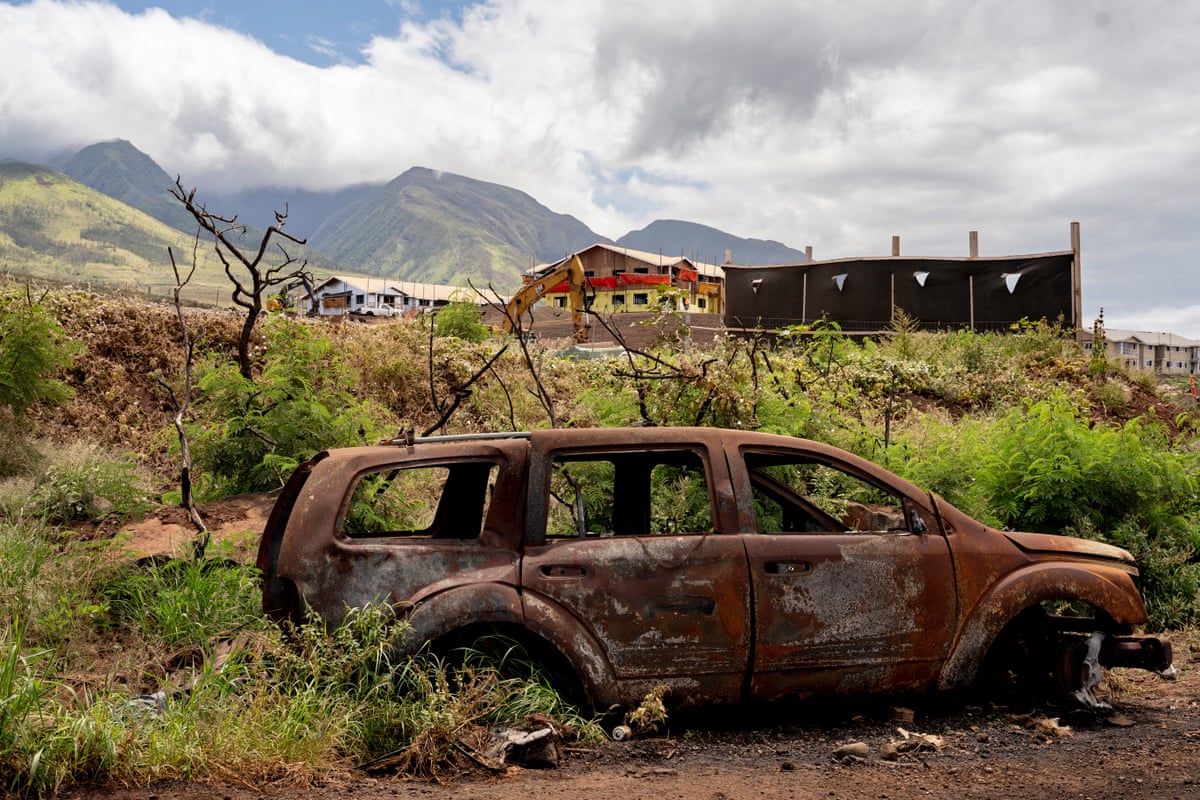
This occurred nearly three years after the 2023 wildfires devastated Lahaina, destroying over 2,000 structures and causing more than 100 fatalities. Many survivors continue to live in temporary housing. Pre-existing issues such as poverty, unemployment, and housing instability have worsened since the fires.
"So many people were hanging on by a thread as it is," said Paele Kiakona, an organizer with a grassroots group.
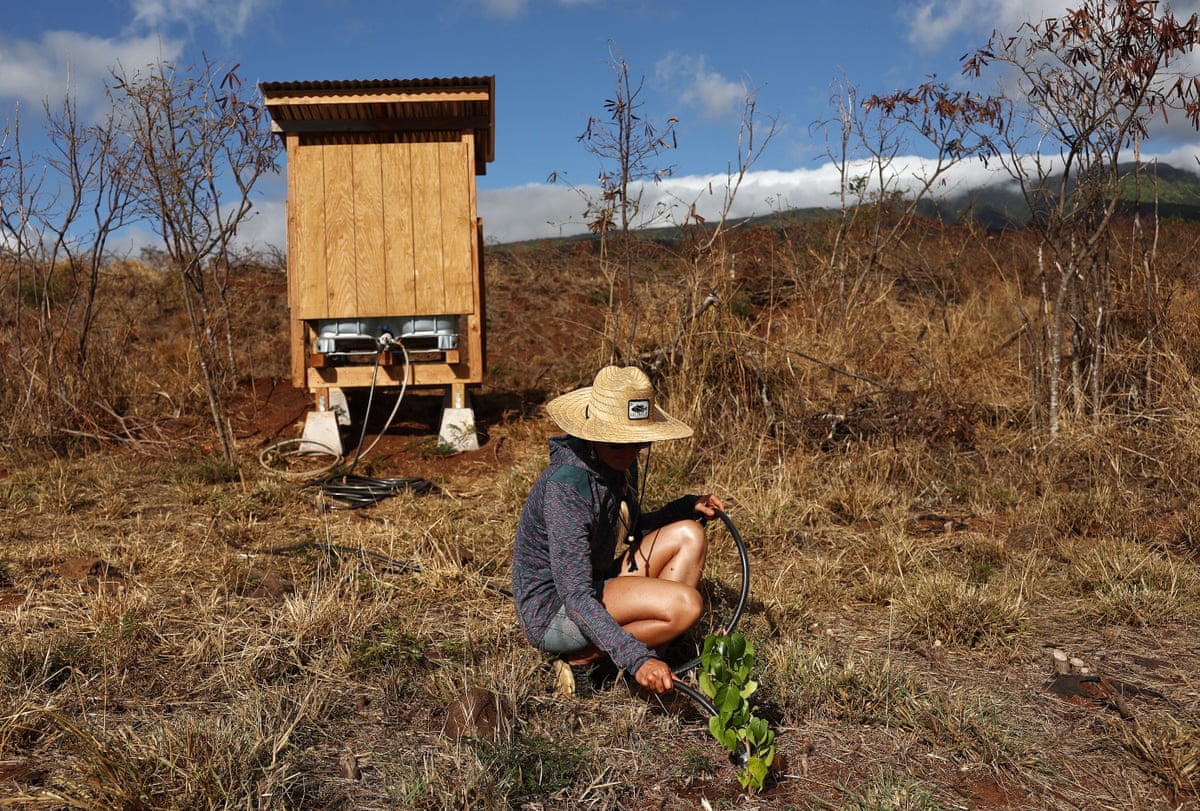
Despite these challenges, community organizers and residents are committed to protecting Lahaina from future climate disasters and rebuilding the town for its residents rather than visitors. Some, including volunteers from Kaiāulu Initiatives, are planting acres of native plants to restore land that was vulnerable due to decades of water diversion, which increased fire susceptibility. Others are advising on the redevelopment of Front Street, Lahaina's main commercial area, to better reflect Native Hawaiian heritage and serve the local community.
One significant achievement by organizers came after years of discussions with the mayor and local officials: in December, the city council passed legislation to phase out short-term rentals on the island, which currently constitute 30% of the housing stock. This measure aims to provide housing for fire survivors and local residents.
"We passed legislation as community members, which is unheard of," Kiakona said. "We’re just community members organizing grassroots from the bottom up, bringing our people in."
The fires and recent storms have underscored the importance of community self-reliance. In the immediate aftermath of the 2023 blaze, residents organized relief efforts when federal emergency assistance was delayed. During the recent storms, Kiakona observed and participated in community efforts to clear fallen trees, rescue vehicles from flooded areas, and dig trenches to divert floodwaters. Organizers emphasize that residents’ ability to mobilize is a reliable resource.
"We were just jumping in everywhere we possibly could," Kiakona said. "The community is so activated."
Prioritizing Housing for Locals Over Tourists
One of the primary concerns among community organizers after the fires was that recovery efforts would be slow, costly, and inaccessible to locals. Unfortunately, this has been the case. Since the fires, many residents have been displaced due to gaps in insurance coverage, uneven access to federal aid, and rising rents.
By advocating for a Lahaina that prioritizes locals, organizers hope to retain current residents and encourage those who left to return.
Following the fires, Lahaina Strong led a protest behind luxury resorts on Kāʻanapali Beach, demanding long-term housing solutions for fire survivors. The contrast of dozens of locals camping on the public beach with signs reading "fishing for housing," amidst tourists staying in nearby hotels, highlighted concerns that local government prioritized tourism over survivors.
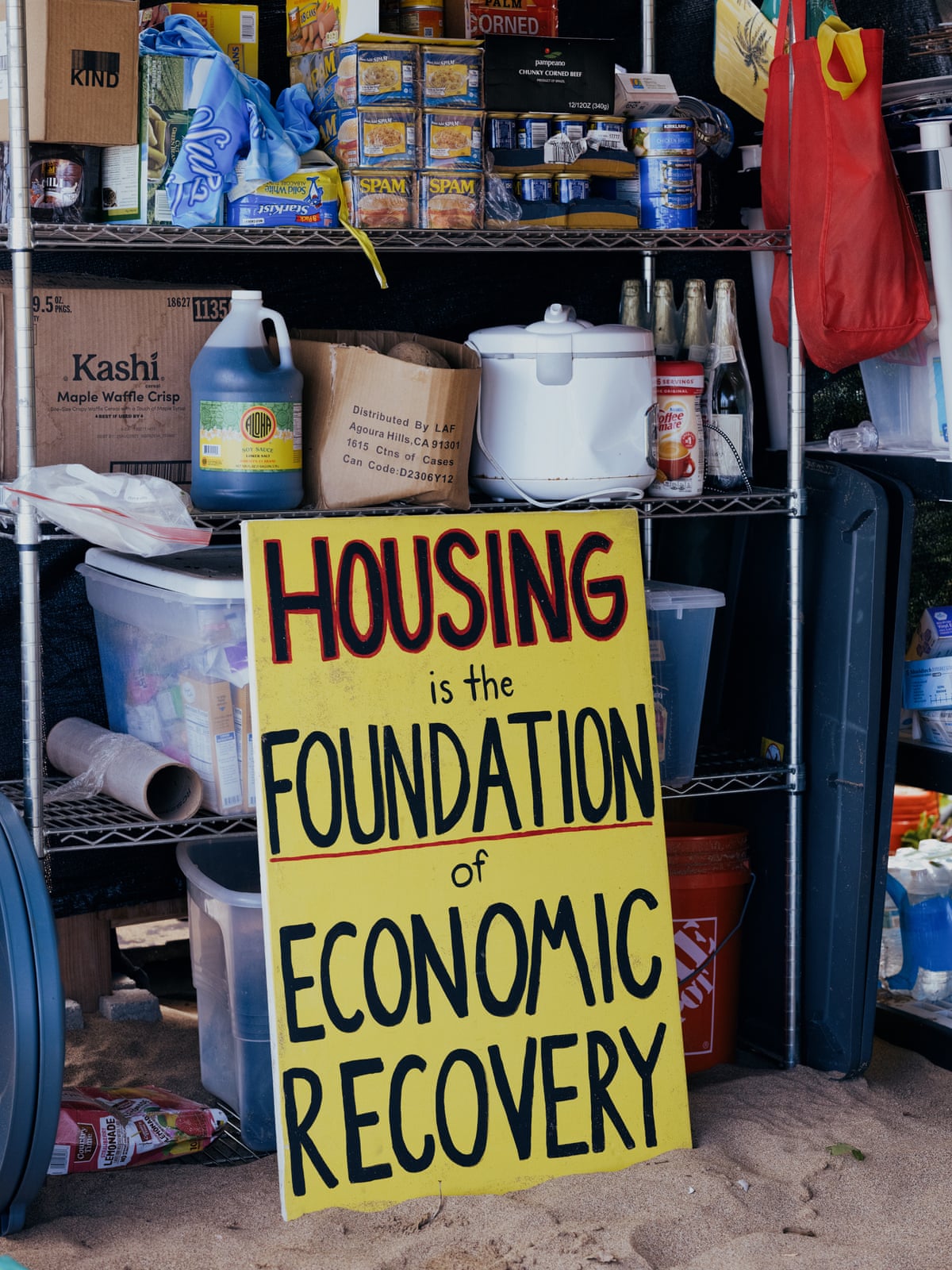
The protest and subsequent negotiations led to a significant policy change: after seven months of camping and dialogue with local leaders, Lahaina Strong joined the mayor in announcing a plan to phase out apartment-zoned short-term rentals in West Maui, including Lahaina, starting June 2024. These rentals will be fully phased out by January 1, 2029, with the remainder of the island following by 2031.

"I think there’s an understanding that the status quo led us to where we are," Kiakona said. "We’ve put so much effort into making things better for our home that the status quo would be the end of us, again."
Kiakona is running for the District 14 seat in the Hawaii statehouse, representing West Maui, motivated by a desire to advocate for his community.
"I want to do what’s right for my place and my home," he said. "If we stay where we are now, the less Hawaii will be Hawaii."
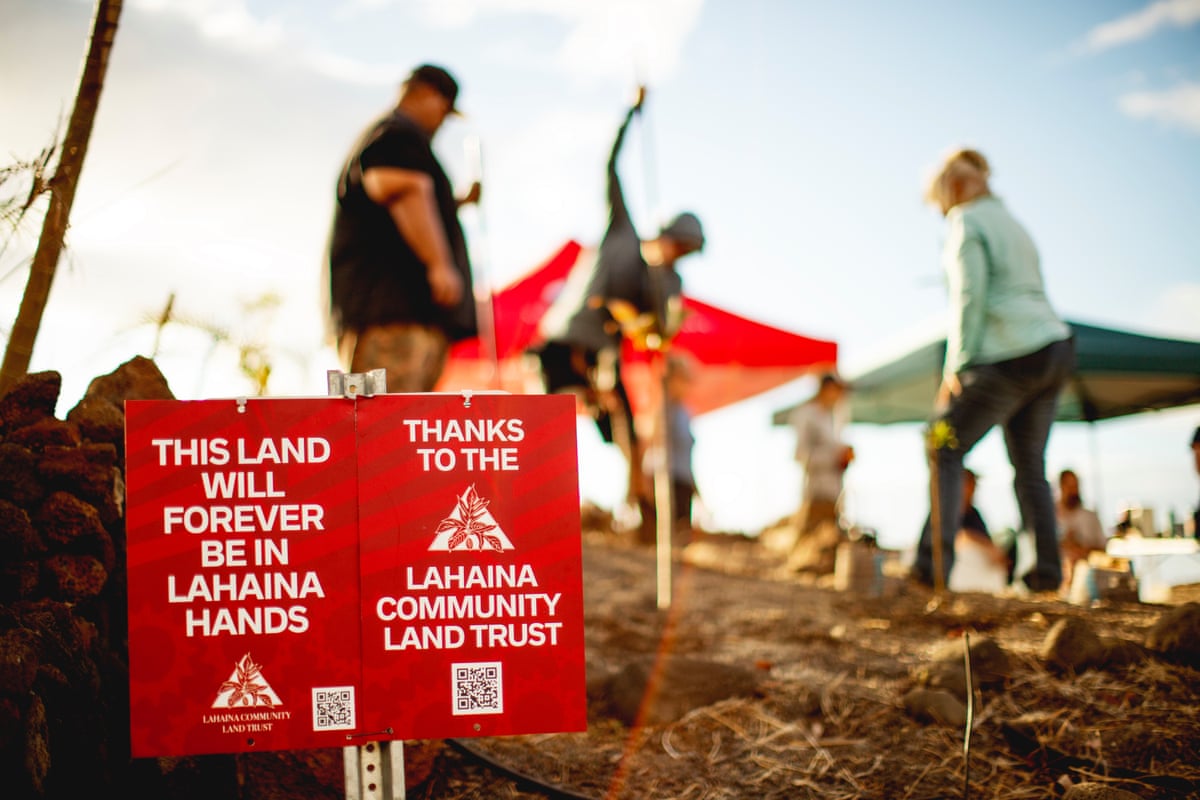
Another initiative to keep land in local hands is the Lahaina Community Land Trust, which purchases homes for sale and resells them to locals at affordable rates. The trust aims to prevent properties from being sold to investors or non-locals. Composed of multigenerational Lahaina residents, the trust also provides grants to homeowners for rebuilding.
"We get called an affordable housing organization a lot, which, that’s not wrong – because our people need to stay – but what we are doing is bigger than that," said Autumn Ness, executive director of the land trust. "Our vision is restoring relationship to ‘āina [land], whether it’s through housing, commercial spaces or open space that is really grounded in the real history of this place."
To date, the trust has acquired at least 20 parcels of land for housing and plans to expand into commercial spaces to support community-serving businesses.
Protecting Vulnerable Community Members
Securing sufficient housing is only part of the challenge; returning residents to their homes and fostering community healing are equally critical.
Many residents continue to struggle, particularly those who faced difficulties accessing formal assistance initially, such as Lahaina’s Filipino immigrant population, which comprises approximately 40% of the town’s residents.
"Filipinos in Hawaii are largely a service labor class," said Nadine Ortega, executive director of Tagnawa, an advocacy group for women and working-class Filipino immigrants. "They are working multiple jobs. The people who get to be heard, get to be seen, are those who have the time and opportunity to attend these meetings and push for their issues. Who gets left behind are immigrants [and] mothers who cannot go to the meetings in the middle of the day because they can’t find childcare."
Tagnawa has addressed some of these gaps by connecting fire survivors to disaster relief in their native languages, facilitating health risk assessments, producing community status reports for policymakers, and organizing mental health workshops.
Dr. Ruben Juarez, director of the Maui Immigrant Support Center, reported that some community members have been deported under recent U.S. Immigration and Customs Enforcement (ICE) raids. While enforcement has been less visible in Maui compared to neighboring islands, arrests have occurred.
"Just because we’re not seeing it on Maui does not mean that it’s not impacting them," said Veronica Mendoza, executive director of Maui Roots Reborn, a group of immigration lawyers and community organizers serving predominantly Latino immigrants. "It feels like you can’t relax."
Mendoza explained that news of deportations has instilled fear within the immigrant community, compounding their grief.
"You always have to be looking behind your back," she said. "I don’t know how full recovery is possible with that."
Maui Roots Reborn’s recovery efforts include "know your rights" training sessions, an ICE watch group, a rapid response network, and a tip line. Mendoza emphasized the importance of providing accurate information and education on immigration rights to foster community stability.
"If there is anything that we can do to provide stability in some way or another – like having a place for them to come for good information, for education on their rights with immigration – we’re not only creating community, but we’re also creating stability in meaningful ways," Mendoza said.

Weeks after the recent storms, Lahaina continues to face challenges. Kiakona reiterates the vital role of community solidarity in overcoming adversity.
"Bureaucracy gets in the way a lot of the time, so sometimes the community just needs to take action," Kiakona said. "That’s how we are in Hawaii – we take care of one another."


