Anticipation Builds on Florida's Space Coast
"People going up to the Moon is kind of cool,"says eight-year-old Isiah, capturing the excitement shared by many as the Artemis II launch approaches.
Approximately 400,000 visitors are expected to gather along the causeways, beaches, and motel balconies of Florida's Space Coast to witness the Artemis II launch tonight. The mission will send four astronauts into space with the goal of orbiting the Moon and potentially traveling farther from Earth than any humans before.
Although NASA's 10-day test flight will not include a lunar landing, the crew may observe lunar landscapes never previously seen by human eyes.
Amanda Garcia has journeyed over 1,000 miles from New Mexico to see the launch.
"I'm pretty excited about it,"she shares.
"I came out here to see it, and I heard it's gonna be a great show. A lot of people are going to be here."

Local Preparations and Economic Impact
Beyond the Kennedy Space Center launch site, areas along the lagoon and beaches of Titusville and Cocoa Beach are bustling. Bars promote "moonshots" and hotels caution guests about potential delays traveling to and from viewing locations.
Local officials describe the event as a "historic influx" of tourists, projecting an economic impact near $160 million (£121 million). Traffic management plans are in place for the night, when highway lights will compete with the illuminated launch towers and camper van barbecues.
Souvenir Sales and Community Excitement
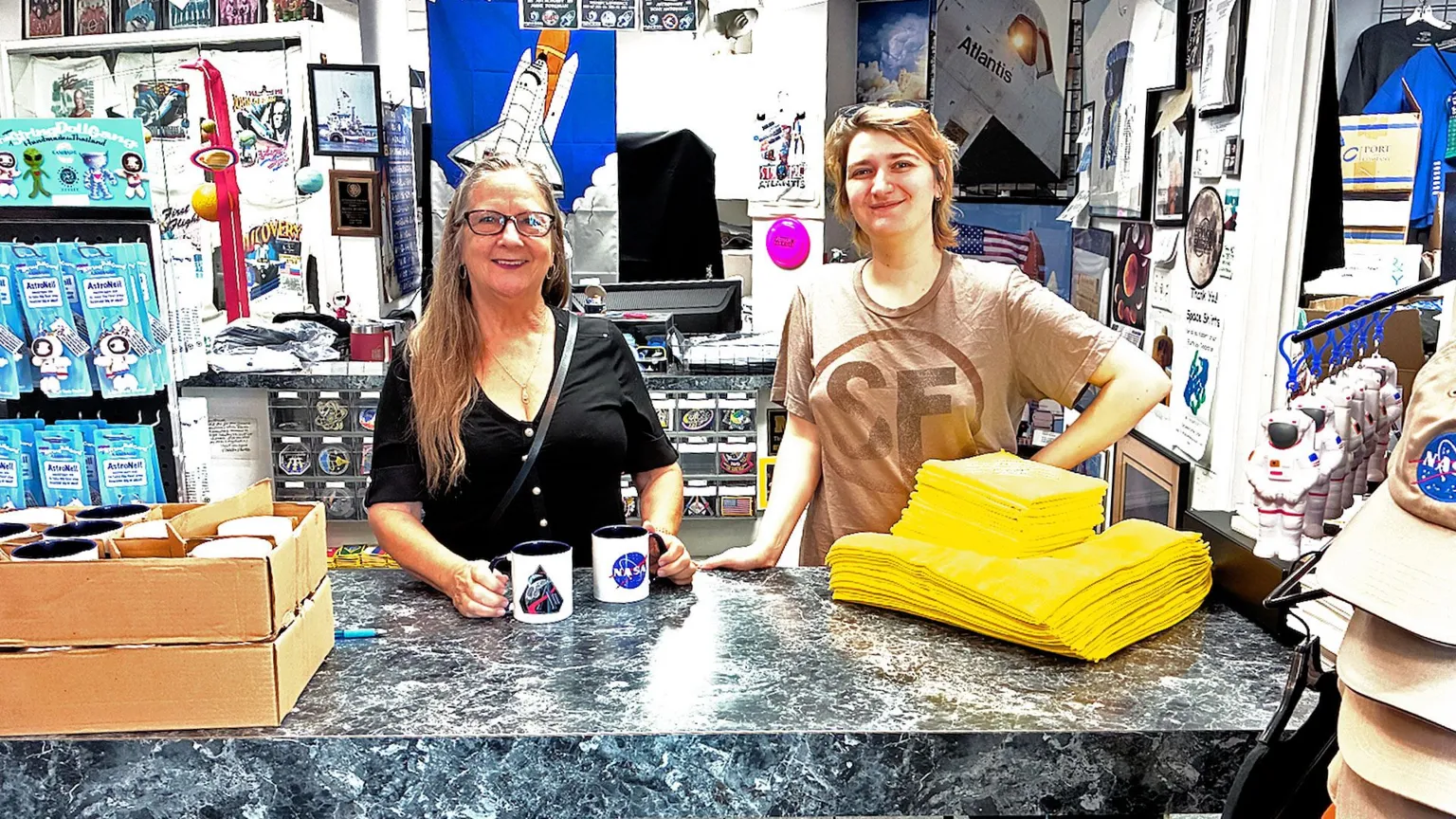
About a mile from the Artemis II launch pads, Brenda Mulberry, owner of Space Shirts, has been selling NASA T-shirts and souvenirs for 40 years. Her small Merritt Island shop displays racks of orange, blue, and black T-shirts featuring hand-drawn rockets, mission patches, and moonscapes, ready for the crowds that arrive on launch days.
Brenda notes that this launch feels different.
"We've wanted to go back to the Moon since the '70s. People are excited. People are beyond excited,"she says.
She has stocked up for what she expects to be the largest surge of customers in her shop's history.
"I want to have the first T-shirt shop on the Moon,"Brenda adds with a laugh.
"Because if you've been there, you get the T-shirt, right?"
Artemis Program Goals and Mission Overview
Future Artemis missions aim to land humans on the Moon for the first time since 1972, with the long-term objective of establishing a permanent lunar base. This base would exploit the Moon's natural resources and serve as a launch point for missions to Mars.
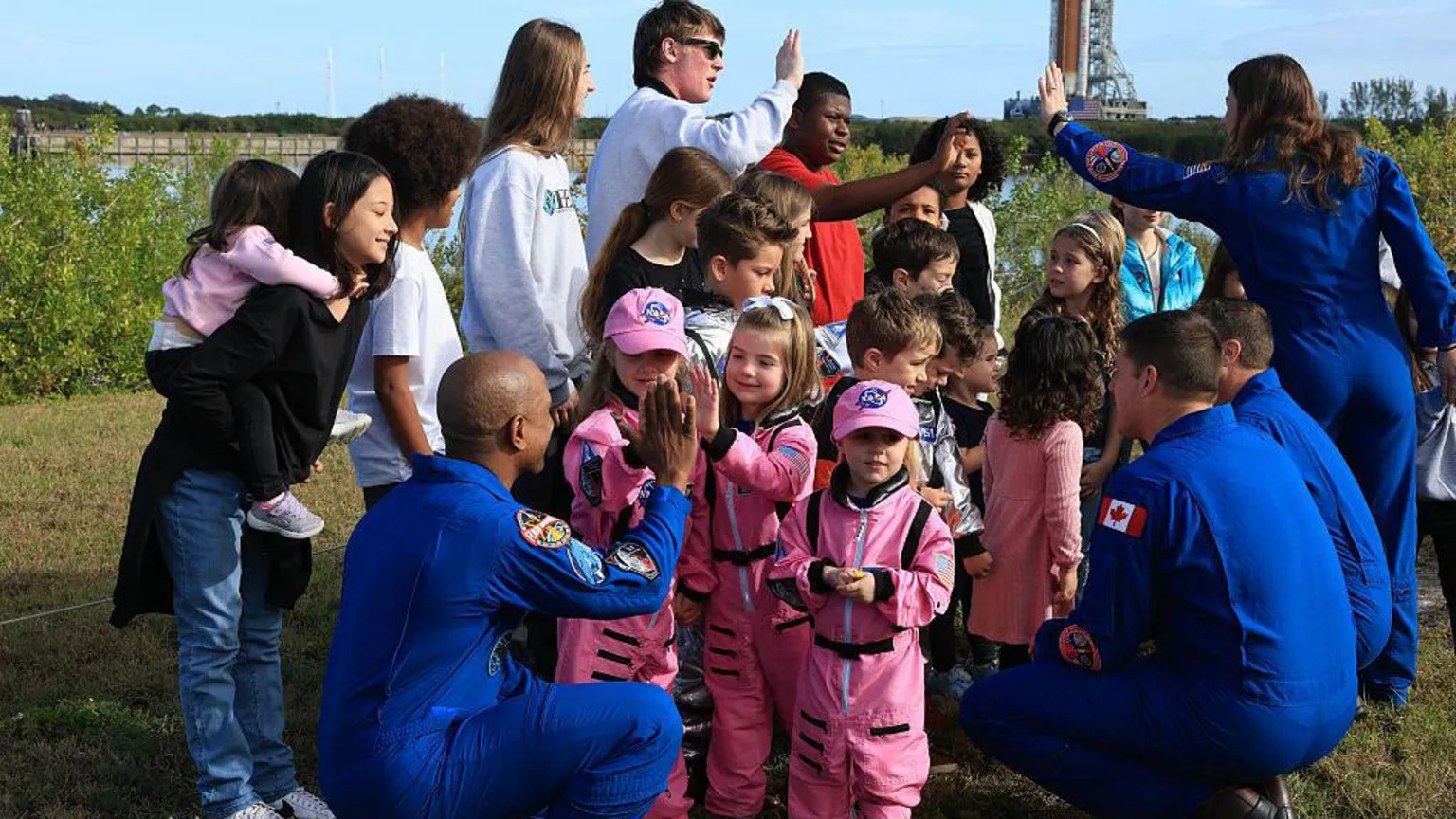
Artemis II's mission commander, Reid Wiseman, expressed hope that the return to the Moon would inspire new generations.
"In our lifetime, we've looked at the Moon knowing that people had been there. And now in the Artemis generation, kids will walk out and look at the Moon going, we are there. We are there now, and we are going further into our solar system."
Launch Details and Crew Composition
Tonight, attention will focus on Launch Pad 39B, the historic site from which the Apollo program first sent astronauts to the Moon in 1969. Standing on the pad is NASA's Space Launch System (SLS) rocket.
At 98 meters (321 feet) tall, the white and orange rocket is the heaviest NASA has ever launched. At its apex sits Orion, a capsule roughly the size of a small van, where the four astronauts will spend the next 10 days in close quarters. This mission marks the first time Orion will be tested with a human crew aboard.

If all proceeds as planned, the launch window is between 18:24 and 20:24 local time (23:24 to 01:24 BST) on Wednesday.
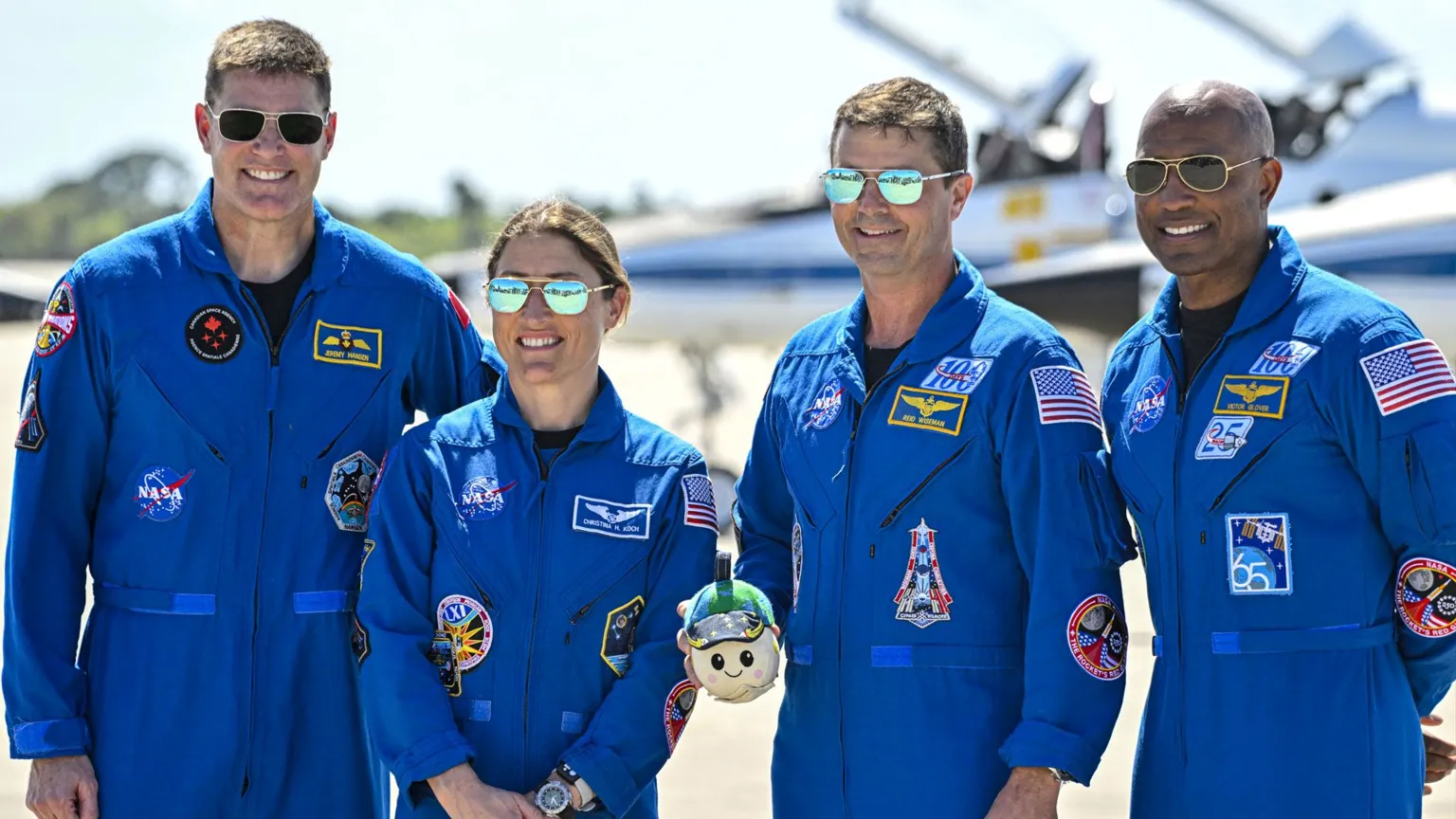
The astronauts, who will board Orion about four hours before launch, have trained together extensively. Commander Reid Wiseman will be seated up front on the left, with pilot Victor Glover beside him. Behind them are Christina Koch and Jeremy Hansen, a Canadian fighter pilot turned astronaut embarking on his first spaceflight.
Mission Phases and Operations
After reaching orbit, Orion will spend its first day in high Earth orbit practicing manual flying and testing life support systems before adjusting its trajectory toward the Moon.
On Day 2, a lengthy trans-lunar injection burn will place the spacecraft on a free return trajectory, naturally looping it around the Moon and back to Earth. Small correction burns will fine-tune the course.
Each day of the mission will involve different tests and challenges for the crew.
Day 6 is notable as Orion will fly around the Moon's far side, causing a radio blackout of approximately 40 minutes during which flight controllers will lose contact with the spacecraft.
Orion will travel approximately 4,000 to 6,000 miles above the Moon's surface and may slightly surpass Apollo 13's record distance of about 250,000 miles (400,000 km) from Earth, depending on the exact trajectory.
Following this, Orion will be naturally pulled back toward Earth by the free return trajectory, with minor course adjustments ensuring the capsule enters Earth's atmosphere at the correct angle.
Re-entry and Heat Shield Challenges
On the final day, the crew will face the most demanding phase: re-entry into Earth's atmosphere at roughly 25,000 mph (40,000 km/h). Orion's heat shield must withstand temperatures intense enough to char rock.
During Artemis I, the first uncrewed test flight, engineers observed that chunks of the heat shield's coating cracked and broke away during a two-stage "skip" re-entry maneuver. This maneuver involved dipping into the upper atmosphere, briefly climbing again, then plunging back to manage heat, G-forces, and splashdown accuracy.
For Artemis II, the two-step re-entry will be retained but with adjusted angle and timing so Orion spends less time in the initial gentler dip. Modeling suggests this will reduce heating and loads that caused extra charring. This mission will be the first time the revised descent is flown with a crew onboard.
Looking Ahead
If Artemis II succeeds, the Space Coast will again fill with visitors for subsequent test flights, each bringing humanity closer to walking on the Moon once more, nearly fifty years after the last footprints were made.
Between the marsh grass and launch pads, it is likely someone will be wearing one of Brenda Mulberry's shirts, dreaming of the day when her logo appears not only on Florida cotton but in a photograph taken on the Moon.