

The Pothole Problem on UK Roads
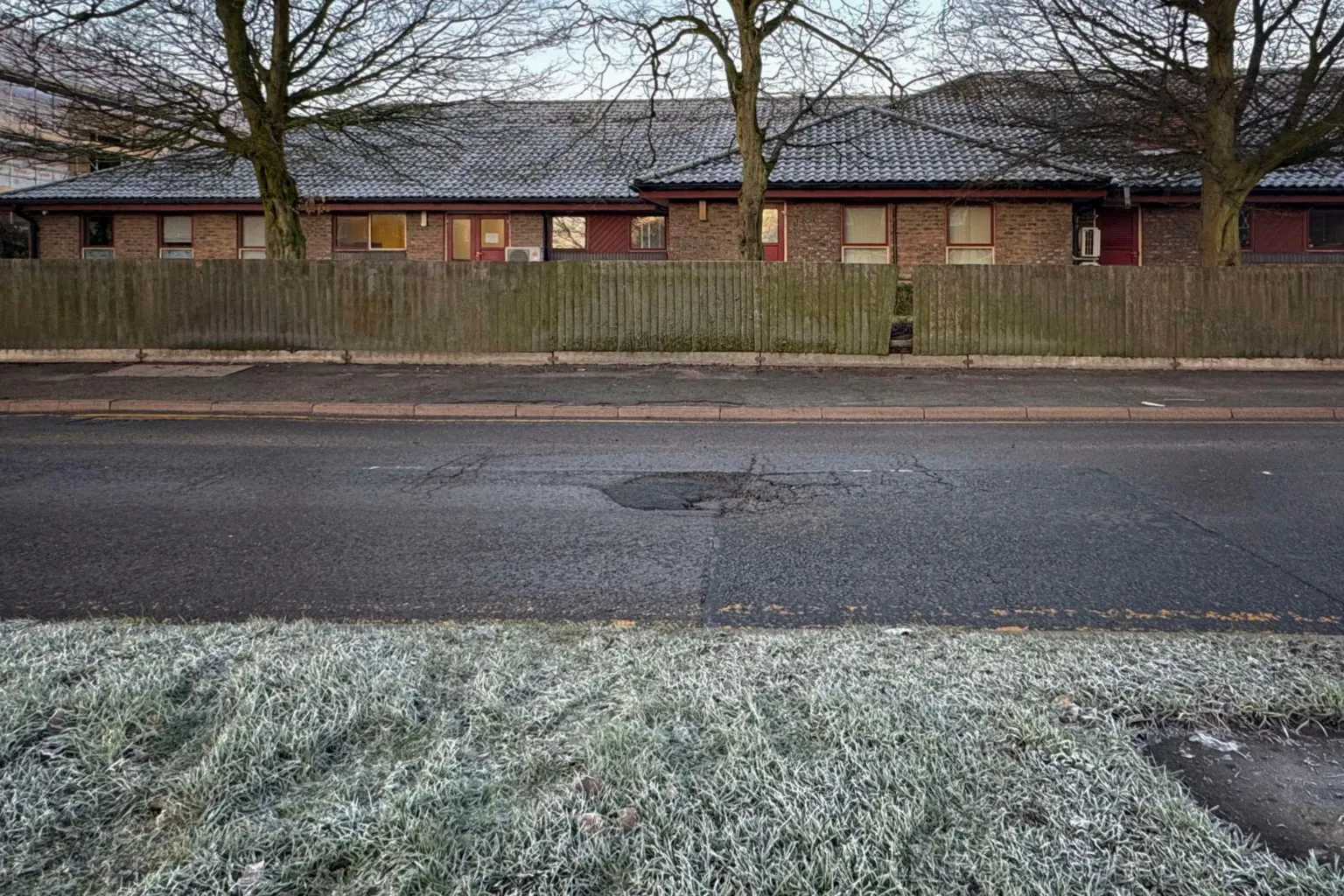
This pothole is just one among more than a million that mar the UK's road network.
Measuring 60cm (24in) wide and 10cm (4in) deep, it was located on a busy suburban route in Colchester.
Data from the Department for Transport (DfT) indicates that potholes and other road defects have contributed to dozens of fatalities and hundreds of injuries over the past decade. Opinion polls also show that road conditions rank highly among voter concerns.
In response, Essex County Council's new Reform UK-led administration declared a "pothole emergency," allocating funds to increase repair teams from nine to 12.
This particular pothole, which emerged from the deteriorating remains of a previous repair, existed before this initiative. But questions remain: how long would it take to be noticed, reported, and repaired? And how durable would that repair be?
To investigate, the BBC monitored the pothole for over a year.
Turner Road: A Vital but Vulnerable Route
Although classified as a minor road, Turner Road hosts Colchester's hospital and a primary care centre, with various residential streets branching off.
Traffic surveys reveal thousands of vehicles use the road daily. Approximately 90% are cars and taxis, light goods vehicles account for about 7%, and buses 1.6%. Traffic often comes to a standstill during peak hours.
Tracking the Pothole's Progress
The BBC began tracking the pothole's development during the frosts of February 2025.
Initially a crack between two previous repairs, it gradually deepened and widened as more of the road surface collapsed.
Drivers and riders increasingly swerved to avoid the jolts caused by the pothole.
Freedom of Information logs released to the BBC show the pothole was first reported to Essex County Council in September 2024.
It was assigned job number 2374931, and highways workers took photographs.
Within two and a half hours during the night of 21 February 2025, the road was closed and repairs carried out.
Ringway Jacobs, the contractor, patched the pothole with a 1 square metre (10.8 sq ft), 10cm (4in) deep repair, sealed with a glossy black bitumen edge.
After completion, the repair crew photographed their work and left.
However, just eight weeks later, the edge seal began to wear away.
Within nine months, the patch showed splits and surface cracks, and a new pothole had formed adjacent to the repair.
Local Councillor's Perspective
Logs reveal David King, Liberal Democrat councillor for the area, first raised the issue and allocated part of his council budget to fund the repair.

"We can agree that I, and the ratepayer and resident, did not [get value]. We've all got different expectations – my expectation would be that a repair should last at least a year."
Repair Methods and Longevity
The BBC asked Essex County Council about the repair type and expected lifespan.
The council, which spent approximately £16 million on reactive maintenance last financial year, did not specify the repair type but it is believed to have been a "cold lay" repair using bitumen, aggregate, and binders.
A council spokesman stated:
"Make-safe repairs are short-term fixes to dangers on the roads while permanent repair patches are expected to last a year. The cost of each repair depends on many factors; however, make-safe measures are quick and economical."
The BBC consulted four road surfacing experts about repair durability.

All agreed that cold lay repairs last from a single day, if stressed by traffic, up to six months.
Three experts expressed a preference against cold lay repairs, advocating for properly applied hot fill repairs with tack coat emulsions, which can last years.
Ongoing Challenges and Broader Issues
King noted potholes are the most frequent issue raised with him, with new ones reported daily.
"Highways is the one thing that everybody experiences and it's the one thing that they have a view about and it's not pretty," he said. "Up and down the country and up and down this road, there are hundreds, thousands of potholes and there's a real question about the quality of repair and value for money."
He views potholes as symptoms of chronic underinvestment in road infrastructure.
"Many of our roads are wearing out, the potholes are the symptom, and we've got to address what lies underneath that," King said. "This is a huge problem. It's an intolerable experience sometimes to go down some of the roads, like this one here. What a miserable experience."
Cost and Scale of the Pothole Issue
The BBC analyzed highways transparency reports from councils across England, revealing wide variation in average pothole repair costs, ranging from £20 to nearly £300.
In Essex, the average cost was about £120.
The data showed the number of potholes repaired increased 25% from 1.47 million in 2020-21 to 1.84 million in 2024-25.
However, the data does not indicate how many repairs failed within months, requiring further work.
Expert Insights on Maintenance Strategies
The Chartered Institution of Highways and Transportation highlighted that pothole repair longevity depends on patch quality and other factors.
Its chief executive, Sue Percy, emphasized the benefits of proper highway management, especially considering costs related to injuries, fatalities, and lost productivity.
She noted that while each pothole patch costs about £73 on average, resurfacing the same area as part of planned maintenance costs about £50.

"But the reality is, for most local authorities, they have to do the patching because of constraints on their funding," Percy said.
She added that increased traffic, heavier vehicles, climate change, and maintenance backlogs make the pothole problem unlikely to be resolved quickly.
Prospects for a Pothole-Free Future
According to Percy, a pothole-free future is theoretically possible but would require massive investment and a shift towards public transport, cycling, and walking.
More realistically, potholes will remain a persistent issue but could be mitigated by adopting new technologies.
Artificial intelligence is already being used to predict road faults, and innovative materials like graphene are improving road surfaces.
"There's lots of technology that's coming through that I think can really help. But it's going to be challenging because our highways are a very large and ageing asset and we need funding that supports that as we go forward."
Government Measures and Funding
New measures introduced by the DfT require local highway authorities to demonstrate effective road management or risk losing a third of their share of £1.6 billion in government funding.
Councils must show how funds are spent, present long-term strategies, and improve training for highway teams.
In April, roads and buses minister Simon Lightwood said:
"Drivers deserve smooth, safe journeys and we're making sure every pound goes straight into fixing roads and tackling potholes, not being spent elsewhere. Fixing our roads is one of the most impactful things we can do to reduce the cost of owning and driving a car and we're making sure every pound goes straight into doing exactly that."
Recent Repairs on Turner Road
Following the BBC's inquiry, Essex Highways dispatched a team with heavy machinery and asphalt to repair Turner Road's potholes.
The BBC observed the team machine-patch extensive sections of the road over five nights at the end of April.

Site manager David Ryan explained the goal was to "take out the worst of the defects" and that a surface treatment would soon be applied to protect the road for seven to ten years.
The repair process involved removing the damaged surface with a 30-tonne planer, sweeping debris, spraying bitumen emulsion binder, and laying fresh asphalt.
Finally, stone chips were rolled into the asphalt surface.
"Once this is all done," Ryan said, "all of the defects should be clear and we can look to the future to make sure it lasts a bit longer."


