The United Nations human rights committee has issued a warning against the misuse of counter-terrorism and national security legislation as the UK's Supreme Court considers whether the ban on Palestine Action complies with fundamental freedoms. The committee's first comprehensive guidance on freedom of association criticises laws that are vaguely worded and target "extremism" or "undesirable" organisations, with particular concern about how such measures are deployed to silence legitimate protest movements.
According to The Guardian, the guidance does not explicitly name Palestine Action, but Hélène Tigroudja, vice-chair of the UN committee, stated that the decision to publish the guidance had been prompted by events in countries including the UK, North Korea, Russia, China and Israel.
Tigroudja acknowledged that legitimate grounds exist for restricting freedom of association, including national security and counter-terrorism efforts. However, she expressed concern about how these purposes are applied in practice.
These legitimate purposes are too often so vaguely defined by domestic legislation, and more importantly, so extensively misused by authorities to silence by way of criminalising associations such as climate activists, children and young-led movements, human rights defenders, journalists, trade unionists, that these aims must be used with a heightened caution.
She went on to highlight a broader pattern of abuse:
In this regard, what is observable at a global level, is the abuse of the 'terrorism' rhetoric to target associations and/or their members and to expose them not only to public opinion's criticism but also to sanctions, including criminal punishment such as heavy fines or arrest and detention for the individuals.
What is the Palestine Action case?
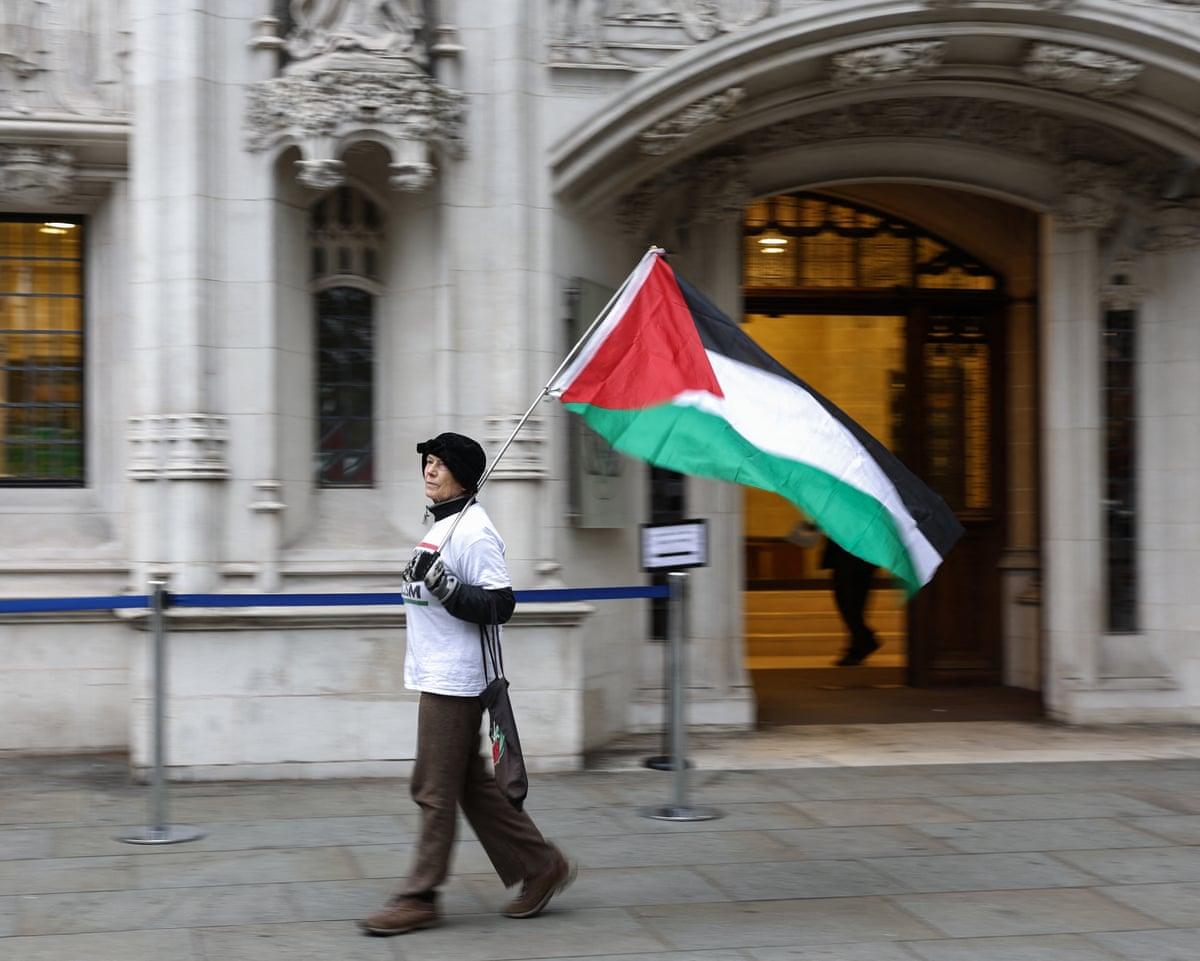
Palestine Action became the first direct action group to be proscribed under the UK Terrorism Act, placing it in the same legal category as organisations such as al-Qaida and Boko Haram. The ban, imposed by the Home Secretary in 2024, has faced sustained legal challenges and widespread criticism from civil liberties organisations, politicians across the political spectrum, a former director of public prosecutions and a former director of the security services.
In February 2026, the Divisional Court ruled the proscription unlawful; the Court of Appeal reversed that decision in June 2026, prompting the group's co-founder Huda Ammori to appeal to the Supreme Court. The Supreme Court heard Ammori's appeal on 4–5 November and reserved judgment, with the case still awaiting decision.
The Supreme Court's consideration is limited in scope. Permission to appeal was granted only on whether proscription is compatible with Articles 10 and 11 of the European Convention on Human Rights—covering freedom of expression and freedom of assembly—while permission was refused on a separate ground concerning the Home Secretary's policy.
In the Supreme Court proceedings, Palestine Action's legal team characterised the group's aims as disruption of weapons supplies from the United Kingdom to Israel at a time when the International Court of Justice had identified a real and imminent risk of irreparable harm to Palestinian rights in Gaza. Israel denies committing war crimes or genocide. According to evidence presented to the court, only three of 385 Palestine Action actions over five years met the relevant terrorism threshold.
What does the UN guidance say?
The UN human rights committee's new guidance establishes clear principles for protecting freedom of association. The committee states that the right to defend human rights, report human rights violations, or advocate for accountability cannot be labelled as a threat or breach of public order simply because it challenges government policy or attracts controversy.
The guidance also establishes that freedom of association does not depend on state authorisation, and that membership in an unregistered association must not, by itself, be criminalised or subject to sanctions. This principle directly challenges the legal basis on which Palestine Action was proscribed, as the ban criminalises support for the group with penalties reaching up to 14 years in prison.
What is Palestine Action's response?
Huda Ammori, co-founder of Palestine Action, said the UN committee's report addresses the core issues in the case.
This goes to the heart of the Palestine Action case. The government cannot simply label a movement 'terrorist' and use that designation to suppress political dissent by extinguishing the fundamental rights of its members and supporters.
Ammori called on the Supreme Court to act on the UN's warning.
I urge the supreme court to heed this clear warning and overturn this unjust, dangerous and disproportionate ban. If the courts fail to uphold these fundamental freedoms, we will take our case to the European court of human rights. The criminalisation of direct action protest has no place in a democracy, and we will not stop fighting until this Orwellian proscription is overturned.
What happens next?
The Supreme Court's judgment remains pending with no decision date currently listed. The outcome will have significant implications for how UK terrorism legislation can be applied to protest movements and civil society organisations, and may influence the interpretation of freedom of association rights across the country.