

HMS Dragon Deployment Delayed Amid Rising Middle East Conflict
The British warship HMS Dragon, designated to protect the UK military base in Cyprus, is not expected to sail until next week, according to officials, as conflict intensifies in the Middle East.
Currently, HMS Dragon is being loaded with ammunition at Portsmouth after recently completing maintenance. Originally assigned to a different mission, the Type 45 Destroyer was confirmed by Sir Keir Starmer on Tuesday to be deployed to the Mediterranean region.
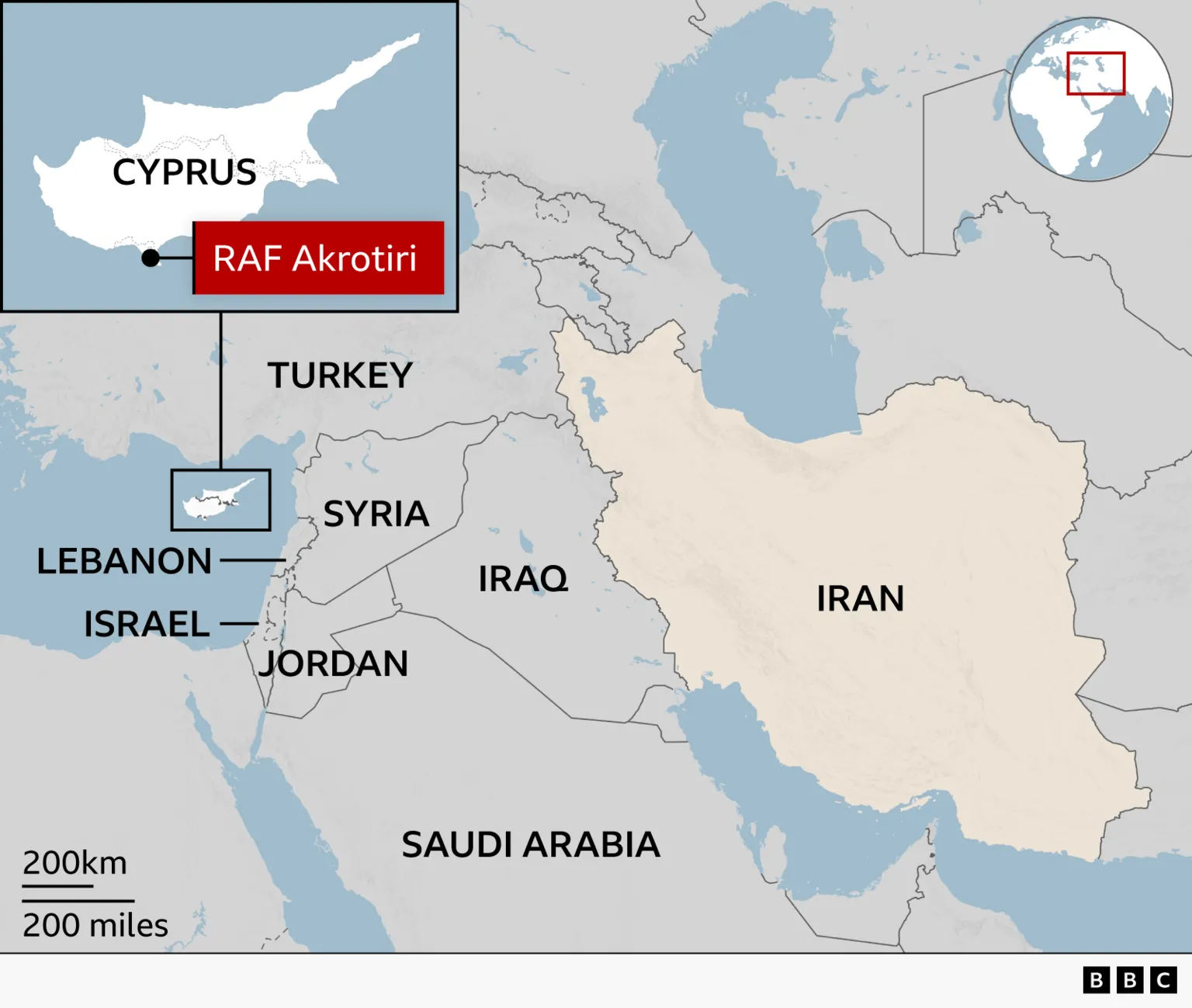
This announcement follows a drone strike on the runway at RAF Akrotiri, which the Ministry of Defence (MoD) described as causing "minimal damage." Western officials have stated that the Shahed-type drone involved was not launched from Iran, though they have not disclosed its origin.
Questions Raised Over Timing of Naval Deployment
Some observers have questioned why the UK did not dispatch a ship to the region earlier, especially given the increased US military presence and President Donald Trump's public threats against Iran. Currently, the Royal Navy has no major warship stationed in the Mediterranean.
On Wednesday, government minister James Murray was asked about the timeline for HMS Dragon's arrival in the Mediterranean. He responded,
"I'm not going to get into operational detail, but it will be as soon as possible."
Murray, the Treasury minister, also noted that defensive capabilities around Cyprus have been enhanced in recent weeks, stating,
"We've been building up F35s at our bases in Cyprus, Typhoons in Qatar, radar capability, all of the defensive capability which is important to enable us to protect British armed forces, British nationals in the region."
Recent Drone Engagements and Military Support
The MoD reported on Tuesday that UK armed forces have shot down drones in Iraq, Jordan, and Qatar in recent days. Additionally, two Royal Navy Wildcat helicopters, equipped with Martlet missiles designed to counter drone attacks, are expected to arrive in Cyprus separately and sooner than HMS Dragon. British military experts are also being deployed to the Middle East to assist allies with air defence advice.
The Royal Navy operates six Type 45 Destroyers; three are at various readiness stages, while the other three are undergoing maintenance and are unavailable. HMS Dragon, crewed by over 200 personnel, is described by the MoD as "one of the most capable air defence warships in the world," capable of launching eight missiles in under 10 seconds.
The MoD stated,

"We are reinforcing our defensive presence in the eastern Mediterranean. Royal Navy Wildcat helicopters armed with Martlet drone-busting missiles are deploying within days. They will reinforce our RAF Typhoons, F-35B jets, ground-based counter-drone teams, radar systems, and Voyager refuelling aircraft already deployed.
Our jets are now flying continuous sorties to defend against indiscriminate Iranian strikes threatening UK people, interests, and bases.
The Royal Navy are working as fast as possible to prepare HMS Dragon for deployment, including resupplying her air defence missiles at our ammunition facility in HMNB in Portsmouth."
Government and Diplomatic Responses
On Tuesday, Downing Street announced that Prime Minister Sir Keir Starmer had spoken with the president of Cyprus, expressing his outrage at the drone attack on the RAF base.
Former Royal Navy commander Tom Sharpe told BBC Radio 5 Live that while deploying HMS Dragon was a good decision, it was "too late." He commented,
"In naval planning terms we were probably 10 days behind what was a pretty obvious requirement.
We've been sitting in RAF Akrotiri staring at the Hezbollah threat for a very long time now. We actually practised sending a Type 45 there in 2013.
That we find ourselves in the position where we got hit in a known shooting war inside a missile threat is pretty incredible."
Sharpe described the Type 45 as a "billion dollar sticking plaster" that would "throw a net over whatever is within missile range," but added that there should have been more ground-based air defences and counter-drone technology at RAF Akrotiri.
UK-US Relations and Military Base Usage
The prime minister has been cautious about the UK's involvement in the conflict with Iran, drawing criticism from President Trump after refusing to allow the US to use UK bases for strikes. On Sunday, however, the UK agreed to Washington's request to use British military bases—likely RAF Fairford in Gloucestershire and Diego Garcia—for "defensive" strikes on Iranian missile sites.
Following this decision, the prime minister told MPs that the UK government "does not believe in regime change from the skies," prompting Trump to express dissatisfaction, stating,
"This is not Winston Churchill that we're dealing with."
Officials have indicated that the US Air Force has not yet conducted bombing missions from British bases. A Western official noted that US bombers have not used Diego Garcia or RAF Fairford so far but that the UK is prepared to accept them, expecting their arrival within the next few days.
Former Conservative chancellor Sir Jeremy Hunt told BBC Radio 4's Today programme that weakening the UK's relationship with the US was a mistake, emphasizing that Britain and Europe rely on the "brute strength" of the American military for defence. He described the use of UK bases as a "relatively minor" request and suggested the government should have agreed to it.
Evacuation of British Nationals and Diplomatic Actions
Meanwhile, some British nationals stranded in the Middle East are scheduled to be flown home later, with a chartered plane set to depart Muscat International Airport at 23:00 local time (19:00 GMT). More than 130,000 Britons have registered for assistance in leaving the region since the outbreak of war over the weekend.
Separately, the Iranian ambassador has been summoned by the UK government, Foreign Office minister Chris Elmore informed the Commons on Wednesday.


