

Funding Crisis Threatens UK National Science Facilities
Britain’s scientific infrastructure is at risk of significant harm, with some national facilities potentially facing closure due to proposed spending cuts aimed at addressing escalating costs at the government’s infrastructure funding body.
The focus is on sites funded and managed by the Science and Technology Facilities Council (STFC), including the Diamond Light Source and ISIS Neutron and Muon Source in Oxfordshire, as well as other national facilities located at Daresbury Laboratory in Cheshire.
These centres are globally renowned and support hundreds of companies and thousands of scientists both within the UK and internationally.
Facility managers have been tasked with identifying substantial savings following cost overruns driven by soaring electricity prices, increased staff expenses, and unfavorable foreign exchange rates affecting international collaborations such as those with the CERN nuclear research laboratory near Geneva.
Scientists report that Diamond and ISIS are considering reductions of between 10% and 20% in their annual budgets to contribute towards the STFC’s goal of saving at least £162 million by the fiscal year 2029-30. While the STFC intends to implement most savings internally, some cuts will impact research grants, a move that Brian Cox, the television physicist and professor at the University of Manchester, described as the "".
Tom Grinyer, chief executive at the Institute of , urged the government to "properly think through any reduction, fully consult the research community and slow down these once-in-a-generation changes to funding" to avoid "risking serious damage to the UK’s scientific capability and international attractiveness."
"Facilities like the Diamond Light Source and ISIS Neutron and Muon Source are a crucial part of the UK’s innovation and research infrastructure. These places are vital to the scientific life of the nation and we have to back them – short term decisions taken now could have consequences that may be felt for decades."
In an April letter to researchers, the STFC’s executive chair, Professor Michele Dougherty, and the chief executive of UK Research and Innovation, Professor Ian Chapman, acknowledged that "it was unavoidable that some impacts will be felt across the portfolio."

Diamond Light Source: A Powerful Scientific Tool
The Diamond Light Source functions as a giant microscope, producing beams of light that are 10 billion times brighter than the sun. These beams are directed into beamlines equipped with instruments enabling researchers to examine materials ranging from the Covid virus to the Herculaneum scrolls with unprecedented precision.
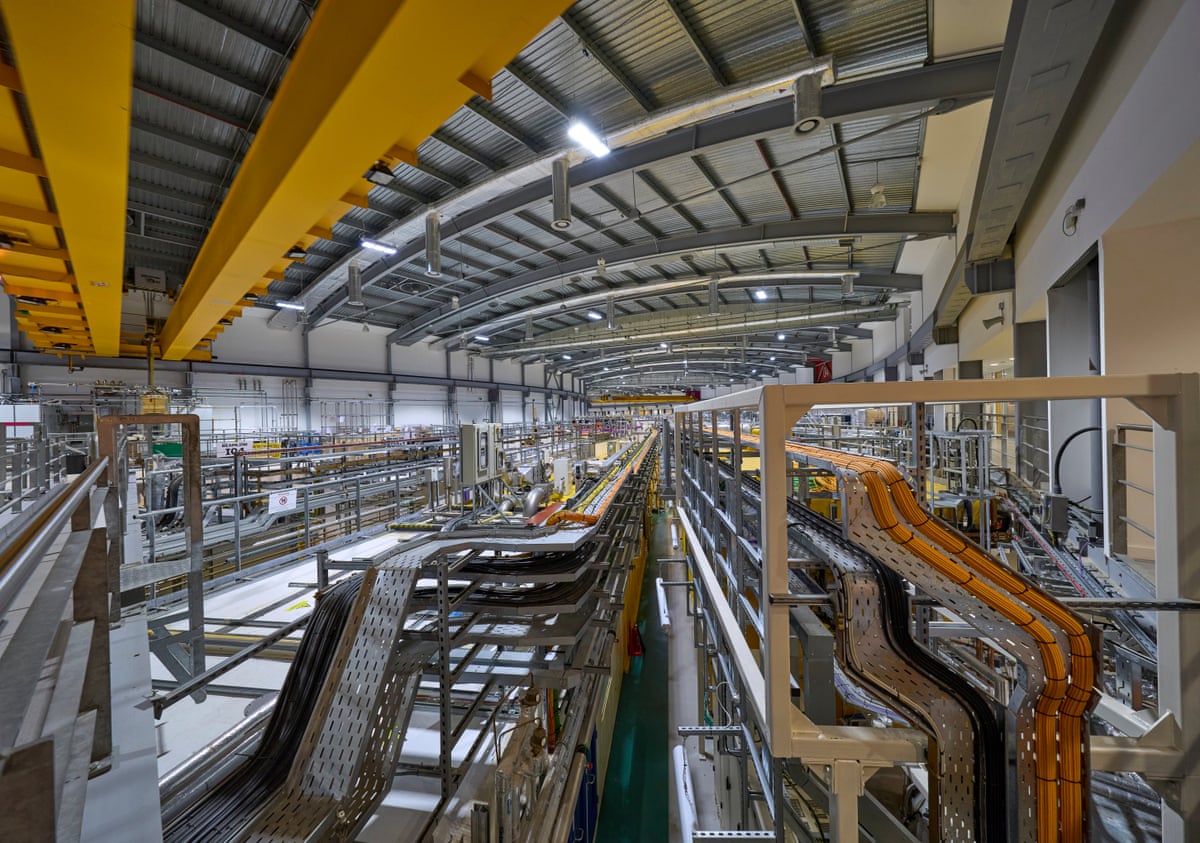
Scientists anticipate approximately 20% cost savings at Diamond, with reductions expected to affect the planned Diamond-II upgrade. In 2023, Professor Mark Thomson, the former executive chair of the STFC and now director general at CERN, emphasized that Diamond-II would play a "crucial role in cementing the UK’s place as a science superpower."
ISIS Neutron and Muon Source: Exploring Material Science
The ISIS facility utilizes neutrons and more exotic subatomic particles called muons to investigate material properties. It supports thousands of scientists and engineers studying pharmaceuticals, batteries, solar cells, hydrogen storage materials, and components for trains, planes, and automobiles. Due to existing financial pressures, ISIS has operated at 80% capacity over the past two years and has lost 10% of its staff, most of whom have not been replaced.
"What is unique about neutron scattering is the breadth of the community it supports, spanning physics, chemistry, materials science, engineering and industry," said Dr Lucy Clark, associate professor of materials chemistry at the University of Birmingham and chair of the UK Neutron Scattering Group.
"Different instruments provide different scientific capabilities, enabling entirely different areas of research. If particular instruments were no longer available, the consequence would not simply be fewer experiments – it would mean losing capability for whole sections of the research community."
Dr Andrew McCluskey, senior lecturer at the University of Bristol and user of both Diamond Light Source and ISIS, described the range of science conducted at these facilities as "wild."
"If ISIS or Diamond close beamlines, which are specialised in a particular area of science, what happens in two, three or five years’ time when it turns out that technique is the thing we need to solve the next crisis that we’re facing?"
Potential Facility Closures and Wider Implications
Professor John Womersley, former chief executive of the STFC, stated that closure of a facility is a possibility given the scale of the budget crisis.
"It’s certainly on the table, because the scale of budget crisis is hard to address with a salami-slicing approach," he said. "It’s a tough decision for that one area, but it enables you to maintain the quality of activity in all the other areas."
He warned that shutting a facility due to salary and electricity costs could damage the UK's international reputation regarding big science facilities, a perception that could take years to repair.
"It seems like you’re selling your second home because the price of milk has gone up," he said.
When questioned about potential closures or mothballing of STFC facilities, an STFC spokesperson stated:
"No decisions have been made about any area of the work of STFC at this time. The prioritisation exercise STFC is currently undertaking across all areas of our work is looking at where we can make efficiencies in the running of STFC to make us financially sustainable. The exercise is still ongoing and decisions should be shared in the autumn."


