
Introduction
A concept image from Babcock of a CCV "mothership" surrounded by uncrewed vessels
The UK government has published its long-anticipated defence spending strategy, which includes investments in drones, nuclear weapons, and stealth jets.
Under the Defence Investment Plan (DIP), nearly £300 billion will be allocated over four years.
This funding includes over £63 billion dedicated to nuclear weaponry, such as replacements for the Trident submarines stationed at Faslane.
Additionally, £8 billion has been committed to developing the next generation of RAF jets, some of which may operate from bases in Scotland.
However, the most notable announcement is a £5 billion investment in a transformative "drone transformation" of the armed forces, featuring a "hybrid fleet" composed of both crewed and uncrewed vessels.
Scotland's naval shipyards in Glasgow and Rosyth have historically been central to the construction of the UK's surface warships.
This raises questions about whether the recent announcements will benefit Scotland's shipbuilders and the motivations behind these plans.
Why is there a change of thinking?
Recent conflicts, such as those in Ukraine and the Gulf, have demonstrated rapid evolution in warfare tactics.
The sinking of Russia's flagship cruiser Moskva in April 2022 served as a stark reminder of how a major vessel can be destroyed by relatively inexpensive anti-ship missiles.
Drone aircraft and boats have been repeatedly deployed against the Russian fleet, as highlighted by the Royal Navy's head, Sir Gwyn Jenkins, in a speech to the security think tank RUSI earlier this year.
"In just a short period, Ukraine, a nation with no warships, has managed to destroy or disable a third of Putin's Black Sea fleet, primarily through maritime drones, uncrewed vessels and long-range strikes," he said.
A video reportedly shows Ukrainian sea drones destroying a Russian warship in the Black Sea in 2024.
On the opposing side, Russia's hypersonic missiles, traveling at approximately 4,000 mph (6,437 km/h), have underscored another threat to traditional warships.
In summary, relying on a limited number of highly sophisticated and expensive ships that can be destroyed rapidly is now viewed as a strategic vulnerability.
The First Sea Lord advocates for greater "mass"—deploying more numerous, less costly ships that are less vulnerable, allowing for losses without jeopardizing overall mission success.
What would a hybrid fleet look like?
The Royal Navy has already acquired and begun testing small drone boats similar to those used recently by Ukraine and Iran, as well as uncrewed minesweepers.
The new strategy also envisions larger drone vessels serving as missile or sensor platforms.
Plans include submersible and airborne drones, all coordinated by a crewed "mothership" known as a Common Combat Vessel (CCV).
Spain's state-owned shipbuilder Navantia, which owns Harland & Wolff, has been developing concept designs for uncrewed ships.
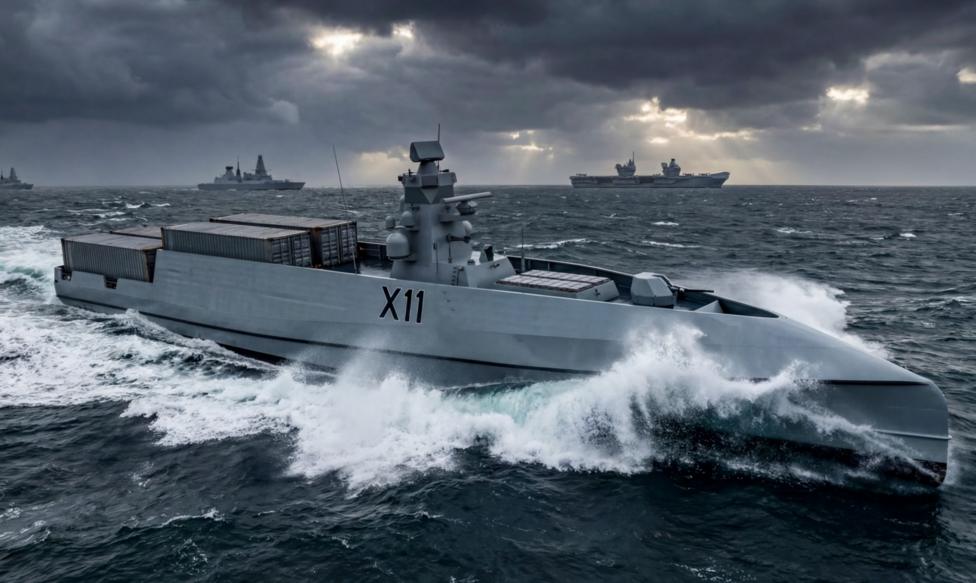
Shipbuilders have drafted concept designs for these uncrewed warships, some approximately 300 feet (100 meters) in length.
For context, this length is comparable to MV Glen Sannox, the second-largest ferry in Scotland's CalMac fleet.
Will they be built in Scotland?
Scottish military shipbuilding is currently experiencing significant growth.
The two BAE Systems shipyards in Glasgow—Govan and Scotstoun—are engaged in constructing 13 Type-26 anti-submarine frigates, eight for the Royal Navy and at least five for Norway.
This workload is expected to continue until at least 2038, potentially longer if additional export orders are secured.
In eastern Scotland, Babcock is building five Type-31 frigates at Rosyth, which are more affordable yet versatile. The final ship, HMS Campbeltown, is scheduled to enter service in the early 2030s.
The new hybrid navy plan includes at least six CCV motherships intended to replace the current Type 45 destroyers.
Questions remain whether these new vessels will also be constructed in Scotland.
Babcock expresses confidence in its prospects.
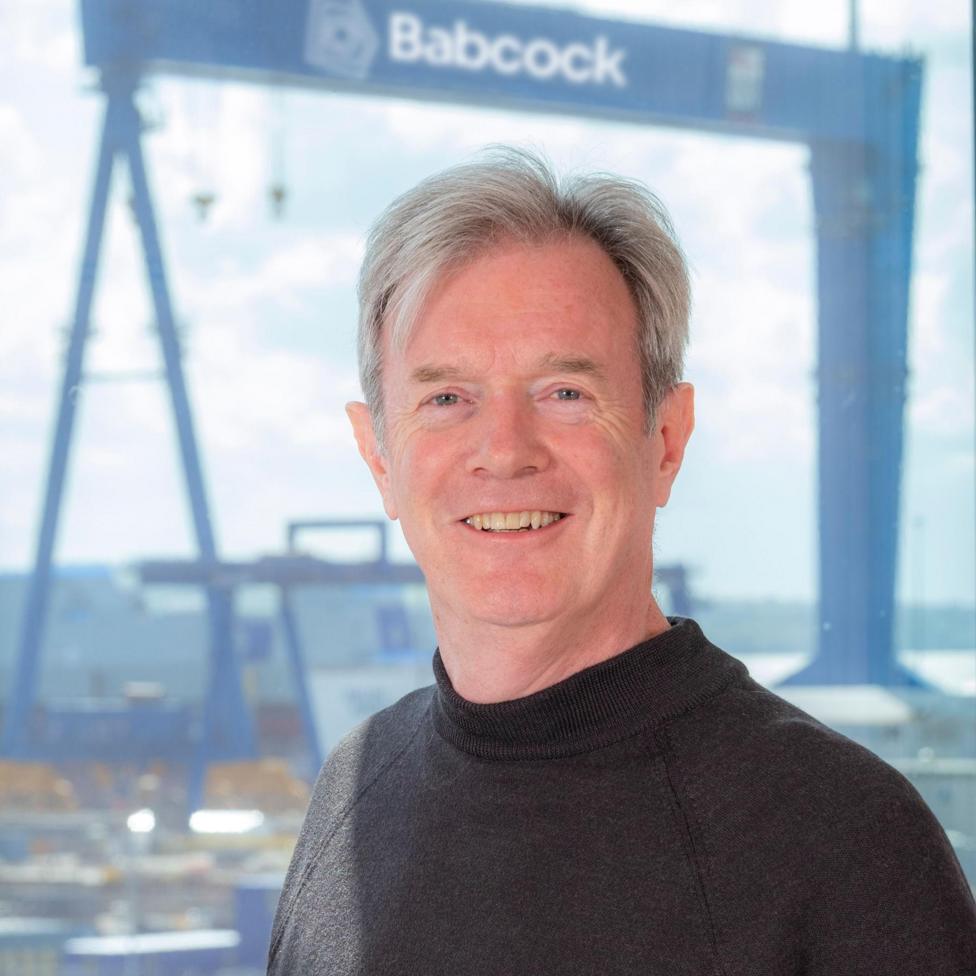
Sir Nick Hine, chief executive of Babcock's marine division and former Second Sea Lord in the Royal Navy, suggests these ships would logically follow the Type-31s.
"I don't want to count chickens, you're never any good until you've actually got the contract signed and even then you want the cash.
But let's be really clear, the Defence Investment Plan is positive for Babcock, it's positive for UK industry and it's positive for Rosyth."
BAE Systems is also optimistic about benefiting from the new plans, though other potential contractors exist.
Last year, the Spanish state-owned shipbuilder Navantia acquired Harland & Wolff in Belfast, where it is currently constructing two large "Fleet Solid Support" ships, which are supply vessels for the Navy's aircraft carriers.
Additionally, Balaena, a new company, recently took over the Cammell Laird shipyard in Merseyside along with the A&P yards in Tyneside and Falmouth.
Although Scottish shipyards may appear to be frontrunners, as Sir Nick Hine notes, contracts are not guaranteed until officially awarded.
The Ministry of Defence might ultimately grant contracts to a consortium comprising some or all of these firms.
Which sites in Scotland might benefit?
Regardless of the lead contractor, there will be an emphasis on distributing benefits across the UK.
Modern shipbuilding typically employs a modular approach, where sections are constructed at different shipyards and later assembled.
This method was used for the two aircraft carriers assembled at Rosyth over a decade ago and influenced the 2016 Parker Review, which aimed to enhance naval shipbuilding efficiency and sustainability.
Cammell Laird currently builds bow sections for Type 26 frigates and transports them by barge from their Birkenhead facility to Govan on the Clyde.
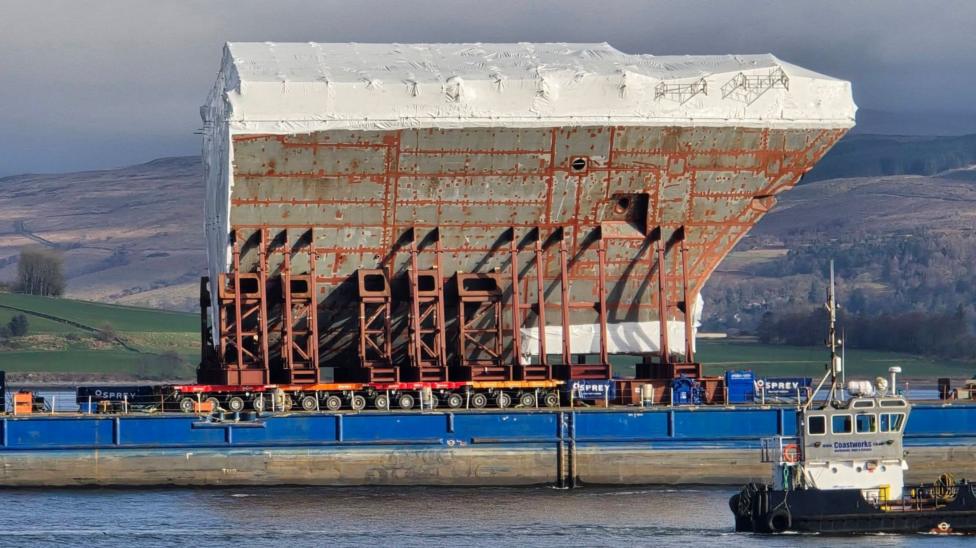
Ferguson Marine in Port Glasgow has also produced smaller components for these ships.
It is anticipated that shipyards and fabrication sites throughout the UK will contribute to building parts of the new CCV motherships and drone vessels.
This could also benefit smaller Scottish sites.
The former BiFab fabrication yard at Methil in Fife, which previously struggled to capitalize on offshore wind turbine demand, is now part of the Harland & Wolff group and showing improvement.
The Methil site recently delivered a large barge intended to transport ship blocks from Devon to the main Belfast shipyard and is being considered for constructing three new floating dry docks for the Faslane submarine base.
Regarding Methil, there is speculation that The Proclaimers may need to revise their famous deindustrialization song, "Letter to America."
Another Harland & Wolff fabrication site at Arnish, on the Isle of Lewis, could also contribute, although it currently focuses on the renewables sector.
State-owned Ferguson Marine is awaiting new ship orders promised by the Scottish government before the election, as construction of MV Glen Rosa, the second of two dual-fuel CalMac ferries, nears completion.
Nearby in Greenock, the large Inchgreen dry dock, largely unused for two decades but one of the few UK facilities capable of handling an aircraft carrier, appears to be preparing for an undisclosed project.
Jointly owned by Inverclyde Council and Peel Ports, Inchgreen recently received £20 million in UK government funding to repair its flooded pump room and aging dock gates.
The supply chain should also be considered.
High-tech defence companies such as Thales in Glasgow, Leonardo in Edinburgh, and Raytheon in Glenrothes and Livingston are expected to play roles.
The ripple effect may extend to the Western Isles, where defence research firm QinetiQ operates drone testing facilities on Benbecula and South Uist.
Political rows and the 'elephant in the room'
Large public expenditures on weapons manufacturing, combined with differing political parties governing Holyrood and Westminster, are likely to generate political disputes.
The largest spending component in the DIP is nuclear weaponry, which the SNP and Scottish Greens criticize as immoral, outdated, and excessively costly.
Conversely, proponents of the UK's "independent nuclear deterrent" argue that recent events in Ukraine and the Gulf underscore its importance, especially amid concerns about the reliability of the US as an ally.
Until recently, the Scottish government refused to allocate public funds to support munitions manufacturing, raising concerns that plans for a specialist submarine welding centre on the Clyde might be jeopardized.
Labour's former Defence Secretary John Healey accused the SNP of "student politics," while a Scottish government cabinet minister defended the longstanding and "principled" position on BBC Scotland's Sunday Show.
Subsequently, John Swinney quietly reversed this policy as part of a statement on Gaza, citing changes in the global context.
The Scottish Greens, who often support the minority SNP government, remain skeptical.
Another issue concerns funding sources.
Sir Keir Starmer acknowledges that non-military budgets may face further reductions.
This raises questions about the impact on funds transferred from Westminster to Holyrood through "Barnett Consequentials," which could provoke further political debate.
BAE's Scotstoun yard, where Type 26 frigates are outfitted, also hosts a new shipbuilding academy.
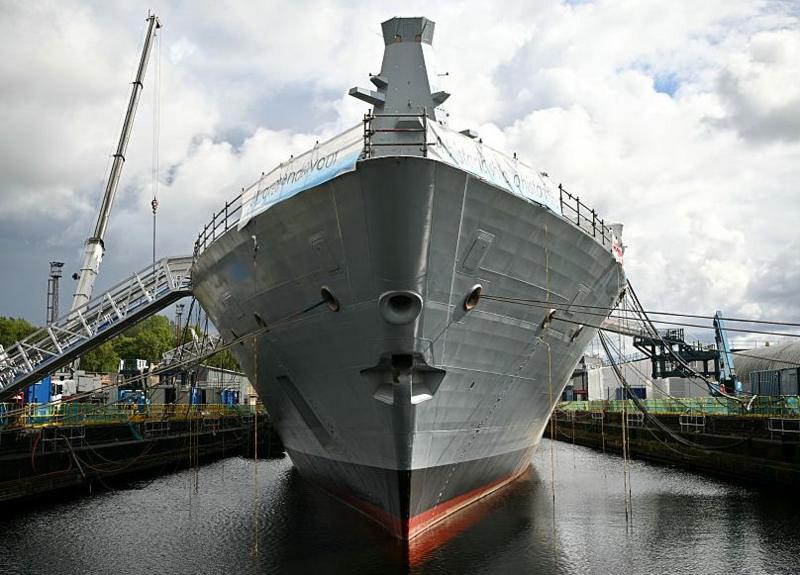
A more complex challenge, often described as the "elephant in the room," is whether Scotland has sufficient skilled workers to construct these ships.
The core workforce at Scottish shipbuilders is primarily local, but during peak demand periods, hundreds of welders, platers, and electricians have been recruited from countries including Poland, Romania, and the Philippines.
Unions express concern that this creates a two-tier workforce and advocate for intensified efforts to train a new generation of shipbuilders.
Scottish shipyards maintain strong apprenticeship programmes, and BAE has established a shipbuilding academy at Scotstoun.
However, rebuilding the extensive skills and experience lost during Scotland's late 20th-century shipbuilding decline is a long-term challenge.
Investing in new military hardware is one matter; investing in human capital is another, and time is limited.
- 'I went from being a cleaner to building a warship'
- Clyde shipbuilding welding centre back on track after UK funds pledge


