
First Minister Signals Shift on North Sea Oil and Gas Drilling
First Minister John Swinney has indicated a softening in his approach to new oil and gas drilling in the North Sea. The SNP leader emphasized that energy security should be a factor in any new decisions regarding further exploration, which remain under the jurisdiction of the UK government, especially as oil prices surge due to the conflict involving Iran.
In 2023, the Scottish government established a presumption against licensing new offshore fossil fuel developments. However, Swinney has repeatedly declined to reaffirm the SNP's commitment to maintaining this stance.
The Scottish Greens have criticized the SNP, suggesting they are no longer earnest about addressing the climate crisis.
Oil prices experienced a sharp increase on Wednesday following statements by US President Donald Trump, who warned that the US military would respond "extremely hard" to Iran amid ongoing tensions.
The conflict involving the US and Israel against Iran has effectively resulted in the closure of the Strait of Hormuz, a critical shipping route through which a significant portion of the world’s energy supplies transit.
The price of Brent crude oil, the international benchmark, rose from approximately $70 in late February to over $100 by late March, triggering record increases in petrol and diesel prices.
Control over licensing for oil and gas exploration in the North Sea rests with the UK government, which under Labour has maintained a policy against permitting new developments. However, this opposition has softened since the last general election, with approvals granted last year for new drilling on or near existing fields, known as "tiebacks."
UK Energy Secretary Ed Miliband and the North Sea Transition Authority, the industry regulator, are currently reviewing whether to approve two significant new oil and gas projects—Rosebank and Jackdaw—following a court ruling that requires consideration of the climate impact of the fossil fuels produced.
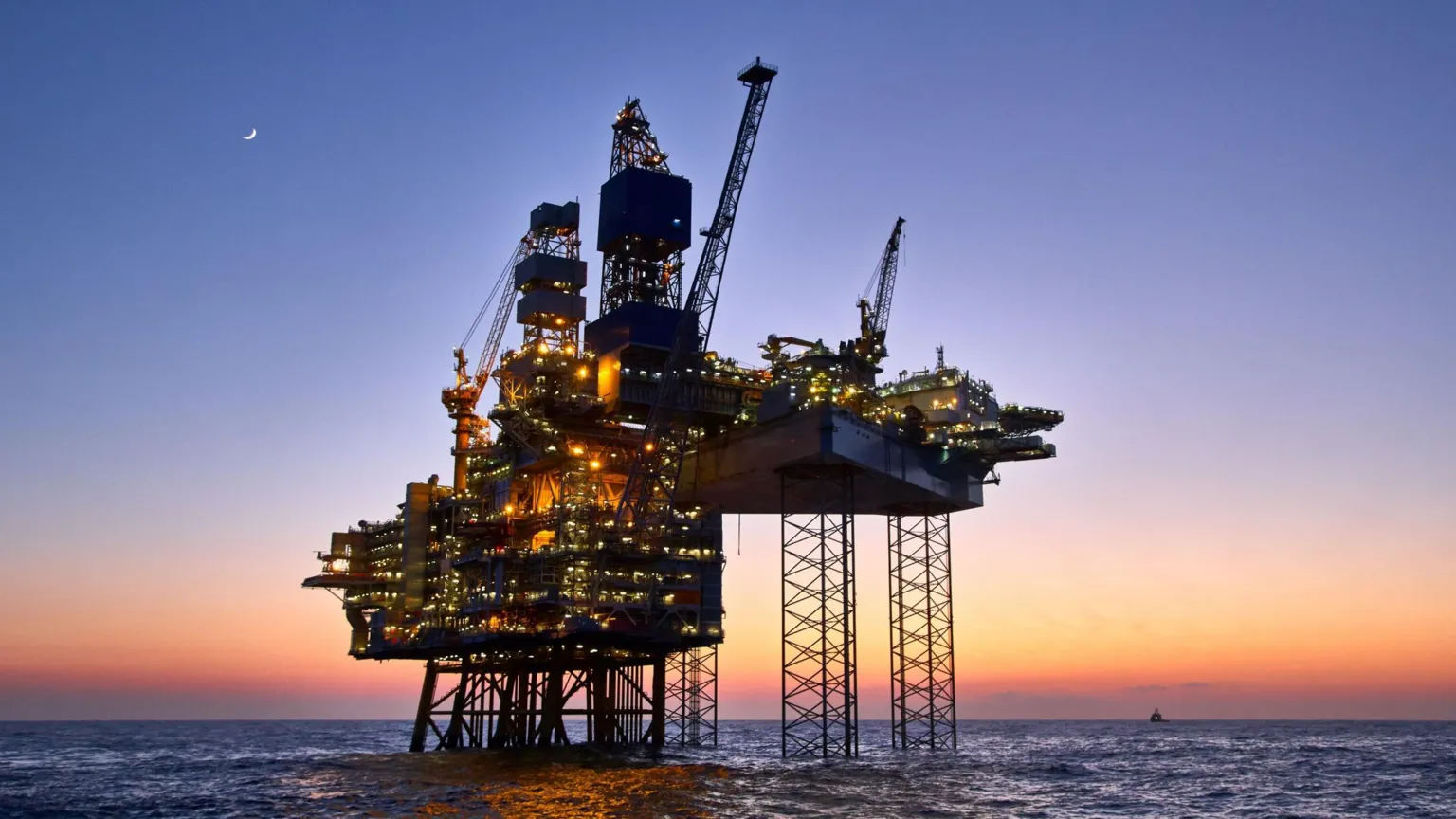
Jackdaw, located about 150 miles east of Aberdeen, is a gas field that could be connected to the UK network within months. Rosebank, situated roughly 80 miles northwest of Shetland, is the UK’s largest untapped oil field, also producing some gas, but it will take longer to become operational.
Swinney has consistently stated that new oil and gas projects must meet climate compatibility tests. However, while campaigning in Edinburgh ahead of the upcoming Holyrood election, he acknowledged that energy security has become a "more significant" consideration when deciding whether to support new North Sea drilling.
"Any proposed projects must take into account the need for energy security for households and businesses in Scotland," Swinney said.
Despite this, the First Minister repeatedly declined to confirm whether the SNP had abandoned its presumption against new North Sea developments.
Political Responses to North Sea Drilling
In Edinburgh, Scottish Liberal Democrat leader Alex Cole-Hamilton stated that permission for Rosebank and Jackdaw should be seriously considered if the projects are found to be more environmentally sound than importing oil and gas from "potentially sketchy regimes." He also pledged that his party would implement a 10p cut in fuel duty if elected next month.
Labour leader Anas Sarwar, who supports drilling at Rosebank and Jackdaw, called for a "balanced approach" that combines oil and gas use, renewables, and the removal of the Scottish government’s effective ban on nuclear power.
Calls for Increased Drilling and Renewable Transition
Scottish Conservative leader Russell Findlay, speaking in Midlothian, advocated for the UK to "drill baby drill." While supporting a long-term transition to renewables, he emphasized that oil and gas will remain necessary for years and that uncertainty over UK policy has cost jobs.
Conversely, Scottish Green co-leader Ross Greer told BBC Scotland News that increasing reliance on oil and gas would undermine the country’s energy security. He argued that the solution lies in switching to "clean, green renewable electricity."
Reform UK, which did not hold a media event on Thursday, has committed in its Holyrood manifesto to North Sea oil and gas exploration and opposes "all SNP net-zero related targets."
Although offshore drilling is controlled by Westminster, the Scottish government retains authority over planning and onshore facilities, which can influence offshore production.
Nicola Sturgeon’s government advocated for the "fastest possible managed and just transition away from dependence on oil and gas." Her successor as First Minister, Humza Yousaf, described consent for the Rosebank oil field as the "wrong decision."
Swinney’s position has been complicated by the fact that his government did not publish an energy strategy before the Scottish Parliament adjourned ahead of next month’s Holyrood election. The last draft plan, published in 2023, included a "presumption against" new oil and gas developments.
In 2024, Swinney criticized the former Conservative UK government for what he called "climate denial of the first order" when it announced plans to open 100 new oil and gas fields without scrutiny.
Chancellor Rachel Reeves told the BBC this week she was "very happy" to support drilling at Jackdaw and Rosebank due to the positive effects on "jobs and tax revenue." However, Energy Secretary Ed Miliband recently stated that the lesson from the current crisis is the UK’s need for "home-grown, clean power that we control."
Would North Sea Drilling Improve Energy Security?
According to industry body Offshore Energies UK, oil and gas currently supply about 75% of the UK’s energy needs and are projected to meet about 20% of demand by 2050.
Professor Paul de Leeuw, director of the Energy Transition Institute at Robert Gordon University, emphasized that while it is essential to transition to greener energy, having the North Sea nearby is advantageous for the UK during an energy crisis.
"It is particularly helpful on gas, which can pump straight into the gas system here," he told BBC Scotland News.
"And it is helpful for oil resilience in the region, because, even if we might not be able to refine the crude oil ourselves, we get it back as refined products, and that, of course, is benefiting all the consumers here."
Professor de Leeuw noted that Jackdaw could supply about 6% of the UK’s gas demand. He explained that the UK obtains approximately 85% of its gas from the North Sea—from both UK and Norwegian sources—with the remainder mainly comprising liquefied natural gas imported from the US.
Due to the Middle East crisis, demand and prices for US gas supplies are increasing.
Professor de Leeuw added that Rosebank would take longer to become operational. Most of its oil, owned by multinational companies, would be shipped to the Netherlands because the UK’s remaining refineries are not equipped to process the heavier crude oil extracted from the North Sea. The refined products, such as diesel or jet fuel, would then need to be reimported to the UK.
He further stated that opening Rosebank and Jackdaw would enhance energy security in Europe, which is heavily dependent on imports from other regions, aligning with Sir Keir Starmer’s aim to strengthen economic ties with the EU.
Impact of Rosebank and Jackdaw on Climate Emissions
Shell estimates that gas from the Jackdaw field could produce 35.8 million tonnes of carbon dioxide over its lifetime, equivalent to 90% of Scotland’s emissions in 2023. However, the company suggests the field is more likely to produce about 23.6 million tonnes, or 60% of the 2023 figure, which is less than emissions from imported gas.
Downstream emissions from Jackdaw are significantly lower than those projected for the Rosebank oil field, where extracted oil is expected to generate nearly 250 million tonnes of carbon dioxide over its lifetime.
Paul Morozzo, senior climate campaigner for Greenpeace UK, argued that increasing North Sea drilling would not enhance energy security.
"Any oil and gas belongs to the company that drills it and will be sold at global market prices to the highest bidder," he said.
"Homegrown renewables are already providing far more of our electricity than fossil fuels, and as the economy electrifies the role of oil and gas will continue to shrink."
Morozzo added that expanding wind and solar power would reduce dependence on oil and gas and create more secure jobs.
"They are also our best insurance policy against the fallout from wars and the impacts of climate change."


