

Emergency Response to Bedford Train Collision
Emergency services from across the region responded swiftly to a train collision near Bedford on Friday night. Initial fears anticipated "100 casualties and up to 20 fatalities," according to officials involved in the response.
Daryl Brown, chief executive officer of the Cambridgeshire-based Magpas Air Ambulance, described the immediate response as "spectacularly quick," attributing the effectiveness to extensive training that he believes saved lives.
The Magpas unit was the first air ambulance on the scene, with seven helicopters attending from various parts of the country.
Train driver Shaun Burton, aged 60, tragically died when two East Midlands Railway (EMR) services bound for London St Pancras collided at approximately 17:15 BST on Friday.
More than 100 people have been treated for injuries sustained in the collision. British Transport Police confirmed that 53 remain hospitalized, with eight patients in critical condition.
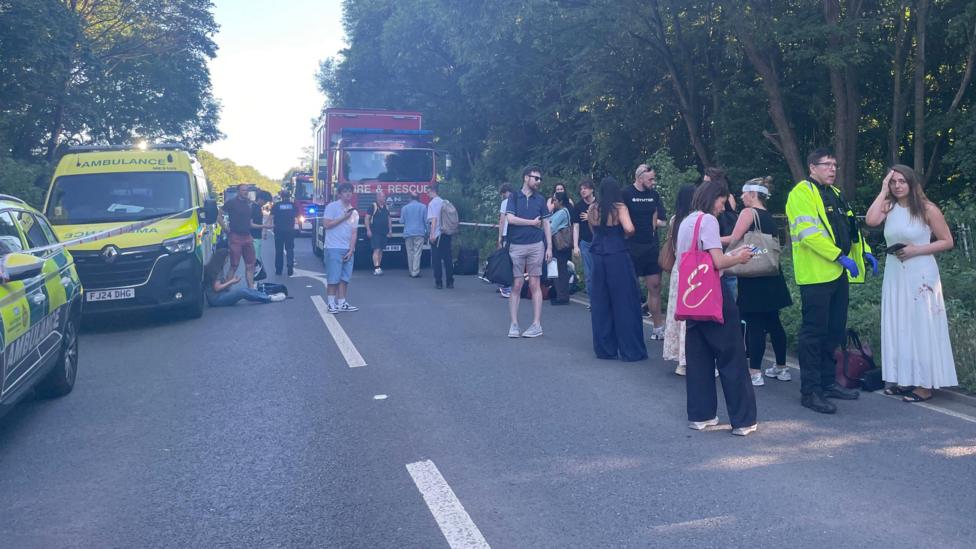
Air Ambulance and Emergency Services Involvement
Brown noted that several air ambulance services attended the incident, including the East Anglian Air Ambulance, Essex & Herts Air Ambulance, London's Air Ambulance, Midlands Air Ambulance, and the Air Ambulance Service.
"With other emergency service partners, our teams provided advanced critical care to those who were seriously injured," Brown said.
The major incident was declared at 17:15, and Magpas had a helicopter airborne by 17:19. The initial crew dispatched by air consisted of a pilot, a technical crew member, a doctor, a paramedic, and a second doctor.

Brown referenced a previous incident where the same team responded to a critical injury involving a three-year-old boy who ended up in a crocodile enclosure near Huntingdon.
From their base at Alconbury Weald, Brown established a crisis command and deployed 10 medical team members who treated 30 of the most seriously injured patients.
"My thoughts and deepest condolences remain with everyone affected by this tragic incident," Brown added.
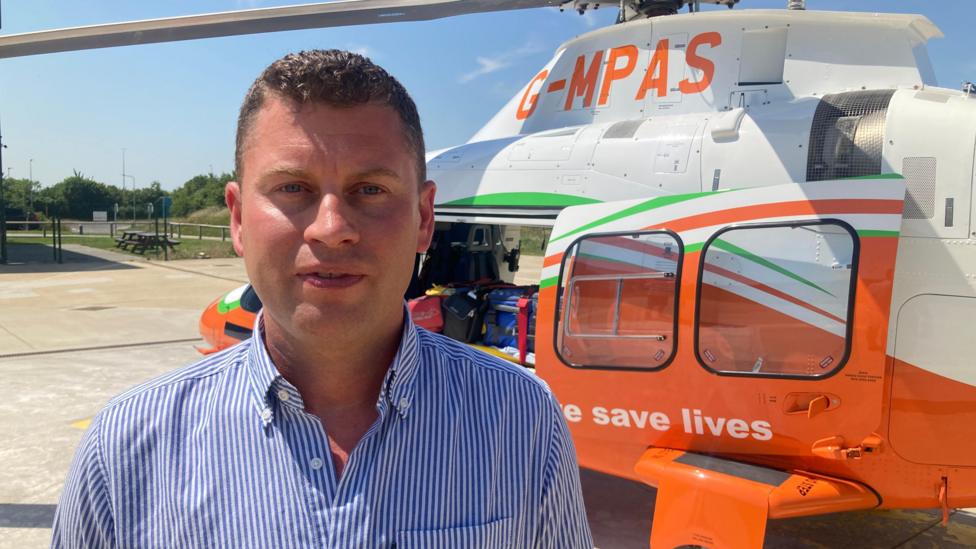
"I think there are many more people alive, thanks to the efforts of not just our air ambulance, there were seven air ambulance teams on scene, the police, the fire, the ambulance service," he said.
One patient treated by the charity was transferred to Oxford's John Radcliffe Hospital. Other hospitals involved in treatment included Addenbrooke's Hospital in Cambridge, Bedford Hospital, and Luton and Dunstable University Hospital.
The Beds & Herts Emergency Critical Care Scheme contributed by sending nine volunteers, including doctors and paramedics, to the scene.
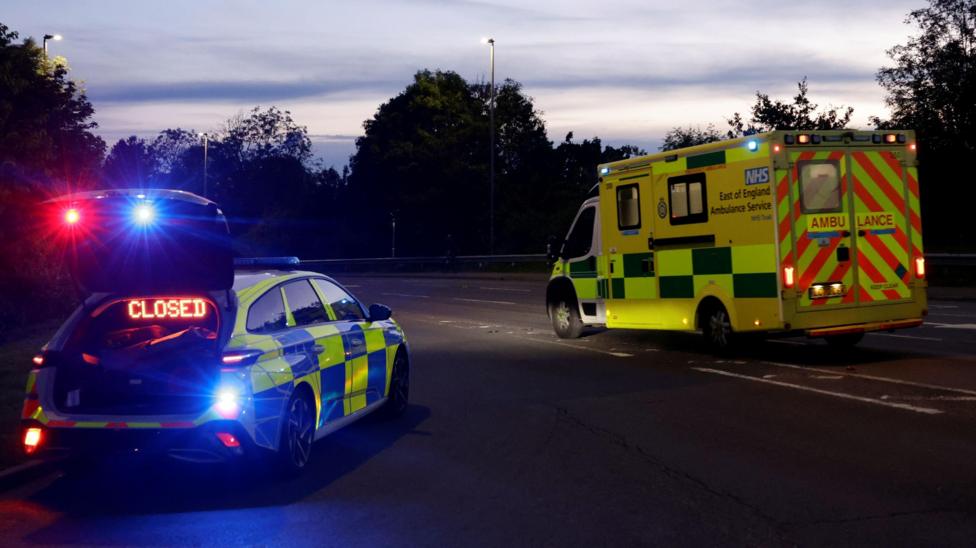
Coordination and Medical Technology
Brown explained that the charity collaborated with major trauma networks and ground crews to determine optimal patient destinations and to notify hospitals in advance.
"Some of the sophisticated diagnostic stuff that we're all carrying these days we can send images to the hospitals, with things like CT scans so the hospitals know exactly what is coming in and be prepared," he said.
"The most important thing with the air ambulances is that we bring the hospital to the patient.
All the initial things that would need to be done in the resus or through the emergency department are just bypassed and that patient can sometimes be taken directly into surgery."
Magpas regularly responds to major incidents and was first on the scene of a knife attack on a train in Cambridgeshire.
"We're pretty well versed in it sadly, but also there is a fantastic system across the whole of the NHS and emergency services, where we get together and we train and we train and we train for these events."
Readers with story suggestions for Beds, Herts, or Bucks are encouraged to contact the news team.
Get in Touch
Follow Beds, Herts and Bucks news on , Facebook, Instagram, and X.
- Community comes together after fatal crash
- 'All of us are devastated by death of train driver'
- Boy, 3, no longer critical after crocodile attack
Related Internet Links
- East of England Ambulance Service


