

Wildlife Species Shortlisted for Future Banknotes
Eighteen species of animals, birds, and insects have been shortlisted to appear on forthcoming Bank of England banknotes. The public is invited to participate in selecting which creatures will be featured.
The selection process offers species such as the colourful kingfisher and the common frog an equal opportunity to be depicted on the next series of £5, £10, £20, and £50 notes.
Earlier this year, the decision to replace historical figures, notably Sir Winston Churchill, with British wildlife sparked significant political criticism.
Currently, the public has one month to provide their opinions on which wildlife species should be honoured on the banknotes.
The shortlist was compiled by a panel of wildlife experts and deliberately excludes household pets. Voters may select up to six favourite species from the list.
To avoid frivolous nominations, such as the anticipated "Stoaty McStoatface" jokes, voters cannot propose alternatives beyond the shortlist.
"I very much hope the public will enjoy engaging in our consultation to choose the animals to feature on our next series of banknotes," said Victoria Cleland, the Bank's chief cashier, whose signature appears on banknotes.
"The shortlisted animals demonstrate the rich variety of wildlife we have to celebrate in the UK."
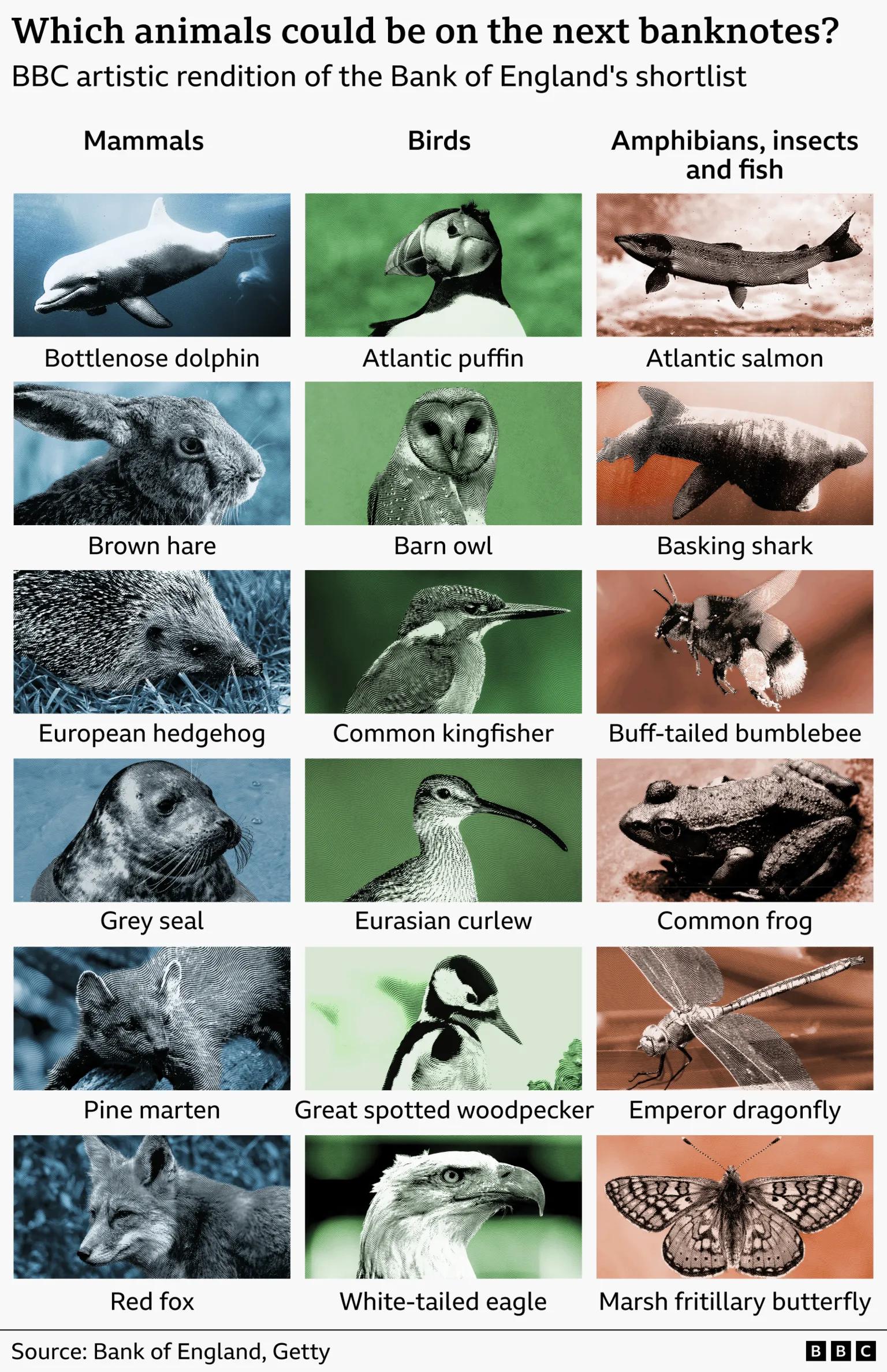
Public Voting Process
Each new banknote will feature one animal or bird. The public can select up to two favourites from each of three categories on the shortlist before the voting deadline on 3 July.
The mammals category includes: bottlenose dolphin, brown hare, European hedgehog, grey seal, pine marten, and red fox.
The birds category features: Atlantic puffin, barn owl, common kingfisher, Eurasian curlew, great spotted woodpecker, and white-tailed eagle.
The amphibians, insects, and fish category comprises: Atlantic salmon, basking shark, buff-tailed bumblebee, common frog, Emperor dragonfly, and marsh fritillary butterfly.
The expert panel responsible for selecting the contenders consists of wildlife filmmakers and presenters Gordon Buchanan, Miranda Krestovnikoff, and Nadeem Perera, alongside Ulster Wildlife's Katy Bell, and academics Steve Ormerod and Dawn Scott.

However, the final decision rests with Bank of England governor Andrew Bailey, who is not obligated to choose the four animals receiving the highest number of public votes.
The design, testing, and printing process for the new notes will take several years before they enter circulation.
The upcoming series will continue to include a portrait of the monarch, as well as images representing the home nations.
For the first time since 1970, the reverse side of the notes will no longer feature notable historical figures.
Currently circulating notes, in ascending order of value, display former Prime Minister Sir Winston Churchill, author Jane Austen, artist JMW Turner, and mathematician and wartime codebreaker Alan Turing.
Political Reactions to Changes
The removal of wartime leader Churchill from the banknotes was particularly controversial among politicians earlier this year.
"They propose we replace people like him with a picture of a beaver," said Reform Party leader Nigel Farage, although the beaver did not make the final shortlist.
"I can't think of a worse time to do this with a war waging in Europe," stated Liberal Democrat leader Sir Ed Davey.
Conservative leader Kemi Badenoch described the decision as "a silly thing to do."
The Bank of England explained that the primary reason for replacing images on banknotes is to combat counterfeiting, necessitating periodic updates.
Emma Soames, Churchill's granddaughter, told the BBC she never expected her grandfather's image on the £5 note "was going to go on forever."
When asked how she would feel if Churchill were replaced by a badger, she responded, "Well, lucky badger or lucky grandpapa," adding that a suitable substitute should be a very brave and courageous animal.
The badger also did not make the shortlist.
The RSPCA advocated for rats, pigeons, foxes, and gulls as intelligent and "under-appreciated" animals deserving representation. Of these, only the fox is included among the contenders.
Wildlife imagery already appears on banknotes issued by the Royal Bank of Scotland, featuring species such as mackerel, otters, red squirrels, and osprey.


