

Phillipson Reassures Parents on EHCP Access Amid SEND Reforms
Bridget Phillipson addressed concerns from parents regarding the accessibility of Education, Health and Care Plans (EHCPs) under the forthcoming SEND reforms. After delivering a speech, she responded to journalists' questions.
"My message today to parents is that we are going to take away that fight that so many parents have had over such a long period of time to get the support that should be much more readily available to their children."
When asked about reassurance for parents worried about obtaining EHCPs for their children, Phillipson explained:
"So I spent a lot of time speaking with parents, with young people, and with those who support children to understand what needs to change. And what I’ve heard time and again, is that increasingly, EHCPs have become the only way to get what your child needs, the only way to get that support. And we have to change that. We have to make much more support available far more quickly, including specialist provision like speech and language support and educational psychologist support to."
She also noted that the new system will be introduced gradually, with implementation starting from 2030.

Department for Education Publishes Consultation Paper on SEND Reforms
Phillipson Highlights Impact of Doubling Full Maternity Pay for Teachers
In response to questions about staffing to deliver enhanced support, Phillipson referenced the white paper published that day, outlining government plans to recruit an additional 6,500 teachers as pledged in the manifesto. She remarked that retention rates for women teachers are at their highest since 2010 and emphasized that doubling the duration of full maternity pay for teachers would make "a huge difference."
Reforms to Expand Rights for SEND Children via Individual Support Plans
Phillipson stated that the reforms would result in an expansion of rights for children with SEND through the introduction of Individual Support Plans (ISPs):
"We will see an expansion in the rights that children have. So more children will get support than is the case right now through individual support plans (ISPs). So an expansion in children’s rights and making sure that more children are able to get that specialist support that at the moment can only be accessed through an education, health and care plan (EHCP)."
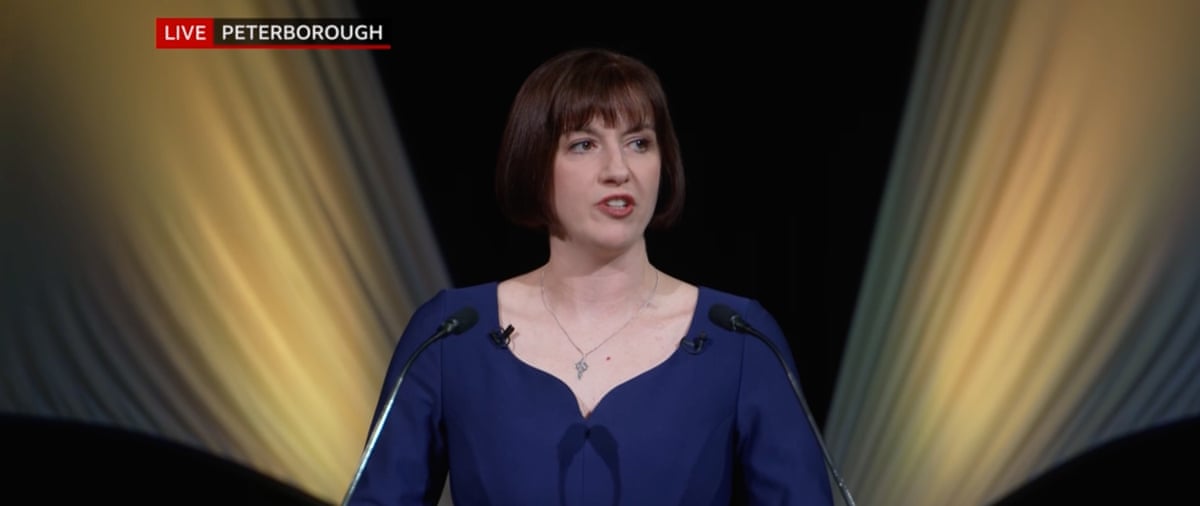
Speaking at an event in Peterborough, Phillipson emphasized the importance of inclusion:
"Inclusion is a choice. It is an educational choice, and it is also a political choice because we could duck this challenge, ignore the injustice of a postcode lottery in life chances putting off fixing the SEND system yet again. The system works well for some at least. [But] that’s just not good enough. Our moment calls for courage because before us [there is a] once in a generation chance for change."
Council for Disabled Children Welcomes Government’s Vision
Richard Adams, ’s education editor, reported that the Council for Disabled Children, representing the SEND sector and comprising over 300 voluntary and community organizations, has supported the government’s SEND reform plans. Amanda Allard, the council’s director, said:
"We welcome the scale of vision contained in the white paper which has the potential to create an education system that fully values children and young people with additional needs and their families. We also welcome the commitment to retain statutory education, health and care plans (EHCPs) for children and young people whose needs cannot be met through this new model. We know that many parents will welcome the legal requirement for schools to create individual support plans (ISPs) for all children with SEND. At the same time we know they will be concerned to understand how accountability will work. The consultation launched today is an opportunity to clarify those details, ensuring families have clear routes to action where these ambitions are not being delivered."
Reduction in Number of EHCPs Expected Under SEND Overhaul
According to Kiran Stacey, hundreds of thousands fewer children with special educational needs and disabilities (SEND) will receive EHCPs following the reforms announced by Phillipson. The new approach will reserve EHCPs for children with particularly severe or complex needs. Millions of children will instead receive Individual Support Plans (ISPs), which are less formal and agreed with schools. These may include access to psychologists, therapists, and "inclusion bases" within schools.
The reforms aim to address the rapid increase in EHCPs, which has created a multibillion-pound deficit in local authority finances. Government projections indicate that EHCPs will decline from nearly 8% of pupils in 2029-30 to under 5% by 2034-35, representing a reduction of approximately 270,000 children if pupil numbers remain stable.
Recently, The Times reported a case where a council spent nearly £20,000 annually on horse therapy for a child’s special educational needs, which sparked debate. Education Minister Georgia Gould, in an interview with Times Radio, declined to criticize horse therapy but emphasized the need for consistent provision nationwide to address the current postcode lottery.
NAHT Welcomes £4bn Funding Boost for SEND Provision
The National Association of Head Teachers (NAHT) responded positively to the government’s £4bn funding commitment for SEND reforms. General Secretary Paul Whiteman stated:
"We believe the government’s approach of looking at the whole child, from birth to adulthood, is the right one, with a focus on early intervention, local provision, inclusion of pupils within mainstream settings where appropriate, and collaboration with external services like social care and health. Crucially, the success or failure of these plans relies on there being sufficient funding – and on the availability of support services. The money announced is significant, and it is good that it is largely aimed directly at schools. We will now be looking closely at the details and speaking to school leaders across the country to assess the viability of the proposals and whether the investment is enough."

Starmer Advocates Inclusion, Citing Evidence of Better Outcomes in Mainstream Schools
Keir Starmer has actively promoted inclusion for SEND pupils, contrasting with past political debates. He stated:
"[The current SEND] system that works for nobody. It forces parents into a grinding, adversarial fight to get ‘one size fits all’ support. It encourages private equity vultures to rip off the taxpayer by charging up to five times more for a precious special school place. Meanwhile, for so many children it simply writes off their potential. Insisting, against all evidence, that they could not thrive in a supported and inclusive mainstream school. We should be crystal clear on this last point: inclusion works. Not for every kid – of course some children need extra support in a specialist institution. That’s why today we are investing in 60,000 extra specialist places. Nonetheless, the evidence shows that pupils in a mainstream setting achieve around half a grade higher in GCSE English and maths than similar pupils in special schools. And so we are also investing heavily in inclusion – in teacher training, early intervention, extra teaching assistants, and above all, in SEND support that is quicker and more personalised to an individual child’s needs."
Institute for Fiscal Studies Describes Funding Increase as Significant
Luke Sibieta of the Institute for Fiscal Studies commented on the SEND reform funding:
"The government is proposing a major set of reforms, with more funding and support provided upfront through mainstream schools– as already happens in Scotland and Wales. To enable this change, the government will provide about £1bn per year to mainstream schools and local authorities to deliver more support and specialist services. This is a reasonably significant change, considering that extra SEND funding for mainstream schools and local authority support services currently totals about £5bn per year. The government will be hoping that more upfront support and early intervention saves them money by reducing the need for expensive support currently provided through education, health and care plans (EHCPs). Reform will be a long and complicated process. If mainstream schools are to play a bigger role, how can we be sure they make decisions in a consistent and fair way? A new funding system will be needed to ensure resources are targeted across schools to where they are needed. There will need to be a plan to upskill and expand the workforce to ensure mainstream schools can play an expanded role. The government will need to manage the transition carefully to ensure minimal disruption to existing support for pupils. More focus on outcomes will also be needed to improve quality."
Starmer Reflects on Brother’s Experience to Explain SEND Reform Commitment
Keir Starmer has frequently spoken about his late brother Nick, who passed away in 2024 and had learning difficulties. He shared:
"My father always used to say: ‘Nick has achieved just as much as you, Keir.’ It was a pointed observation. Like so many working-class children of my generation, I was the first in my family to go to university. And for families like ours, there is deep pride in that. Inevitably, you get put on a pedestal. But my dad was right. I believed him then and I believe him just as strongly now. Because I saw how much Nick had to fight every day just to be seen. To count. To be recognised by an education system that never had any expectations for him because he had difficulties learning. And Nick did fight. Taught by my mum, he defied those who told him he would never be able to read. Abandoned by the traditional education system, he went to college to get technical qualifications. He ignored the name-callers, the doubters, the people who prefer to look away, and he grafted, just as much as I have, every single day. And so I feel an immense personal sadness that, in the end, he did not quite achieve the level of basic comfort in his life that my parents and I wanted for him."
Starmer often uses the phrase "difficulties with learning" rather than "learning difficulties," a distinction noted by educationalists. According to his biography by Tom Baldwin, Nick suffered complications during birth and had severe learning difficulties. It is likely that, under current systems, Nick would have qualified for an EHCP.
Starmer also highlighted the broader need for reform in education to value all children’s contributions, noting:
"I want this country to see and value the contribution every single person can make. It’s a cause that can only start with an education system grounded in those same values. I should be clear – Britain has come a long way since the Seventies and Eighties. For all our problems, we do have a more inclusive and tolerant society. Our schools have improved markedly, under both Labour and Conservative governments. But not for every child. Not for the white working-class kids, who now get some of the worst grades of any social group. Not for the kids whose gifts lie in their hands and want a good quality apprenticeship in their community. And not for the children who face that same battle Nick faced just to be seen as deserving of educational excellence."
Department for Education Details £4bn SEND Investment
The Department for Education outlined plans to invest £4bn over three years to improve SEND provision in English schools:
- £1.6bn over three years to provide targeted and small group interventions at early signs of additional needs across early years, schools, and post-16 settings, supplementing existing SEND funding.
- £1.8bn over three years for "Experts at Hand," enabling councils to commission local professionals such as educational psychologists, occupational therapists, and speech and language therapists to be routinely available, regardless of EHCP status. Special and alternative provision schools will provide expert training, direct interventions, and short-term placements. An average secondary school will receive over 160 days of specialist time annually.
- Over £200m to ensure every community’s Best Start Family Hub offers dedicated SEND outreach and support.
- £200m to assist local authorities in transforming operations in line with reforms while maintaining current SEND services.
- £200m to train every teacher to support children with SEND, representing the largest SEND training initiative in English schools, with a new requirement for all teachers to receive SEND training.
- Creation of 60,000 new SEND places, including 10,000 already delivered, supported by over £3.7bn investment.
Taken together, these investments aim to build a SEND system markedly different from the current experience of families.
Teaching Unions Critique Funding as Insufficient
Despite the funding announcement, some teaching unions expressed skepticism. Matt Wrack, general secretary of the NASUWT, stated:
"While increased early support for SEND is welcome, years of underfunding and diminished external services mean that this new funding is barely a drop in the bucket of the investment necessary to drive real improvement in schools. £1.6bn over three years may sound like a lot of money, but it equates to just a few thousand pounds per setting. It is absolutely ridiculous to suggest that SEND provision can be adequately overhauled with this low level of funding, or that the associated workloads for teachers could be in any way offset by throwing a bit of money in their general direction."
Estimates suggest the funding equates to approximately £20,000-£40,000 annually for primary schools and £50,000-£70,000 for secondary schools.
Political Context and Upcoming Events
The government’s SEND reforms follow previous controversies, including the shelving of disability welfare payment restrictions, which created financial and political challenges. The SEND reforms are seen as a potential flashpoint due to cost containment and parental concerns.
Bridget Phillipson has led extensive consultations to address concerns among parents and MPs, with many expressing cautious optimism about improved provision, especially for disadvantaged children.
Key events scheduled for the day include:
- 10:30am: Bridget Phillipson delivers a speech in Peterborough on SEND reforms and the schools white paper.
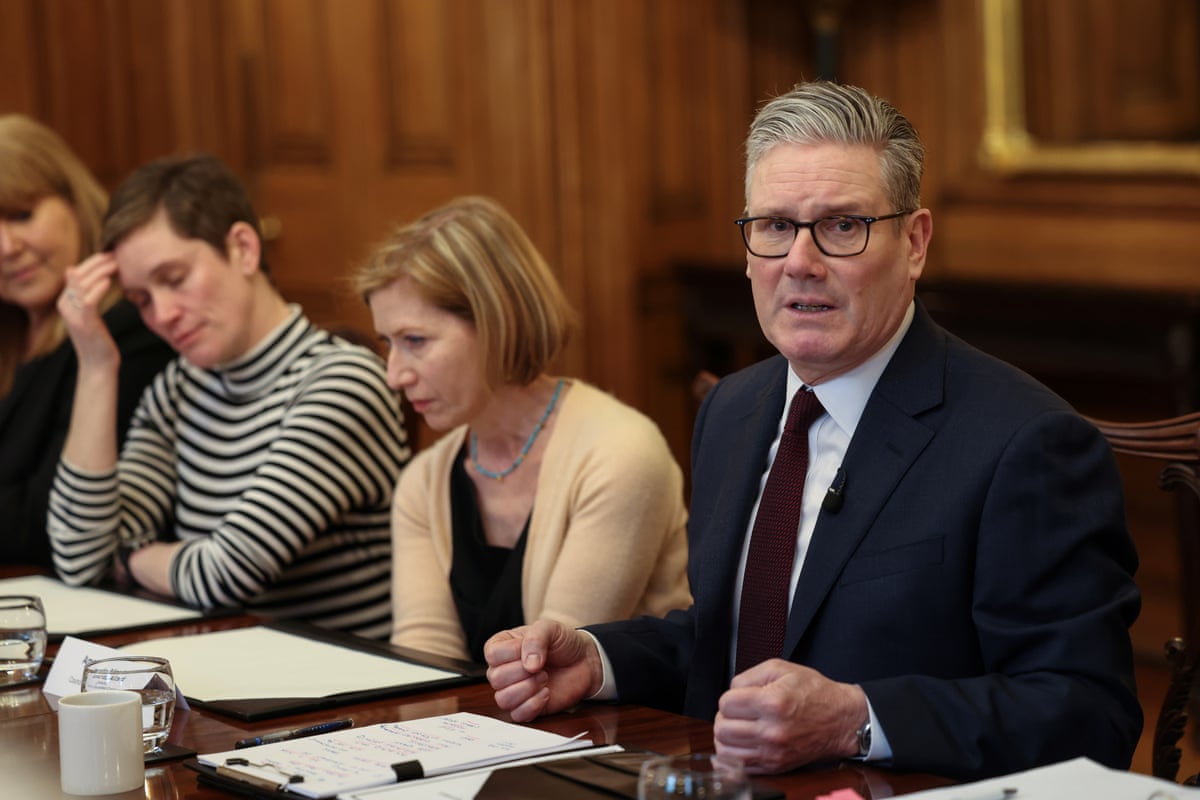
- Morning: Keir Starmer hosts a roundtable event on SEND reforms.
- 11:00am: Department for Education publishes the schools white paper.
- Morning: Kemi Badenoch promotes the Conservative party’s agenda in London and appears on Radio 2’s Jeremy Vine show.
- 11:00am: Zia Yusuf, Reform UK’s home affairs spokesperson, speaks in Dover.
- 2:30pm: Steve Reed, housing secretary, answers questions in the Commons.
- 3:30pm: Ministers respond to urgent questions; topics may include the Chagos Islands, Iran, tariffs, and royal succession.
- Afternoon: Phillipson makes a statement to MPs on SEND reforms following urgent questions.
Readers are encouraged to engage via social media or comments during open hours. Andrew Sparrow, the author, welcomes corrections and questions.


