

Growing Frustration Over PM's Responses in Commons
Concerns about the prime minister's reluctance to directly answer questions have been increasingly voiced in the House of Commons. This issue, though not new, has gained intensity and frequency during weekly Prime Minister's Questions (PMQs), where MPs expect clear answers on government policy.
Each Wednesday at noon, MPs assemble on the green benches for PMQs, anticipating responses to their inquiries. However, frustration arises when Sir Keir Starmer employs a political strategy known as "the pivot," shifting focus from the question posed to topics favored by Number 10.
This approach has drawn ire from opposition parties and many viewers and listeners at home.
BBC Radio 5 Live has obtained letters and emails addressed to Sir Lindsay Hoyle, the Commons Speaker, concerning conduct and behaviour during PMQs. Of the 61 pieces of correspondence received in January 2024, the vast majority criticized Sir Keir's failure to answer questions directly and Sir Lindsay's perceived inability to intervene.
"During MPs question time, the prime minister gets asked a question but he never answers it. It is always a deflection tactic. Why does Sir Lindsay Hoyle allow this to happen?"
Another correspondent wrote to Sir Lindsay:
"You are not executing your duties AND responsibilities by allowing questions to be ignored and in its place putting his party's agenda before the house. If you are not going to adhere to the House's principles, stand down and take up something that more suits your talents such as knitting!"
The correspondence was released following a Freedom of Information request.
Additional comments included:
"Can you please ensure the prime minister answers the question he is asked, otherwise it may be better to call it prime minster doesn't answer questions."
and
"This prime minister seems to never answer a question which makes a mockery of the proceedings which are supposed to hold the government to account for their actions."
One email proposed a solution:
"All the Speaker has to do at the end of PMQs one day is to say 'we the British people have had enough of this charade, which is an insult to parliamentary democracy our nation - I want you Sir Keir to return at say 4pm to make full and proper replies to the questions posed'."
However, Sir Lindsay maintains that under current parliamentary rules, this is not within his remit.
Conservative Leader Raises Issue at Despatch Box
Conservative leader Kemi Badenoch expressed her frustration with Sir Keir's approach during PMQs on Wednesday, stating:
"I asked the prime minister six questions last week and he did not answer a single one. He has a duty to this House to answer the question. Let us see if he can do better this week."

Badenoch's questions concerned whether the prime minister personally spoke to Peter Mandelson regarding his relationship with convicted paedophile Jeffrey Epstein before appointing Mandelson as UK ambassador to Washington.
In his responses, Sir Keir apologised for the appointment but diverted to topics including the war in Iran, a Muslim prayer event in Trafalgar Square, Christians performing the passion of Christ, NATO, Greenland, and Tommy Robinson.
Speaker's Role and Parliamentary Rules
Sir Lindsay has emphasized that he is not responsible for judging the quality of answers provided by government ministers, including the prime minister.
"I do not have responsibility for, or authority over, answers. It is incumbent on ministers to try to ensure that there is an answer, but it is not for me to judge whether the answer is correct. That would be politicising the Chair. If that is what the House wishes to do, it can by all means do that, but I have not got that power."
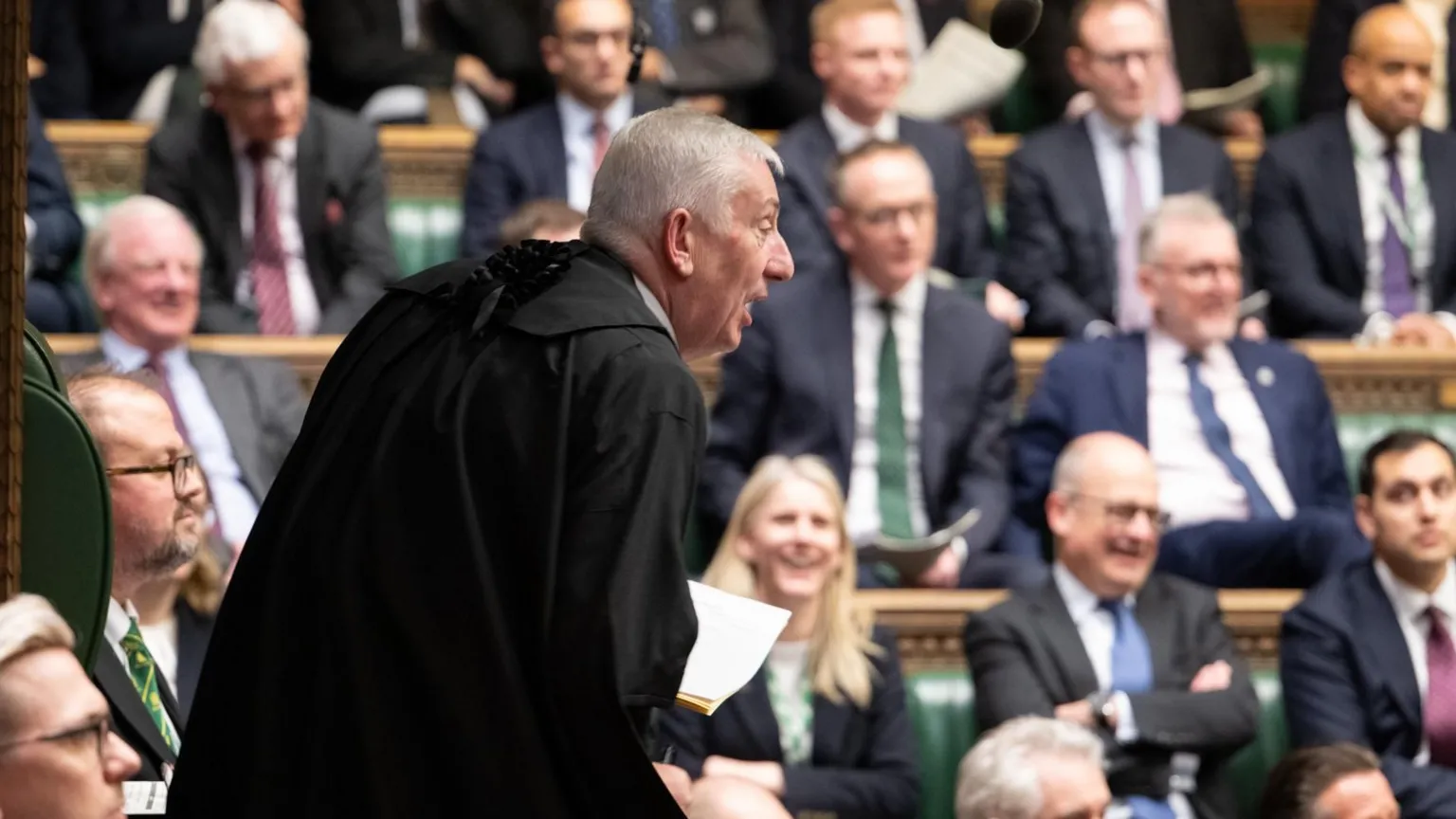
A spokeswoman for the Speaker's Office added that determining whether an answer is satisfactory would require a political assessment, potentially compromising the Speaker's impartiality.
Some MPs have reviewed Erskine May, the parliamentary rulebook, specifically paragraph 22.7, which states:
"The Speaker's responsibility for questions is limited to their compliance with the rules of the House. Responsibility in other respects rests with the Member who proposes to ask the question, and responsibility for answers rests with Ministers."
Currently, there are no plans to amend these rules.
Government Perspective on PM's Approach
Chris Ward, a government minister involved in preparing Sir Keir for PMQs both in opposition and government, defended the prime minister's method.
He told BBC Radio 5 Live:
"In opposition, we were up against Boris Johnson – not the most forthcoming of people in answers, or always the most truthful. It was our challenge to always pin him in a way that he couldn't get away from it.
And I'd say if you look at how Keir answers it, there's always an answer at the beginning where he gives a factual answer, but then he'll pivot… there's always a bit where you will answer it and then you'll give a rebuttal and then do an attack bit."
Ward acknowledged that "there are more graceful ways you can do that."
Downing Street Responds to Public Complaints
When asked about complaints from voters regarding the prime minister's responses, a Number 10 spokesperson stated:
"The PM has got the big calls right on not joining the war, making tackling the cost of living a priority, and boosting our energy security as a nation.
So of course he is going to contrast how he has taken the right decisions in Britain's interests with how Kemi Badenoch has got it wrong time and time again.
While Keir Starmer has consistently shown calm, level-headed leadership, she has demonstrated why her appalling judgement makes her unfit to lead the country."

Listeners can tune in to Matt Chorley weekdays from 2pm on BBC Radio 5 Live for further political analysis.
To stay informed on Westminster and political developments, for the Politics Essential newsletter.


