

Introduction
Ann Grosmaire was fatally shot by her boyfriend shortly after her 19th birthday. Nearly 16 years later, her mother, Kate Grosmaire, has publicly expressed forgiveness toward the man responsible for her daughter's death.
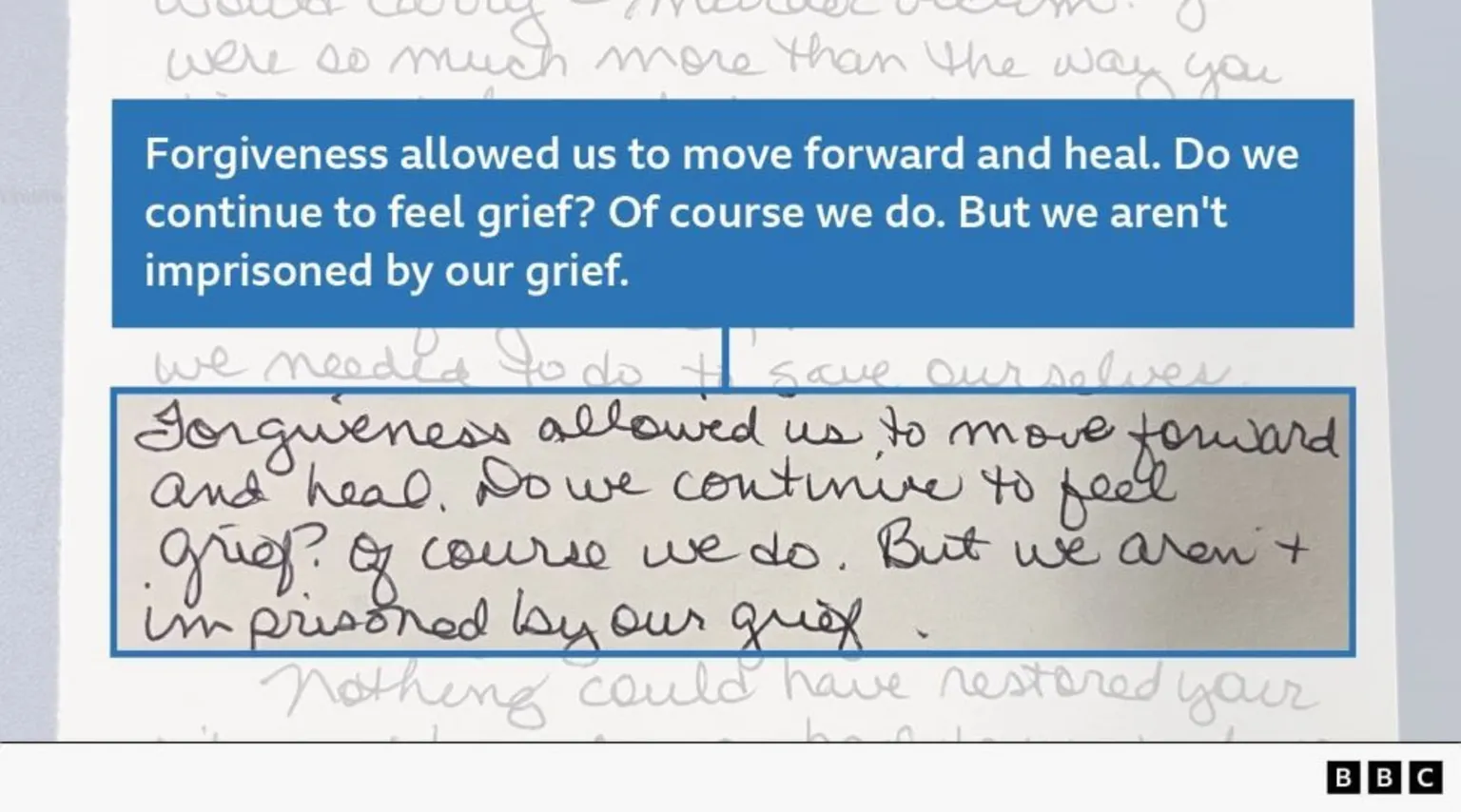
"Forgiveness allowed us to move forward and heal," she says. "Do we continue to feel grief? Of course we do. But we aren't imprisoned by our grief."
Kate has composed a letter to Ann, which she shared on the BBC World Service podcast, Dear Daughter. In this letter, she reflects on the process of finding forgiveness and advocates for open dialogue between victims and perpetrators of crime.
Ann's Life and Relationship
Ann was the youngest of three sisters and described by her mother as "very smart," though she did not enjoy school. Her passion was theatre, participating in every school production. Ann also aspired to establish a wildlife refuge. Friends remembered her as wise, kind, loving, and compassionate.
Ann met Conor McBride at school in Tallahassee, Florida, when she was 16. Kate and her husband, Andy, found Conor to be "very nice" and polite. The couple even welcomed Conor into their home for three months after his father expelled him.
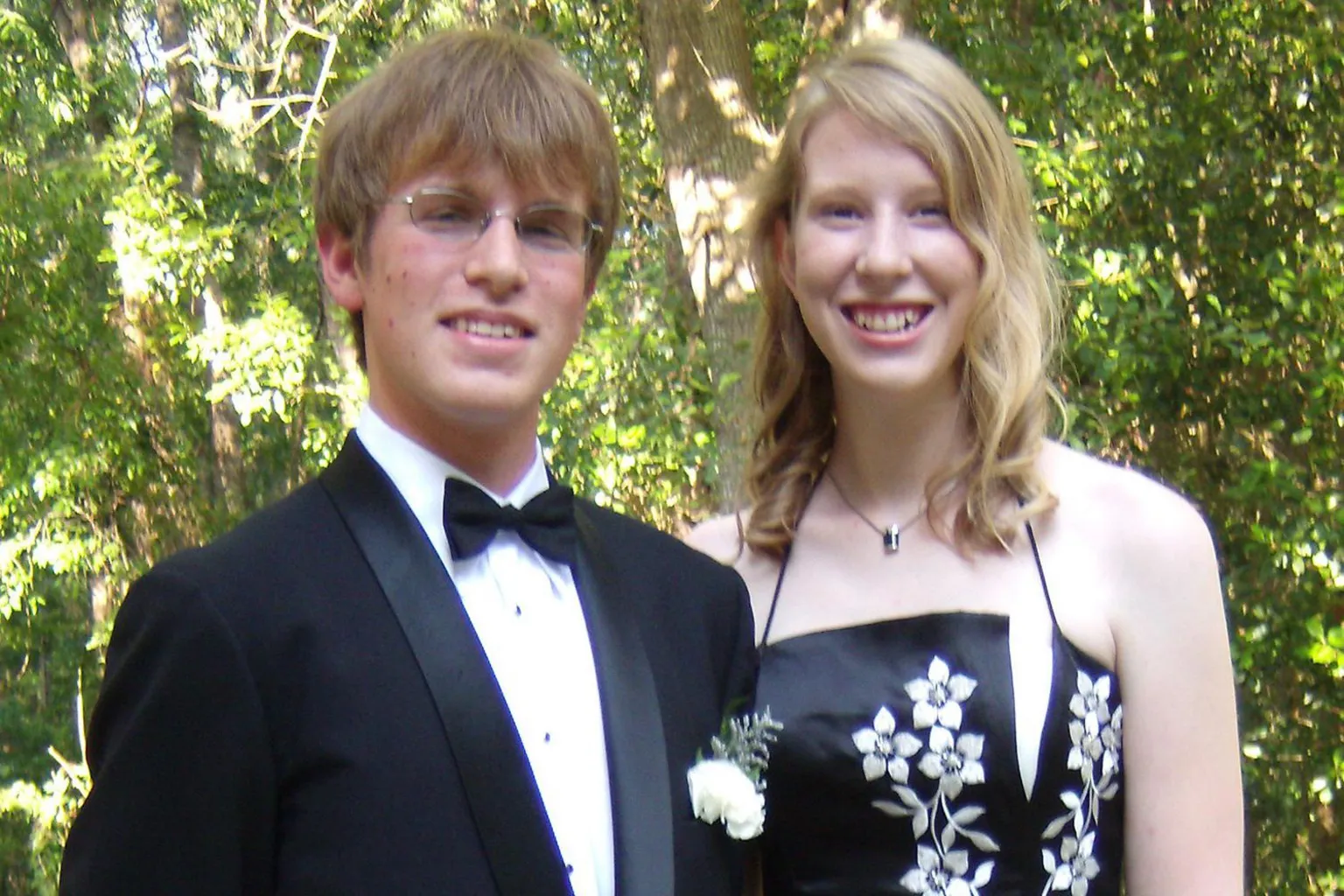
Their relationship was sometimes volatile, with arguments and breakups, but overall they appeared happy. They had plans to marry one day, according to Kate.
The Tragic Incident
In spring 2010, Ann was recognized for academic achievements at college and planned a celebratory picnic with Conor. However, Conor was less enthusiastic, leading to an argument that lasted through the night.
The following day, the argument continued. At one point, Conor retrieved his father's shotgun, threatening to kill himself. Ann responded that if he did not want to live, she did not either. Conor then pointed the gun at Ann, asking, "Is this what you want?" to which she replied, "No, I don't."
Exhausted from the argument and wanting it to end, Conor pulled the trigger.
Conor immediately surrendered to authorities. Police found Ann alive but with critical injuries unlikely to be survivable. She was placed on life support.
Forgiveness and Decision
Kate chose to visit Conor in jail, where she told him that both she and Andy loved and forgave him. She recalls:
"And when I said those words, I just felt a peace come over me."
Days later, Kate and Andy made the difficult decision to discontinue Ann's life support.
In her letter to Ann, Kate wrote:
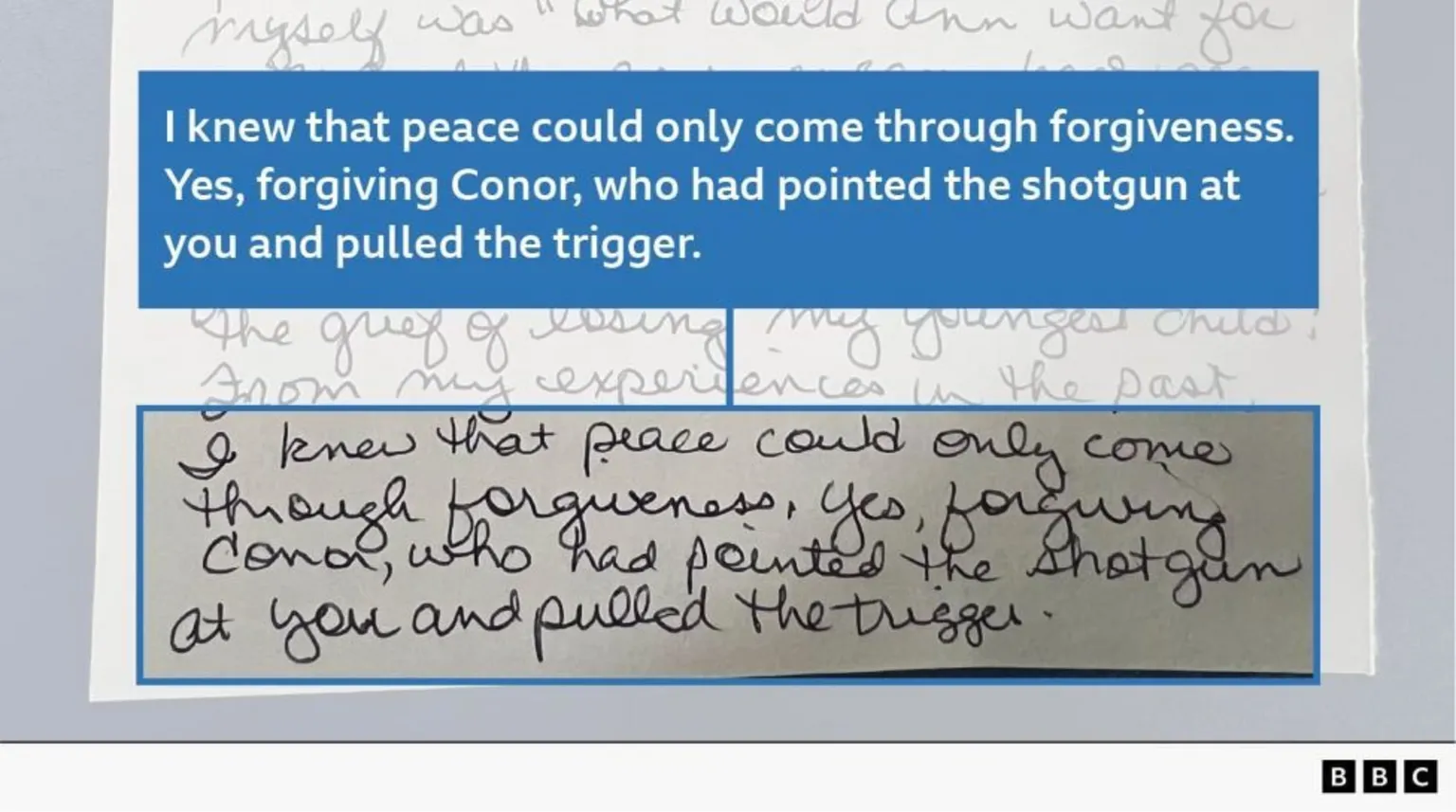
"I knew that peace could only come through forgiveness. Yes, forgiving Conor, who had pointed the shotgun at you and pulled the trigger."
Kate emphasizes that she did not want her daughter to be remembered solely as a murder victim.

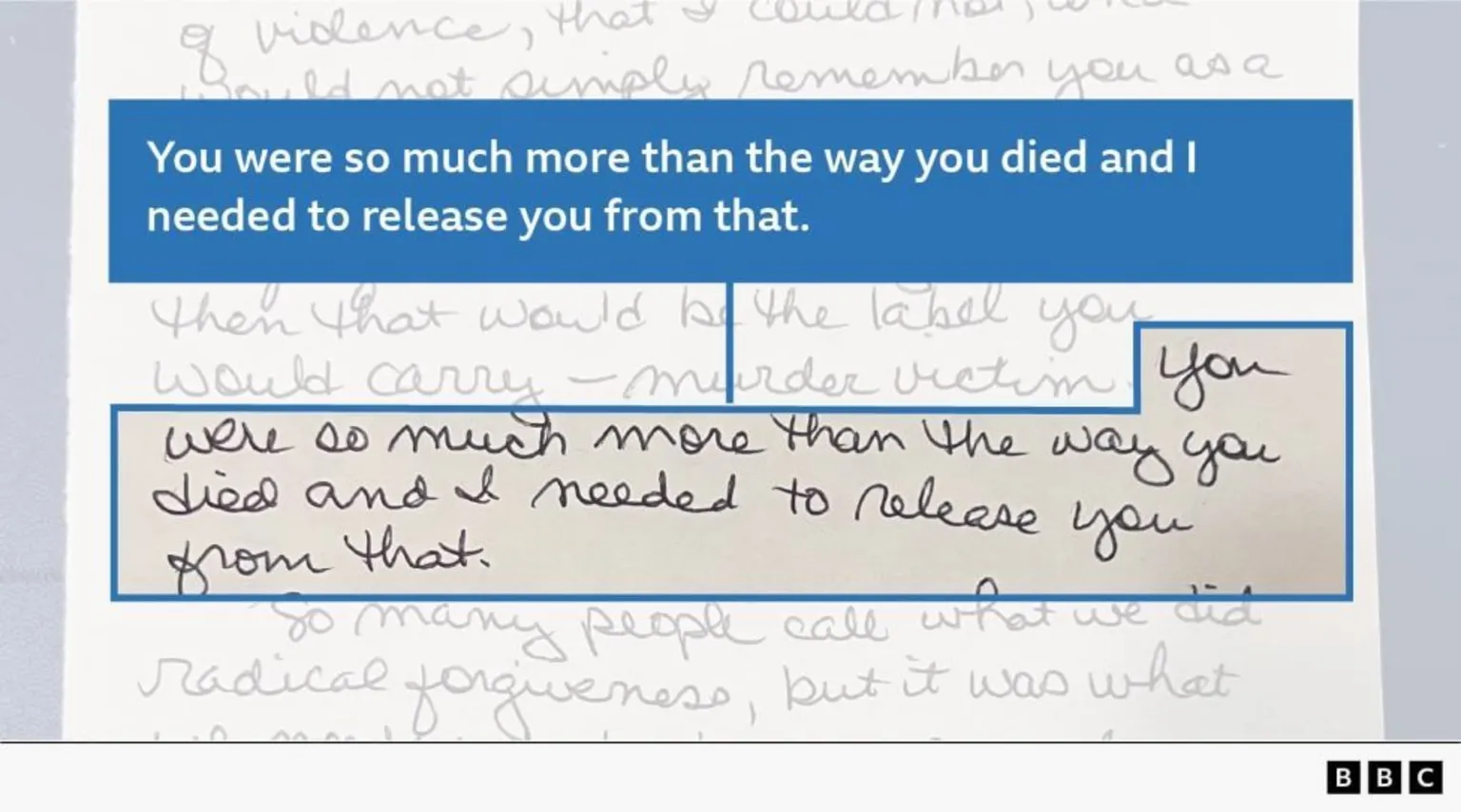
"You were so much more than that. But if I allowed myself to see Conor only as a murderer, then that would be the label you would carry."
Restorative Justice Process
Restorative justice enables victims to communicate with perpetrators about the crime's impact, while allowing perpetrators to accept responsibility, explain their actions, and address the harm caused. Upon learning about this process, Kate and Andy felt it was appropriate for their situation.
During their first restorative justice meeting with Conor in summer 2011, Kate states:
"We were able to just really pour our hearts out and explain to Conor just what it meant, how hard it was to lose her."
Conor shared details about the argument that led to Ann's death. Kate and Andy were invited to suggest sentencing recommendations, which the state attorney considered.
The state attorney offered Conor a choice: a 25-year prison sentence, or 20 years with 10 years probation, contingent on his participation in anger management classes, public speaking about teen dating violence, and volunteering in areas related to Ann's interests.
Kate wrote in her letter:
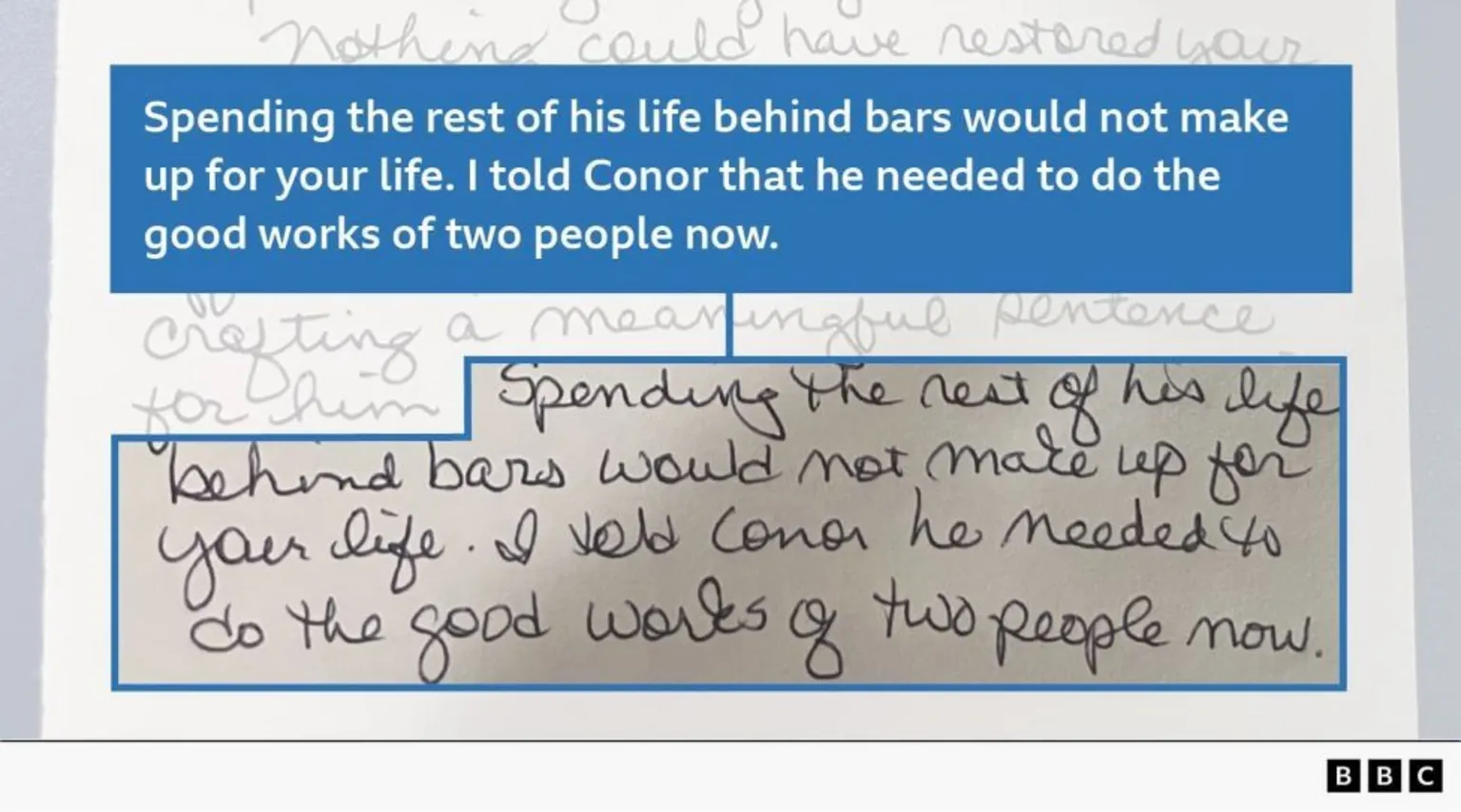
"Spending the rest of his life behind bars would not make up for your life. But we were able to tell Conor how his actions affected us and participate in crafting a meaningful sentence for him."
Ongoing Contact and Legacy
Kate believes forgiveness has been essential to her own peace, enabling her to be present for her other daughters, who were 21 and 25 when Ann died, without bitterness.
"You can imagine that if all I could think about every day was Ann and the way she was taken from me, that would affect my relationship with them," she explains.
Kate and Andy maintained contact with Conor, now 35, initially speaking weekly by phone and email, and visiting him in prison. Kate notes:
"I think he really needed - especially in those first few years - to know that our forgiveness stuck, that our willingness to talk to him stuck."
It has been a few months since their last conversation.
While incarcerated, Conor has volunteered as a law clerk, facilitated accountability and restorative justice classes, and appeared in a video discussing teen dating violence.
Kate told Conor:
"He needed to do the good works of two people now."
Kate and Andy continue to honor Ann's memory annually by celebrating her birthday with cake and singing "happy birthday," and by hanging her Christmas stocking.
"I can't bring myself to not hang it," Kate says, "but then it is a sad reminder of her absence."
Kate regards advocacy for forgiveness and restorative justice as part of Ann's legacy.
She clarifies:
"Forgiveness is not a pardon. It doesn't mean what they did was okay. It just means that you're not going to wait for them to make it right. With forgiveness, you let it go and you walk away - and feel that peace that comes with it."


