

Lib Dems Advocate for Independent British Nuclear Deterrent
Liberal Democrats leader Sir Ed Davey has urged the UK government to initiate the construction of a "fully independent British nuclear deterrent" to eliminate the nation's dependence on the United States.
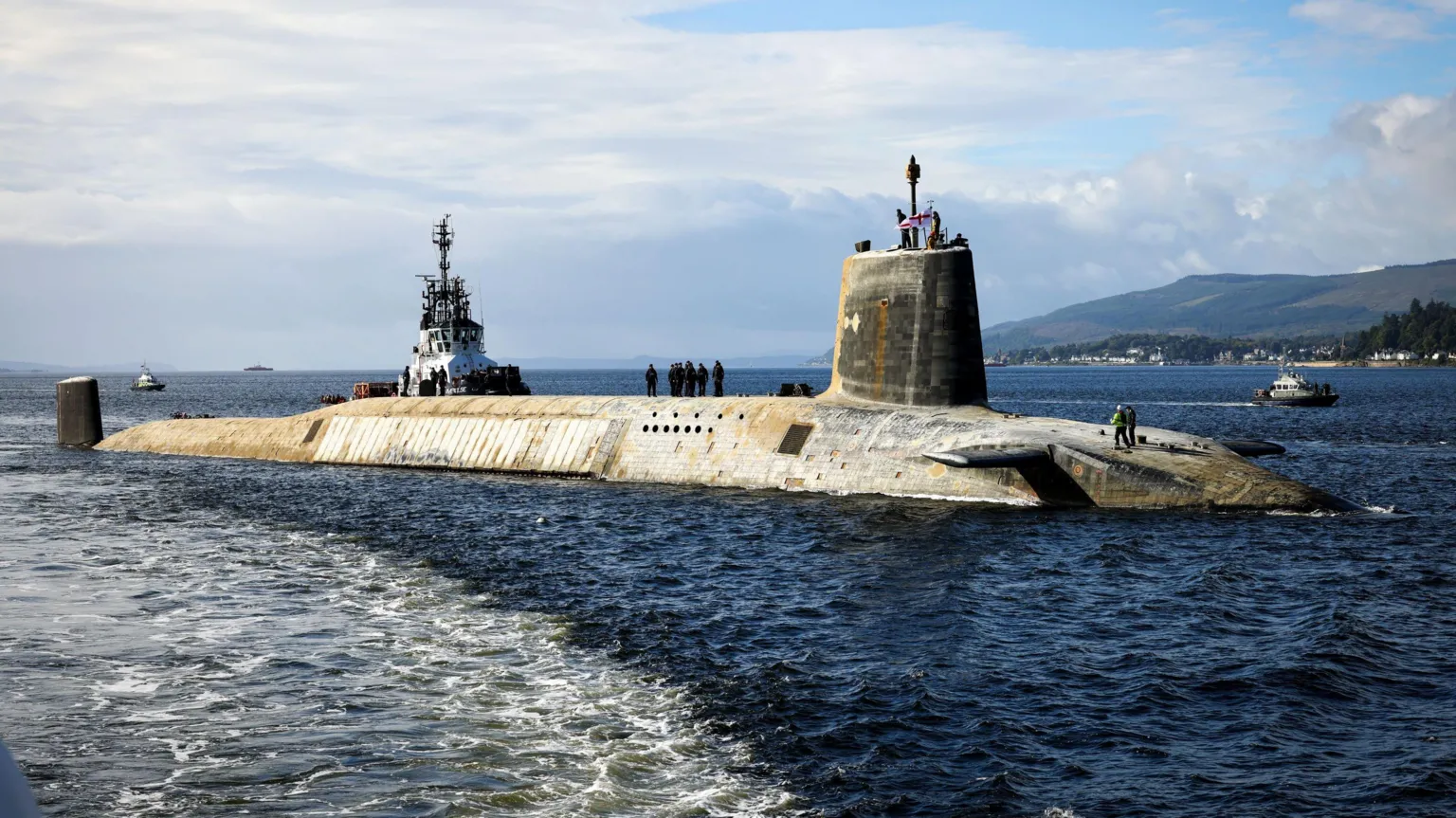
Currently, while the UK retains operational control over its nuclear arsenal, including warheads developed domestically, it relies on the US for the supply and maintenance of the Trident missiles that serve as delivery systems for these warheads.
In a speech delivered at the Liberal Democrats' spring conference in York on Sunday, Sir Ed emphasized that the UK's ongoing dependence on US support poses an unacceptable risk to national security.
The government responded by highlighting the UK's deep and longstanding partnership with the US and its significant role in NATO's security framework.
Historical Context of the UK’s Nuclear Capability
The UK was the third nation globally, following the US and Russia, to develop nuclear weapons, which were initially deployed via a fleet of Royal Air Force aircraft.
Since the 1960s, the UK has maintained a fleet of submarines armed with American-built missiles under a technology-sharing agreement with the US; these submarines are continuously deployed at sea.
The Prime Minister holds the authority to authorize missile launches, but the UK's nuclear arsenal functions as part of NATO's collective defense system.

Sir Ed Davey’s Call for Sovereign Nuclear Capability
Addressing the conference, Sir Ed stated:
"Britain's nuclear deterrent must be genuinely, verifiably ours – not dependent on Trump or whoever his successor may be. Trump has proven we can't rely on America as a dependable ally."
"As the UK now prepares to replace Trident in the 2040s, we should make the decision now to spend the billions required over the next two decades here in the UK, not in the US."
"Britain has the best scientists, the best engineers, the best builders in the world. So let's get building our own, truly independent nuclear deterrent here in the UK."
Government Response and Strategic Defence Review
A Ministry of Defence spokesperson commented:
"Our independent nuclear deterrent protects us every minute of every day and is the ultimate guarantee of our national security."
"As the 2025 Strategic Defence Review made clear, a modernised nuclear deterrent will remain the cornerstone of the UK's defence, and our commitment to Nato and global security."
Cost and Feasibility Considerations
The Liberal Democrats have not provided a cost estimate for their proposal, which is expected to significantly exceed the billions currently allocated for the planned replacement of the Trident system.
France, the only other European nation with nuclear weapons, has consistently maintained a fully independent nuclear weapons system.
The Lib Dems cite France's approach as evidence that a sovereign British nuclear capability is achievable.
They propose a two-stage plan: initially developing domestic maintenance capabilities for the existing Trident weapons system, followed by the long-term manufacture of a fully British-made replacement.
Party Divisions and Policy Context
The Liberal Democrats have historically been divided on the issue of Britain's nuclear weapons.
Many party members have advocated for unilateral nuclear disarmament—a position the party sources affirm they still support—while acknowledging the need to consider the current global security environment.


