

Inquiry Focuses on Violence-Fixated Individuals
The knife attack occurred on Hart Street in Southport on 29 July 2024.
The chairman of the public inquiry into the Southport attack has pledged that his team will exhaust all efforts to prevent similar future tragedies.
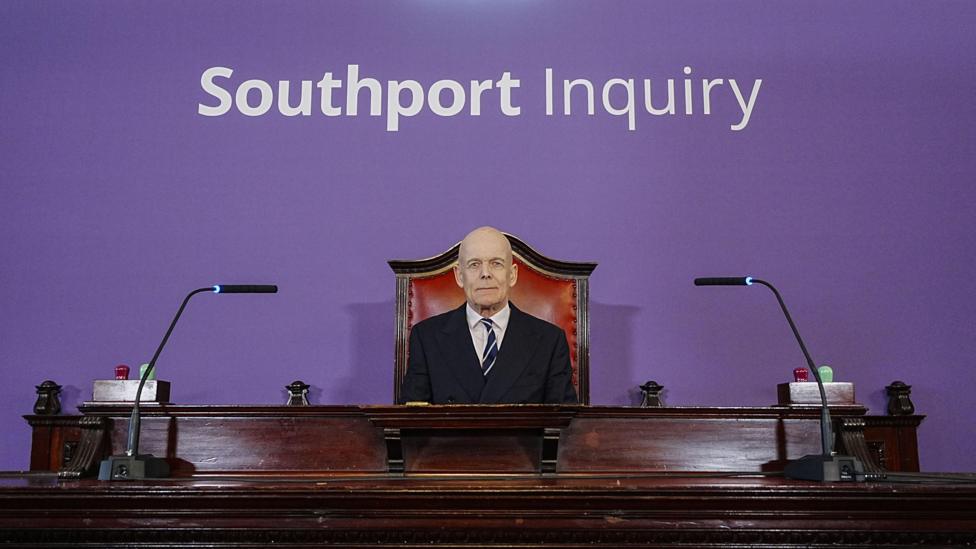
At the opening of the inquiry's second phase, Sir Adrian Fulford stated that society faces an increasing challenge from "violence-fixated individuals," who "all too often are not acting out of an adherence to a particular ideology."
He explained that the inquiry will employ evidence sessions, seminars, questionnaires, and examine six case studies to identify potential responses to the threats posed by such individuals.
The inquiry was established following the murders of Bebe King, Elsie Dot Stancombe, and Alice da Silva Aguiar at a Taylor Swift-themed dance class on 29 July 2024.
Sir Adrian has already determined that there were "catastrophic" failures by multiple agencies prior to the Southport attack and asserted that it could have been prevented.
The inquiry will also scrutinize the effectiveness of current laws and the regulation of knife sales during its hearings.
Axel Rudakubana, the knifeman, seriously injured eight other children and two adults, leaving many children with lasting psychological trauma.
He is serving a minimum prison sentence of 52 years for the murders and attempted murders.
The second phase will investigate the role of social media in influencing violent individuals.
The case studies to be examined include a young man who killed three family members and planned an attack on a primary school; a teenager who fatally stabbed a 12-year-old boy; a man who randomly murdered two women; and a licensed shotgun owner who killed his mother and four others.
Sir Adrian stated:
"We must now, with the greatest care but also at speed, do all we can to prevent a repetition of the events in Southport two years ago which were, tragically, wholly avoidable.
We are confronted with a growing challenge from violence-fixated individuals, who all too often are not acting out of an adherence to a particular ideology.
Instead, the reasons for their interest in violence is various and as a consequence they can be extremely difficult to identify.
All too often they will be acting entirely alone, having spent endless hours in solitude, relentlessly online."
'Fundamental Failure'
Sir Adrian announced that evidence sessions are scheduled for September, October, and November, with additional sessions in December if necessary.

In April, following nine weeks of hearings during the inquiry's first phase at Liverpool Town Hall, Sir Adrian released a report.
He concluded that Rudakubana had "clearly revealed" himself as an extreme danger and that the attack "could and should have been prevented" if his parents had "done what they morally ought to have done," or if agencies had implemented appropriate risk management arrangements.
His 763-page report, containing 67 recommendations, highlighted a "fundamental failure" by any organisation or multi-agency arrangement to assume responsibility for the risk posed by the teenager.
Last week, Home Secretary Shabana Mahmood formally responded to the inquiry, accepting its recommendations and pledging to do "whatever is needed to protect the public."
She stated:
"The perpetrator came into contact with the state on countless occasions in the years leading up to the attack.
Failures in both systems and culture meant multiple opportunities were missed to stop this atrocity.
That is unacceptable. I am clear that the inquiry must act as a turning point."
Families of the victims and survivors have expressed the need for more tangible action and noted that no personnel have been held accountable through job losses for the failures.
'Anti-Extremism Programme'
Inquiry counsel Nicholas Moss KC explained that the second phase aims "to make effective and pragmatic recommendations to minimise the risk of any repeat of such an unimaginably dreadful attack."
He acknowledged the importance victims and families place on "effective and speedy implementation" of the inquiry's recommendations and the necessity for "real, tangible change."
The inquiry team has distributed questionnaires to child and adolescent mental health services, multi-agency public protection teams (MAPPA), and chairs of Channel teams, which are part of the government's anti-extremism programme Prevent.
The questionnaires inquire about the prevalence of violence-fixated individuals and how they are managed.
Seminars will cover topics including psychiatry and psychology, the Prevent programme, the internet, offensive weapons, current law effectiveness, and risk management practices abroad, such as those in the Netherlands.
Sir Adrian emphasized that part of this phase will address the concerning influence of the online world.
Get in Touch
Tell us which stories we should cover on Merseyside.
Listen to the best of BBC Radio Merseyside on Sounds and follow BBC Merseyside on Facebook, X, and Instagram. Story ideas can also be sent via WhatsApp to 0808 100 2230.
Related Stories
- Home Secretary admits failures led to Southport attack
- Parents of Southport survivors say anonymity has erased their girls from the story
- Southport killer's parents failed in 'moral duty' to report son


