Heriot-Watt University Staff Strike Over Job Cuts and Programme Closures
Lecturers at Heriot-Watt University are set to undertake strike action as part of ongoing industrial disputes concerning job reductions and plans to close academic programmes.
Academics at the Edinburgh-based institution will protest proposed cuts involving 41 posts at the Riccarton campus and 10 positions at a satellite campus in Malaysia.
The University and Colleges Union (UCU) described the scale of job losses across the country as a "crisis" and called for intervention from the Scottish government.
A spokesperson for Heriot-Watt University expressed disappointment over the timing of the strike, noting that negotiations with UCU representatives are still underway.
Universities Minister Ben McPherson encouraged both parties to engage in dialogue.
"While the Scottish government cannot intervene directly, we encourage universities and trade unions to engage constructively and seek resolution to these disputes."
Current proposals at Heriot-Watt include job losses in the department of languages and intercultural studies, which may result in the discontinuation of undergraduate teaching in German and Chinese.
The online learning programme for school pupils, Scholar, is also expected to experience staff reductions.
The university reported a deficit of £7.9 million for the 2024/25 financial year, attributing this to rising costs but stating it is pursuing long-term sustainability.
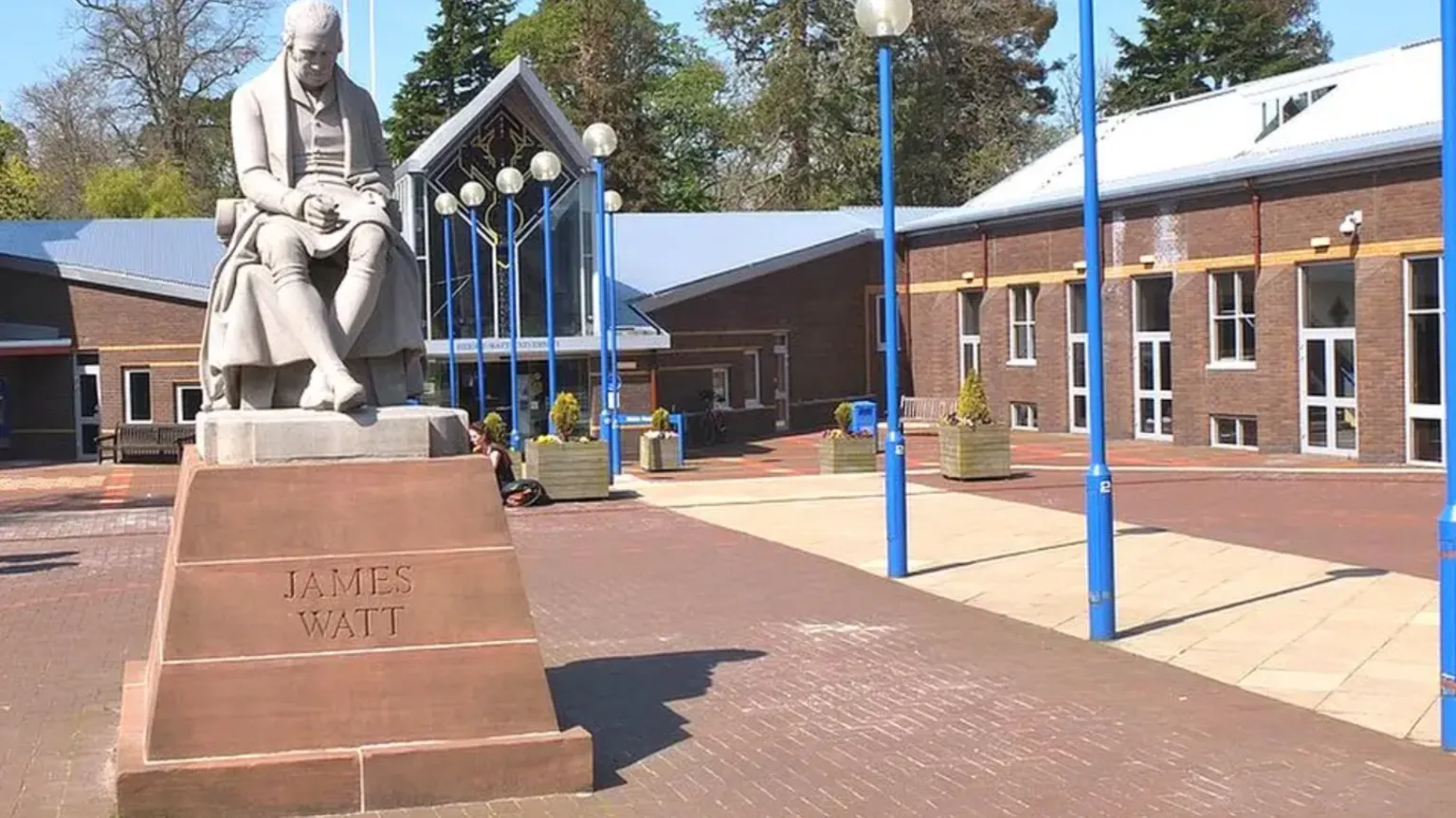
Kate Sang, president of the Heriot-Watt UCU branch, stated:
"The university is refusing to rule out compulsory redundancies.
Students will not have the choices anymore to study a variety of courses around German and Chinese - applicants who already had places had their places withdrawn a few weeks ago."
She added that the strikes are having a significant impact on staff morale.
"It's very sad. In 14 years we've never had to go on strike, we've always been able to resolve local disputes.
I've never in my years of a trade union seen people so distressed in union meetings.
People can't cope with what's happening."

Matt Riemland, an assistant professor in German, described his situation as uncertain after relocating to Scotland in August last year to join the university.
"It's been extremely distressing for myself and for so many colleagues.
There's a tremendous amount of stress.
It's really hard to look ahead, keep moving forward and do the best we can for the students when our jobs are in such a precarious state."

A Heriot-Watt spokesperson acknowledged the difficulties faced by those impacted but emphasized a commitment to resolving the dispute primarily through voluntary severance.
They added:
"While we respect the right to lawful industrial action, it is disappointing that strike action is taking place while discussions with the UCU are ongoing.
Our priority remains constructive dialogue and protecting the experience of our students while ensuring the university's long-term sustainability."
Wider Impact of Cuts Across Scottish Higher Education
Last week, staff at Strathclyde, Aberdeen, and Dundee universities also participated in strike action amid separate disputes over job cuts and concerns about compulsory redundancies.

Strathclyde University plans to cut 76 roles, while Dundee intends to reduce the equivalent of 180 full-time positions.
At Aberdeen, job cuts are planned to save over £5 million.
Strikes are anticipated to resume at the University of Edinburgh next week.
The BBC understands that academics at Glasgow Caledonian University (GCU) will open a ballot on Wednesday regarding potential redundancies.
GCU leaders recently announced that up to 100 posts could be lost following the revelation of a £10 million funding shortfall for the upcoming year.
More than half of Scotland's higher education institutions have been involved in disputes over staffing or funding cuts within the past year.
Claire McPherson, director of Universities Scotland, commented:
"The grim reality is that universities are facing an incredibly challenging mix of rising costs, set against both falling and highly volatile sources of income, domestically and internationally."
Over half of Scotland's universities are forecast to operate at a deficit this year.
Rising expenses, including inflation, energy prices, and national insurance increases, have adversely affected the sector, alongside a decline in international student numbers over the past two years.
Universities have long argued that Scottish government funding to support "free tuition" for Scottish students has not kept pace with inflation and remains lower per student compared to similar institutions in England that receive tuition fees.
Recruitment of international students, who pay fees up to £40,000 annually, has helped offset financial shortfalls.
However, changes in immigration and visa regulations, currency fluctuations, and increased international competition have made this revenue stream vulnerable.
At the end of last year, the Scottish government announced a review into the financial sustainability of Scotland's universities to address sector-wide challenges, with findings expected after the Scottish parliamentary election.
UCU general secretary Jo Grady acknowledged the sector's multiple challenges but attributed current issues to "ongoing government underfunding."
"There has never been a time when so many jobs are on the line.
The review is a welcome acknowledgement that things can't go on as they are but is no comfort to people losing their jobs right now or the students seeing their courses cut.
We need the Scottish government to commit to fully funding our universities and principals to rule out compulsory redundancies."