

Government to Intensify Crackdown on Illegal Migration in Northern Ireland
The government is preparing to "intensify" its efforts to clamp down on illegal migrants residing in Northern Ireland.
A government source revealed that the Home Office is increasing immigration enforcement initiatives aimed at "tracking down, detaining, arresting and removing" illegal migrants.
This initiative will involve a "surge in intelligence-led operations" conducted by Immigration Enforcement officers alongside Border Force personnel operating along Common Travel Area routes.
The Home Office reports that nearly 1,000 illegal migrants have been removed over the past year.
This move comes amid growing pressure from unionist parties urging the government to address the influx of migrants entering Northern Ireland illegally from the Republic of Ireland.
Government data indicates that since the Labour government took office, there have been 2,682 "raids to detain and remove" illegal migrants, representing a 16% increase compared to the last 21 months of the Conservative administration.
Consequently, the number of individuals detained or arrested for immigration offences has risen to 2,233.
According to the government, approximately 70% of immigration enforcement activity is conducted through Operation Gull, an intelligence-led Common Travel Area (CTA) operation targeting Northern Ireland's domestic air and sea ports.
As a result of Operation Gull, over 900 immigration offenders were identified last year, allegedly "abusing and circumventing the Common Travel Area rules."
"The three most frequently encountered nationalities were Romanian (83), Albanian (44) and Afghan (30)," the government source said.

Meanwhile, the number of asylum seekers housed in supported accommodation in Northern Ireland currently stands at 2,379, reflecting a decrease from previous figures.
What is the CTA?
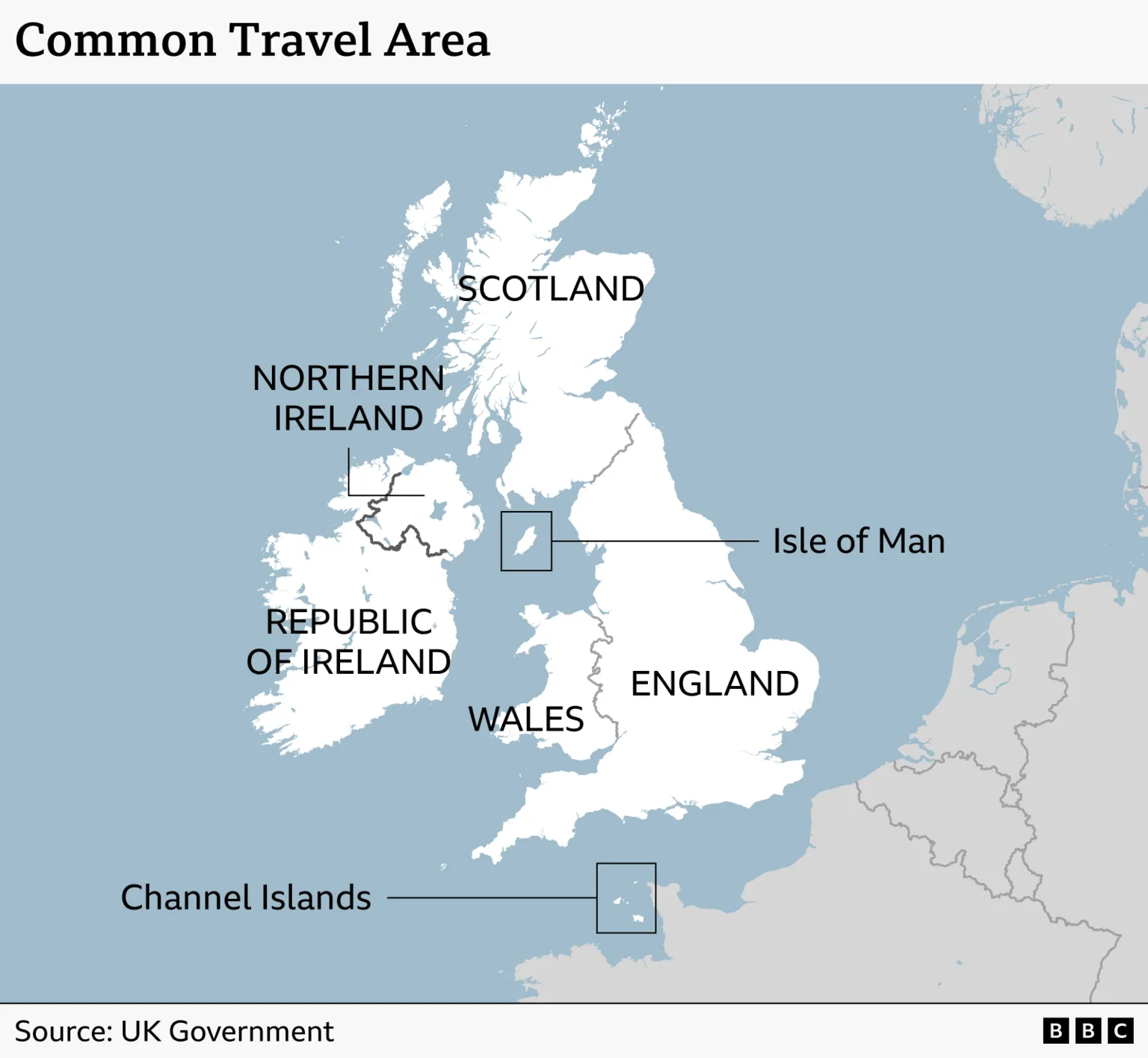
The Common Travel Area (CTA) is an arrangement dating back to 1922, when 26 of Ireland's 32 counties were granted significant independence by the United Kingdom. It grants British and Irish citizens reciprocal rights in each other's countries.
These rights include largely unrestricted, passport-free travel between the UK, the Republic of Ireland, and the Crown Dependencies of Jersey, Guernsey, and the Isle of Man for British and Irish citizens.
Individuals from other countries are required to present a passport—and in some cases a visa—to enter the UK, Republic of Ireland, and Crown Dependencies. It remains unclear how Alodid passed border checks at Dublin Airport after arriving from Paris.
Without more formal controls, the Irish border serves as a relatively open immigration route. It is policed under "Operation Gull," a long-standing, intelligence-led initiative operated by the UK Home Office, the Police Service of Northern Ireland (PSNI), Police Scotland, and Ireland's police force, the Garda Síochána.
If a person is found without the appropriate documentation to be in the CTA, they can be detained under UK immigration powers and returned to the Republic of Ireland.
However, if that individual claims asylum, they cannot be deported and would enter the UK asylum system while their claim is assessed.
NI and ROI have shared 'interest and responsibility'
In a statement, the Irish Department of Justice emphasized that the Republic of Ireland and Northern Ireland share "a shared responsibility and a shared interest in protecting the operation" of the Common Travel Area.
"It offers great advantages to our people on a social and economic level," the department said.
"The invisible border on the island of Ireland is among the most tangible gains of the peace process and is essential to the continuing normalisation of relationships.
"At the UK-Ireland Summit in March, it was agreed that further steps would be taken to ensure that the Common Travel Area (CTA) remains secure by working together to expand immigration data-sharing arrangements, particularly to prevent the abuse of CTA free movement by those not entitled to its benefits."


