

Illegal mini-marts to face up to 12-month closures under new government powers
Illegal mini-marts, barbers, and vape shops in England and Wales could be closed for up to a year under new government powers announced following extensive investigative reporting by into organised crime on British High Streets.
BBC investigations have revealed links between these shops and serious crimes including drug trafficking, child sexual exploitation, money laundering, and immigration offences related to the sale of illegal cigarettes, vapes, and drugs.
Currently, authorities can only close such shops for three months, with a possible extension to six months under anti-social behaviour legislation. The proposed legal changes will double the maximum closure period to 12 months.
Home Secretary Shabana Mahmood, announcing the changes, commended the BBC's reporting and acknowledged public concerns that High Streets were being overtaken by "organised crime [and] immigration criminality". She emphasized that the government was "not prepared to tolerate it".
"This type of criminality makes people lose faith, not just in their local area but in democracy, in what our country is, and we can't let that happen," she added.
The Home Office stated that extending closure periods will provide investigators with more time to collect evidence, pursue prosecutions, and identify business owners, while preventing offenders from reopening and continuing illegal activities.
Trading Standards officers have welcomed the announcement, highlighting their current lack of sufficient powers to address the issue effectively.
"Closure orders are a key enforcement tool... for tackling 'dodgy shops'," said John Herriman, chief executive of the Chartered Trading Standards Institute (CTSI).
"There is almost universal support from my profession for the new measures," he added.
Other Trading Standards officers indicated that longer closure orders would reduce the financial viability for unscrupulous owners to simply wait out closures and would encourage landlords to be more vigilant about their tenants.
'Open criminality'
For nine months, repeatedly sought an interview with the Home Secretary to discuss their findings.
Last week, the BBC was invited to accompany Mahmood on police raids of mini-marts on Soho Road in the Handsworth area of Birmingham, a High Street adjacent to her constituency.
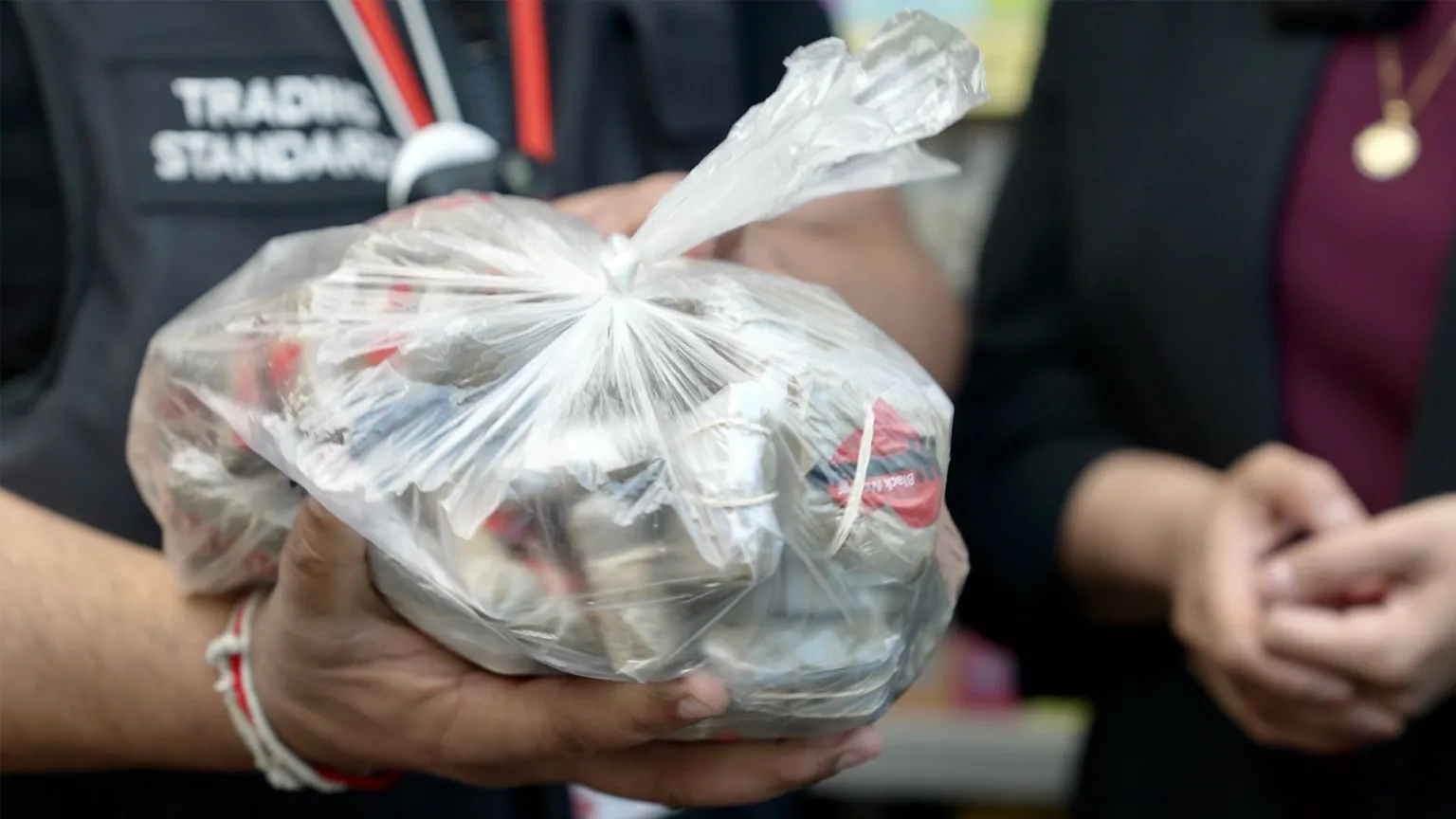
During one raid, police and Trading Standards officers discovered illegal cigarettes and snuff (finely ground tobacco). A shopworker was arrested after a makeshift weapon—a plank with a nail—was found beneath the counter.
The shopworker, a student from Afghanistan, admitted awareness that selling illegal cigarettes was wrong.
"Perhaps you should ask the manager, he's the owner," he said when asked why he was selling illegal cigarettes, noting the owner was not present.
Soho Road has been the focus of Operation Fearless, a West Midlands Police initiative targeting street-level crime.
PC Victoria Gaunt, an officer involved in the operation, described the area as the worst she had encountered in her career.
"In all the areas I've worked in… it's by far the worst here," she said.
She reported that shops were selling prescription drugs, cocaine, heroin, and cannabis, stating,
"You name it, you can probably buy it."
PC Gaunt added she would not feel safe in the area without her uniform and stab vest.
She also described witnessing individuals carrying machetes and chasing others, as well as a significant rise in prostitution and exploitation of girls.

A BBC undercover reporter visited approximately a dozen businesses on Soho Road and found counterfeit cigarette packs being sold for as little as £3, compared to genuine packs costing between £16.50 and £19.50.
Shopworkers also reported open drug dealing on the street.
Home Secretary Mahmood expressed understanding of public frustration, stating that she and her family were also upset by the perception of individuals "getting away with breaking our laws, getting away with open criminality."
'Broken system'
Over 14 months, has exposed the extent of organised crime infiltrating High Streets across England and Wales.
Last year, BBC reporters accompanied the National Crime Agency (NCA) during raids on barbers, mini-marts, and vape shops suspected of money laundering and illegal employment.
Subsequent investigations uncovered shops with secret underground tunnels used to supply sacks of illegal cigarettes, revealed asylum seekers purchasing and selling shops for cash, and exposed a Kurdish organised crime gang operating throughout Great Britain.
In March, revealed that a senior council worker had repeatedly reported to local authorities the sexual abuse of children as young as 11 occurring in mini-marts.
More recently, undercover reporting documented the sale of cocaine, cannabis, laughing gas, and prescription pills on a West Midlands street described by an anonymous law enforcement source as "lawless."
Late last year, the Home Secretary acknowledged that the evidence gathered by the BBC demonstrated that "the system was broken" and announced an "urgent" investigation led by the NCA, Immigration Enforcement, HMRC, and police forces across England and Wales.
Last month, the government announced a £30 million High Street organised crime unit, which will deploy additional police and Trading Standards officers, conduct tax raids, and intensify efforts against illegal working.
When asked if the government's response was too late, Mahmood described the new measures as a "game-changing national crackdown."
The Home Office expects the extended closure orders to become law by the end of this year, following the laying of secondary legislation, with the new powers coming into effect in early 2027.
The government also stated it will inform authorities in Northern Ireland and Scotland about the changes, noting that these regions have different enforcement legislation for closing shops.

Additional reporting: Steve Fildes and Phill Edwards


