

Barton on Mandelson’s Epstein Links and Ambassador Appointment Challenges
Philip Barton, former permanent secretary at the Foreign Office, expressed concerns about Peter Mandelson’s links to Jeffrey Epstein potentially complicating his appointment as ambassador to the United States.
When asked if he would have raised concerns had he been consulted, Barton indicated he likely would have.
"At no point did anyone consult me, ask me. I was presented with a decision … and told to get on with it."
Barton, who previously served as deputy ambassador to the US and is familiar with US politics, noted Epstein’s controversial status, particularly during the US presidential election campaign.
"Epstein, through both the presidential election campaign in the US and more generally in US politics, was a controversial figure. And I was worried that [Mandelson’s links to Epstein] could become a problem in future – not because I was expecting that we were going to find out more, because to be honest I wasn’t. I just thought that it was a potentially difficult issue politically in the United States."
Barton Defends Mandelson’s Access to Foreign Office Before Security Vetting Completion
Emily Thornberry questioned Barton about Mandelson receiving briefings and access to secret material prior to the completion of his developed vetting (DV) clearance, questioning the purpose of the vetting process.
Barton responded that DV clearance was necessary for Mandelson to perform his duties properly.
When asked if Mandelson had access to the building and acted as though he had DV clearance before it was granted, Barton disagreed.
"In the period before DV clearance was given, Mandelson did not have access to parts of the Foreign Office building where DV was required."
He added that it was reasonable for Mandelson to receive briefings before officially starting the role.
Regarding the timeline, Barton confirmed that Mandelson was offered the job on 20 December and needed to be in Washington by 20 January, and that efforts were made to accommodate this within the rules.
Barton also stated he was unaware of the UK Security Vetting forms containing boxes recommending vetting denial, noting he had never seen such forms in his career.
(This references the red box ticked on Mandelson’s vetting form recommending refusal, which Olly Robbins and Ian Collard also said they had never seen.)
Barton Trusts Olly Robbins and FCDO Security Chief on Vetting Decision Integrity
When questioned about whether pressure to expedite the vetting process influenced the decision, Barton said he believed Olly Robbins and Ian Collard’s statements that their decisions were not affected by such pressure.
"Olly Robbins told the committee last week that he did not feel his decision making was affected by the pressure. And I believe both him and Ian Collard, the Foreign Office’s head of security, who said the same thing in his letter to the committee published yesterday."
Barton Acknowledges Pressure for Rapid Vetting Outcome but Denies Pressure on Substance
Asked if he faced pressure to approve Mandelson’s vetting, Barton clarified the distinction between pressure on the process and pressure on the substance of the decision.
"One is during my tenure. I was not aware of any pressure on the substance of the Mandelson DV case. Question two was there pressure? Absolutely. And I’ve described it. And I also have seen what the Foreign Office said to you last night. I don’t think anyone could have been in any doubt in the department working on this that there was pressure to get everything done as quickly as possible."
Barton Denies McSweeney Swore at Him Over Mandelson Vetting Approval
Richard Foord (Lib Dem) corrected a previous statement regarding an allegation that Morgan McSweeney, then chief of staff to the Prime Minister, swore at the Foreign Office to approve Mandelson’s appointment. Foord clarified the report was mistaken and stemmed from a private conversation.
Barton stated he had heard versions of the story but did not recall McSweeney swearing at him or generally, and did not believe the claim had substance.
Barton Does Not Believe His Reservations Influenced Early Departure
When asked if his concerns about Mandelson influenced David Lammy’s request for Barton to leave early, Barton said he had informed the department of his departure on 4 November, a month before the Mandelson decision was announced.
Barton on Initial Cabinet Office Suggestion That Mandelson Did Not Need Developed Vetting
John Whittingdale (Con) questioned Barton about whether developed vetting had taken place when Mandelson’s appointment was announced.
Barton confirmed it had not, but due diligence led by the Cabinet Office had been conducted.
He said he was initially told by the Cabinet Office that Mandelson did not require developed vetting, which surprised him given the ambassador’s need for access to sensitive information.
After discussions, it was agreed that developed vetting was necessary.
When asked if the Cabinet Office or Foreign Office first suggested DV was not needed, Barton said he was told it was the Cabinet Office, but emphasized that by the end of the week all parties agreed DV was required.
He stressed that the final decision was what mattered.
(Previously, Olly Robbins told the Commons the Cabinet Office first suggested DV was unnecessary, but later statements from Darren Jones and others indicated the Foreign Office initially suggested it might not be needed due to Mandelson’s peerage and privy counsellor status.)
Barton Was Not Consulted on Mandelson Appointment but Thinks He Should Have Been
Barton said he was first informed of Mandelson’s appointment on 15 December 2024 and was not aware it was being planned or that a decision was imminent.
He noted that as head of the Foreign Office, he would expect to be informed, but acknowledged the political nature of the appointment may explain his exclusion.
He expressed mixed feelings about whether he should have been consulted.
"In the end, this is an appointment to the most senior job in our foreign service. I was head of the diplomatic service. So I think it is possible, without asking me as a civil servant, I think it is possible [a civil servant] to be involved in a conversation, for example, around what are the requirements, what does the UK need in the period ahead and that sort of thing – even if that you’re not then involved in the absolute decision making discussions around individuals who are politicians because it’s a political appointment."
Barton explained that under the previous Conservative government, the Foreign Office had begun a process to find a replacement for Karen Pierce, the outgoing ambassador, and a candidate had been identified before the process was paused due to the election call.
Former Foreign Office Chief Barton Says Leaving Early Was Not His Choice
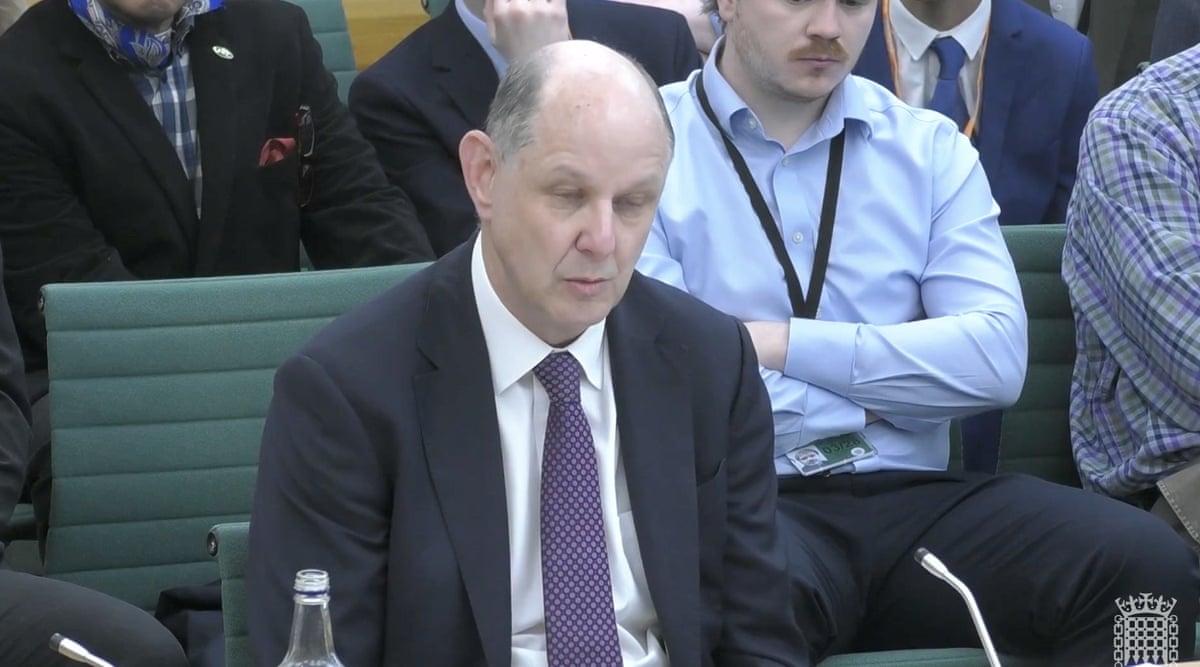
Philip Barton began his evidence to the Commons foreign affairs committee, with chair Emily Thornberry noting his previous testimonies and expressing surprise at his return post-retirement.
Barton joked about being back and emphasized he did not want to be accused of misleading the committee.
When asked why he left eight months early, Barton stated it was not his decision, but that Foreign Secretary David Lammy wanted new leadership to advance transformation.
Foreign Affairs Committee Publishes Security Vetting Answers from FCDO Security Chief
Last night, the foreign affairs committee released documents from the Foreign Office containing responses from Ian Collard, then head of security at the Foreign Office during Mandelson’s appointment.
Collard had briefed Olly Robbins on the vetting interview outcomes and recommended approval, noting that risks identified could be managed.
Henry Dyer reported on the document’s contents.
Keir Starmer Faces Vote on Mandelson Vetting Scandal as Key Figures Testify
Good morning. The former US President Lyndon Johnson famously said the most important political skill is knowing how to count votes, but sometimes winning the argument is equally critical. Today, Keir Starmer will be tested on both fronts.
Winning the vote is expected to be straightforward. Pippa Crerar’s overnight preview outlines the upcoming vote on a motion tabled by Kemi Badenoch and MPs from five opposition parties and independents, referring Starmer to the privileges committee.
Labour MPs are under a three-line whip to oppose the motion, with the government anticipated to win easily. Jonathan Reynolds, Labour’s chief whip, told , "We’ll vote it down."
Badenoch aims to convince MPs and the public that Starmer misled the Commons over Mandelson’s ambassadorial appointment, comparing it to Boris Johnson’s Partygate lies. However, the case for deliberate misleading is weak, and Labour dismisses the vote as a pre-election stunt. Shadow Cabinet Office minister Alex Burghart denied political games, stating on the Today programme, "There aren’t any political games going on here."
The Mandelson controversy centers less on whether Starmer misled MPs and more on the initial appointment. Two weeks ago, Starmer dismissed Olly Robbins as permanent secretary after revelations that Robbins approved Mandelson’s security clearance despite initial vetting recommendations against it. Robbins was unaware of the original recommendation, and his dismissal is widely viewed as unfair.
This morning, before the Commons debate, the foreign affairs committee will hear evidence from Philip Barton and Morgan McSweeney, Starmer’s former chief of staff. McSweeney’s testimony is anticipated to be particularly revealing, given his role in Starmer’s leadership rise and his limited prior public scrutiny. While Starmer is likely to win the Commons vote, committee evidence may influence his standing among MPs.
Today’s agenda includes:
- 9am: Philip Barton’s evidence to the Commons foreign affairs committee.
- Morning: Keir Starmer chairs cabinet.
- 11am: Morgan McSweeney’s evidence to the foreign affairs committee.
- Noon: Downing Street lobby briefing.
- After 12.40pm: Conservative leader opens debate on referring Starmer to the privileges committee; vote at 7pm.
- Afternoon: Starmer chairs government’s Middle East response committee meeting.
- After 3pm: Peers vote on Commons amendments to the children’s wellbeing and schools bill.
For contact, messages can be posted below the line during open comment hours (10am-3pm) or via social media. Including "Andrew" in messages increases visibility. Urgent matters are best communicated via social media, where Andrew Sparrow can be reached on Bluesky at @andrewsparrowgdn.bsky.social or on Twitter at @AndrewSparrow.
Corrections and questions are welcomed, with efforts made to respond when possible.


