

Typical Household Energy Costs to Decrease in April 2026
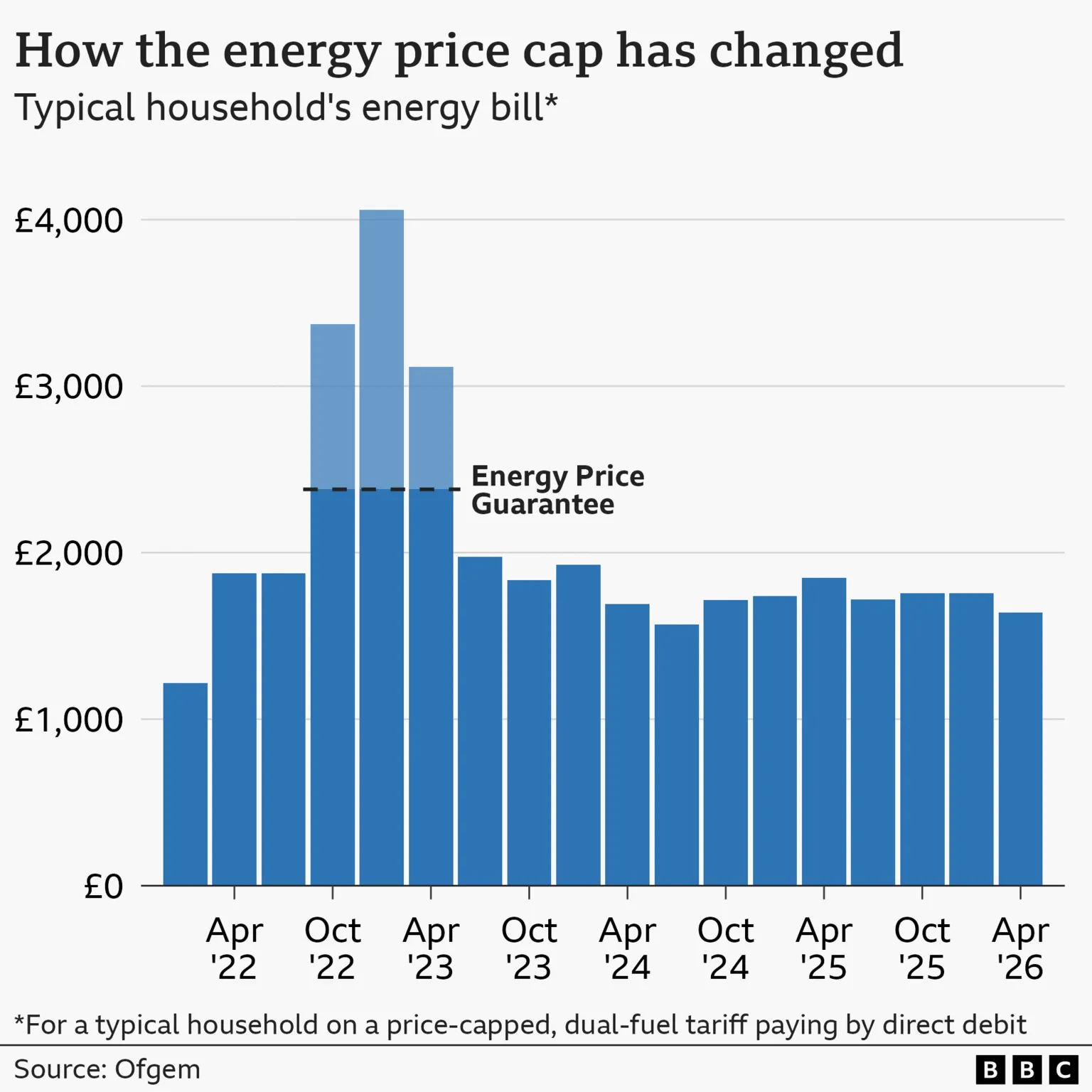
From 1 April 2026, typical household energy costs will decrease as a new energy price cap is implemented, reflecting changes in how charges are calculated. This follows a government commitment made in the Budget to remove certain costs from annual energy bills, resulting in an estimated saving of approximately £117 for a typical household.
However, the expenses associated with maintaining the energy network infrastructure have increased, which means the savings will be less than initially projected by the government.
What is the Energy Cap and How is it Changing?
The energy price cap affects around 19 million households across England, Wales, and Scotland and is set by the regulator Ofgem every three months. It establishes the maximum price that customers can be charged per unit of gas and electricity under a standard or default variable tariff for a typical dual-fuel household paying by direct debit. Actual bills vary depending on energy consumption.
Between 1 April and 30 June 2026, the annual bill for dual-fuel direct debit households in Great Britain using a typical amount of energy will be £1,641. This represents a £117 or 7% reduction from the previous cap applicable from January to March 2026. Despite the decrease, prices remain about one-third higher than before the conflict in Ukraine.
During this period, gas prices are capped at 5.74p per kilowatt hour (kWh) and electricity at 24.67p per kWh.
Ofgem regulates the energy market in England, Scotland, and Wales, while Northern Ireland operates under a separate system. The energy cap is scheduled to change again on 27 May 2026.
What Defines a Typical Household?
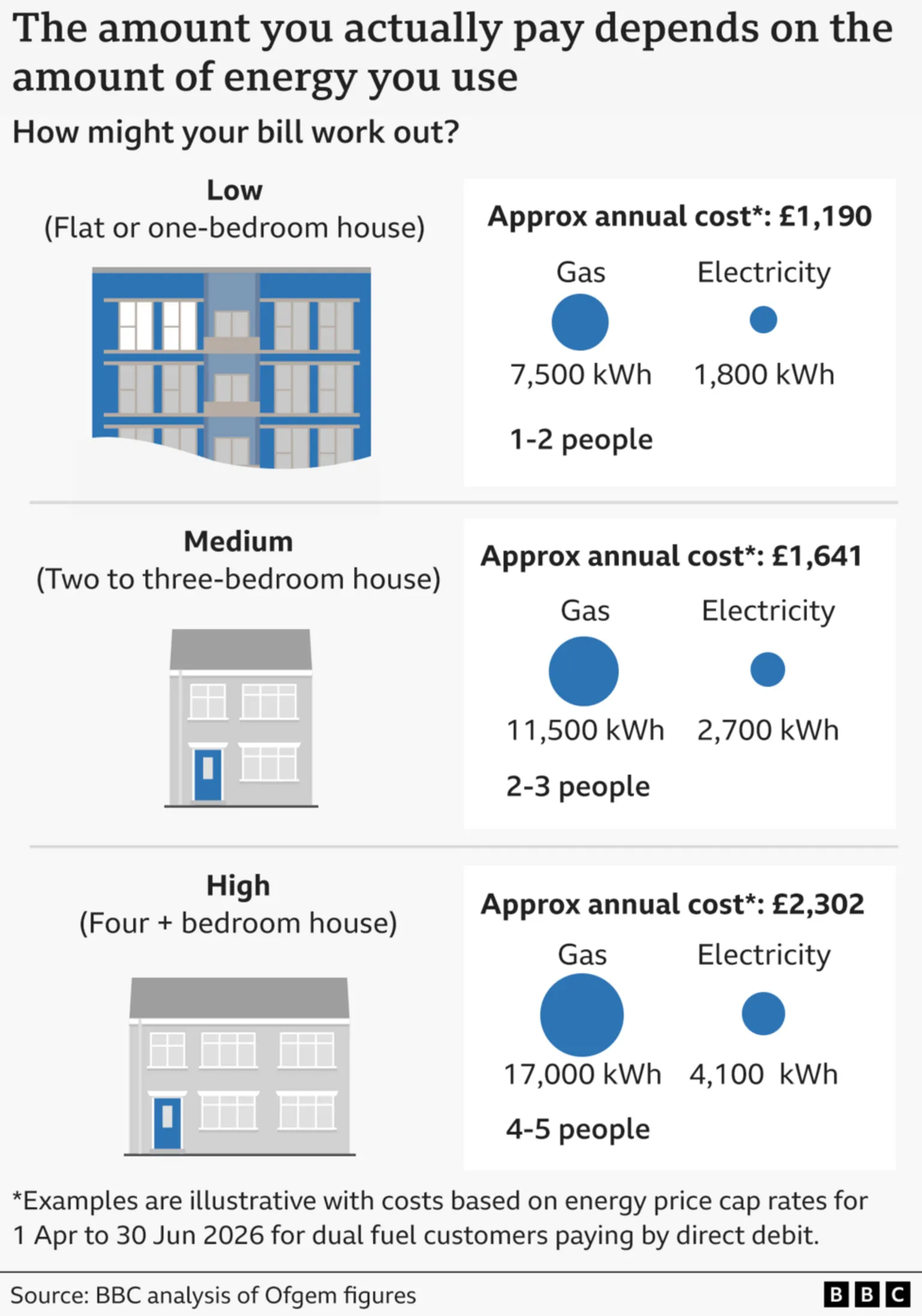
The price cap sets unit prices for gas and electricity, but individual household bills depend on total energy usage and payment method. Factors such as property type, energy efficiency, number of occupants, and weather conditions influence consumption.
Ofgem bases the cap on a "typical household" consuming 11,500 kWh of gas and 2,700 kWh of electricity annually, with a single combined bill for gas and electricity paid via direct debit. The majority of customers pay by this method to spread costs evenly throughout the year. Those paying quarterly by cash or cheque typically incur higher charges.
Changes to Energy Bill Calculations
In the November Budget, Chancellor Rachel Reeves announced measures to reduce energy costs starting April 2026. From 1 April, charges related to the Energy Company Obligation (ECO), an insulation scheme, will be removed. Additionally, for three years, renewable energy projects will be 75% funded through general taxation rather than levies on energy bills.
Previously, energy bills in England, Scotland, and Wales included extra charges to support insulation for low-income households and subsidize green energy initiatives such as wind farms and solar panels. Almost all households in these nations will benefit from the reduction regardless of their energy tariff, though savings will vary.
Simultaneously, the costs of maintaining and upgrading energy infrastructure—such as power lines, cables, and gas pipes—are rising. In December, Ofgem approved a £28 billion investment to enhance the electricity and gas grids in Great Britain. This upgrade aims to strengthen energy supply resilience, reduce exposure to volatile prices, and decrease reliance on gas.
Customers will contribute to the upgrade costs through an additional £108 added to energy bills by 2031. These charges will begin appearing from April 2026, adding roughly £6 monthly to the bill of a typical household under the energy cap.
Consequently, although Chancellor Reeves initially stated the changes would reduce average annual dual-fuel bills by £150, typical households will save about £117.
Submitting Meter Readings When the Cap Changes
Providing a meter reading when the energy cap changes ensures customers are billed accurately rather than based on estimated usage at incorrect rates. This is particularly important when prices increase.
Customers with functioning smart meters do not need to submit readings, as their bills are calculated automatically.

Impact on Prepayment Customers
According to recent Ofgem data, approximately six million households use prepayment meters. Historically, prepayment customers paid more than those using direct debit, but recent adjustments have aligned charges so both groups pay the same rates.
Between 1 April and 30 June 2026, the typical annual bill for prepayment customers will be £1,597, down from £1,711 between January and March.
Many prepayment meters have been in place for years, while some were installed more recently to assist customers struggling with higher bills. New rules introduced in November 2023 require suppliers to offer customers more opportunities to clear debts before switching them to prepayment meters. Additionally, meters cannot be installed in certain households.
Standing Charges and Their Changes
Ofgem also regulates standing charges, which are fixed daily fees covering the costs of connecting households to gas and electricity supplies. These charges vary slightly by region.
From 1 April to 30 June 2026, standing charges will typically be 57.21p per day for electricity and 29.09p per day for gas.
Campaigners have criticized standing charges as unfair because they constitute a larger portion of bills for low energy users. In response, Ofgem has proposed that all energy firms offer at least one tariff featuring a low standing charge but a higher cost per unit of energy.
"This would give some customers more choice and control," Ofgem stated, while acknowledging that such tariffs may not suit everyone.
Charities, campaigners, and the suppliers' trade body have criticized this proposal, arguing it merely shifts costs within the bill rather than reducing them.
Options to Fix Energy Prices
Fixed-price energy deals are not subject to the energy price cap, which changes quarterly and can fluctuate. Fixed deals provide price certainty for a set period, often a year or longer, but if market prices fall during the contract, customers may remain locked into higher rates. Early termination of fixed deals may also incur penalties.
Ofgem advises customers seeking bill certainty to consider fixed deals but emphasizes understanding all associated costs.
Martin Lewis, founder of Money Saving Expert, recommends using whole-of-market energy price comparison websites to find the best deals.
Support Available for Energy Bills
Ofgem's latest figures indicate that energy debt and arrears in England, Wales, and Scotland reached £4.4 billion between April and June 2025, an increase of £750 million compared to the same period in 2024. More than one million households had no repayment arrangements, a record high.
Energy suppliers are required to offer affordable payment plans or repayment holidays when necessary, and most provide hardship grants.
Ofgem plans to introduce a scheme in early 2026 allowing nearly 200,000 benefit recipients to have their energy debts cancelled, provided they have made some effort to repay. This initiative could reduce the £4.4 billion owed by up to £500 million but will require an additional £5 added to all gas and electricity bills to cover costs.
Several existing government programs assist low-income households with energy bills. The Household Support Fund, launched in September 2021 to aid vulnerable customers, has been extended until March 2026.
The Warm Home Discount scheme is undergoing changes. Starting winter 2025, all individuals on means-tested benefits in Great Britain will receive a £150 discount on their energy bills regardless of property size. The discount will be automatically applied for eligible people in England, Wales, and some in Scotland. Low-income households in Scotland will need to apply through their energy supplier, with letters being sent to inform them.
The Fuel Direct Scheme enables customers to repay energy debts directly from their benefit payments.
Approximately nine million pensioners will receive the Winter Fuel Payment in 2025/2026, valued at £200 or £300, following a government reversal on eligibility criteria.


