

Johnson Advocates Sending Non-Combat UK Troops to Ukraine
Former Prime Minister Boris Johnson has called for the United Kingdom and its allies to deploy non-combat troops to Ukraine immediately, aiming to "flip a switch" in the mindset of Russian President Vladimir Putin.
In an exclusive interview on Sunday with Laura Kuenssberg, alongside former Chief of the Defence Staff Admiral Sir Tony Radakin, Johnson proposed sending troops to peaceful regions of Ukraine in non-fighting roles.
"If we can have a plan for boots on the ground after the war, after Putin has condescended to have a ceasefire, then why not do it now?" Johnson stated.
The UK government is currently collaborating with allies to organize a "coalition of the willing" to provide forces aimed at preserving peace and stability in Ukraine, but only contingent on a formal agreement to end the conflict.
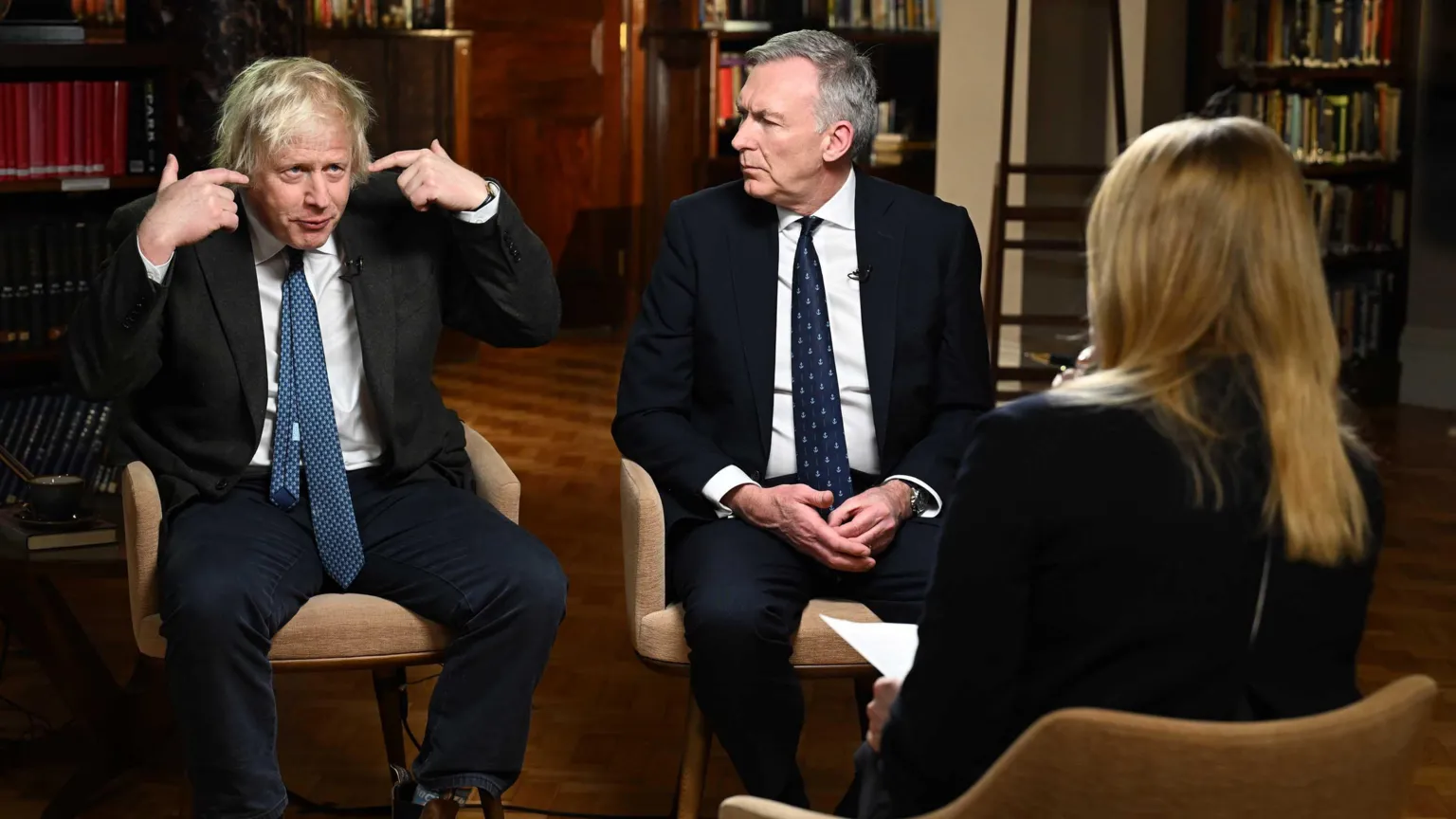
Reflections on the War's Origins and Early Response
Speaking just days before the fourth anniversary of the war, Johnson, who was prime minister at the time of Russia's invasion, reflected that the conflict might have been prevented had Western allies taken Putin's escalating aggression and the 2014 annexation of Crimea more seriously.
Johnson and Sir Tony recounted the moment Russia invaded Ukraine on 24 February 2022, and the initial days of the war when the decision to support Ukrainian President Volodymyr Zelensky was made.
Despite extensive UK support, both agreed that Western allies had been too slow and cautious in providing aid to Ukraine. Over the past four years, allies have often taken months to agree on sending the weapons President Zelensky requested.
Sir Tony described the allies' approach as "incrementalism" and said Ukraine felt it was "too slow and it's deeply frustrating - these tensions have existed all the way through."
Viewers can watch the full interview on Sunday with Laura Kuenssberg at 9am on BBC One and on the channel at 8.30pm on Saturday.
Criticism of Delayed Support and Strategic Approach
Johnson criticized the cautious approach, emphasizing that it had cost lives.
"We've always delayed needlessly," he said. "We've then ended up giving the Ukrainians what they have been asking for, and actually it's always served to their advantage and to the disadvantage of Putin. I mean, the one person who suffers from escalation is Putin."
He reiterated his earlier point:
"If we can have boots on the ground after the war, after Putin has condescended to have a ceasefire, then why not do it now? Just to make this point that it is up to the Ukrainians, and these people wouldn't be there in a war-fighting capacity, right?"
When asked if he meant UK and other European allies' forces should be deployed now to safe parts of Ukraine to "flip a switch," Johnson affirmed:
"Yes, I think, you know, if we are willing to do it in the context of a ceasefire, which of course puts all the initiative, all the power in Putin's hands, why not do it now? There is no logical reason that I can see why we shouldn't send peaceful ground forces there to show our support, our constitutional support for a free, independent Ukraine.
That is a political thing. It's about whether Ukraine is a free country or not. If it's a vassal state of Russia, which is what Putin wants, then obviously it's up to Putin to decide who comes to his country. If it's not, then it's up to the Ukrainians."
Johnson's proposal suggests deploying troops in a non-combat, peacekeeping capacity to demonstrate political support for Ukraine's sovereignty.
Potential Russian Reaction and Historical Context
It is likely that Putin would view the presence of international troops in Ukraine, even on a peacekeeping mission, as a significant provocation. In September of the previous year, following the announcement of a proposed "reassurance force," Putin declared that any troops deployed to Ukraine would be considered "legitimate targets."

Johnson reflected on the failure to confront Putin over Crimea's annexation in 2014, during David Cameron's tenure as UK prime minister, calling it "tragic."
"I do think that. The failure to do anything in Crimea was tragic. I think Putin was emboldened by a Western failure in Syria to punish Assad for using chemical weapons. I think Putin was further emboldened in February 2022 by what he'd seen in Afghanistan, and a sort of general sense that the West was on the back foot.
He'd seen those appalling pictures of Americans being forced to flee Afghanistan and the UK pulling out as well, and that really did embolden him."
Johnson also criticized the "general ambiguity of the Western position," stating:
"If we'd had clarity and simplicity about Ukraine, rather than endless fudge and obscurity, we could have saved that, we could have prevented that invasion."
He acknowledged his own regret for not having taken more decisive action during his time as foreign secretary and prime minister.
"I do think we should have done more," he said.
Johnson emphasized a fundamental issue:
"The real problem is, with Ukraine, that Putin does not yet believe, or he has not yet been convinced, that the West regards it as an overwhelming strategic objective for Ukraine to be a free and independent European country.
And until he sees the evidence that that is our determination, I think he's just going to keep going. That's the problem we're in. It's that fundamental lack of resolve."
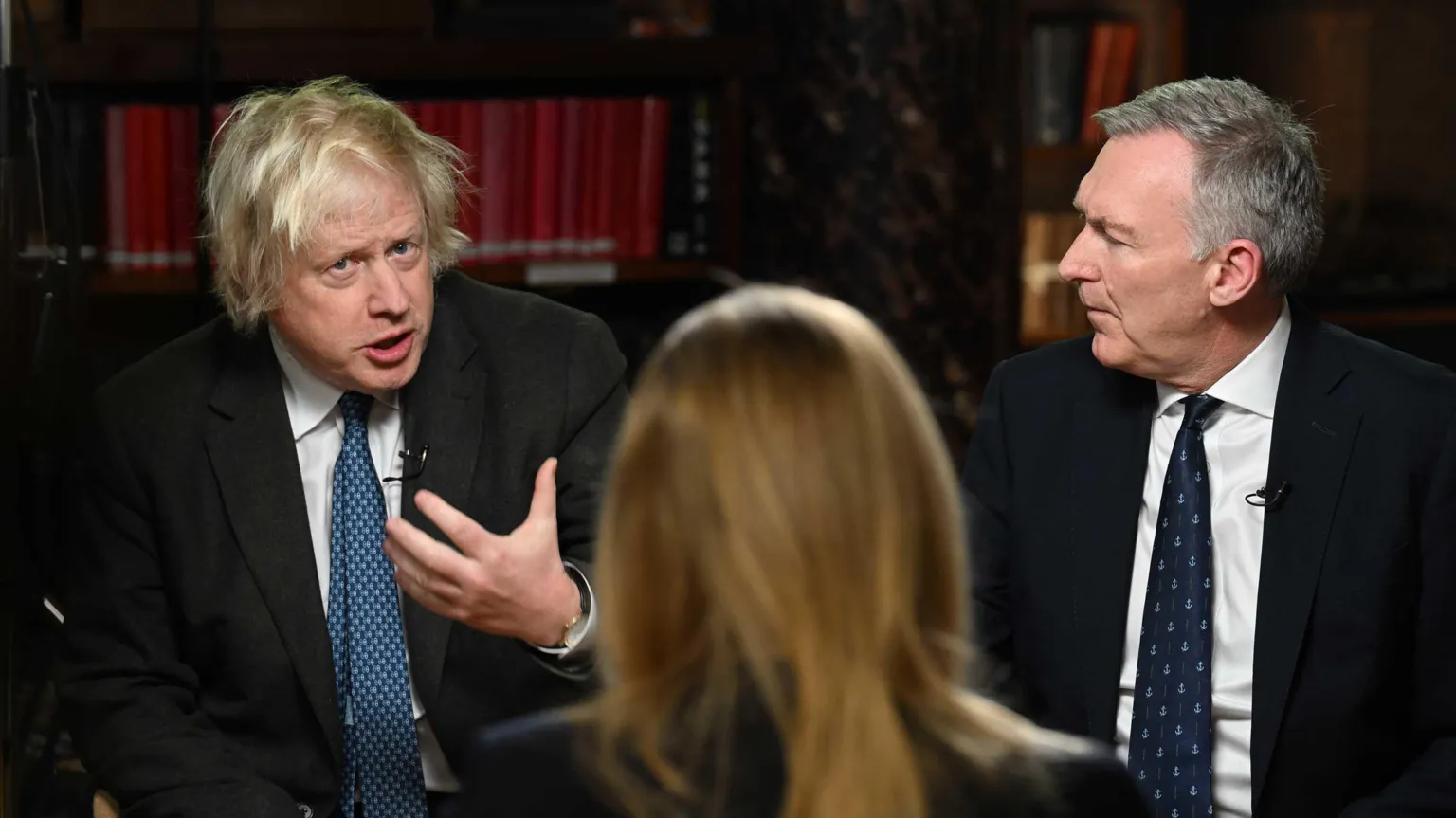
Defence Spending and NATO Commitments
On defence spending, Sir Tony Radakin urged the government to fulfill its commitment to allocate 3.5% of national income to defence by 2035, a pledge made at the NATO summit the previous year.
"We made, the prime minister made, an international commitment. The reason for that commitment was because there is a war in Europe. Russia is weak, but dangerous.
We are safe as a country at the moment: we are a nuclear power, we're a member of NATO, we have America as our principal ally. But we need to invest in each of those in order to assure our nation that we will continue to be safe in the 2030s. That's why we had a defence review.
That's why NATO galvanised around an operational plan and the need for more spending, and that has to be resolved. We have made that commitment. NATO is challenging us. Where is our plan?"
Reflections on Western Policy and Future Prospects
As the war in Ukraine approaches its fourth anniversary, Johnson expressed regret that the conflict could have been prevented, attributing this to failures by the West, including during his own tenure as foreign secretary and prime minister, which emboldened Putin.
His assertion suggests that nearly a decade of foreign policy missteps contributed to the current situation, a claim likely to be debated for years.
Johnson's proposal to send UK and allied troops to Ukraine now surpasses current official UK and partner suggestions, including those discussed by Sir Keir Starmer regarding a "coalition of the willing."
Sir Tony Radakin, who was involved in planning such a coalition, noted that forces are being prepared to support Ukraine only if a peace deal is reached.
In 2022, European nations pledged support to Ukraine but deemed sending troops as beyond their willingness. Shifting the coalition's focus to deploying troops now would represent a significant political development. Alternatives under discussion include creating a safe zone in western Ukraine or opening Lviv airport as precursors to a ceasefire.
Johnson's suggestion appears driven by frustration over the allies' cautious response, which he perceives as sufficient to sustain Ukraine's fight but insufficient to end the war.
Both Johnson and Radakin emphasized that President Zelensky has already made concessions, and that peace requires increased pressure on the Kremlin, both economically and militarily.
Johnson described it as "deluded" to believe that Putin desires peace, a view he has communicated to the White House.
With ongoing casualties on both sides, it remains uncertain how much further Western allies are prepared to escalate support or how much Putin is willing to respond.


