

Labour MPs Back Andy Burnham as Next Leader
The majority of Labour MPs have nominated Andy Burnham as the next leader of the Labour Party.
Burnham is currently the sole MP standing for the leadership and is anticipated to secure over 323 nominations by Monday, making it mathematically impossible for any rival to meet the nomination threshold required to contest against him.
This development means Burnham is poised to become prime minister later this month, only weeks after his return to Parliament via a by-election in Makerfield.
What Happens Next?
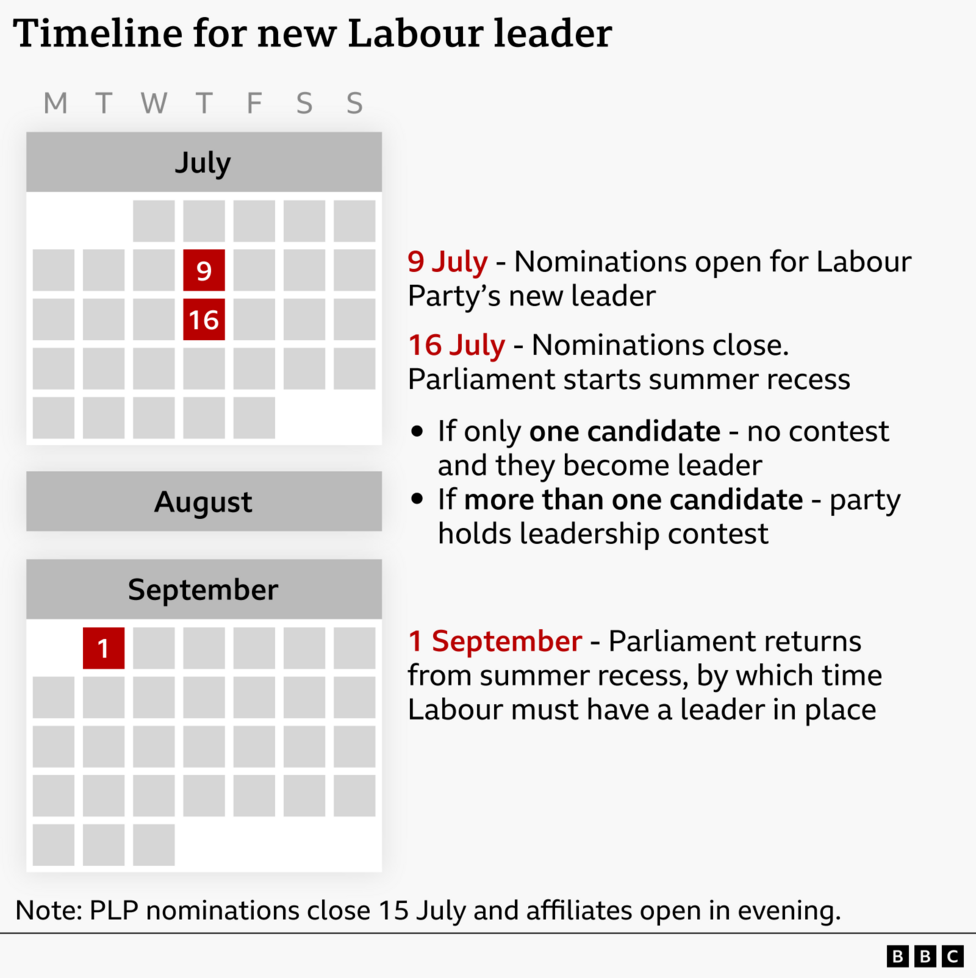
Under the party's rulebook, there is a designated one-week period between 9 and 15 July during which MPs can gather the necessary nominations to stand for leadership.
Candidates must obtain nominations from 20% of Labour MPs. With 403 Labour MPs in total, this equates to the support of at least 81 MPs.
In addition to MP nominations, candidates must also receive nominations from at least three of the 31 socialist societies and trade unions affiliated with the party, or alternatively from 5% of the constituency Labour parties (CLPs).
Affiliate nominations must represent at least 5% of Labour's affiliated membership and must include endorsements from two unions, such as GMB, Unite, and Unison.
Affiliate nominations open at 18:00 BST on 15 July and close at the same time on 16 July. Should a contest be necessary, the CLP nomination stage would commence on 20 July and conclude on 31 July.
What If Burnham Is the Only Candidate?
No other candidate has declared their intention to stand.
Wes Streeting, the former health secretary under Sir Keir Starmer, was initially considered the most likely to enter the race. However, following Sir Keir's resignation, Streeting endorsed Burnham and announced he would not seek the leadership.
Once Burnham achieves 323 nominations, it becomes mathematically impossible for any rival to meet the 81-MP nomination threshold required to stand against him. This milestone is expected to be reached on Monday.

Consequently, Burnham will be confirmed as Labour leader by 17 July. However, he will not assume the office of prime minister until three days later.
This delay is due to the formal process whereby Sir Keir Starmer must tender his resignation to King Charles III at Buckingham Palace. The King will then invite Burnham to form a new government.
Since the leadership declaration will occur on a Friday, the official transition will take place on the next working day, Monday 20 July.
Could There Be a General Election?
Burnham has already dismissed the possibility of an early general election, stating at an online forum last week:
"I'm going to work to the 2024 manifesto."
By September 2024 at the latest, the United Kingdom will have experienced seven prime ministers within a decade.
Four of these prime ministers assumed office mid-term without contesting a general election: Theresa May in 2016, Boris Johnson in 2019, and both Liz Truss and Rishi Sunak in 2022.
In each instance, opposition parties questioned the legitimacy of these leaders due to their lack of a direct electoral mandate.
However, the incoming prime minister, like their predecessors, is not obligated to call a general election before the scheduled end of the current Parliament in 2029.
The UK's political system involves the electorate voting for MPs and parties, with those MPs and parties subsequently selecting their leader.
The last general election was held on 4 July 2024, resulting in a Labour landslide majority. Legally, the next election must occur by August 2029, although the prime minister may call one earlier at their discretion.
The decision to call an early election depends on several factors, including party polling performance and whether the prime minister seeks a fresh mandate to implement their agenda.
While Burnham has ruled out an immediate election, it remains possible that one could be called before 2029.
- Burnham rules out calling early election as PM
- Burnham says there is some room for movement on tax


