

US Announces Naval Blockade of Strait of Hormuz
US President Donald Trump has declared that the United States will initiate a blockade of the Strait of Hormuz following unsuccessful negotiations with Iran aimed at ending the ongoing conflict.
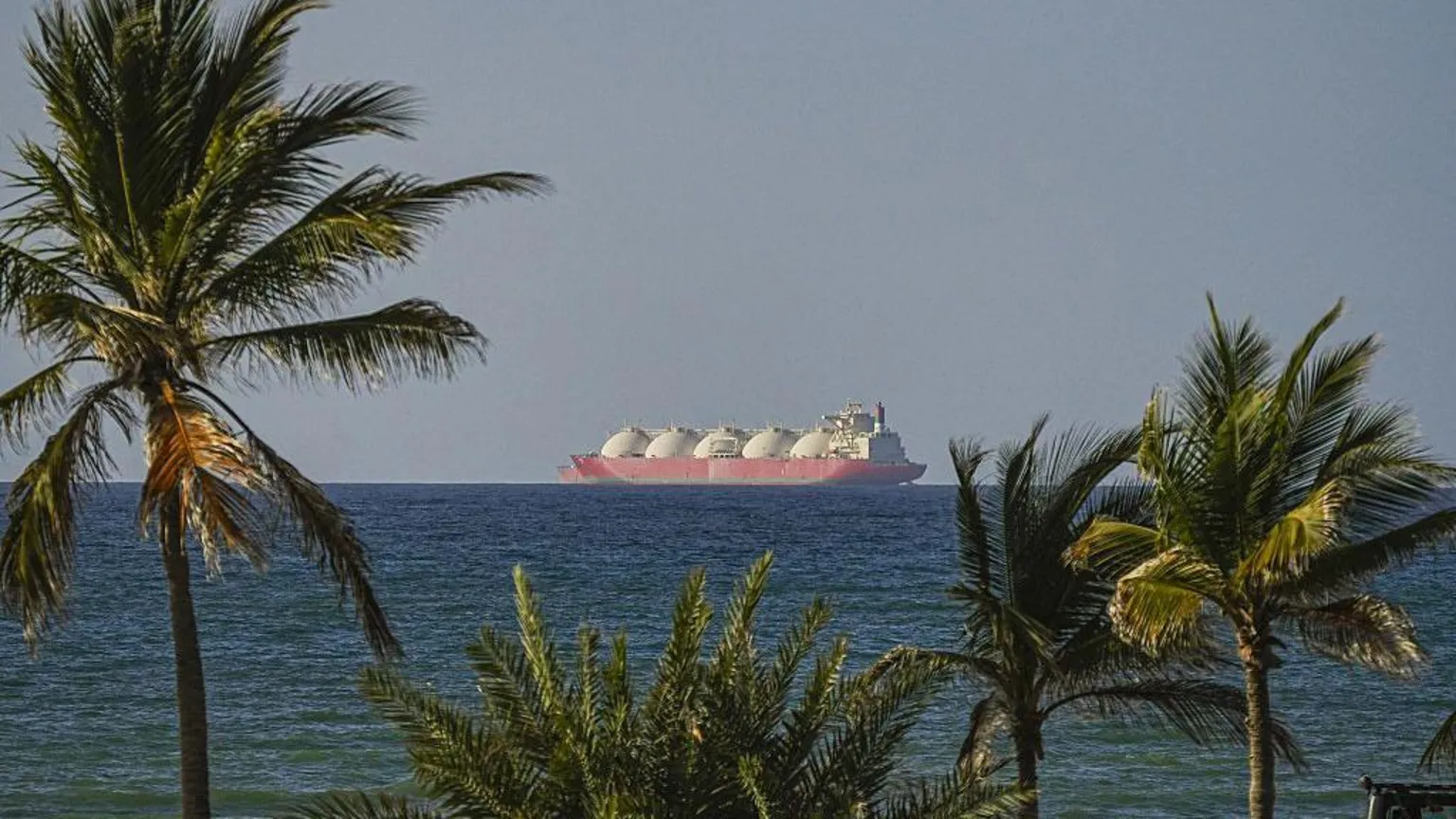
Iran has effectively closed the strait, a critical maritime route through which approximately 20% of the world's oil and gas shipments transit, as a strategic component of its war efforts.
President Trump stated that direct talks with Iran, held in Pakistan, failed because "Iran is unwilling to give up its nuclear ambitions."
In response, Iran's foreign ministry spokesman condemned the US for its "excessive demands and unlawful requests." Mohammad Bagher Ghalibaf, Iran's parliamentary speaker and head of the Iranian negotiating team, wrote that "the opposing side ultimately failed to gain the trust of the Iranian delegation in this round of negotiations."
What Has Trump Said About the Blockade?
On Sunday, President Trump posted on Truth Social that the US would begin "BLOCKADING any and all Ships trying to enter, or leave, the Strait of Hormuz."
"I have also instructed our Navy to seek and interdict every vessel in International Waters that has paid a toll to Iran. No one who pays an illegal toll will have safe passage on the high seas," Trump stated.
He further added that the US would commence operations to neutralize mines reportedly laid by Iran in the strait.
"Any Iranian who fires at us, or at peaceful vessels, will be BLOWN TO HELL!" he warned.
Trump indicated that an agreement ensuring free passage would eventually be reached but criticized Iran for obstructing this by claiming the presence of undisclosed mines.
"Iran promised to open the Strait of Hormuz, and they knowingly failed to do so. As they promised, they better begin the process of getting this INTERNATIONAL WATERWAY OPEN AND FAST!" he added.
How Would a Blockade Work in Practice?
Trump announced that "effective immediately," the US Navy would initiate the blockade of the strait.
The 2022 US Navy Commander's handbook on naval operations law defines a blockade as a "belligerent operation to prevent vessels and/or aircraft of all States, enemy and neutral, from entering or exiting specified ports, airfields, or coastal areas belonging to, occupied by, or under the control of an enemy State."
Later on Sunday, Trump told Fox News that the blockade "will take a little while, but will be effective pretty soon," describing it as an "all or none" policy.
He mentioned that other countries would participate in the blockade but did not specify which ones. The BBC understands that the UK will not be involved in the blockade.
Trump also stated that NATO has offered assistance to "clean out" the strait, aiming to restore free navigation "in not too long a distance." He said the US would deploy minesweepers and that the UK, a NATO member, would also contribute.
"I understand the UK and a couple of other countries are sending minesweepers," Trump said.
Prime Minister Keir Starmer has previously confirmed that British military mine-hunting systems are already operating in the region.
A UK Government spokesperson said: "We continue to support freedom of navigation and the opening of the Strait of Hormuz, which is urgently needed to support the global economy and the cost of living back home."
The spokesperson emphasized that the Strait of Hormuz "must not be subject to tolling."
"We are urgently working with France and other partners to put together a wide coalition to protect freedom of navigation," the spokesperson added.
Three US legal experts told the BBC that a blockade could violate maritime law. One expert also questioned whether a militarily enforced blockade would breach the current ceasefire agreement.
Why Would the US Blockade the Strait?
The geography of the strait has enabled Iran to leverage control during the conflict by selectively restricting vessel passage and causing oil prices to rise.

Tehran has been charging substantial fees for some vessels to transit the strait.
By closing the strait, the US aims to cut off a significant revenue source for the Iranian government, though this action risks further increasing oil and gas prices.
Speaking to Fox News, Trump said,
"We're not going to let Iran make money on selling oil to people that they like and not people that they don't like,"
adding the goal was to allow "all or nothing" passage through the vital shipping channel.
Analysts suggest Trump's announcement is intended to pressure Iran into negotiating on American terms.
On CBS' Face the Nation, Republican Congressman Mike Turner of Ohio described the blockade as a strategy to force a resolution in Hormuz.
"The president, by saying we're not just going to let them decide who gets through, is certainly calling all of our allies and everyone to the table. This needs to be addressed," Turner said.
However, Senator Mark Warner of Virginia, ranking Democrat on the Senate Intelligence Committee, told CNN,
"I don't understand how blockading the strait is going to somehow push the Iranians into opening it."
What Would the Impact Be?
In the short term, Trump's blockade threat will affect only a small number of vessels still navigating the strait, according to shipping expert Lars Jensen.
Jensen, chief executive of Vespucci Maritime, told the BBC,
"If this is actually done by the Americans, it will halt a very tiny trickle of vessels. In the greater scheme of things, it doesn't really change anything."
He also noted that Trump's warning to deny safe passage to ships paying tolls to Iran would have limited effect, as such companies are already subject to sanctions.
"First of all, there's very few ships that pass. There's even fewer of those that pay, and those that pay will already be subject to American sanctions," Jensen said.
Most shipping companies are expected to wait for a potential peace agreement before resuming normal operations, with a gradual increase in shipping anticipated if stability returns.
Current Situation in the Strait
A two-week ceasefire in the US-Israel conflict with Iran, agreed on 7 April, included provisions guaranteeing "safe passage" through the narrow waterway.
Despite this, vessels received warnings that they would be "targeted and destroyed" if they attempted to cross without permission, resulting in only a few ships transiting the strait in the initial days following the ceasefire.
By 17:00 BST on 10 April, BBC Verify analysis of MarineTraffic ship-tracking data recorded only 19 ships passing through the strait since the ceasefire began.
Of these vessels, four were tankers carrying oil, gas, or chemicals, while the remainder were bulk carriers or container ships of various types.
Some ships have transited without broadcasting their locations.
This contrasts with an average of 138 ships passing daily through the strait before the conflict commenced on 28 February.
Additional reporting by Sareen Habeshian.


