

Conflicting Narratives on US-Iran Negotiations
When the United States asserts that ongoing, productive negotiations to end the war with Iran are underway, while Iran denies such talks are taking place, it raises the question of which account reflects reality.
What is truly occurring behind the scenes? Is peace in the Gulf imminent, or are both parties preparing for a prolonged and costly conflict that will sustain elevated energy prices globally through the summer?
Communications are reportedly being exchanged from the US to Iran, albeit indirectly through intermediaries such as Pakistan, which maintains favorable relations with both governments.
However, this indirect contact does not equate to formal negotiations, which may explain why an Iranian military spokesperson has categorically denied that talks are occurring.
While indirect channels exist between the two sides, a comprehensive agreement may remain distant.
The current situation resembles the stalemate seen in efforts to end the Russia-Ukraine war, where both parties express a desire to conclude hostilities but insist on terms far apart from each other’s positions.
What the US and Israel Want
At the onset of the conflict on 28 February, Washington and Jerusalem harbored high expectations that their overwhelming military superiority over Iran would lead to the Islamic Republic’s collapse.
Failing that, they anticipated that Iran’s already fragile economy would compel it to seek peace on American terms.
These outcomes have not materialized. Consequently, the objectives of the US and Israel may not be fully realized, as the Iranian regime’s continued survival appears to embolden it further.
Details of a proposed 15-point US plan, reported by Israel’s Channel 12 network, include demands for Iran to end its nuclear program, halt its ballistic missile development, and cease support for proxy militias such as the Houthis in Yemen and Hezbollah in Lebanon.
In exchange, Iran would receive sanctions relief and some shared control over the Strait of Hormuz.
What Iran Wants
Initially, Iran rejected the US 15-point plan outright, labeling it "excessive."
Later, Iran’s Foreign Minister Abbas Araghchi provided a more measured response on state television, stating:
"Some ideas have been proposed to the country's senior leaders - and if a position needs to be taken, it will certainly be determined."
Iranian state media outlined five conditions for ending the war, including payment of war reparations, international recognition of Iran’s "sovereign right to exercise authority over the Strait of Hormuz," and assurances that Iran will not be attacked again.
These demands present significant challenges for Washington and its Gulf Arab allies.
Iran asserts that as the largest nation in the region, with over 90 million people and the longest coastline along the Gulf, it should reclaim its historical role as "the policeman of the Gulf," a position it held under the shah before the 1979 Islamic Revolution.

Iran seeks the withdrawal of the US Navy’s 5th Fleet, based in Bahrain, to establish itself as the dominant military power in the Gulf, supported by allies Russia, China, and North Korea.
Iran cites a deep mistrust of the US, noting that on two occasions—2025 and February of this year—it engaged in negotiations only for the US to abandon talks and initiate military strikes.
Critics argue that Iran was merely prolonging talks without genuine intent to relinquish its contentious programs and policies that destabilize the region.
What the Gulf Arab States Want
The Gulf Arab states have reacted with dismay to recent developments.
Although they never favored the Islamic Republic regime, they had established an uneasy accommodation prior to the conflict.
They have witnessed with concern the US’s failure to topple the Iranian regime despite significant military efforts, leaving Iran wounded but increasingly assertive, conducting drone and missile attacks against neighboring Gulf states.
To the frustration of Washington and US Central Command (Centcom), Iran has strengthened its strategic position, effectively controlling the vital Strait of Hormuz.
This control grants Tehran substantial leverage over the global energy market, as international pressure on US President Donald Trump to end the war limits his options.
Ideally, the Gulf states desire a return to the status quo ante, but Iran’s current posture shows no inclination to retreat.
Trump’s options may expand with the deployment of approximately 5,000 US Marines and paratroopers from the 82nd Airborne Division to the region, though these forces could be stationed at various strategic locations, including Iran’s oil export terminal at Kharg Island, Hormuzgan province’s coast, or the Bab El Mandeb Strait at the Red Sea’s southern entrance.
Alternatively, their presence might serve as leverage in negotiations with Tehran.
However, any ground operation risks US casualties, which are unpopular domestically, and could entangle the US more deeply in what many describe as "a war of choice."
The Islamic Republic’s survival has emboldened its leadership and demands, as it believes it holds advantages in both time and geography.
The more the White House projects that Iran is desperate for a deal, the less likely Iran is to agree to one.
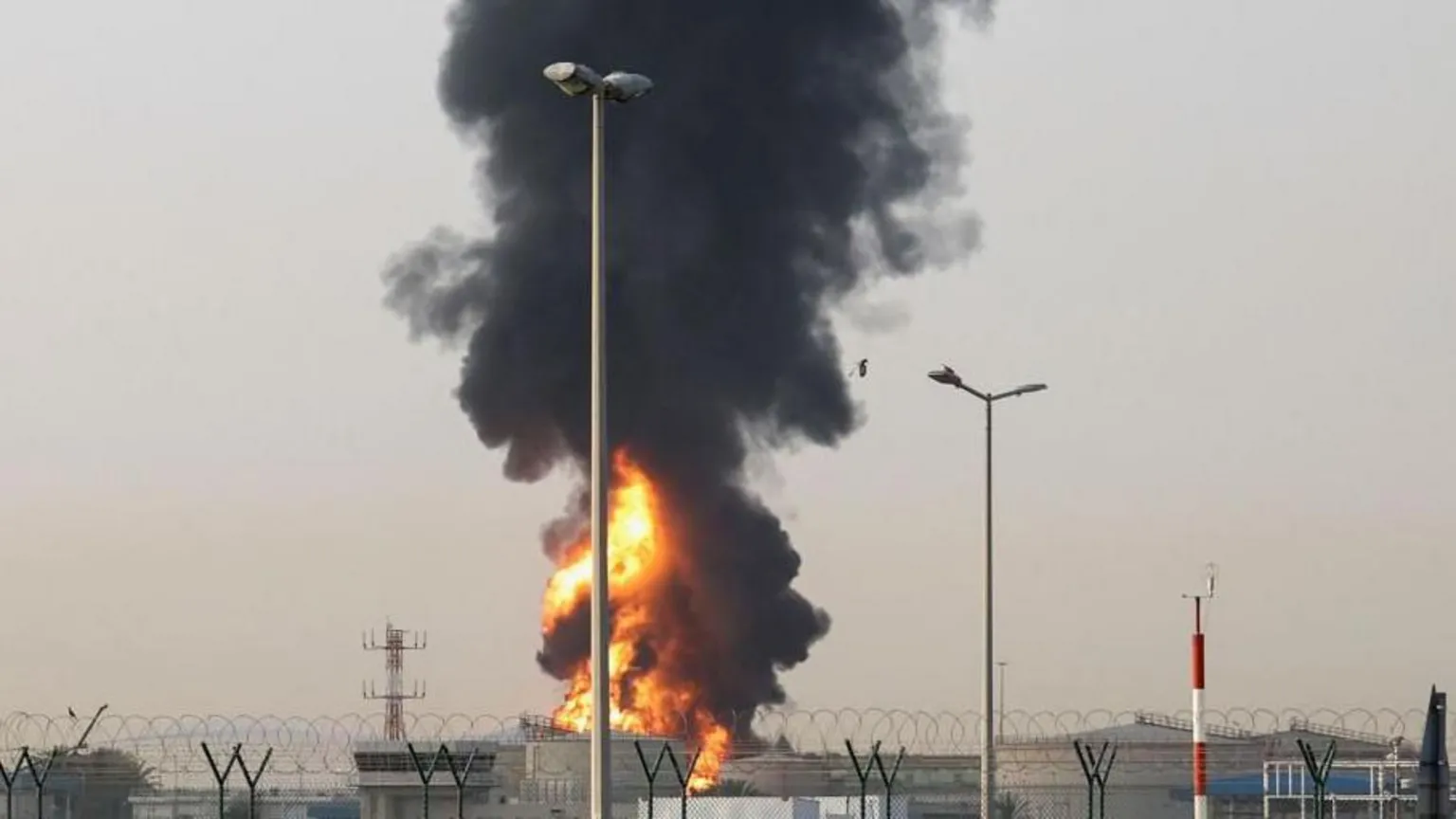
Iran has been carrying out retaliatory strikes on US-allied Gulf states.


