

UK Considers Measures to Secure Strait of Hormuz
The United Kingdom is examining "any options" to ensure the security of vital oil shipping routes through the Strait of Hormuz, including collaboration with the United States and allied nations, according to Energy Secretary Ed Miliband.
This announcement follows a statement by US President Donald Trump on Saturday, in which he threatened to reopen the channel "one way or another" and called on countries such as China, France, and the UK to deploy warships to the strategic waterway.
Miliband emphasized the importance of making the strait safe for maritime traffic but declined to disclose specific strategies under consideration by the government.
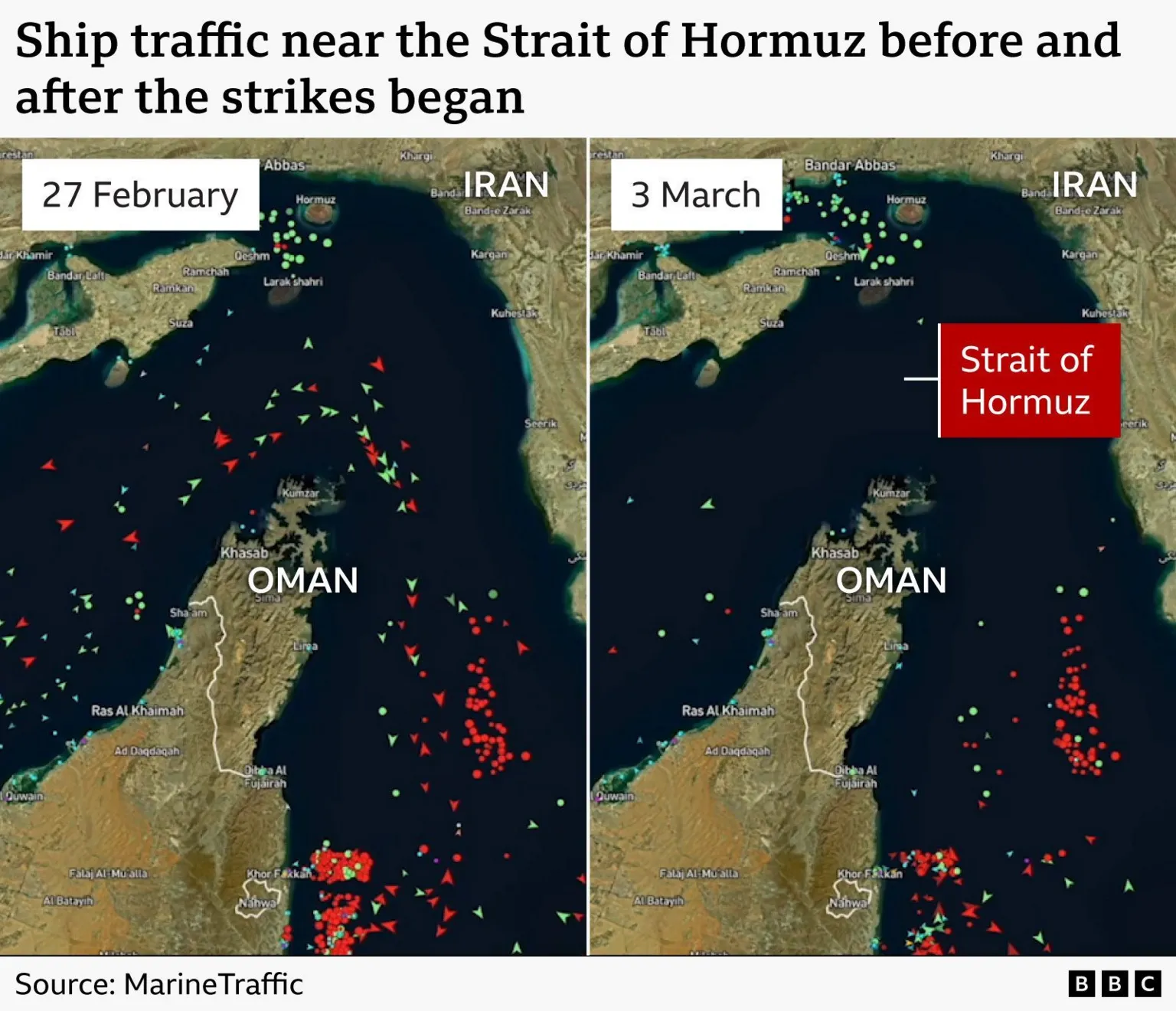
The Strait of Hormuz, a critical global shipping channel, has been effectively blocked by Iran, causing severe disruptions to international supply chains and driving up energy prices.
Iran's newly appointed Supreme Leader, Mojtaba Khameini, has pledged to maintain the blockade as a form of political and economic leverage against the United States. Approximately 20% of the world's oil supply typically transits through this narrow passage.

Escalating Conflict and Security Concerns
As the conflict involving the US and Israel against Iran enters its third week, several vessels have been attacked while attempting to navigate the strait. There are also apprehensions that Iran may have deployed naval mines in the area to further obstruct shipping activities.
During an interview on Sunday with Laura Kuenssberg, Miliband stated it was a "priority" to reopen the Strait of Hormuz and noted that there are "different ways we can contribute including with mine-hunting drones."
"You can rest assured that any options that can help to get the strait reopened are being looked at in concert with our allies," Miliband said when asked if the UK was considering sending drones or ships to the region.
He refrained from providing operational specifics but reiterated that "ending the conflict, is the best and surest way to get the strait reopened."
Political Responses Within the UK
In contrast, Liberal Democrat leader Ed Davey argued against deploying UK ships to secure the Strait of Hormuz, advocating instead for efforts to "de-escalate" the ongoing war.
Davey criticized President Trump as "very reckless" in what he described as an "illegal and damaging war," asserting that Britain should not be at the beck and call of an American president "who does not seem to know what he is doing."
Shadow Energy Secretary Claire Coutinho also commented on Sunday, stating that the UK should consider sending ships or drones to the Middle East if it aligns with national interests.
"It is in the UK's interests to re-open international shipping lanes and protect military assets abroad," Coutinho said, adding that the Conservative party would have permitted US allies to use UK military bases more swiftly than the Labour party did.
Strategic Importance of the Strait of Hormuz
According to estimates from the US Energy Information Administration (EIA), approximately 20 million barrels of oil passed through the Strait of Hormuz daily in 2025. This volume corresponds to nearly $600 billion (£447 billion) worth of energy trade annually, underscoring the strait's critical role in global energy markets.


