

Iran 'offers to end chokehold on strait of Hormuz'
Iran has proposed ending its control over the strait of Hormuz without addressing its nuclear program, according to two regional officials familiar with the proposal on Monday. This development coincides with a visit by Iran’s foreign minister to Russia, described by him as an opportunity to consult with Moscow regarding the ongoing conflict and relations with the United States.
As part of its proposal, Iran also demands that the US lift its blockade of the country, the officials said on condition of anonymity due to the confidential nature of the negotiations.
The proposal, which was relayed to the United States through Pakistan, is unlikely to gain support from US President Donald Trump, who insists that Iran’s nuclear program must be curtailed as part of any comprehensive agreement to reopen the strait of Hormuz and establish a permanent ceasefire.
“We have all the cards. If they want to talk, they can come to us, or they can call us,” Trump stated on Sunday during an interview with Fox News Channel.
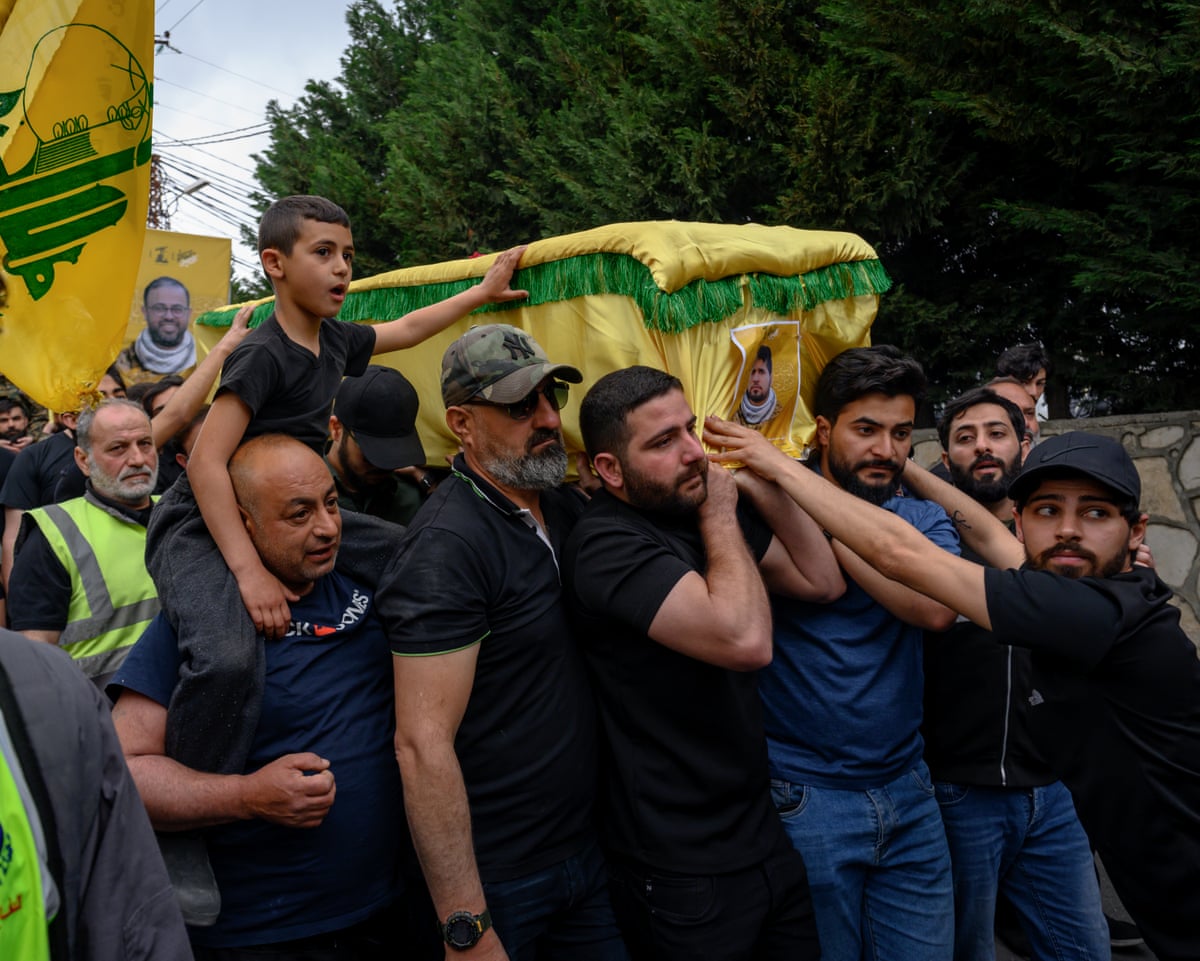
Meanwhile, Hezbollah leader Naim Qassem on Monday condemned Lebanon’s planned direct negotiations with Israel, labeling them a “grave sin” that threatens to destabilize Lebanon.
“We categorically reject direct negotiations with Israel, and those in power should know that their actions will not benefit Lebanon or themselves,” Qassem said in a statement. He urged authorities to “back down from their grave sin that is putting Lebanon in a spiral of instability.”
“These direct negotiations and their outcomes are as if they do not exist for us, and they do not concern us in the slightest,” he added, affirming, “we will continue our defensive resistance for Lebanon and its people.”
“No matter how much the enemy threatens, we will not back down, we will not bow down, and we will not be defeated.”
Opening summary: Trump says Iran can call 'if they want to talk'
Welcome to our live coverage of events in the Middle East.
US President Donald Trump has stated that Iran can initiate telephone contact if it wishes to negotiate an end to the conflict, emphasizing that Iran must agree never to develop nuclear weapons. Concurrently, Pakistani leaders have attempted to revive stalled peace talks between Washington and Tehran.

Iranian Foreign Minister Abbas Araghchi engaged in discussions with mediators from Pakistan and Oman before traveling to Russia on Monday, where he is scheduled to meet President Vladimir Putin. However, hopes for renewed peace efforts diminished on Saturday when Trump canceled a planned visit to Islamabad by his envoys Steve Witkoff and Jared Kushner.
“If they want to talk, they can come to us, or they can call us,” Trump told Fox News on Sunday. “You know, there is a telephone. We have nice, secure lines.
“They know what has to be in the agreement,” the US president continued. “It’s very simple: they cannot have a nuclear weapon, otherwise there’s no reason to meet.”
In a sign that diplomatic efforts are ongoing, Iran’s semi-official Fars news agency reported that Tehran had sent “written messages” to the Americans via Pakistan outlining red lines, including issues related to nuclear development and the strait of Hormuz. However, Fars clarified that these messages do not constitute formal negotiations.
In Lebanon, Israeli airstrikes on Sunday resulted in 14 deaths and 37 injuries, according to the health ministry, despite an existing ceasefire agreement between Israel and Lebanon.
Iran presented the US with a new proposal aimed at reopening the strait of Hormuz and ending hostilities, deferring nuclear negotiations to a later stage, according to the news website Axios. The US State Department and White House did not immediately respond to the Sunday report, which cited an unnamed US official and two sources.
Araghchi’s discussions with Pakistani officials on Sunday included topics such as “implementing a new legal regime over the strait of Hormuz, receiving compensation, guaranteeing no renewed military aggression by warmongers and lifting the naval blockade,” according to Iran’s semi-official Tasnim news agency. During talks with Omani leader Haitham bin Tariq al-Said, Araghchi advocated for a regional security framework free from external interference.
Iran’s envoy in Russia, Kazem Jalali, stated on X that Araghchi’s meeting with Putin was “in continuation of the diplomatic jihad to advance the country’s interests and amid external threats.”
Following the cancellation of the latest diplomatic trip, two US Air Force C-17 aircraft carrying security personnel, equipment, and vehicles used to protect US officials departed Pakistan, according to two Pakistani government sources who spoke to on Sunday.


