Military Response to Iranian Missile Fire
The military has reportedly stated it is responding to missiles launched from Iran.
Qatar reported a garage fire in an industrial area, which civil defence has brought under control. No injuries were reported, according to the interior ministry on Monday, though no further details were provided.
On Sunday, Qatar and Bahrain announced they had intercepted missiles and drones fired towards their territories.
Israel Targets Iranian Regime Sites Across Tehran
The Israeli military announced it is currently attacking Iranian regime infrastructure throughout Tehran. The brief statement did not provide additional details.
Indonesian Peacekeeper Killed Near Southern Lebanon
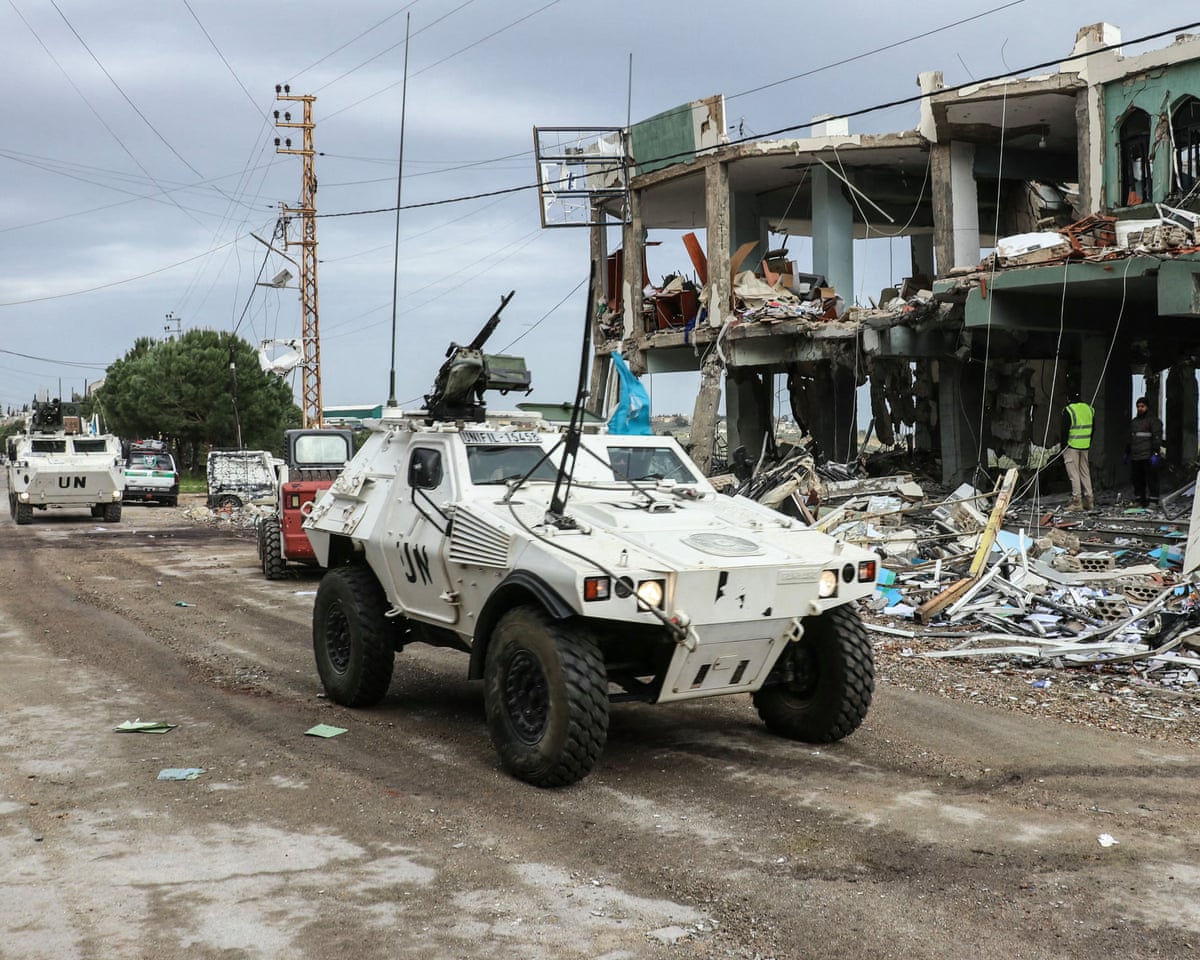
Indonesia condemned the death of an Indonesian peacekeeper serving with the UN Interim Force in Lebanon (Unifil) on Monday, following a projectile explosion at one of its positions near the southern Lebanese village of Adchit al-Qusayr on Sunday.
Indonesia’s foreign ministry stated that harm towards UN peacekeepers is unacceptable and reiterated its condemnation of Israeli attacks in southern Lebanon, urging all parties to respect Lebanon’s sovereignty.
South Korean Airlines Seek Jet Fuel Export Redirection Amid Supply Concerns
South Korean airlines have requested government assistance to redirect jet fuel exports to the domestic market, potentially affecting half of Australia’s imports of this critical fuel. This follows Chinese authorities flagging export restrictions earlier this month.
An official from South Korea’s transport ministry told that “some domestic carriers” asked authorities to redirect export-bound jet fuel back to the local market due to supply concerns.
Any export restrictions would significantly impact import-dependent countries. Australia sources a substantial portion of its refined fuel imports from South Korea, including 18% of its jet fuel imports.
China, which supplies about one-third of Australia’s jet fuel, has reportedly already moved to restrict fuel exports. However, Australia’s energy minister Chris Bowen stated late last week that fuel supplies are expected to last until late April or early May.
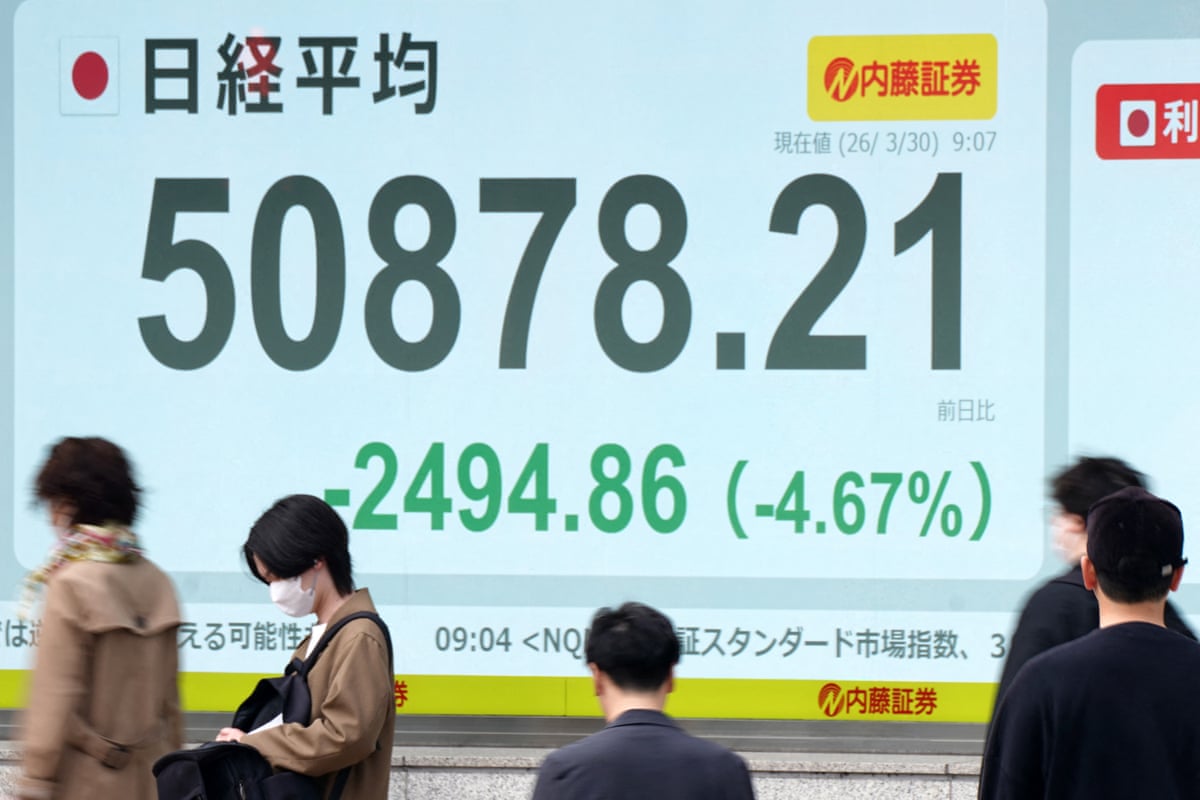
The price of Brent crude has surpassed $116 a barrel, while stock markets in Asia have declined as investors brace for a prolonged Gulf conflict that could trigger inflation spikes and recession risks globally.
Brent crude was just over $70 a barrel when the war began last month, marking an increase of over 50% since then.
Iran’s effective closure of the vital Strait of Hormuz has caused surges in prices for oil, gas, fertiliser, plastic, aluminium, and fuel for planes and shipping.
Much of Asia is heavily reliant on Middle Eastern energy, making the region particularly vulnerable amid the ongoing crisis.
Japan’s Nikkei index dropped another 4.7% early Monday, bringing March losses to nearly 14%. South Korea’s market fell by 4.2%.

Welcome Summary
Welcome to our continuing live coverage of the Middle East war and its impact on the region, global affairs, and the economy.
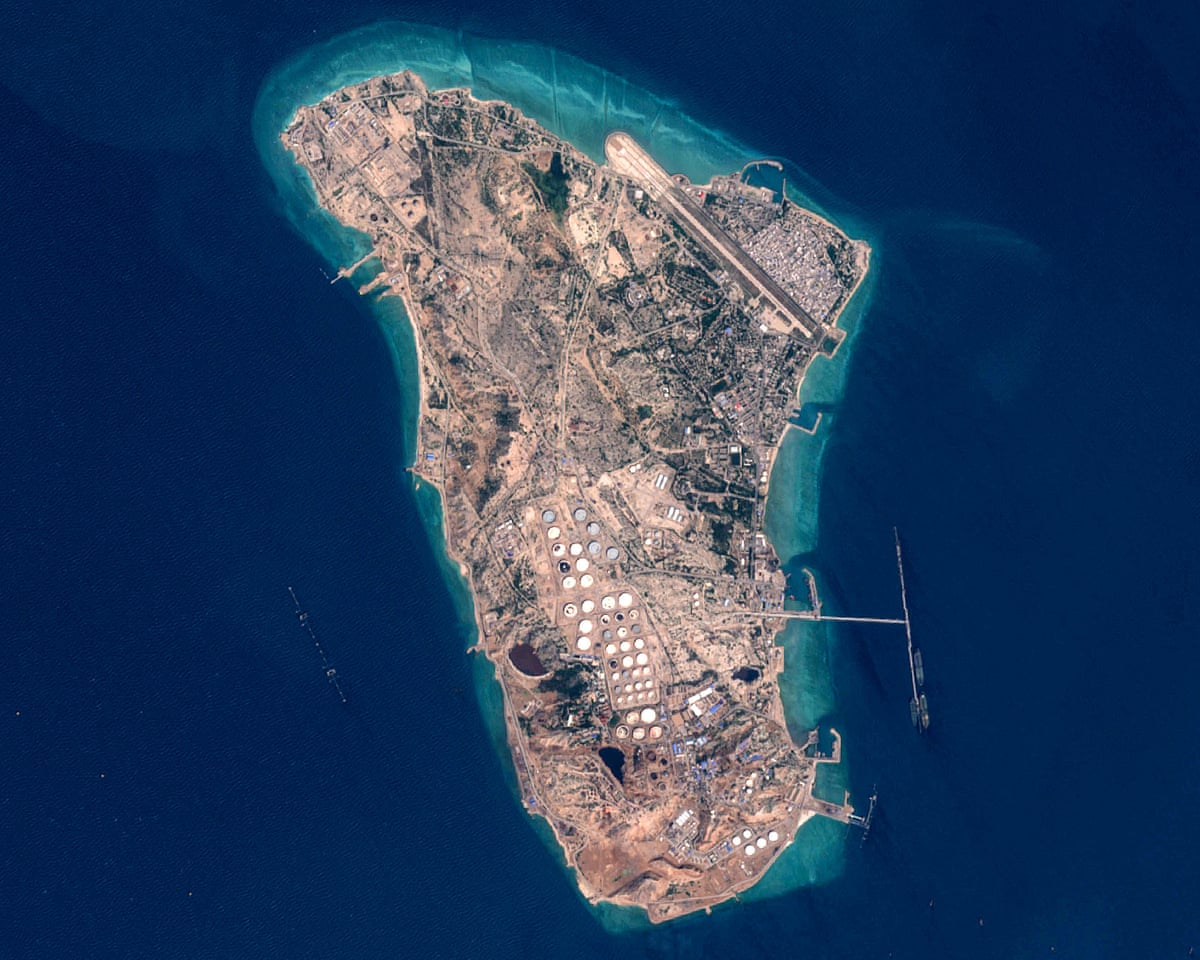
Former US President Donald Trump stated his “preference would be to take the oil” in Iran and claimed US forces could seize the regime’s export hub on Kharg Island, according to the Financial Times. This comes as the US deploys thousands of troops to the Middle East.
Trump compared the potential operation to Venezuela, where the US intends to control the oil industry “indefinitely” following the ousting of President Nicolás Maduro in January.
“To be honest with you, my favourite thing is to take the oil in Iran, but some stupid people back in the US say: ‘why are you doing that?’ But they’re stupid people.”
Such an operation would involve seizing Kharg Island, through which most of Iran’s oil is exported. However, an assault on this export hub would be risky, potentially increasing US casualties and prolonging the war’s cost and duration.
“Maybe we take Kharg Island, maybe we don’t. We have a lot of options,”
Trump also indicated that despite his threats to seize Iranian oil production, indirect US-Iran talks via Pakistani “emissaries” were progressing well.
Additional Key Developments
The UN peacekeeping mission in Lebanon reported that a peacekeeper was killed when a projectile exploded near the southern Lebanese village of Adchit al-Qusayr on Sunday. Another peacekeeper was critically injured, according to an early Monday statement.
The Israeli air force intercepted two unmanned aerial vehicles launched from Yemen, the Israel Defense Forces (IDF) confirmed.
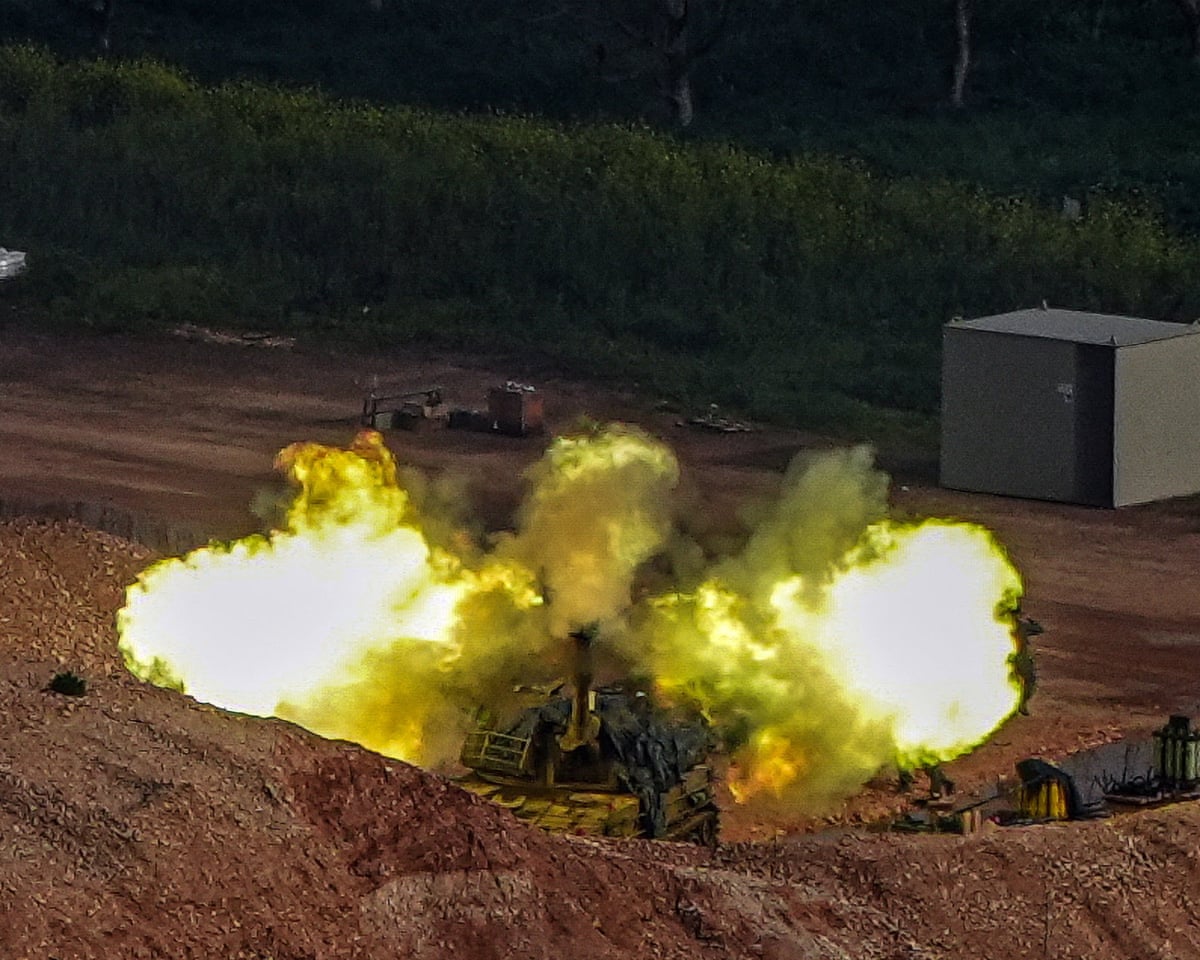
Israeli Prime Minister Benjamin Netanyahu announced an expansion of Israel’s invasion of southern Lebanon targeting Hezbollah. In a video statement from the northern command, he said:
“I have just instructed to further expand the existing security buffer zone. We are determined to fundamentally change the situation in the north.”
Israeli forces currently occupy the area south of the Litani River. Their destruction of key bridges connecting to the rest of Lebanon and the forced displacement of residents have raised concerns about a prolonged occupation.
Pakistan will soon host talks between the US and Iran, according to its foreign minister. Top diplomats from Pakistan, Saudi Arabia, Turkey, and Egypt met in Islamabad to discuss de-escalation strategies. Neither Washington nor Tehran have commented on this development.
Earlier, Iranian parliament speaker Mohammad Bagher Ghalibaf stated that Iranian forces were “waiting” for US ground troops to arrive so they could “rain fire upon them.” This followed reports that the Pentagon is preparing for possible weeks of ground operations in Iran, coinciding with the arrival of thousands of US soldiers and marines in the region.
Power has reportedly been restored across parts of Iran after Israeli strikes targeted “electricity infrastructure,” according to Iran’s energy minister.
The International Atomic Energy Agency (IAEA) confirmed that Iran’s heavy-water production plant at Khondab, struck by Israel on 27 March, has “sustained severe damage and is no longer operational.” The agency added on X that the Khondab heavy water research reactor “contains no declared nuclear material.” The Israeli military had described the site as a “key plutonium production site for nuclear weapons” when it bombed the facility on Friday.
A fire at an industrial site in southern Israel was brought under control hours after being declared a “hazardous materials incident.” The IDF stated that the fire at the Neot Hovav industrial complex may have been caused by “a weapon fragment or interceptor fragment.”
Iranian Supreme Leader Mojtaba Khamenei expressed gratitude to the Iraqi people and religious leadership for their support of Iran “in the face of aggression,” Iranian state media reported, without specifying how the message was conveyed. More than three weeks after his appointment as supreme leader, Khamenei has not been publicly seen or heard since being injured in the US-Israeli airstrike that killed his father, the late Ayatollah Ali Khamenei, his wife, and son on the first day of the war.
On Palm Sunday, the Pope stated that God rejected the prayers of leaders who start wars and have “hands full of blood,” a remark seen as a critique of the Trump administration.