

US and Israel Escalate Attacks on Iran Amid Rejected Negotiation Attempts
Israel and the United States intensified their military operations against Iran on Tuesday, conducting multiple strikes targeting command and control centers, strategic government offices, and missile launch sites. Concurrently, former US President Donald Trump stated he had dismissed what he described as an Iranian attempt to reopen negotiations.
“Their air defense, Air Force, Navy and Leadership is gone. They want to talk. I said ‘Too Late!’”
Iran responded with hundreds of missile and drone attacks across the Gulf region, targeting US military bases, embassies, and civilian infrastructure. Despite widespread international concerns, there appeared to be little prospect for de-escalation as violence spread across an expanding area of the Middle East for the fourth consecutive day.
Casualties have mounted, particularly in Israel, where the Red Crescent reported 787 fatalities and thousands injured. The conflict has caused billions of dollars in damage to oil refineries, tankers, airports, luxury hotels, and other infrastructure, raising fears of a global economic crisis due to soaring energy prices.
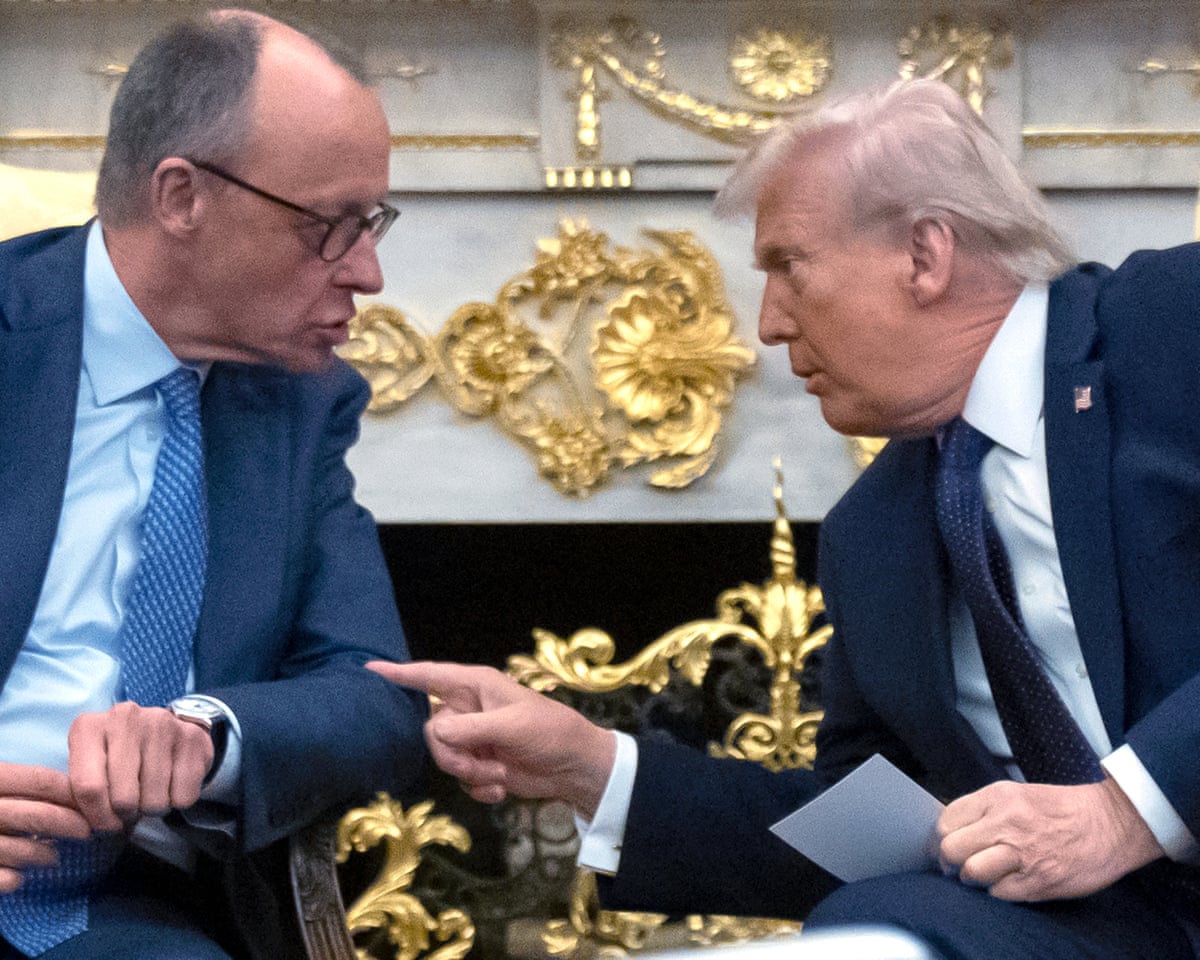
Trump, writing on his Truth Social platform, emphasized the US readiness for a prolonged conflict, stating the country was prepared “to go far longer” than a four- to five-week war against Iran. During a White House meeting with German Chancellor Friedrich Merz, Trump added,
“Just about everything’s been knocked out.”
He denied that Israel had pressured him into initiating the conflict, though he acknowledged concerns about a potential “worst-case scenario” in Iran if a leader as detrimental as the previous one were to assume power.
On the same day, Iran’s ambassador to the United Nations in Geneva refuted claims that Tehran had sought negotiations with the US.
Targeted Strikes and Iranian Retaliation
Among the targets hit in the latest US and Israeli airstrikes were buildings in Tehran and other major Iranian cities, including a facility used by the committee of senior clerics responsible for selecting a successor to Ayatollah Ali Khamenei. Khamenei’s assassination by Israeli airstrikes on Saturday marked the beginning of hostilities. It remains unclear whether the building was occupied during the strike.
“The American-Zionist criminals attacked the Assembly of Experts building in Qom,”
reported Tasnim, an official Iranian news agency. Iran’s foreign ministry called on the UN Security Council to intervene to halt the war, while its military maintained a defiant stance.
A spokesperson for the Revolutionary Guards warned,
“The gates of hell will open more and more”
on the US and Israel.
The US embassy in Riyadh, which sustained damage and a brief fire from an Iranian drone strike overnight, issued a warning of an imminent attack in Dhahran, a key Saudi city housing much of the kingdom’s oil and gas infrastructure along the Gulf coast.
Economic targets across the Gulf also faced attacks as Iran continued launching retaliatory drone and missile strikes against neighboring countries. Qatar reported intercepting missiles aimed at Hamad International Airport in Doha, Oman experienced multiple drone attacks on the port of Duqm, and in the UAE, debris from an intercepted drone caused a fire in an oil storage and trading zone.
Expansion of Conflict and Ground Operations
On a newly opened front, Israel announced that ground troops had entered southern Lebanon to protect residents of northern Israel. In response, Mahmoud Qamati, deputy head of Hezbollah’s political council, declared an “open war” against Israel.
The pro-Iranian group continued its attacks on Israel, launching two missile salvos overnight targeting military bases in northern Israel and shelling a military base on Tuesday morning. Israel conducted retaliatory strikes and ordered evacuations of villages in southern Lebanon, effectively emptying the region south of the Litani River and turning Beirut’s southern suburbs into a ghost town.

Israel’s Defense Minister, Israel Katz, confirmed on Tuesday that he had instructed troops to “hold and advance” into southern Lebanon to prevent further Hezbollah attacks on northern Israel. This marked the first official acknowledgment that Israel’s campaign against Hezbollah would involve ground forces.
To date, Israeli airstrikes have resulted in 52 deaths and displaced at least 29,000 people in Lebanon.
US Officials Maintain Aggressive Stance
US officials have maintained a firm stance, with Defense Secretary Pete Hegseth suggesting the possibility of deploying US troops on the ground in Iran. Secretary of State Antony Blinken warned that the “hardest hits are yet to come.”
Trump stated on Tuesday that successive waves of US-Israeli strikes had eliminated individuals he had considered potential new leaders in Iran.
“Most of the people we had in mind are dead … I guess the worst case would be, we do this, and then somebody takes over who’s as bad as the previous person, right? … We’d like to see somebody in there that’s going to bring it back for the people,”
he said during his meeting with Chancellor Merz at the White House.
US officials have provided varying explanations for the initiation of the conflict with Iran. Trump has alternately described the objective as regime change, preventing Iran from acquiring nuclear weapons, and curbing its ballistic missile program. Iran has consistently denied pursuing nuclear weapons development.
Israeli Prime Minister Benjamin Netanyahu has been more explicit, stating that the US and Israel are “creating the conditions” for the Iranian people to overthrow their government. Israeli analysts suggest the campaign against Iran may bolster Netanyahu’s flagging poll numbers ahead of legislative elections.
Continued Attacks and Casualties
Israeli authorities reported that 12 people were injured on Tuesday in three Iranian missile attacks on southern Israel, some involving cluster munitions, a weapon banned by most countries.
The US military reported the death of a service member, apparently killed while stationed in Kuwait. Additionally, three F-14 fighter jets were accidentally shot down by Saudi Arabia’s air defense systems on Monday.
Trump criticized some US allies for their lack of support for the joint US-Israeli campaign against Iran, singling out Spain as “terrible” and expressing dissatisfaction with the United Kingdom. Referring to UK Labour leader Keir Starmer, Trump remarked,
“This is not Winston Churchill that we’re dealing with.”
Impact on Gulf Energy Infrastructure
Iran’s strikes on energy infrastructure have severely disrupted operations in the resource-rich Gulf states. Qatar announced the suspension of its largest liquefied natural gas production facility, while Saudi Arabia halted operations at its Ras Tanura oil refinery.
Following Iran’s closure of the Strait of Hormuz—a critical global chokepoint for hydrocarbon shipments—Iranian forces attacked several vessels attempting to transit the narrow waterway.
Brigadier General Ebrahim Jabbari, an adviser to the paramilitary Revolutionary Guards, warned that continued US-Israeli attacks would provoke Iranian reprisals against “all economic centres” in the Middle East.
“We have closed the strait of Hormuz … The price of oil … will soon reach $200. We are saying to the enemy that if it decides to hit our main centres, we will hit all economic centres in the region,”
Jabbari stated, as reported by the Iranian news agency ISNA.
On Tuesday night, loud explosions were reported in Doha, Dubai, and Abu Dhabi, underscoring the ongoing volatility in the region.


