

Israeli Military Strikes Hezbollah in Lebanon Following Rocket and Drone Attacks
Israel's military announced it had targeted Hezbollah positions in Lebanon after the Iranian-backed Shia group launched rockets and drones at the Israeli city of Haifa. Hezbollah stated these attacks were in retaliation for the killing of Iran's Supreme Leader Ayatollah Ali Khamenei.
Lebanon's health ministry reported that 31 people were killed by Israeli strikes in Beirut's southern suburbs, an area with a strong Hezbollah presence, as well as in southern Lebanon.
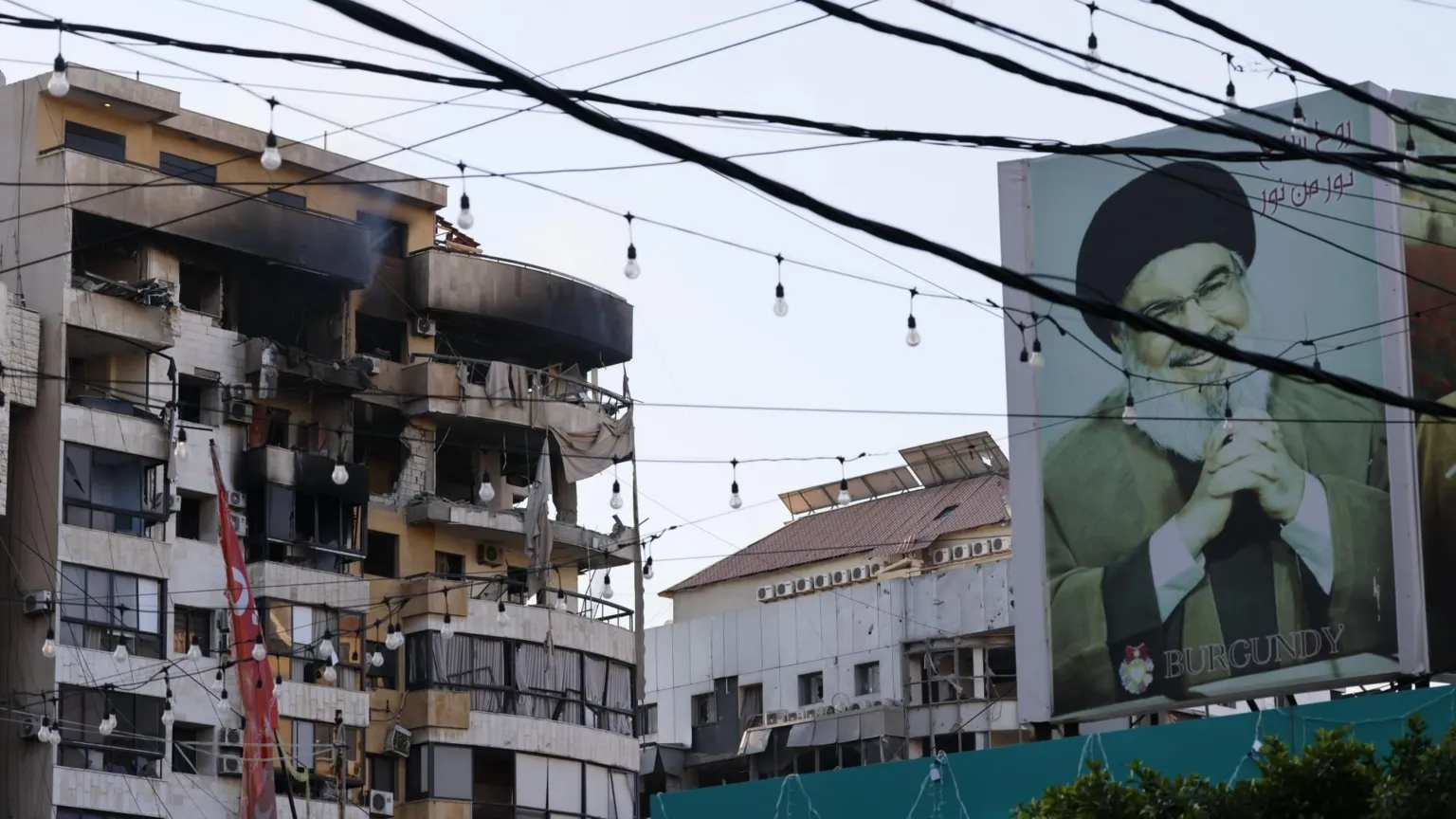
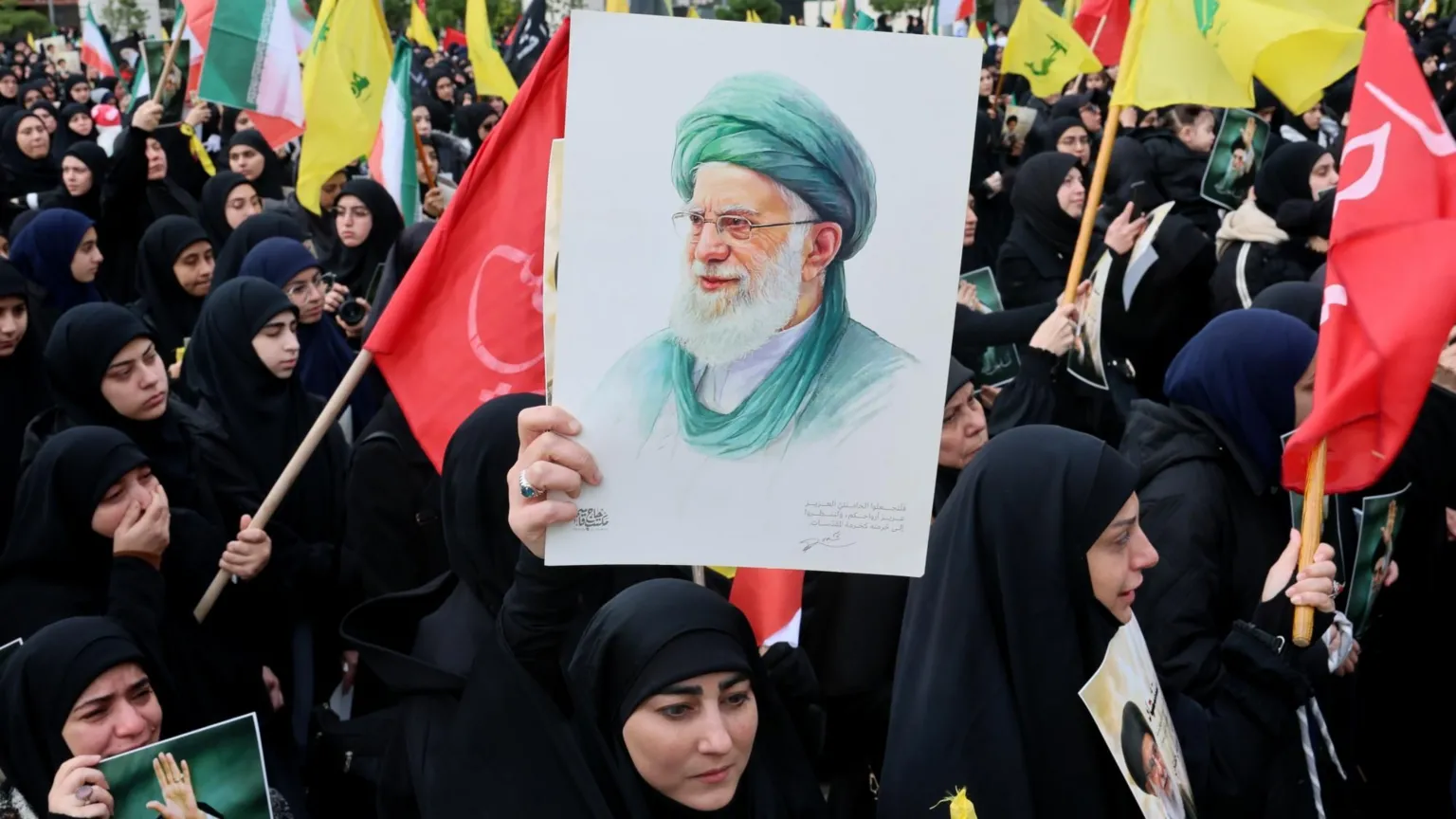
No casualties were reported in Israel from Hezbollah's rocket fire, which the group described as vengeance for Khamenei's "pure blood" and for Israeli strikes in Lebanon since a ceasefire ended a war between them 15 months ago.
Israel's defence minister vowed that Hezbollah would pay a "heavy price".
Israel Katz said he had ordered the Israeli military to "act forcefully" against the militia and political party, and that its leader Naim Qassem was now a "marked target for elimination".
Lebanon's Prime Minister, Nawaf Salam, condemned Hezbollah's actions as "irresponsible" and announced his government's immediate ban on the group's military activities.
It had been widely anticipated that Hezbollah, which maintains close financial and ideological ties to Iran, would become involved in the escalating conflict between Iran, Israel, and the US.
The conflict has rapidly expanded across the Middle East since a joint US-Israeli attack on Iran's leadership and armed forces on Saturday. Iran responded by launching missiles and drones towards Israel and Gulf Arab states hosting US military bases.
Hezbollah's Response and Rocket Attacks on Israel
On Sunday, Hezbollah's leader condemned Khamenei's assassination as "the height of crime." Qasem declared that his group would "undertake our duty of confronting the aggression" by Israel and the US and would not abandon "the field of honour and resistance."
At approximately 01:00 local time on Monday (23:00 GMT Sunday), sirens sounded in several northern Israeli areas and explosions were heard.
The Israel Defense Forces (IDF) stated that one projectile crossing from Lebanon into Israeli territory was intercepted, while several others landed in open areas. No injuries or damage were reported.
Hezbollah's military wing later announced it had launched "a barrage of rockets and a swarm of drones" at a missile defence site south of Haifa, citing retaliation for Khamenei's killing and "repeated Israeli aggressions" since the November 2024 ceasefire ended the year-long conflict between them.
Israeli Counterstrikes in Lebanon
Israeli forces responded with a significant wave of air and naval strikes on Beirut's southern suburbs, known as Dahieh, and southern Lebanon around 03:00.
The IDF reported that the strikes targeted senior Hezbollah operatives, command centres, weapons stores, and "terrorist infrastructure." Hussein Meklad, head of Hezbollah's intelligence headquarters, was reportedly killed.
Smoke plumes rose above Dahieh immediately after the strikes. Streets filled with smoke and screams as multiple fires broke out in buildings.
Roads near Beirut's airport were also struck, leaving broken glass and debris scattered.
Traffic congestion extended along the airport road and main highways leading north as Beirut residents fled the area.
Eyewitness Accounts from Beirut
Zeinab, a teacher from Dahieh, recounted to the BBC how she and her family were initially awakened by news of Hezbollah's rocket launch at Israel.
"We tried to understand from the news where things might go and in the end we said, 'let's go back to sleep and in the morning we can decide if we need to leave or not'."
She was soon awakened by the explosions from Israeli strikes.
"The house was shaking around us... I was with my daughter and I told her, 'we are dying. There is no chance for survival'."
They fled on foot, uncertain of their destination.
"We didn't know where we were going or how. We ran on foot."
Zeinab expressed frustration over being drawn into another conflict.
"We shouldn't have to live with this fear and anxiety for any reason... nor should our children carry the burden of a war that has nothing to do with them. We are done, we are exhausted."
Evacuations and Further Israeli Strikes
The IDF ordered residents of over 50 southern and eastern villages to evacuate, warning of additional strikes.
Some residents in southern Lebanon had already begun to leave following Hezbollah's rocket launch.
"It's absolutely miserable," a 55-year-old shop owner told the BBC in a voice message. "We were just sitting at home and then suddenly this happened."
"We were shocked and we quickly packed and woke up the kids and got in the car. Now we're stuck on blocked roads because of the massive displacement from the south."
The man, a father of three who requested anonymity, said his parents living in Dahieh were also "stuck and trying to get out."

Additional heavy Israeli strikes occurred in Beirut and southern Lebanon on Monday afternoon. The IDF stated these strikes hit more than 70 weapons storage facilities, launch sites, and missile launchers.
Situation in Northern Israel and Military Preparations
In the northern Israeli border town of Metula, where the ruins of a Lebanese village are visible a few kilometres away, the streets were quiet on Monday.
Levav Weinberg and his family returned there in July after evacuating during the last conflict with Hezbollah.
He said they slept in the safe room on Monday night after sirens warned of incoming rockets from Lebanon.
"Hezbollah rockets not same as Iranian rockets," he told the BBC. "An Iranian rocket would probably smash the whole house. We all understand that Iran is the heart of all the bad groups around us."
Levav stated that fighting Hezbollah equated to fighting Iran.
"I hope they take care of that problem better than they took care of Hezbollah in south Lebanon - because even a year after the [ceasefire] agreement, we already see Hezbollah back."
A young Israeli soldier standing by a bomb shelter expressed full support for his government's decision to initiate a war with Iran.
He backed the decision "100%".
The IDF's chief of staff, Lt Gen Eyal Zamir, addressed officers on Monday morning, describing the situation as the start of an "offensive campaign" against Hezbollah and advising preparation for "many prolonged days of combat ahead."
Later, he declared:
"We will end this campaign with not just Iran being struck, but with Hezbollah suffering a devastating blow."
IDF spokesperson Brig Gen Effie Defrin stated that troops had been deployed to defend the Lebanese border and prepare for "all possibilities."
When asked about the possibility of a new ground invasion of southern Lebanon, he responded that "all options" were "on the table."
Lebanese Government Response and Political Developments
Lebanese President Joseph Aoun condemned the Israeli strikes while warning against turning Lebanon into a battleground for conflicts "that do not concern us."
He later chaired a cabinet meeting at Baabda Palace, where ministers condemned the rocket fire from Lebanese territory, stating it violated the November 2024 ceasefire agreement that ended the year-long war between Israel and Hezbollah.
Prime Minister Nawaf Salam emphasized that "the decision of war and peace" rests solely with the state and stressed the "immediate prohibition of all Hezbollah's security and military activities as being outside the law, and obliging it to hand over its weapons."
This move represents one of the clearest challenges to Hezbollah's long-standing parallel authority in Lebanon.
There was no immediate response from Hezbollah, which is designated as a terrorist organization by countries including the UK and US. The group has previously stated its fighters will not disarm until Israel withdraws from southern Lebanon and ceases air strikes.
Background on Hezbollah and Recent Conflicts
Hezbollah's arsenal has long been a source of division within Lebanon, a country still affected by its 1975–1990 civil war.
Calls for Hezbollah to disarm have intensified since its last conflict with Israel, which began after Hezbollah fired rockets at Israeli positions in a disputed border area one day after Hamas attacked southern Israel on 7 October 2023.
Israel launched an intense air campaign and ground invasion against Hezbollah in September 2024, aiming to ensure the safe return of residents displaced by the rocket attacks.
The war resulted in 4,000 Lebanese and 120 Israeli deaths and left Hezbollah significantly weakened. Hezbollah's previous leader, Hassan Nasrallah, died in an Israeli strike in Dahieh.
Under the US- and French-brokered ceasefire, Hezbollah agreed to end its armed presence south of the Litani River, approximately 30 km (20 miles) from the Israeli border. Israel also agreed to withdraw its forces from the area.
Since the truce, both sides have accused each other of violations.
Israel has accused Hezbollah of attempting to rebuild its military capabilities, including in southern Lebanon.
The IDF has conducted near-daily strikes on targets it claims are linked to Hezbollah, and its troops continue to occupy at least five positions in southern Lebanon.


