Israeli Air Strikes Target Iranian Security Officials
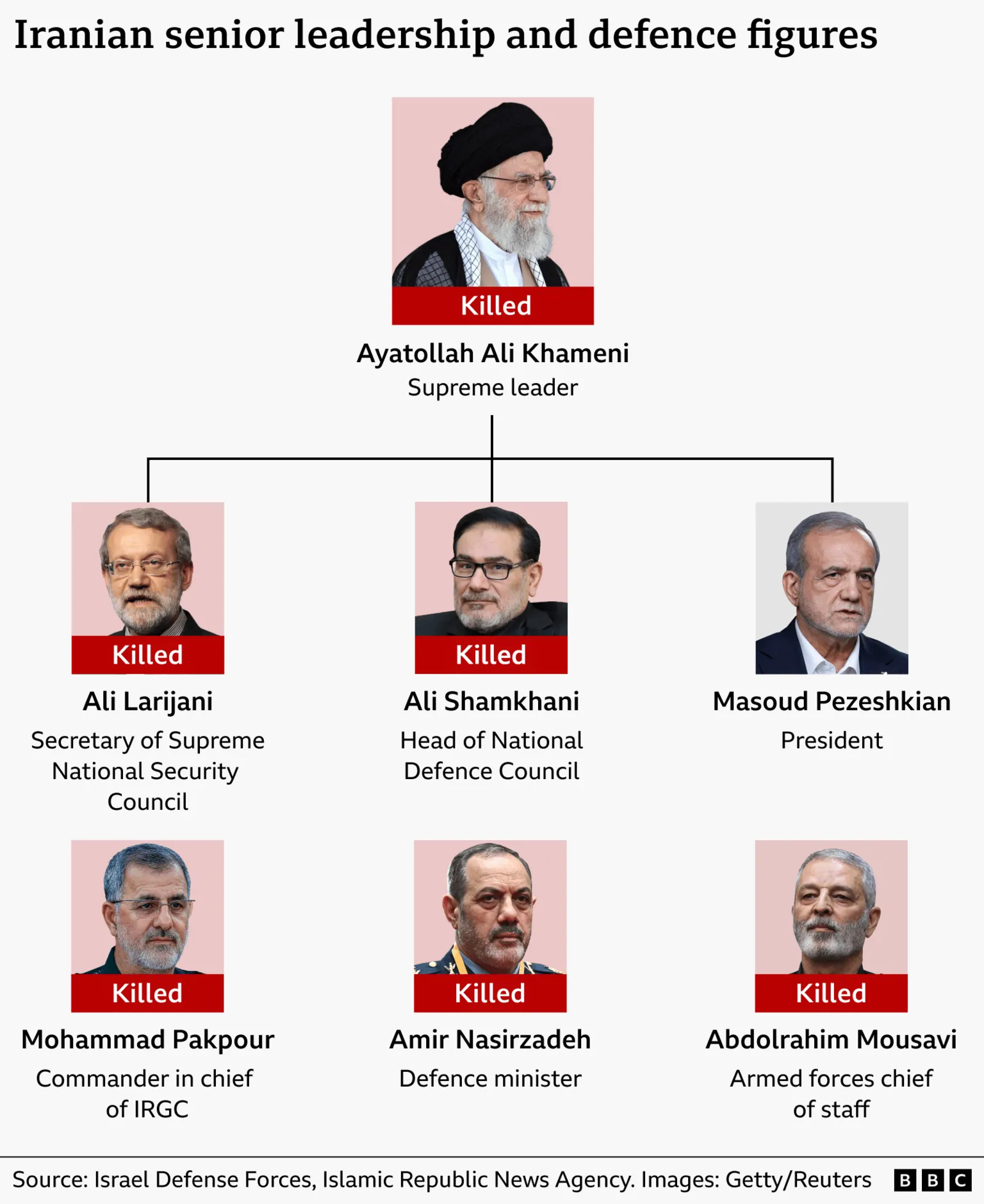
Israel has announced that its air strikes have killed Iran's top security official, Ali Larijani, along with Gholamreza Soleimani, the head of the paramilitary Basij force.
"Larijani and the Basij commander were eliminated last night and have joined Khamenei, the head of the annihilation programme, along with all those eliminated from the Axis of Evil in the depths of hell," Defence Minister Israel Katz stated.
Iranian authorities have not immediately confirmed the deaths.
If confirmed, Larijani would be the highest-ranking Iranian official assassinated since the death of Supreme Leader Ayatollah Ali Khamenei, who was killed on the first day of Israeli and US strikes on 28 February.
These strikes initiated a conflict that has expanded across the Middle East, with Iran retaliating by launching missiles and drones targeting Israel and Arab states hosting US military bases.
The conflict has caused a surge in oil prices, as Iranian attacks have forced production stoppages in Gulf states and disrupted exports through the strategically vital Strait of Hormuz.
The Israel Defense Forces (IDF) reported that its air force conducted a "precise strike" near Tehran on Monday night, resulting in the death of Ali Larijani.
"Following the elimination of Khamenei, Larijani consolidated his status as the de-facto leader of the Iranian regime and led the combat efforts against the State of Israel and countries across the region," the IDF said.
Subsequently, Israeli Prime Minister Benjamin Netanyahu remarked:
"We are undermining this regime in the hope of giving the Iranian people an opportunity to remove it."
Iranian officials have not responded to the Israeli claims, which followed a night of heavy bombardment in Tehran, accompanied by thunderous sounds.
Shortly after Katz's announcement, Larijani's social media accounts posted an undated handwritten note, which state media reported was written on Tuesday.
The note commends the 84 "warriors" of the Iranian navy who were killed in a US submarine attack on their warship near Sri Lanka earlier this month. Iran is preparing a ceremony to honor the sailors on Tuesday evening.
State TV also broadcast a similar message from Gholamreza Soleimani, commander of the Basij Resistance Force, who the IDF said was killed in a separate overnight strike.
The Basij is a volunteer militia with an estimated one million members, often deployed to suppress dissent. It operates under the control of the Islamic Revolution Guard Corps (IRGC).
"During internal protests in Iran, particularly in recent periods as demonstrations intensified, Basij forces under Soleimani's command led the main repression operations," the IDF stated.
The IDF released video footage purportedly showing one of several air strikes targeting Basij checkpoints across Tehran on Tuesday.
Iranian authorities have not issued comments, though local media last week reported casualties among security personnel due to Israeli strikes on four checkpoints in the capital.
Larijani is believed to have overseen the unprecedented crackdown by the Basij and other security forces on protests that swept Iran in December and January. Human rights activists report at least 6,508 protesters were killed and 53,000 arrested.

Due to an internet shutdown imposed by Iranian authorities, communication is difficult. However, some Iranians opposed to the regime who contacted BBC Persian expressed support for the news.
A man in his 30s from Tehran stated:
"I think it was a very important step because the decision-making brains must be shut down."
A man in his 20s from Karaj said:
"When they die, you might not believe it, but I get so happy because they're criminals and have so much blood on their hands."
Larijani was appointed secretary of Iran's Supreme National Security Council (SNSC) by President Massoud Pezeshkian last August.
He also served as Khamenei's representative on the council and was described by Iranian news outlets as an adviser to the late supreme leader.
Before the war, Khamenei reportedly tasked Larijani with developing a plan to ensure the Islamic Republic's survival in the event of a major attack by Israel and the US, including the assassination of its leadership.
Following the death of the supreme leader, Larijani's influence increased significantly.
Although Khamenei's son Mojtaba was chosen as his successor, he has not appeared publicly or in recent media since the war began, reportedly due to injuries sustained in the Israeli strike that killed his father.
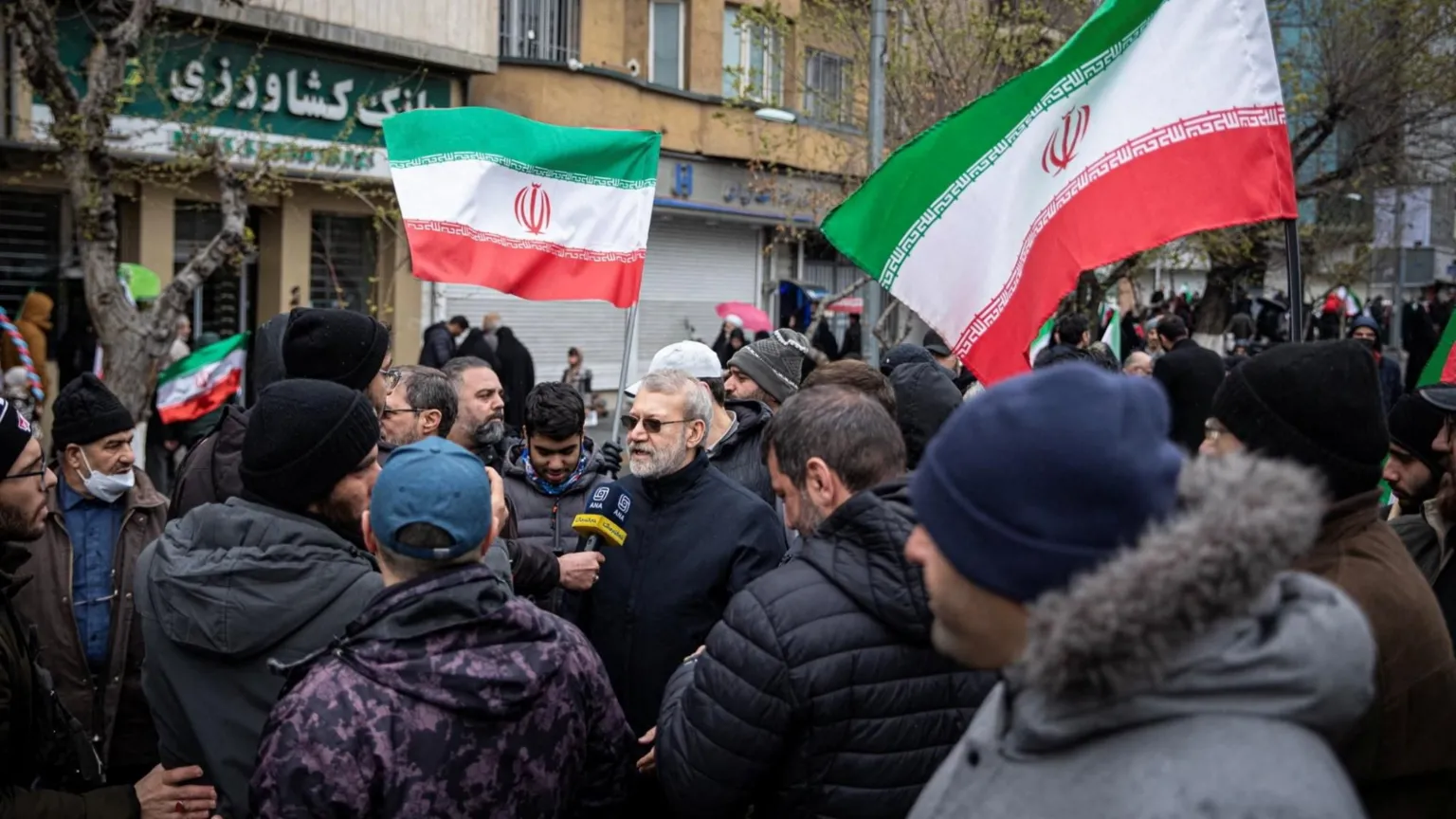
In contrast, Larijani has been active, responding regularly to statements by US President Donald Trump on social media and was seen participating in the Quds Day demonstration in Tehran last Friday.
Larijani is a former Islamic Revolution Guard Corps (IRGC) commander who gained prominence as head of Iran's state broadcaster, IRIB, a position he held for ten years before becoming a security adviser to Khamenei in 2004.
He ran unsuccessfully in the 2005 presidential election, then served as Iran's chief nuclear negotiator with the West for two years.
From 2008 to 2020, he was Speaker of Iran's parliament. Initially leading the hardline "principlist" faction committed to the Islamic revolution's principles, he was later described as a "moderate conservative."
More than 1,300 people have been killed in Israeli and US strikes in Iran since the war's onset, including 226 women and 204 children, according to Iranian government figures.
In Israel, authorities report 12 fatalities due to Iranian missile attacks.
Sirens sounded across Israel after Iranian forces launched several missile barrages on Tuesday. Reports indicated fires from impacts, but emergency services confirmed no casualties.
In the United Arab Emirates, debris from an intercepted Iranian missile killed a Pakistani national in Abu Dhabi's Bani Yas area. Additionally, oil loading at the port of Fujairah was partially halted following a third drone attack in four days.