

Iran Targets Kurdish Headquarters in Northern Iraq
Iran's military announced it has targeted the headquarters of Iranian Kurdish forces located in northern Iraq, escalating its military operations against Kurdish regions in both Iran and Iraq.
The military reported launching an attack with "three missiles" against "Kurdish groups opposed to the [Islamic] revolution in Iraqi Kurdistan." The strikes, which occurred on Tuesday and Wednesday, resulted in one fatality and three injuries, as confirmed by the BBC.
Tehran's intensified attacks on Iranian Kurdish groups in Iraq coincide with reports suggesting that US President Donald Trump is encouraging these groups to join the conflict against Iran, while US and Israeli military actions continue in the region.
Kurdish Opposition Denies Crossing Into Iran
Kurdish Iranian opposition parties based in Iraq have refuted claims that some of their forces have crossed the border into Iran.
"This is not true. Do not believe it," said Hanna Hussein Yazdan Pana of the Kurdistan Freedom Party (PAK). "Not a single Peshmerga [fighter] has moved. No-one moves alone."
Yazdan Pana explained that six Kurdish opposition groups, which recently formed a coalition, are coordinating their plans but require American support to proceed. She informed the BBC that no movement was expected this week.
"It's not about the hours or days. We cannot move if the air above us is not cleaned. We need to see weapons depots [of Iran's security forces] being destroyed. Otherwise, it would be suicidal."
She also advocated for the establishment of a no-fly zone to protect Kurdish forces.
"The regime is very brutal," she said, "and the most advanced weapon we have is a Kalashnikov."
Speculation Over US Involvement
Speculation has grown that President Trump aims to involve Kurdish forces as ground troops in the conflict. However, the White House has denied reports that the president is considering arming these groups.
On-the-Ground Impact of Iranian Attacks
On Wednesday, the BBC visited the sites targeted by Iranian strikes against two Kurdish opposition groups.
One base was struck by a ballistic missile around 11:00 local time (08:00 GMT) on Wednesday, injuring four Kurdish Peshmerga fighters. One of the injured later succumbed to his wounds.

The missile caused significant destruction, crushing one building and scattering rubble and twisted metal over a wide area. A crater was also visible, gouged out by the missile's impact.
At another base, belonging to the Democratic Party of Iranian Kurdistan (KDPI), the BBC observed the aftermath of a double drone strike that occurred on Tuesday, reportedly injuring one civilian.
KDPI Leadership and Fighters' Perspectives
A senior political leader of the KDPI told the BBC he anticipated Kurdish forces would soon be engaged in fighting within Iran, though he did not specify a timeline.
The leader declined to comment on reports that President Trump had recently communicated with the KDPI leadership.
A fighter named Hassan, aged 25 and armed with an AK-47, expressed eagerness to fight for freedom in Iran.
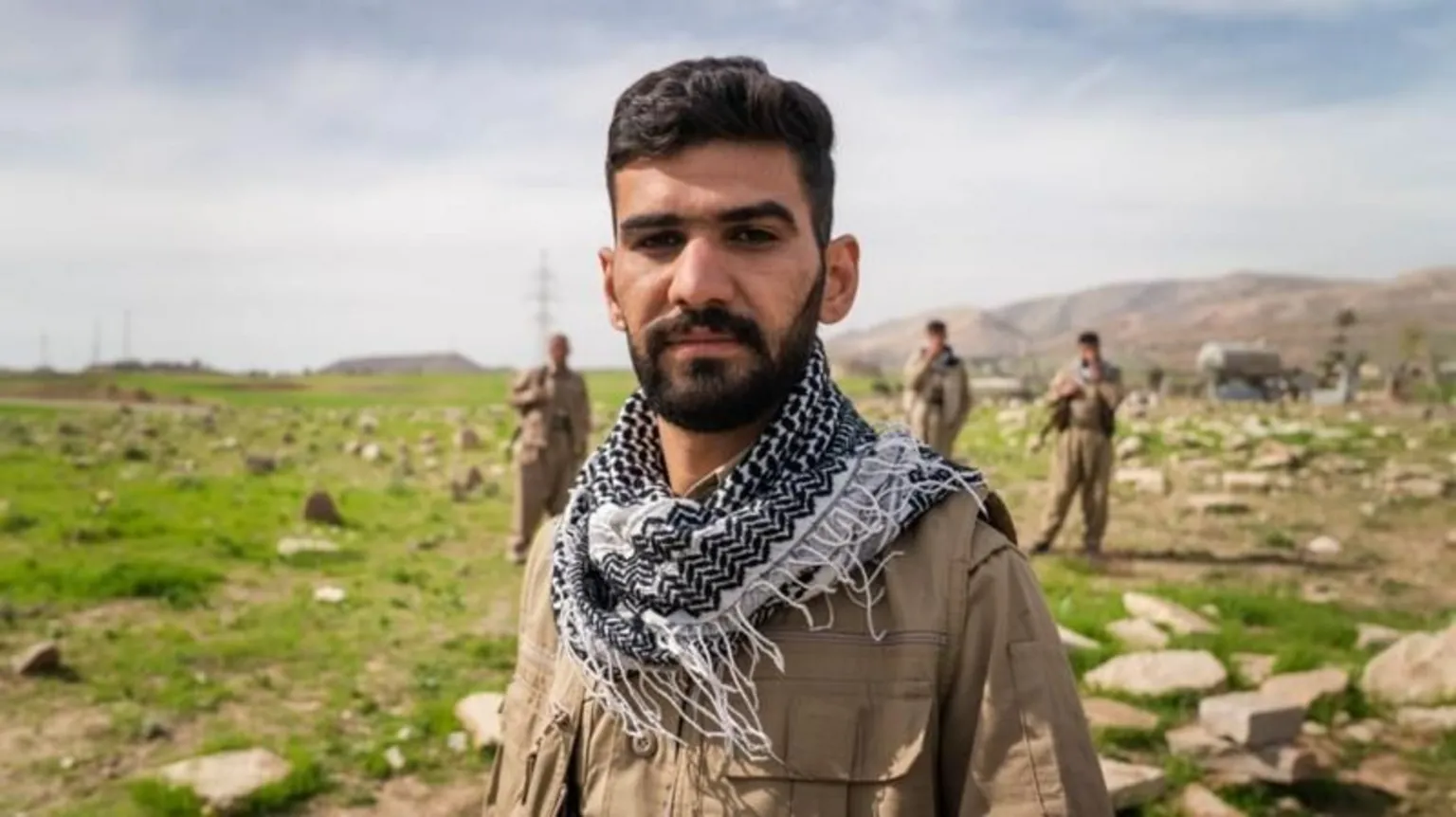
"We are closer than ever," he said.
Expert Analysis on Kurdish Insurgency
Sir Simon Gass, a former British ambassador to Tehran, described Iran as "a patchwork of different ethnicities" with a Persian majority alongside significant Kurdish, Baloch, Arab, and Azeri minorities.
"If the United States and Israel find a way to ignite some of those groups into armed insurrection against the regime, it will be another problem which the regime needs to manage. It will be extremely difficult," he told BBC Radio 4's Today programme.
Gass noted that Iranian Kurdish opposition fighters are "relatively lightly armed" and under normal circumstances would not be expected to withstand the strength of Iran's armed forces.
"However, if they are supported by special forces from other countries who can call in air support - that could be a different matter," the former diplomat added.
Kurdish Population and Regional Context
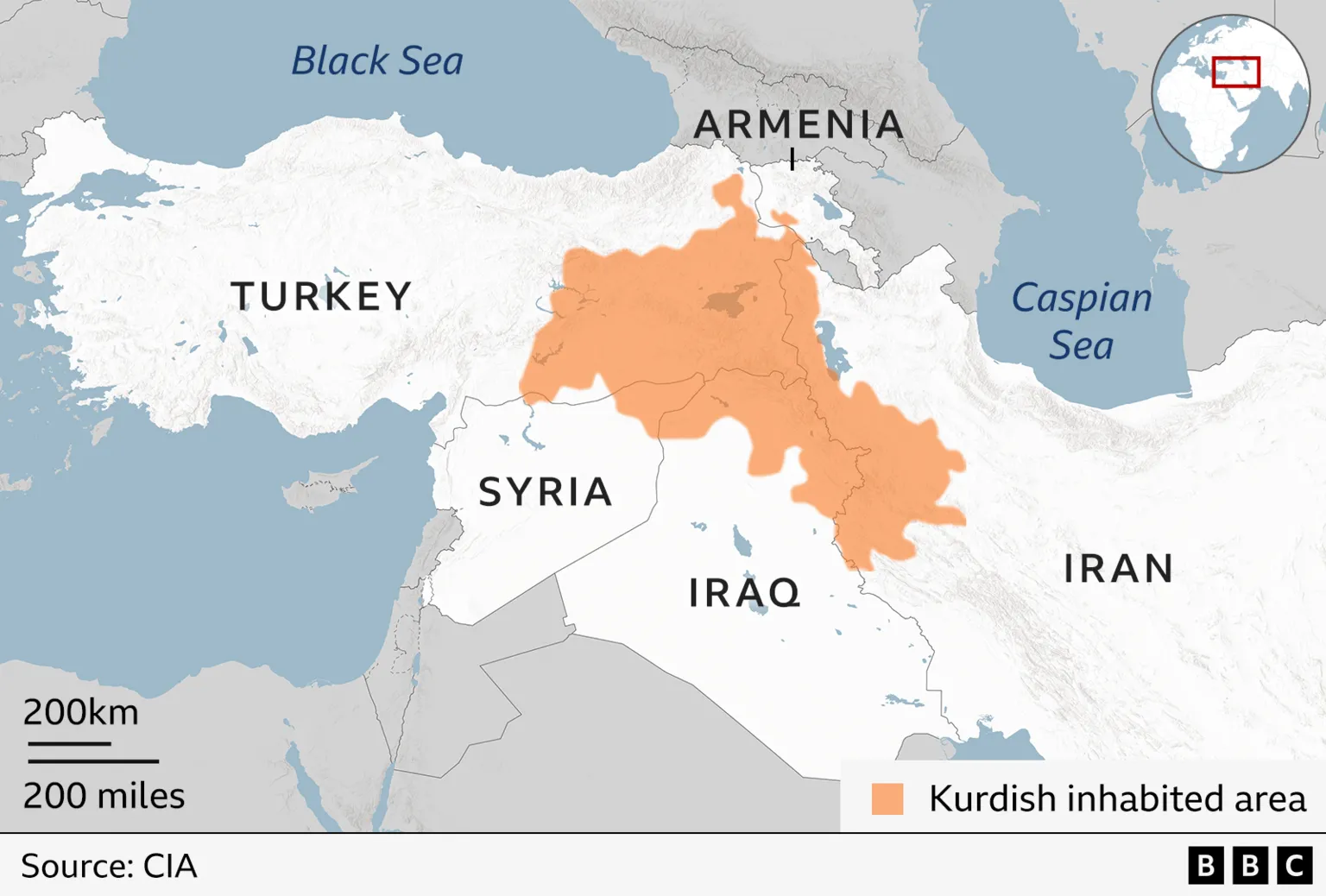
Between 25 and 35 million Kurds inhabit a mountainous region spanning the borders of Turkey, Iraq, Syria, Iran, and Armenia. They constitute the fourth-largest ethnic group in the Middle East but have never established a permanent nation state.
Approximately 10% of Iran's 91 million population are Kurds, who are predominantly Sunni Muslims living mainly in the country's northwestern regions.
Human Rights Concerns
Amnesty International has reported that Iranian Kurds have "long suffered deep-rooted discrimination" and that their social, political, and cultural rights, as well as their economic aspirations, have been repressed.


