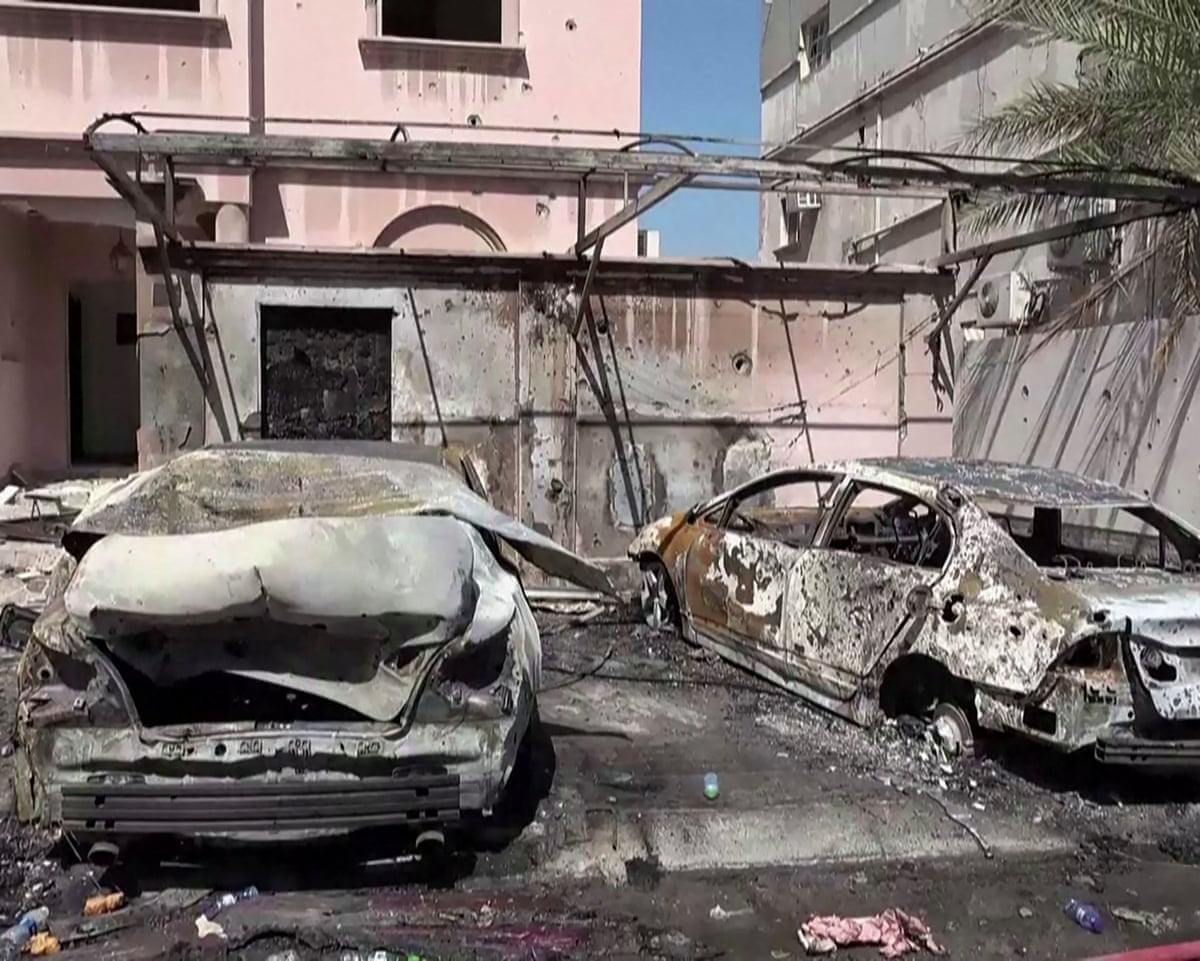
Summary: Iran disputes Trump’s assertion of imminent peace deal
Hello and welcome to ’s ongoing coverage of the Middle East crisis.
Iran’s foreign ministry has refuted claims made by former US President Donald Trump that a peace agreement between Washington and Tehran could be signed as early as this weekend.
The potential deal, if confirmed, would represent the most significant diplomatic development to end the three-month conflict, which has resulted in thousands of deaths and caused a sharp rise in global energy prices. However, Esmaeil Baghaei, spokesperson for Iran’s foreign ministry, stated that although substantial portions of the negotiation text have been finalised,
“a final conclusion” has not been reached.
“This is a very important issue that is currently being reviewed by the relevant decision-making bodies,”Baghaei added, emphasizing that Tehran would not concede on its red lines.
Trump told reporters at the White House:
“We just made a great settlement of the war with Iran.
“The strait will officially open as soon as we sign, which could be soon, very soon, maybe over the weekend in Europe,”
he said, adding that vice-president JD Vance could sign for the US.
Since mid-March, Trump has repeatedly asserted that a deal with Iran to end the war was near, but no agreement has yet been finalised.
Trump announced the cancellation of a third day of US airstrikes and bombings that he had previously indicated would occur, stating that
“discussions” with Iran “have been brought to the highest level of Iranian leadership and approved”.He also posted on social media:
“Discussions and final points have been, in both concept and great detail, approved by all parties involved, including the United States, , Saudi Arabia, UAE, Qatar, Turkey, Pakistan, Bahrain, Kuwait, Jordan, Egypt, and others.”
Israel, however, stated it was
“not a party to”what Prime Minister Benjamin Netanyahu’s office described as an emerging memorandum of understanding between the US and Iran. The office noted that Netanyahu had spoken with Trump and that the final agreement, once negotiations conclude, would include the removal of enriched nuclear material, dismantling of enrichment infrastructure, limits on missile production, and cessation of Iran’s support for its terrorist proxies in the region—measures that have historically been red lines for Iran.
Trump reiterated that the Strait of Hormuz would open
“as soon as we sign”the documents of the
“great settlement”reached with Iran, adding,
“The whole Middle East is happy.”
Iranian media reported that Iranian forces had prevented a
“violating tanker”from entering the Strait of Hormuz. The Fars news agency, closely linked to Iran’s Revolutionary Guards, issued the report shortly after explosions were reportedly heard near the port city of Bandar Abbas.
Earlier, Trump posted on social media that the US would seize Iran’s Kharg Island
“in the not too distant future”,but later stated that the seizure would be off the table
“if we sign this agreement”.
Oil prices initially rose following Trump’s threat of a
“very hard”attack on Iran but dropped sharply after he announced the cancellation of the strikes. US West Texas Intermediate crude futures declined 1.9% to $86.08 a barrel, adding to a 2.6% drop overnight, while Brent crude fell 1.5% to $89.08 a barrel, following a nearly 3% overnight decrease. Asian stock markets joined a global rally, with South Korea’s Kospi surging 7.4% and Japan’s Nikkei increasing by 2.7%.
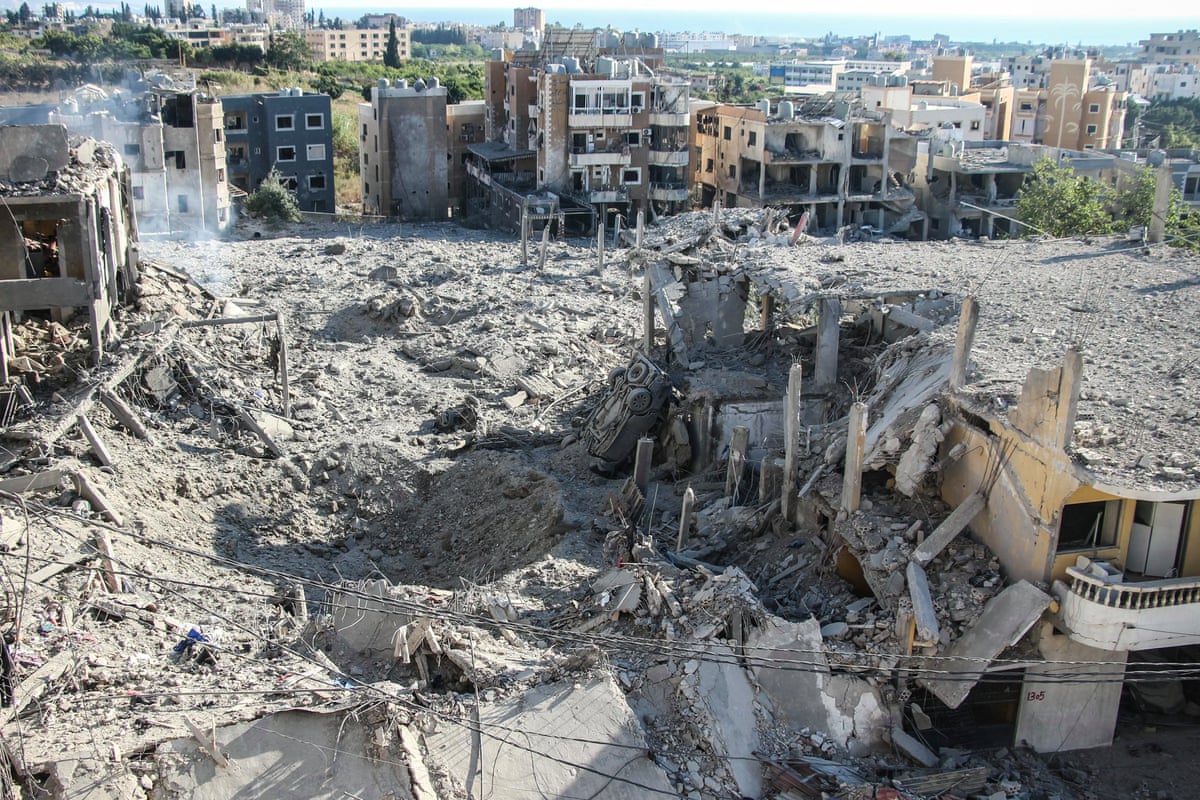
A strike wounded 10 staff members at a hospital in the Lebanese city of Tyre on Thursday, according to the facility’s director who spoke to AFP news agency, as Israeli raids continued in southern Lebanon. All three hospitals in the historic city have been hit since the onset of the latest conflict between the Iran-backed militant group Hezbollah and Israel in early March.

India’s government expressed concern after three Indian seafarers were killed in US military strikes against oil tankers transiting the Strait of Hormuz.
Donald Trump claimed that the US has been conducting a
“secret mission”in the Strait of Hormuz to assist Gulf oil-producing states in circumventing Iran’s blockade on oil shipments, which has disrupted global energy markets for months.
The US president asserted that
was unaware that dozens of tankers had been escorted out of the blockaded channel at night with their transmitters turned off.
He wrote on his Truth Social platform that 200 vessels had exited the strait in this manner, transporting over 100 million barrels of oil to global buyers.
For further explanation of these developments, Jillian Ambrose and Joanna Partridge provide detailed analysis here:
US-Iran memorandum of understanding reportedly includes end to war in Lebanon
Iran’s semi-official Mehr news agency published a list of terms reportedly contained in the draft memorandum of understanding with the US. Citing a source close to the Iranian negotiating team, the report noted that the details have not been publicly confirmed by either Tehran or Washington and that the text is yet to be finalised by Iranian leadership.
The report outlined 14 points in the draft:
- Permanent and immediate cessation of war on all fronts, including .
- The US’s
“commitment to non-interference in Iran’s internal affairs”
and respect for its sovereignty. - Lifting of the US naval blockade within 30 days.
- Withdrawal of US forces from areas surrounding Iran.
- Reopening of the Strait of Hormuz within 30 days
“with Iranian arrangements”.
- Suspension of US sanctions on Iranian oil.
- US and allies to develop reconstruction plans for Iran
“worth at least $300bn”.
- Sixty days of negotiations to reach a final agreement
“based on nuclear issues and the complete lifting of” sanctions.
- Reaffirmation of Iran’s commitment not to produce nuclear weapons.
- During negotiations, the US will not increase forces in the region or impose new sanctions.
- Release of $24 billion in blocked Iranian funds.
- Establishment of a monitoring mechanism to implement the agreement.
- Final agreement to be approved by a UN Security Council resolution.
- Final negotiations will not begin before release of half of Iran’s frozen funds, suspension of oil sanctions, and lifting of the naval blockade.
“Discussions about Iran’s missile programme and support for resistance groups have been definitively removed from the agenda.”
Israel has previously stated it will continue its ground operations in southern Lebanon despite a ceasefire agreed in April that has largely collapsed. The Israeli military has taken control of large areas as it seeks to dismantle Hezbollah, Iran’s most powerful armed proxy in the region. Reports on ongoing discussions to end the war suggest a potential US-Iran deal depends on developments in Israel’s war in Lebanon, with Hezbollah demanding Israeli troop withdrawal.
American news outlet Axios reported that four US Air Force planes departed for Europe to prepare for a possible signing ceremony between the US and Iran to end the war.
The planes are reportedly en route to Geneva, where US Vice-President JD Vance is expected to sign on behalf of Washington, according to Axios, citing sources familiar with the preparations.
While Donald Trump claimed a deal could be signed as soon as this weekend, Iran has stated that no final decision has yet been made.