

Ongoing Airstrikes and Potential Ground Involvement
For the sixth consecutive day, the United States and Israel have conducted airstrikes targeting locations within Iran. The question arises whether ground forces will soon be deployed. While American troops are unlikely to be involved on the ground, Iranian Kurdish opposition groups based in northern Iraq have indicated longstanding plans to cross into Iran, although they deny having done so already.
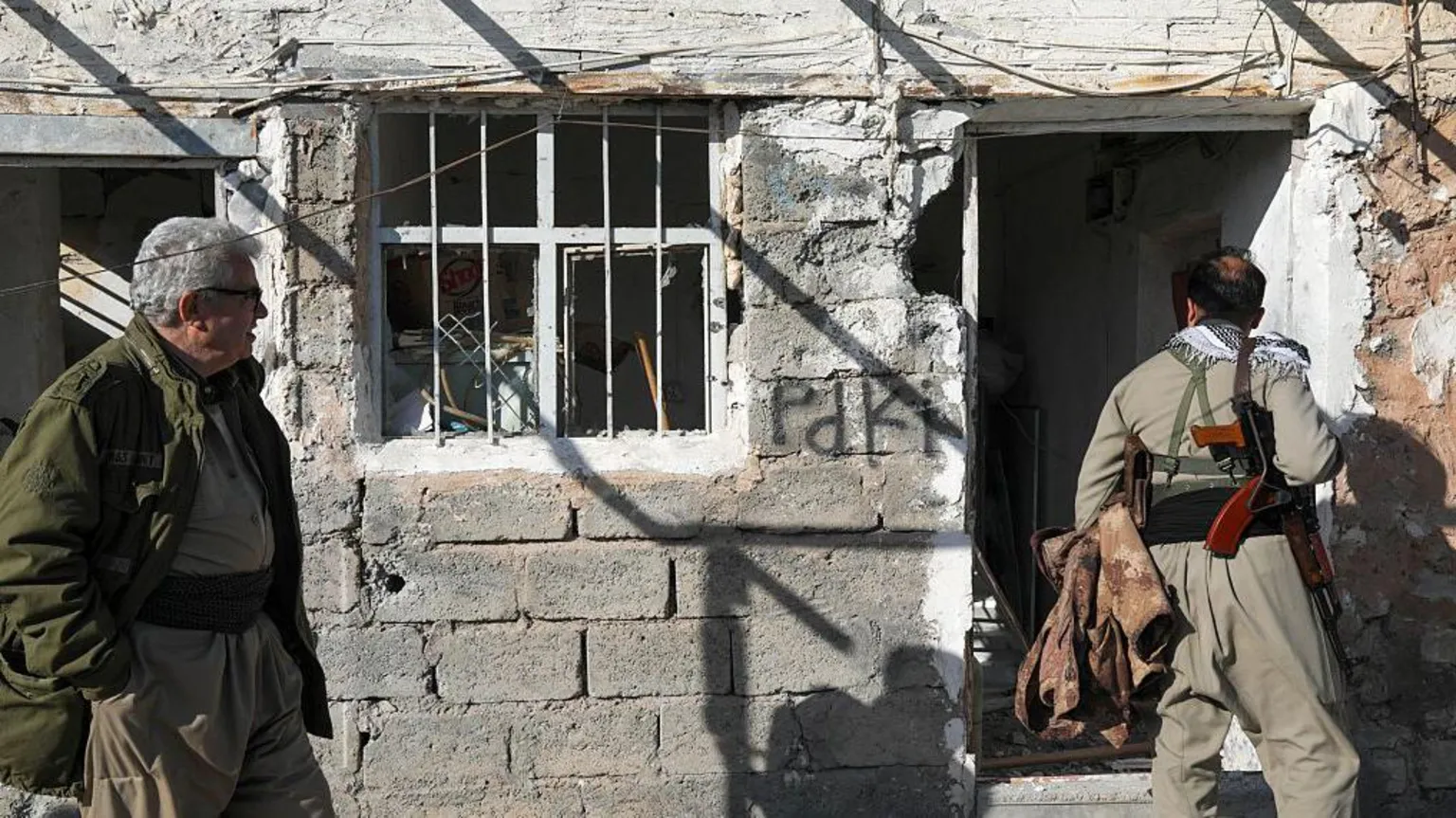
"We have been preparing for this for the past 47 years, since the age of the Islamic Republic,"said Hana Yazdanpana of the Kurdistan Freedom Party (PAK), which asserts it has the largest armed force among Kurdish groups.
However, Yazdanpana emphasized that
"not a single Peshmerga has moved"yet. The term "Peshmerga" translates to "those who face death" in Kurdish.
She explained that six opposition groups recently formed a coalition and are coordinating both politically and militarily.
"No-one moves alone,"she stated.
"We will know if our brothers are going to move."
Yazdanpana does not anticipate any movement of fighters this week, noting that the US must first establish conditions on the ground.
"We can't move if the air above us is not cleaned,"she said.
"And we need the regime's weapons depots to be destroyed. Otherwise, it would be suicidal. The regime is very brutal, and the most advanced weapon we have is a Kalashnikov."
She has requested that the US impose a no-fly zone to protect Kurdish fighters.
"We have asked for this many times,"she added.
"I was the one who sent the emails saying 'we need it urgently'."
The White House has denied reports that President Donald Trump is considering arming the Kurds, many of whom were previously trained by US forces to combat the Islamic State (IS) group in Iraq.
Escalating Attacks on Kurdish Groups
As speculation about a possible Kurdish advance grows, Tehran has intensified attacks on these groups. Recent strikes include a ballistic missile attack on a PAK base, resulting in the death of one fighter.
Some Kurdish groups have evacuated their bases and relocated forces to protect them from further assaults.
Engaging in open conflict against the Iranian regime carries significant risks, and it remains unclear what support or incentives the US might offer in return.
Kurdish Identity and Historical Context
The Kurds are the fourth largest ethnic group in the Middle East, residing across Iran, Iraq, Syria, and Turkey. They have faced a long history of persecution and betrayal. As a Kurdish proverb states,
"we have no friends but the mountains."
Trust in US commitments is uncertain among Kurds, particularly after President Trump recently sided with the transitional government in Damascus against Kurdish allies in Syria, who had been key partners in the fight against IS.
Nonetheless, some senior Iranian Kurdish leaders adopt a pragmatic perspective.
"America and Israel did not begin this war for our hopes, but for their own interests,"said Mustafa Mauludi, vice-president of the Kurdistan Democratic Party of Iran (KDPI).
"But they are targeting bases of the Islamic Revolution Guard Corps [IRGC], and this will be good for us and help us to go in."
At 67 years old, Mauludi has awaited the fall of the Islamic regime for most of his life.

Wearing traditional Kurdish attire, he recounted a painful family history: one cousin killed by the regime at age 13, another imprisoned for 31 years on suspicion of opposition collaboration, and 60% of his family arrested and mistreated due to his political activities.
Mauludi envisions his return to Iranian Kurdish territory vividly.
"When I get to the first village,"he said,
"I will say with a loud voice: 'I have been fighting for you, you are my people, and now I will fight even more.'"He hopes to be present for the Kurdish new year festival, Nowruz, on 21 March.
Political Calls and Regional Implications
Kurds constitute approximately 10% of Iran's 90 million population. Their leaders are appealing to the international community to support President Trump and their cause.
"We are the most politically organised group in Iran,"said Abdullah Mohtadi, secretary general of the Komala Party of Iranian Kurdistan.
"And we won't let this opportunity [for change] be wasted."
Mohtadi expressed disappointment with the UK's position.
"I'm astonished that Britain is the only country in the continent [of Europe] that has not registered the IRGC as a terrorist organisation,"he said, also criticizing Britain's hesitation in permitting US use of its bases for strikes against Iran.
Estimating Kurdish troop strength is challenging. A local Kurdish journalist suggested numbers could be in the several thousands, including some already inside Iran.
"They want to be part of the change in Iran, to ensure they are part of the future. Despite the lessons of history, they continue to hope."
Some Iranian Kurds advocate for action regardless of American assurances.
"If we have the slightest hope of seeing our homeland, that is ok for us,"said a woman in Sulaymaniyah, near the Iranian border.
"We call it [Iran] the Islamic regime of the executioner. We hate them so much. They have killed so many people."
Iraq's Position and Kurdish Sentiment
Iraq faces a difficult situation, wary of being drawn into conflict next door. The Baghdad government has declared it will not permit groups to cross the Iranian border from Iraqi territory to conduct terrorist acts.
If Kurdish forces do cross into Iran, it will be a moment of mixed emotions for PAK's Hana Yazdanpana.
"Going back to my land will be very emotional,"she said.
"My uncles and grandparents died here [in northern Iraq]. I don't know how to feel, happy or sad, because those who really deserve to see this day are gone."
Additional reporting by Wietske Burema, Matthew Goddard, and Bizhar Shareef.


