

China Calls for Protection of Vessels in Strait of Hormuz Amid Rising Shipping Costs
The Chinese government has urged all parties to ensure the safety of vessels passing through the Strait of Hormuz amid escalating conflict and soaring shipping freight rates. The strait, a narrow channel on Iran’s southern border connecting the Persian Gulf with the Gulf of Oman, has seen a significant reduction in maritime traffic following recent military actions.
Since the weekend, when an attack occurred on Iran, prompting retaliation from Tehran, maritime traffic through the strait has effectively been halted. On Tuesday, Beijing’s foreign ministry appealed to "all parties to immediately cease military operations, avoid escalating tensions and safeguard the safety of navigation in the strait of Hormuz."
China, as the world’s largest importer of oil and fossil gas and a major buyer of Iranian oil, is particularly vulnerable to disruptions in energy shipments caused by the conflict.
The Strait of Hormuz is a critical global trade artery, carrying approximately 20% of global seaborne crude oil, 20% of seaborne gas tankers, and one-third of the most widely used fertilizer. It remained devoid of ships for a fourth consecutive day on Tuesday.
According to marine intelligence firm Windward, only seven vessels crossed the strait on 2 March, marking a 60% decrease from the previous day and a sharp decline from the daily average of 79 ships.
The effective closure of the strait has disrupted exports from major producers including Saudi Arabia, the United Arab Emirates, Iraq, Kuwait, and Iran, leading to energy shortages and elevated prices worldwide.
India, heavily reliant on oil and gas imports from the Middle East, is among the Asian countries most affected by the closure. Additionally, Korea, Thailand, and the Philippines are considered vulnerable to rising oil prices due to their dependence on energy imports, according to industry analysts.
Recent Attacks and Maritime Incidents
On Monday, Iranian forces claimed to have struck the Honduras-flagged fuel tanker Athe Nova in the strait with two drones, resulting in a fire onboard. Two other tankers were attacked off the coast of Oman on Sunday, incidents that led to the death of one crew member.
At least 40 vessels carrying crude oil, liquefied natural gas (LNG), and oil products anchored in the Gulf over the weekend, representing 4% of the global fleet by tonnage, according to the International Chamber of Shipping.

Impact on Energy Prices and Production
Oil and gas prices surged on Tuesday following the closure of facilities by some of the largest energy-producing nations in the Middle East. Qatar has shut down its LNG sites, responsible for about 20% of global LNG exports. Saudi Arabia halted production at its largest domestic refinery, while parts of gas and oil production were suspended in Israel and Iraq’s autonomous Kurdistan region.
Energy-producing countries have limited alternative export routes. Some oil pipelines exist, including Saudi Arabia’s east-west pipeline and others in the UAE and Kurdistan, but these have significantly lower capacity compared to maritime transport.
Historically, vessel traffic through the Strait of Hormuz has not experienced prolonged disruptions, even during conflicts. Should the effective closure persist, it is expected to cause further increases in energy prices.
Rising Freight Costs and Insurance Risks
The stoppage of transit has led to a surge in freight costs, with the cost of chartering a very large crude oil carrier (VLCC) from the Middle East to China rising above $424,000 (£318,000) per day. This rate is four times higher than the $100,000 per day seen in recent weeks.
Leading maritime insurers have issued warnings for vessels operating in the Gulf, and London’s marine insurance market has expanded the area in the Gulf considered high risk. The Joint War Committee, which influences insurance premiums, added waters around Bahrain, Djibouti, Kuwait, Oman, and Qatar to the high-risk list on Tuesday.
Disruptions to Container Shipping and Rerouting
Container ships, which transport goods ranging from furniture and clothing to food and building materials, are also affected by the disruptions. Large shipping companies had anticipated resuming Red Sea routes this year after a pause due to conflict in Yemen.
However, companies including Denmark’s Maersk and Germany’s Hapag-Lloyd have rerouted their vessels around the Cape of Good Hope at Africa’s southern tip following threats from the Houthis to resume attacks. This rerouting adds extra time and cost to shipments.
Diversions around the Cape of Good Hope increased by 112% on Monday, according to Windward, indicating "structural rerouting rather than temporary caution."
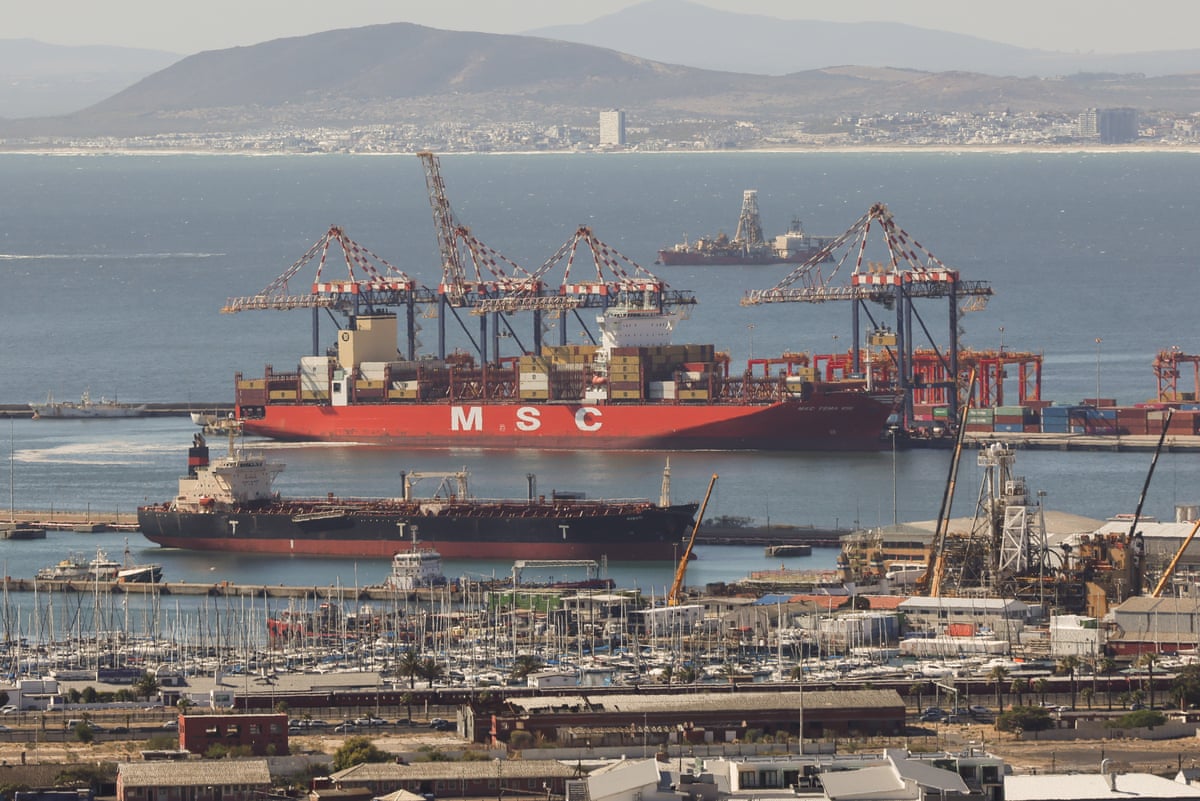
On Tuesday, France’s CMA CGM announced the immediate suspension of all bookings requiring loading and unloading at ports in Bahrain, Kuwait, Qatar, the UAE (except Fujairah and Khor Fakkan), most ports in Saudi Arabia, and most ports in Iraq. The company described this as a "precautionary measure to ensure the safeguard of our crew, vessels and customers’ cargo under the current circumstances."
A spokesperson for the International Chamber of Shipping stated:
"Shipowners are understandably reluctant to place seafarers in harm’s way while a major conflict is underway. If traffic continues through the strait of Hormuz at its current volume – currently down 80% – then it is likely that the pressure will increase day by day."


