

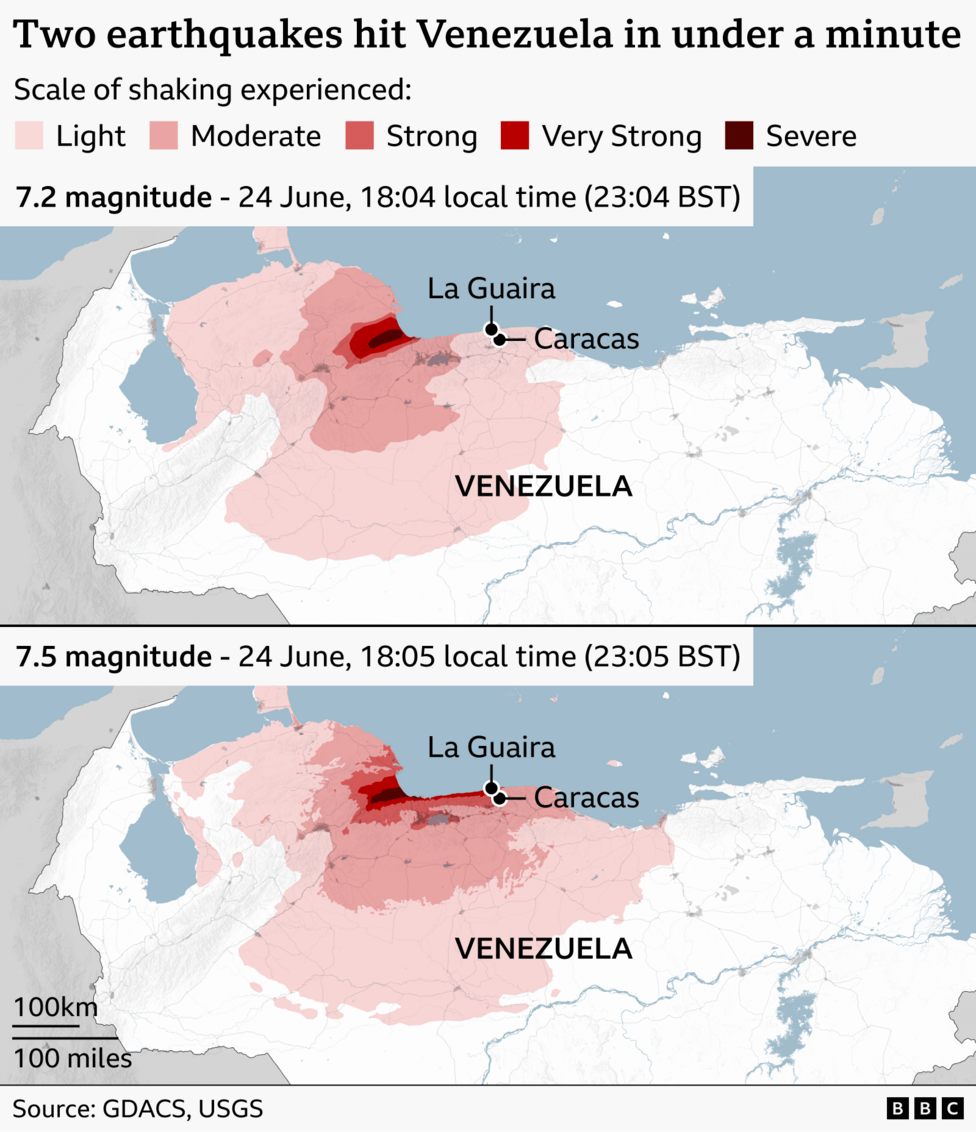
Rescuers are urgently searching through rubble in La Guaira, a city severely affected by last week's devastating earthquakes in Venezuela.
Efforts continue to locate survivors trapped beneath the debris of Venezuela's twin earthquakes, which have so far claimed at least 1,700 lives, with expectations that the death toll may rise.
The critical 96-hour window for finding survivors passed on Sunday evening. In many severely impacted areas, residents have been compelled to conduct their own searches amid limited government assistance.
Despite this, rescue teams remain hopeful and persist in conducting detailed searches comparable to those performed immediately after the earthquakes, according to Lee Ivory, a search and rescue expert.
"We continue to search to the same level of detail as on day one,"Ivory told the BBC.
Ivory serves as deputy national coordinator for UK International Search and Rescue (UK ISAR), one of numerous international teams collaborating with local rescuers in Venezuela.
Equipped with a variety of tools including search dogs, sound detection devices, and cameras, rescuers employ diverse methods to locate survivors still alive beneath the rubble.
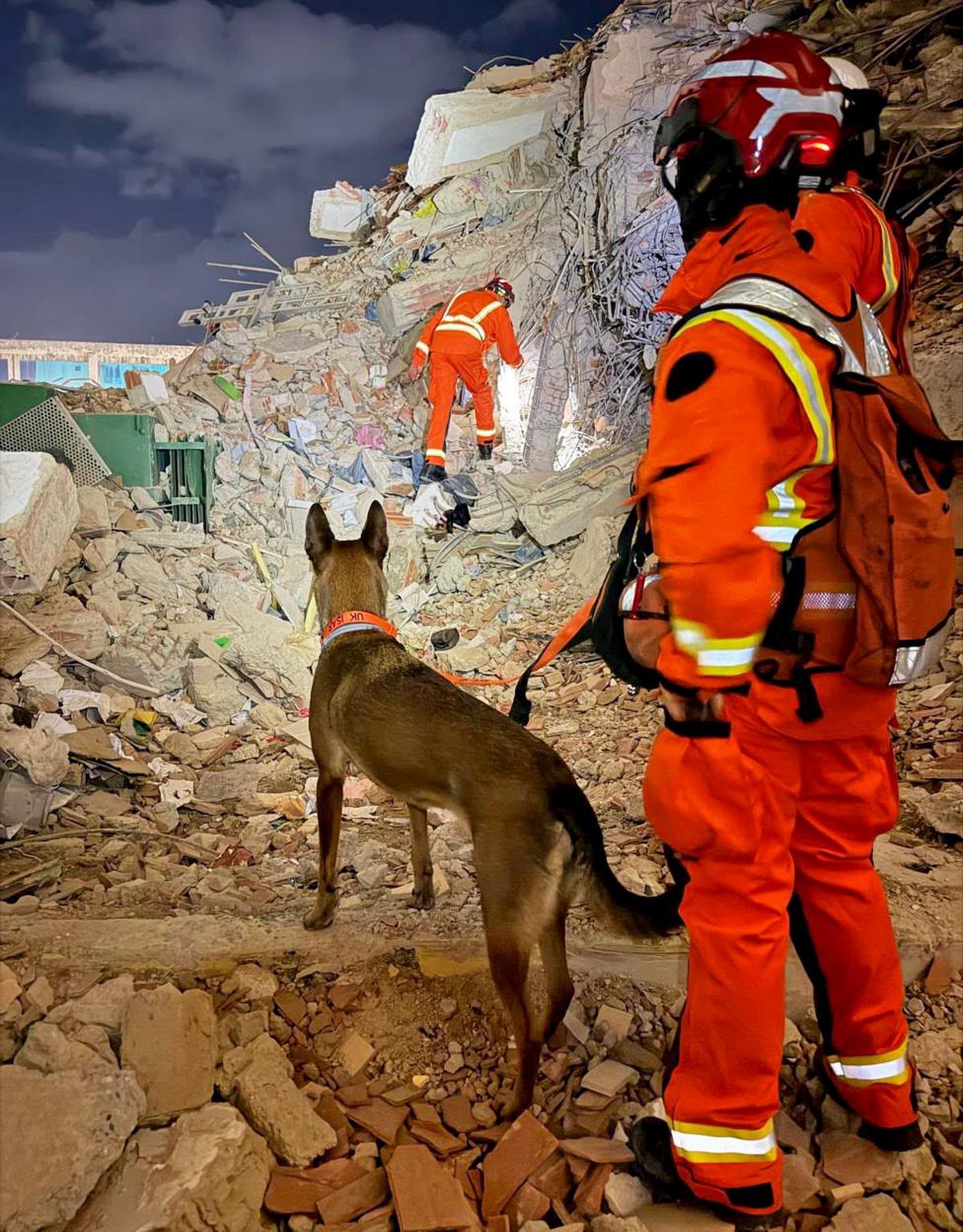
Search dogs
Ivory, who has been deployed to Venezuela alongside his search and rescue colleagues, praises the remarkable capabilities of search dogs.
"The abilities of search dogs are amazing,"he said.
These specially trained dogs can detect the scent of individuals buried up to 10 meters (32.8 feet) under rubble. Upon locating a potential survivor, the dogs emit a strong and sustained bark to alert rescuers.
The training involves imprinting toys with human scent, which the dogs receive as rewards when they successfully identify a person on site, Ivory explained.
Search dogs also assist in navigating complex debris fields, identifying access points, and following scent trails, according to Sakthy Selvakumaran of the UK-based charity Search and Rescue Assistance in Disasters (SARAID), which deploys personnel globally to large-scale disasters.
"They can find hard-to-navigate paths through rubble to follow a scent or identify different access points to the victim,"Selvakumaran told the BBC.
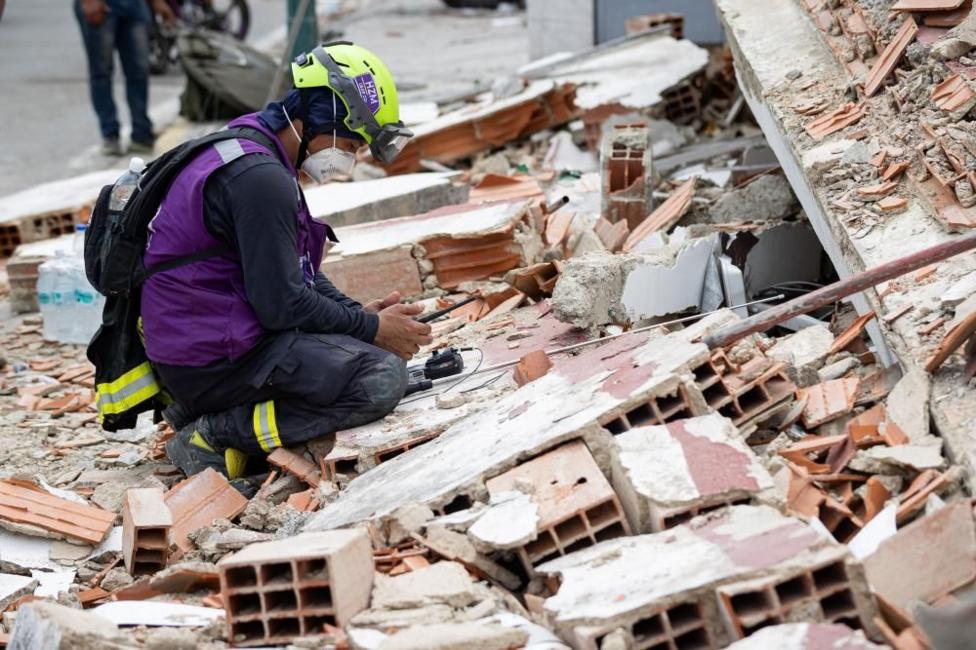
Sound detectors
Sound detection devices are a vital component of the rescue operations in Venezuela.
"One of the most effective ways of locating victims is by having a really good listen,"Ivory said.

Rescuers call out into the rubble, introducing themselves and using local language phrases to elicit responses from trapped individuals.
Teams also employ seismic and acoustic listening devices, which resemble small pots or cans attached to wires connected to monitoring equipment, to detect faint noises from survivors.
"In essence, if someone was just scratching on a bit of concrete, we'd be able to pick that up,"Ivory explained,
"even if they are entombed in the building."
Cameras and thermal imaging equipment
Technical search cameras enable rescuers to inspect small openings within the rubble.
Various models exist, often consisting of small pods mounted on long sticks with cameras at the end. Some offer 360-degree views that can be recorded and reviewed remotely.
Video cameras are also utilized to communicate directly with trapped victims, Ivory noted.
The UN humanitarian chief, Tom Fletcher, has reported the use of micro drones, nicknamed "cockroach drones," in Venezuela's rescue efforts.
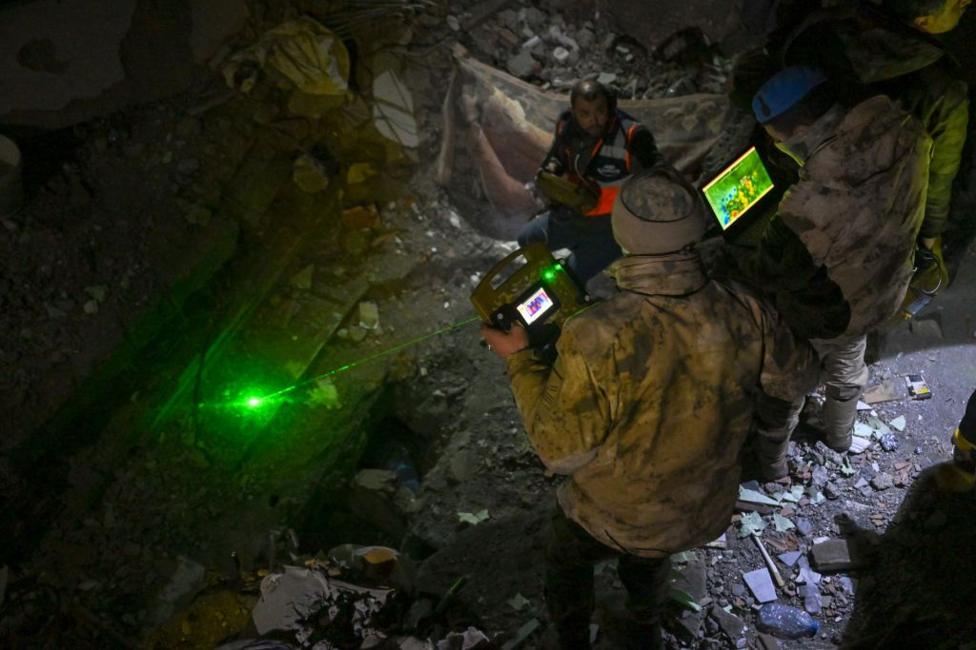
Thermal imaging equipment is also deployed by some teams to detect survivors not visible to rescuers.
"The trapped person's body heat can warm the rubble around them, allowing rescuers to see through some types of walls,"Selvakumaran explained.
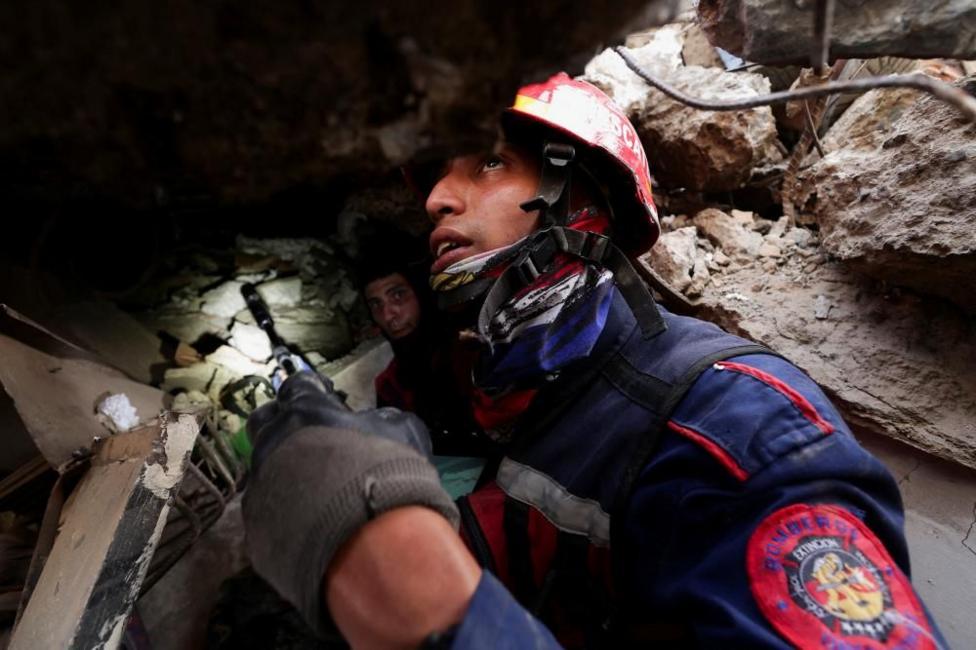
Manual tools and heavy machinery
Technical rescues involve a variety of tools such as disk cutters, saws, and handheld angle grinders.
"Anything that can help the process of breaching and breaking to get through heavy bits of concrete, or just trying to get through furniture, filing cabinets, refrigerators, anything that can help cut all of that through,"Selvakumaran described.
Some teams use electrically powered tools or diesel generators to operate equipment.
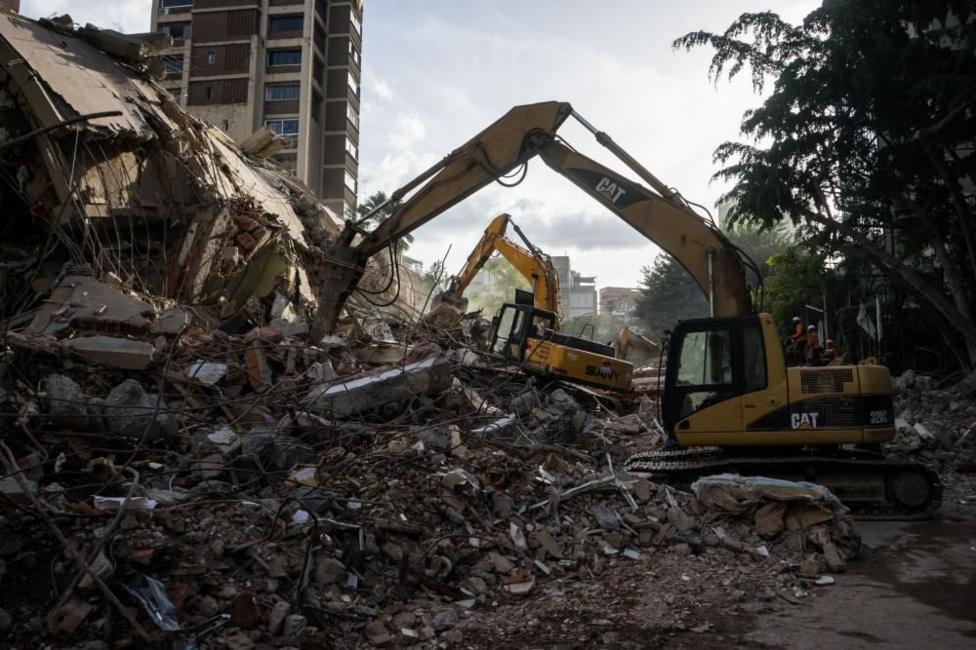
Heavy machinery plays a crucial role in moving large amounts of debris to reach trapped individuals.
Bulldozers, diggers, and cranes can shift multiple layers of concrete, sometimes spanning three stories, to access survivors.
"It is often local teams that try to coordinate access to heavy machinery to do the bigger heavy shifting and lifting,"Selvakumaran added.
- Two boys pulled from Venezuela earthquake rubble among 33 people rescued over weekend
- Venezuela earthquakes in maps and graphics - where they hit and how severe they could be


