

Introduction to Dinosaur Auctions and the Rise of Gus
In 1997, Sotheby's held its inaugural natural history auction, featuring fossils and other prehistoric artifacts. Initially a niche event, it primarily attracted museums seeking to expand their collections. Among the items was a Tyrannosaurus Rex specimen named Sue, which was sold for $8 million (£6 million) to the Field Museum in Chicago.
Nearly three decades later, on Tuesday, another T. rex specimen, known as Gus, is set to appear at the annual auction. Gus is one of the most complete T. rex fossils ever discovered and has been valued at $30 million, with the potential to surpass previous records and become the most expensive dinosaur fossil ever sold.
This auction highlights a growing debate within the natural history community: should scientifically significant fossils be preserved within museums for research, or should fossil hunters be rewarded through private sales that rescue these specimens from obscurity?
Cassandra Hatton, global head of natural history at Sotheby's, notes the dedication of paleontologists in their search for fossils: "People die on excavations."
For many fossil hunters, the ultimate prize remains the Tyrannosaurus Rex, a dinosaur that has become iconic through popular culture, including films like King Kong and Jurassic Park, as well as lending its name to an English rock band.
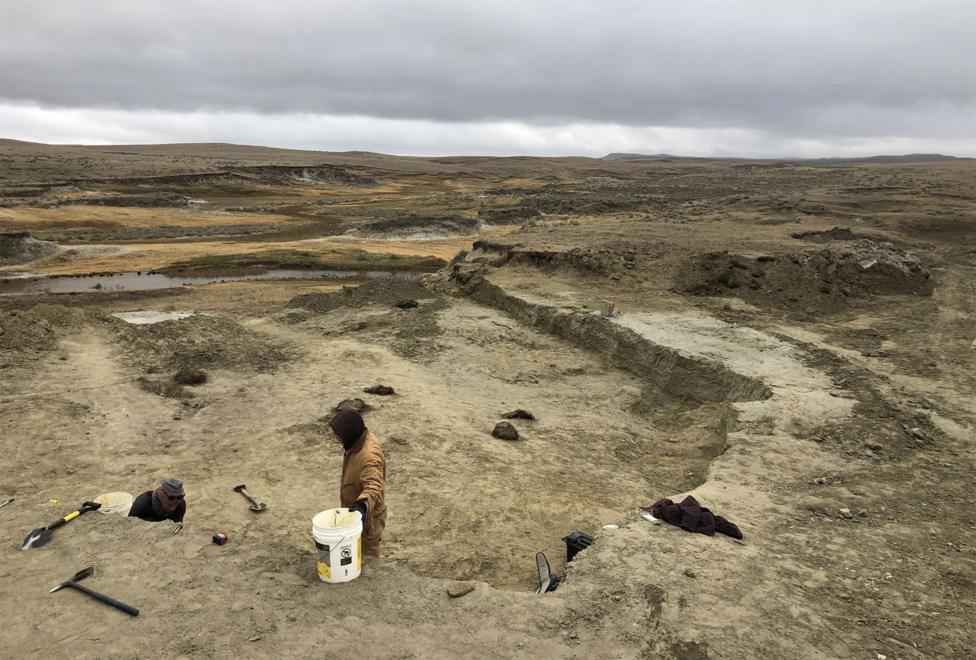
Gus was discovered in Badlands country, South Dakota, and named after the late landowner, Gary "Gus" Licking.
Hatton describes the challenging conditions faced by fossil hunters: "The people that look for these fossils will spend months out in the field with tents and their food in their backpacks and they're camping out in the middle of nowhere with the rattlesnakes and the bugs and the mountain lions."
Excavation and Preservation Challenges
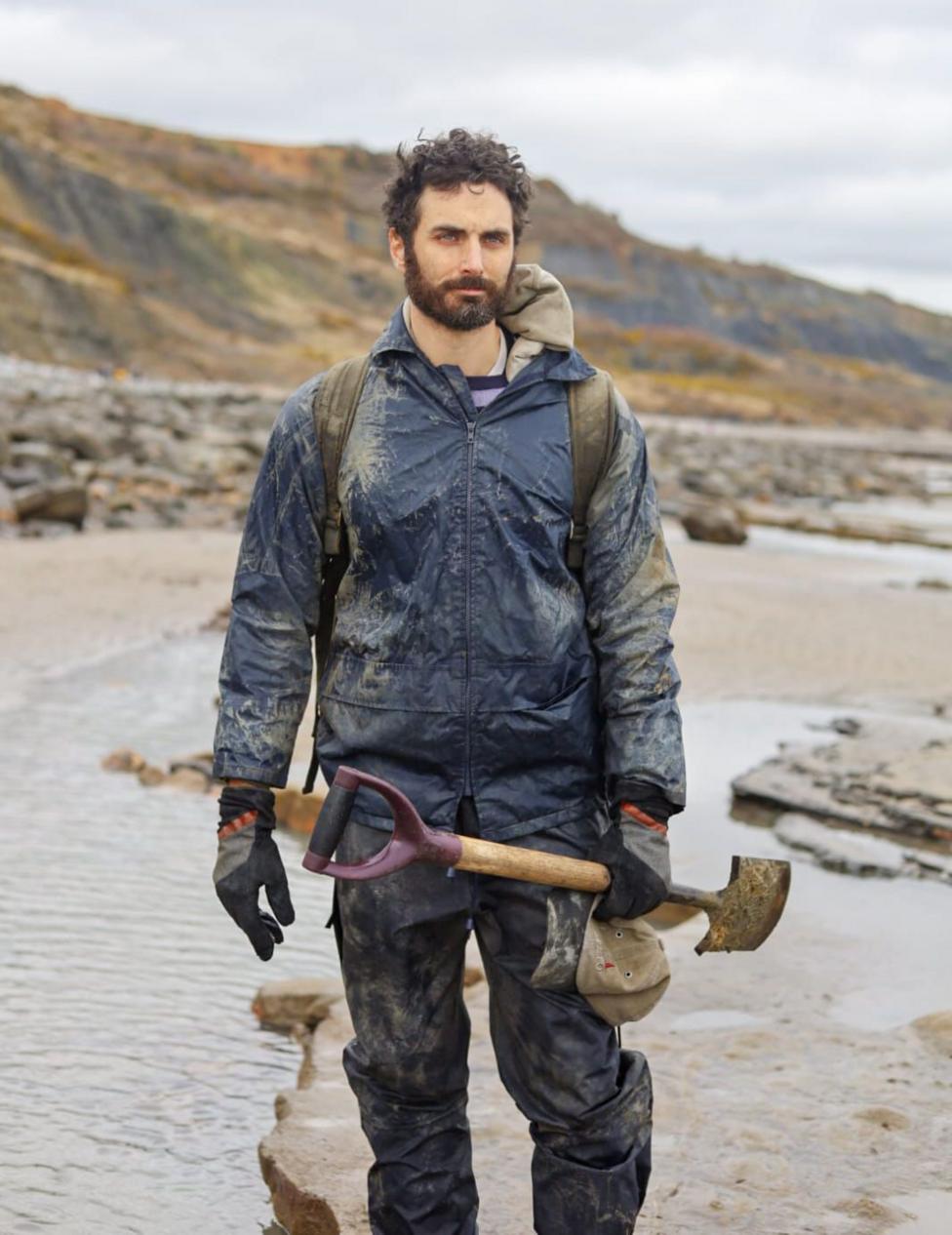
While discovery is a significant milestone, the process of excavation and preservation is arduous. Dr Fiann Smithwick, an independent paleontologist with two decades of experience, explains that once fossils are removed from the ground, they become unstable and prone to decay or disintegration.
"Suddenly when they're out of the ground, they're out of equilibrium, and that normally means they start to decay, fall apart," says Dr Smithwick.
The team led by Thomas Heitkamp spent three years carefully excavating Gus. However, excavation is limited to specific seasons due to weather conditions.
Hatton elaborates, "You can only dig during the field season. So you have to wait till the ground has thawed. And then you are furiously digging until the ground freezes again [in September]."
Although the excavation was completed in 2023, the recovery process continued for an additional three years, during which the team documented and reconstructed the T. rex in the laboratory.
Dr Smithwick highlights the meticulous nature of the process: "Coming across the fossils is the start of a careful and arduous process of excavation."
Valuation and Auction Details
The upcoming auction represents a significant financial opportunity for the excavation team. Gus carries a pre-sale valuation of $30 million, the highest for a T. rex specimen to date.
The current record for a dinosaur auction is held by Apex, a Stegosaurus sold by Sotheby's in 2024 for $44.6 million, which was 11 times its initial valuation.
Prospective bidders must start with a minimum offer of $19 million. However, this price point places such specimens beyond the reach of many established museums.
Prof Susannah Maidment, a dinosaur researcher at London's Natural History Museum (NHM), states, "We're already priced out of having access to many, many specimens."
Since 2020, the five most expensive dinosaurs sold at auction have all commanded high prices, including Stan, a T. rex sold for $31.8 million in 2020, despite an initial guide price of $6-8 million.
Prof Maidment calls this trend "really problematic," emphasizing the importance of access to real fossils for scientific study: "If we're going to do any sort of study, the number one thing is we need to understand the anatomy. We need to know what's real."
She further stresses the critical role of paleobiology in understanding current environmental changes, noting, "We are in what is probably a mass extinction right now, we're changing our environment very, very, very rapidly. The past is really the only kind of empirical data we have to tell us about what is going on right now and in the future."

Beyond scientific implications, Prof Maidment highlights the public's engagement with natural history through museum exhibits, stating that seeing authentic dinosaur bones helps foster connection with the natural world.
She observes a shift in perception, where dinosaur specimens are increasingly viewed as collectible art rather than scientific artifacts, contributing to rising prices.
'A Huge Bite Mark on the Skull'
The excavation of Gus took three years, followed by an additional three years dedicated to documentation and reconstruction.
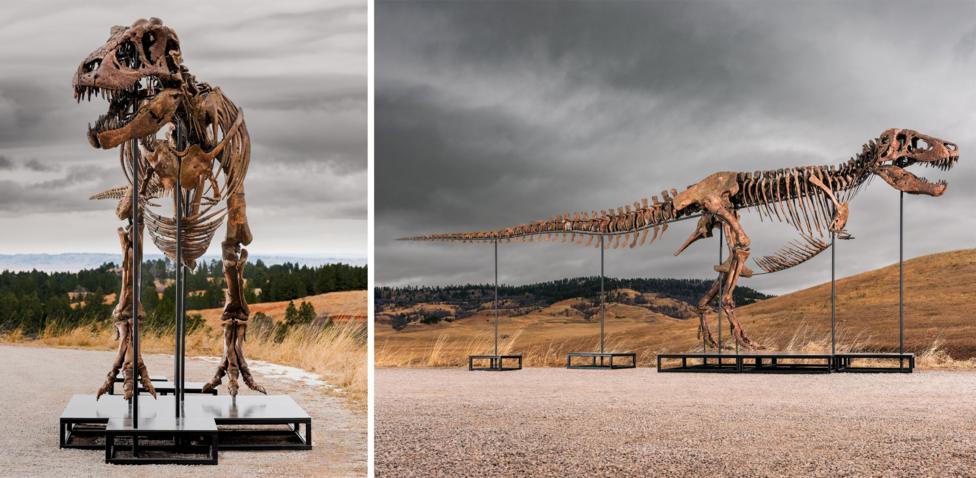
Cassandra Hatton remarks on Gus's significance: "Gus is one of the largest and most complete T. rex ever found, 61% of the bones has been identified - in general you find half of the skeleton that's a major scientific find."
The condition of Gus's bones offers valuable insights into its life. Notably, there is a large bite mark on the top of the skull, possibly sustained during a battle, along with broken ribs that show signs of healing.
Hatton has reached out to museums worldwide to encourage participation in the auction, aiming to place scientifically important specimens into public trust. However, she acknowledges the necessity of pricing that reflects the considerable time, skill, expense, and risk involved in fossil recovery.
"For a lot of excavators, some of these people are living hand to mouth. They're not wealthy people. They have to invest their own money. It's not billionaires digging them up," she explains.
Conversely, it is often billionaires who purchase these fossils. For example, Apex, the Stegosaurus, was acquired by Kenneth Griffin, founder and CEO of the hedge fund Citadel, who has loaned the specimen to the American Natural History Museum for four years.
Dr Smithwick notes that museums have historically depended on wealthy individuals donating or loaning artifacts to build their collections. However, unlike art, fossils present unique challenges in private ownership.
Scientific journals generally do not accept studies based on specimens held in private collections, effectively rendering such fossils invisible to the scientific community.
Prof Maidment explains the importance of accessibility: "Scientists need to be able to revisit the fossil over many years - to agree and disagree, to check their findings as other specimens emerge."
She warns of risks associated with private ownership, such as specimens being lost due to disinterest, death, or divorce, citing cases where scientifically described fossils have been discarded.
"So it's actually just not science anymore," Prof Maidment concludes.
The Second Extinction of Dinosaurs
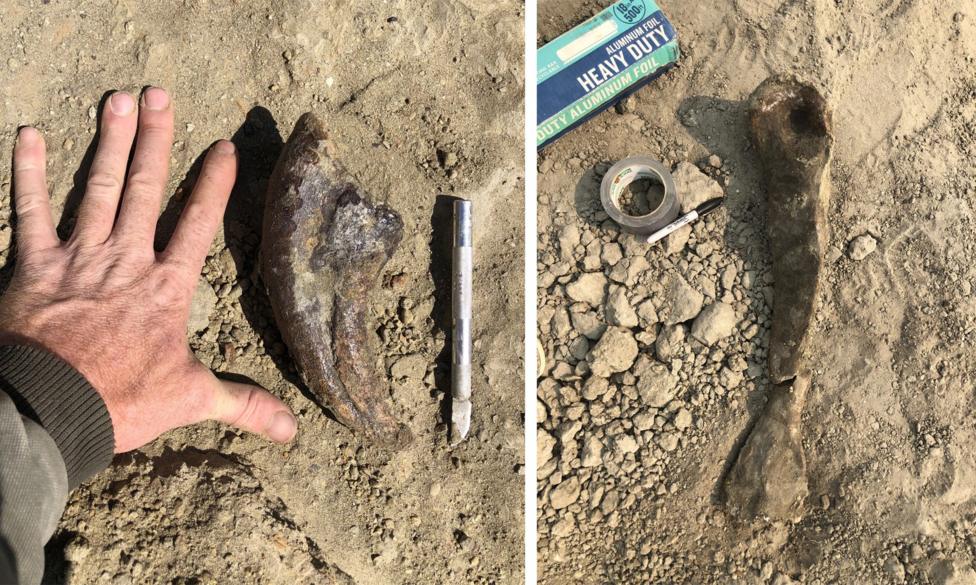
The team meticulously documented the recovery process and the fossils uncovered, including one of Gus's claws and a metatarsal bone.
Dr Smithwick acknowledges that museums also face risks of losing specimens. For instance, Mary Anning, a prolific early fossil collector, discovered the first Squaloraja fossil in 1829, an ancient fish bridging sharks and rays. Although the fossil was donated to the Bristol Institute, it was destroyed during a World War II bombing raid over a century later.
Despite differing perspectives, fossil collectors, museum scientists, and auctioneers agree that without the expertise and dedication of professional hunters, many specimens and scientific discoveries would not exist.
"They're saving the dinosaurs from the second extinction," says Sotheby's Cassandra Hatton.
Dr Smithwick, who hunts fossils along England's Jurassic coast, understands the urgency of fossil preservation.
"I've found a rock with the perfect impression of what was a fish an hour before, and now it's gone. If you imagine a wave coming in, splitting that rock open, the next wave comes along, just wipes out the fish. The sea has broken it into 10,000 pieces, and that is it. It is lost forever."
Most fossils recovered do not reach high-profile auctions like Sotheby's. Many are smaller and less culturally prominent but hold significant scientific value for museums and the public.
Dr Smithwick remarks, "There are countless other specimens that will be scientifically more important in the grand scheme of palaeontology. And you have got people selling ammonites to kids on the beach and that is inspiring curiosity in the outside world."
- First dinosaur bone from Antarctica found in a drawer
- From a dino superhighway to origins of fire-making: The incredible discoveries in 2025


