

Firefighters battle flames as deadly wildfire rages in southern Spain
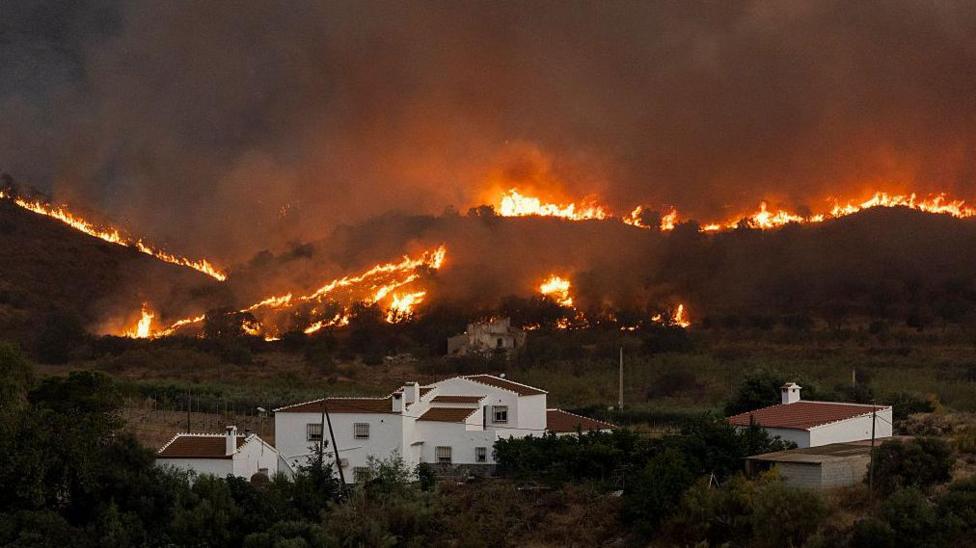
Hundreds of firefighters in Spain continue efforts to contain remaining flames in the southeast following one of the country's most severe wildfires.
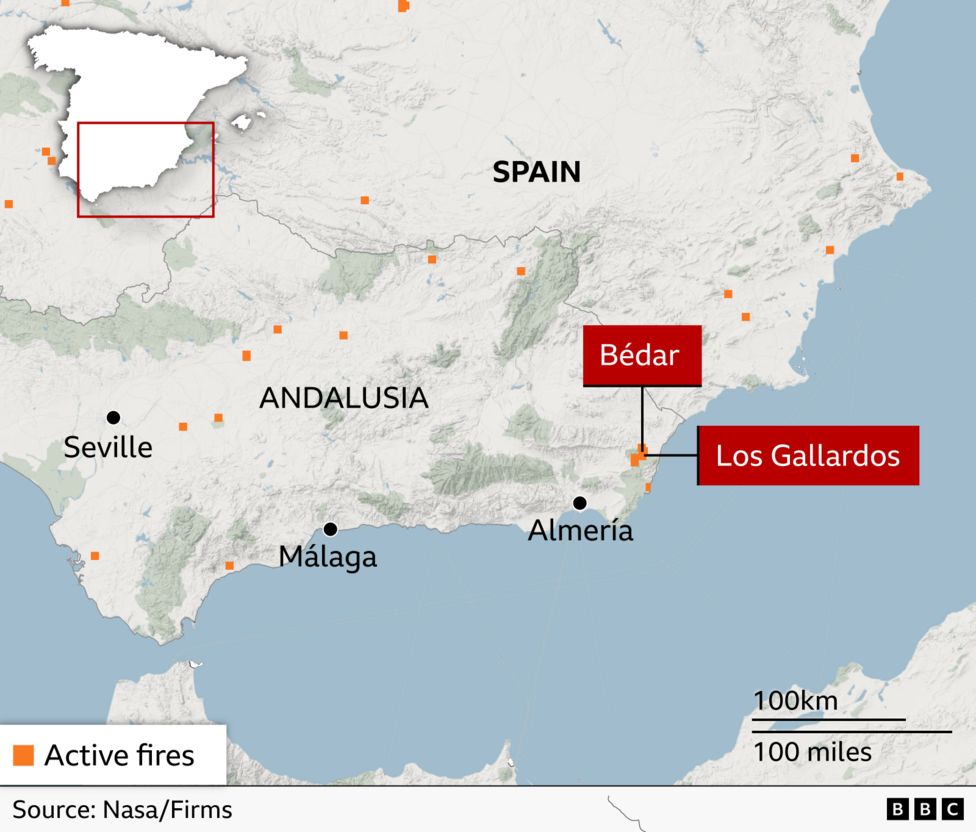
Emergency services have been deployed around the village of Bedar, where authorities report at least 12 fatalities, including four British nationals. Additionally, 23 individuals remain missing.
Local officials in the Los Gallardos area of Almería have cautioned that the death toll may rise, amid concerns that more British citizens could be among the deceased.
A prolonged heatwave with temperatures near 40°C (104°F) has contributed to widespread wildfires across Southern Europe this summer, notably affecting France, Portugal, and Spain.
Rapid fire spread and cause under investigation
Soaring temperatures, extremely dry conditions, and strong winds caused the Los Gallardos fire to spread rapidly on Thursday afternoon.
Initial reports attributed the fire's origin to a fallen power line; however, local electricity companies have denied responsibility.
No further details have been released regarding the four individuals found deceased inside a burnt-out vehicle.
Antonio Sanz, Andalusia's health and emergencies minister, stated earlier that the victims were believed to be "of British origin" and noted the vehicle had a right-hand steering wheel.
A burnt-out car sits among the ashes near Bedar.
Eyewitness accounts of the wildfire
Lucinda Curtois, who arrived in Spain with her partner Riyaz Cheytan and their teenage children for a holiday on Thursday, recounted their escape from Bedar.
"It was almost like there was a mushroom cloud of smoke, it was like a bomb had gone off," she said.
Curtois told the BBC she feared that at least two other UK nationals had died.
"They left their home on foot, I don't know why," she said. "I can only presume it was probably because their road was cut off because they live out in the countryside."

Evacuation challenges and victim identities
Officials in Bedar indicated that some victims did not follow the recommended evacuation routes, though it remains unclear how effectively this guidance was communicated.
Neither Spanish authorities nor the UK Foreign Office have disclosed the identities of the deceased.
Sanz described the fire as rapid and complex, suggesting that most or all victims may have been foreign nationals.
Belgian Foreign Minister Maxime Prévot noted that many Belgians own second homes in the region and that consular services are attempting to contact those who have not responded.
Weather conditions and historical context
The Andalusian branch of the national weather agency AEMET reported that conditions were expected to improve on Saturday, with moderate winds and cooler temperatures.
With at least 12 fatalities, this wildfire ranks among the deadliest in Spain's history.
In 1984, a fire on the Canary Island of La Gomera resulted in 20 deaths, while in 1979, a forest fire near Lloret de Mar in northeastern Spain claimed 21 lives, including nine children.
Climate change and its impact
Climate change is contributing to rising global temperatures, with Europe warming twice as fast as the global average, according to the Copernicus climate service.
This trend is leading to more frequent summer heatwaves, increased strain on Europe's water resources, and more intense wildfires.
Get in touch
If you have been affected by the wildfires and extreme heat in Southern Europe, and it is safe to do so, please get in touch.



