

Putin Rejects Zelensky's Proposal for Face-to-Face Talks
Russian President Vladimir Putin stated he does not see any point in meeting Ukrainian President Volodymyr Zelensky following Zelensky's request for direct negotiations aimed at ending the war between Russia and Ukraine.
Zelensky issued an open letter on Thursday urging direct talks with Putin, emphasizing that it was "wrong to simply wait" for the conflict, which escalated with Russia's full-scale invasion of Ukraine in 2022, to regain international attention.
The Ukrainian leader also called for a ceasefire, adopting a tone that was at times defiant and mocking.
Putin described Zelensky's letter as "rude" and declined the meeting request, reaffirming his stance that peace negotiations must precede any ceasefire.
"I don't see any point for now," Putin said when asked about accepting Zelensky's offer during Russia's annual economic forum in St Petersburg on Friday.
"Was it a way to create the conditions for a face-to-face meeting or a way not to set up a face-to-face meeting? I think it was the second."
He reiterated his position that a ceasefire would only enable Ukraine to regroup, while Moscow's demands from Kyiv remain unmet.
"The only point is for the Ukrainian side to halt the advance of our armed forces. But we need agreements - not for six months, not for three months, but for the long term," he said.
"Let the experts get to work and come up with some solutions. After that, we can meet."
Putin emphasized that the war would end only when Russia's objectives are achieved.
"Military actions will end some day, we assume. Without a doubt, they will end once we have achieved the goals we have set for ourselves."
Territorial Demands and Kyiv's Rejection
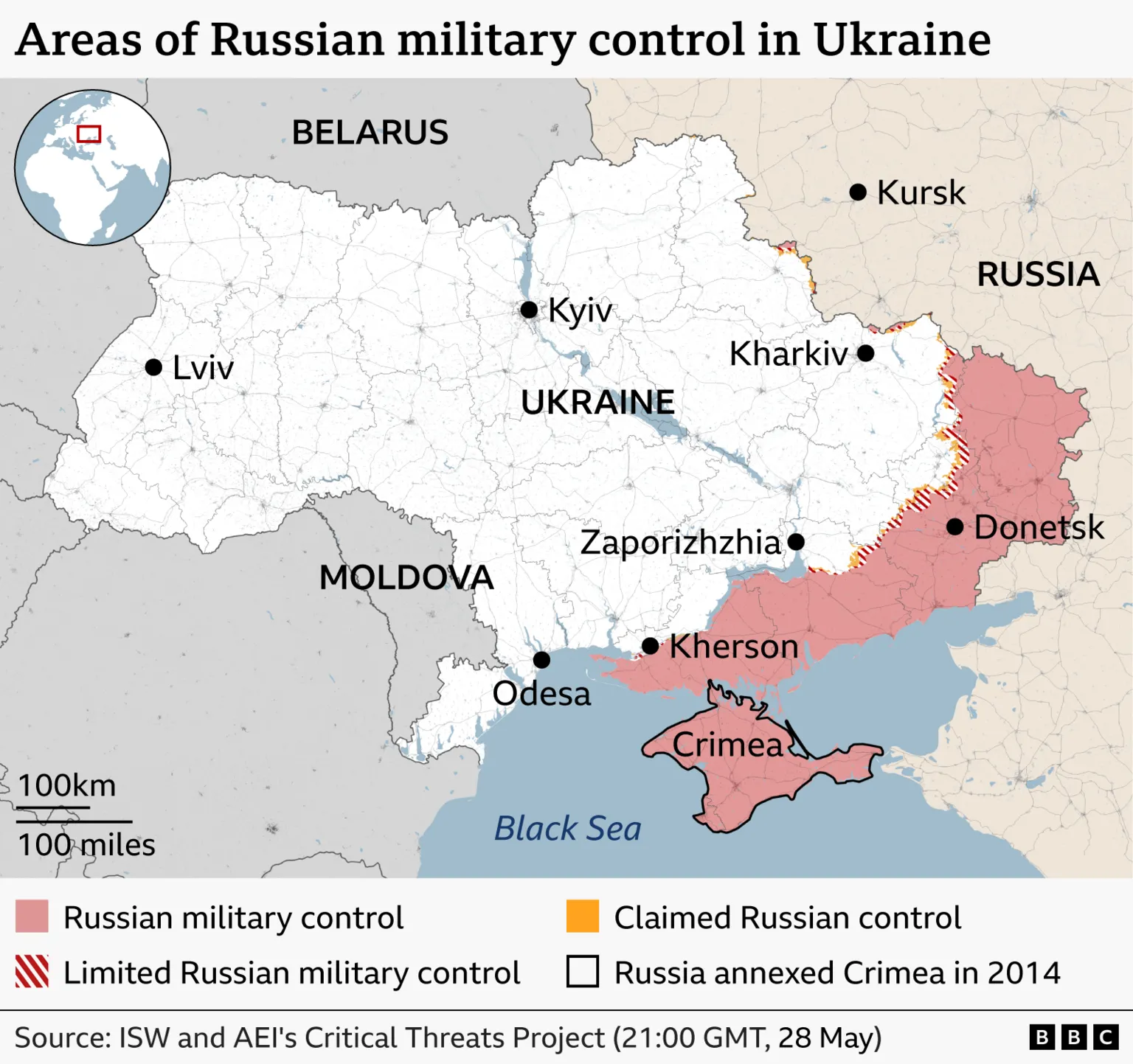
Russia's longstanding position requires Ukraine to withdraw from the Donetsk, Luhansk, Kherson, and Zaporizhzhia regions, and to abandon its aspirations to join NATO.
Kyiv has refused to cede any territory, arguing that concessions would encourage further invasions, recalling that Russia's full-scale invasion occurred eight years after it annexed Crimea.

Zelensky's Reaction and International Responses
Following Putin's response, Zelensky stated that Russia "was choosing war again."
"He just doesn't want to end the war. I think that many in the world were disappointed by this answer," Zelensky wrote on Telegram.
In his letter, Zelensky remarked that "after 26 years in power, age is beginning to take its toll" on Putin, and referenced recent Ukrainian strikes on Russian territory, including one on St Petersburg on Thursday, which he described as "paying a visit."
Putin dismissed the letter's tone, calling it "some rather rude remarks."
The letter had raised hopes for peace in some quarters, including the White House. US President Donald Trump commented that "it would be great" if the two leaders met.
Ukrainian Attacks on Ships and Drone Incident
On Friday, Ukraine reported striking five ships carrying illegal cargo in the Sea of Azov and coastal waters of Russian-occupied territories.
Robert Brovdi, Ukraine's drone commander, stated the ships were involved in "stealing" Ukrainian grain and transporting fuel and military supplies.
Azerbaijan's foreign ministry reported five fatalities from attacks on two ships in the Sea of Azov but did not specify who was responsible. The ministry noted the vessels were not Azerbaijani.
Additionally, a Ukrainian-operated drone exploded in the Romanian Black Sea port of Constanta. Ukrainian operators attributed this to Russian electronic interference that caused the drone to deviate from its course.
Casualties from Recent Russian Attacks
Officials reported at least 13 deaths and 70 injuries from a series of Russian attacks in Ukraine over the past day.
Four people died when a dairy factory near Kyiv was hit, and a drone strike on a petrol station in Kherson resulted in the death of a 35-year-old woman.


