

Portugal Breaks May Temperature Record Amid European Heatwave
Portugal recorded its highest temperature ever for the month of May, reaching 40.3°C in the central town of Mora. This surpasses the previous record of 40°C set in May 2001, as western European countries contend with extreme heat conditions.
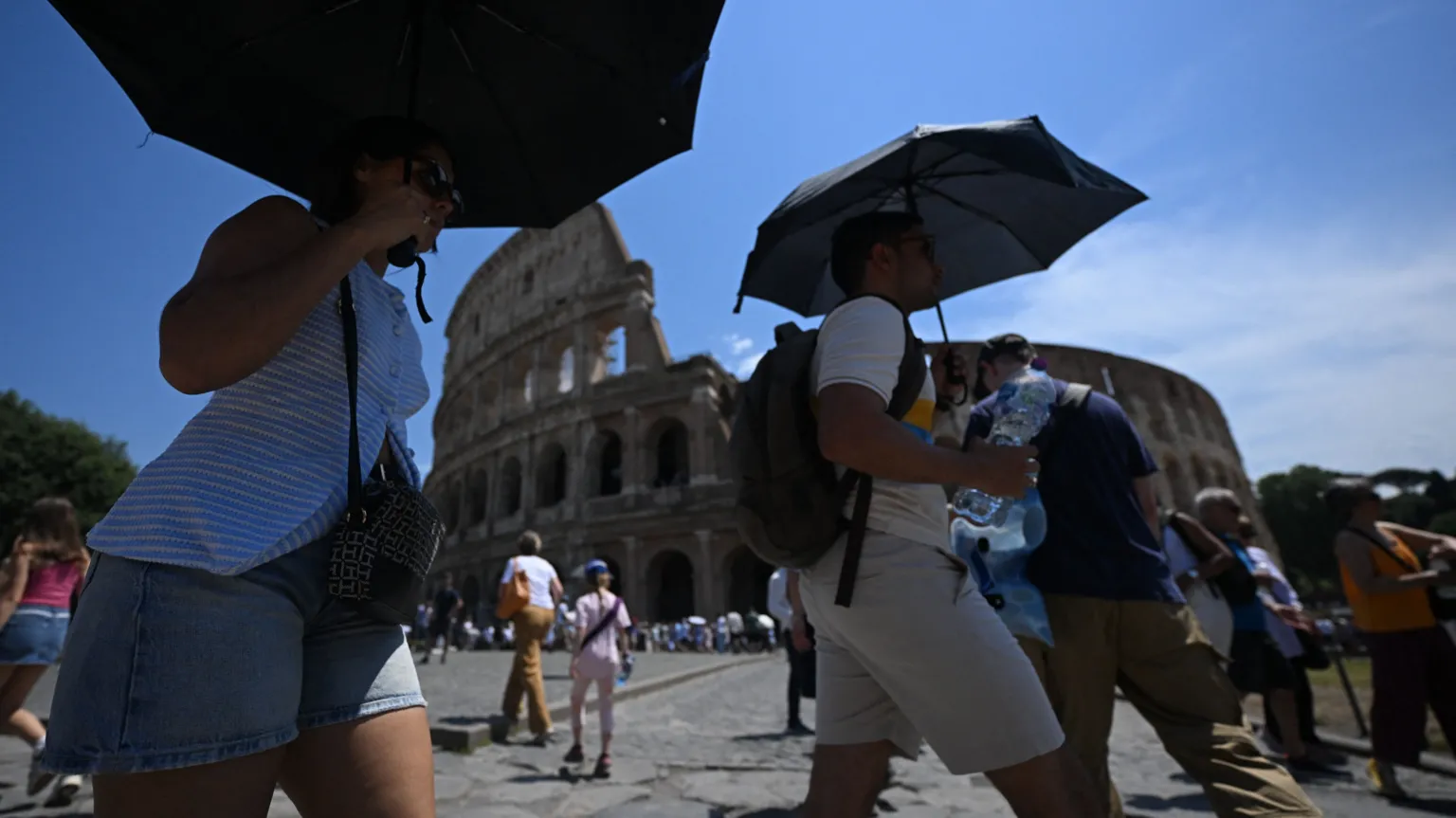
Ministers in France convened to evaluate the nation's readiness for ongoing heatwaves, while tennis world number one Jannik Sinner withdrew from the French Open due to heat-related illness. Italian authorities issued a red heatwave alert for Rome, where temperatures could reach 32°C on Thursday.

The heatwave is expected to persist through the weekend, affecting Germany, Spain, and Switzerland with unusually high temperatures. Portugal's meteorological office forecasts that some areas will exceed 35°C on Thursday and Friday before temperatures begin to decline.
French Government and Education Sector Respond to Heatwave
French Prime Minister Sébastien Lecornu led a ministerial meeting on Thursday afternoon to formulate a preparedness plan addressing extreme heat events. The plan focuses on mitigating forest fires and securing sufficient water supplies throughout the summer months.
Despite the heatwave, baccalaureate exams—the French equivalent of A-levels—will continue as scheduled. However, some schools have closed due to unsafe indoor temperatures. For example, a primary school in Souston, located in the Landes region, will remain closed on Thursday and Friday after indoor temperatures reached 53°C earlier in the week, according to a local official.
Education Minister Édouard Geffray told BFMTV that exam centers would select rooms with the most shade, emphasizing that exams will proceed
"simply because the students are prepared and... there is also a schedule according to which they expect their results".
The decision to continue exams amid the heat has drawn criticism from education unions and teachers. One teacher told French radio that educators were
"forced to bring in their own fans"to cope with the conditions.
A survey conducted by France's secondary school union found that nearly 78% of schools recorded temperatures above 30°C this week. Reports included teachers using screwdrivers to pry windows open for ventilation.
Heat Alerts and Measures in France
Seventeen departments in France, including regions in the northwest and Paris, are under an orange alert, signaling the public to be
"very vigilant"about the weather.
Temperatures in Paris are forecast to reach 33°C on Thursday and peak at 34°C on Saturday and Sunday. To alleviate traffic congestion, police have implemented measures until Saturday, such as restricting road access to lower-emission vehicles and reducing speed limits. Additionally, a single fare will be offered for the entire public transport network during this period.
French Open and Athlete Affected by Heat
At the French Open in Paris, Jannik Sinner appeared to be on track for victory before experiencing dizziness and lethargy, leading to his withdrawal.
He reflected on the experience, stating
"It was a tough spot to be in,"and added,
"Really it was nothing against the heat, nothing against the weather. It was just me today, but it happens."
Italian Heatwave Alerts and Conditions
Italy has issued its first red heatwave alert of the year for Rome, as well as for Florence, Bologna, Brescia, and Turin. The alert warns of
"possible negative effects on the health of healthy, active people".
Temperatures in Madrid are expected to reach 35°C over the weekend. Although the current heat does not officially qualify as a heatwave in Spain, the national meteorological office noted that the temperatures are typical of July and August.
Cause and Climate Context of the Heatwave
The immediate cause of the heatwave is identified as a "heat dome," a high-pressure area that becomes stationary, trapping warm air beneath it.
While attributing individual extreme weather events directly to climate change remains challenging, scientists agree that climate change increases the frequency and intensity of heatwaves.
According to the Copernicus climate service, Europe has warmed by 0.56°C per decade over the past 30 years, intensifying heat extremes significantly.
UN Climate Warnings
On Thursday, the United Nations warned that global average temperatures are likely to remain at or near record levels this year and for the next four years.
The 11 hottest years on record have all occurred since 2015. The UN's weather and climate agency projects this trend will continue, with a new record hottest year
"likely"before 2031.


