Morning opening: G7 commits to 'unwavering support for Ukraine'
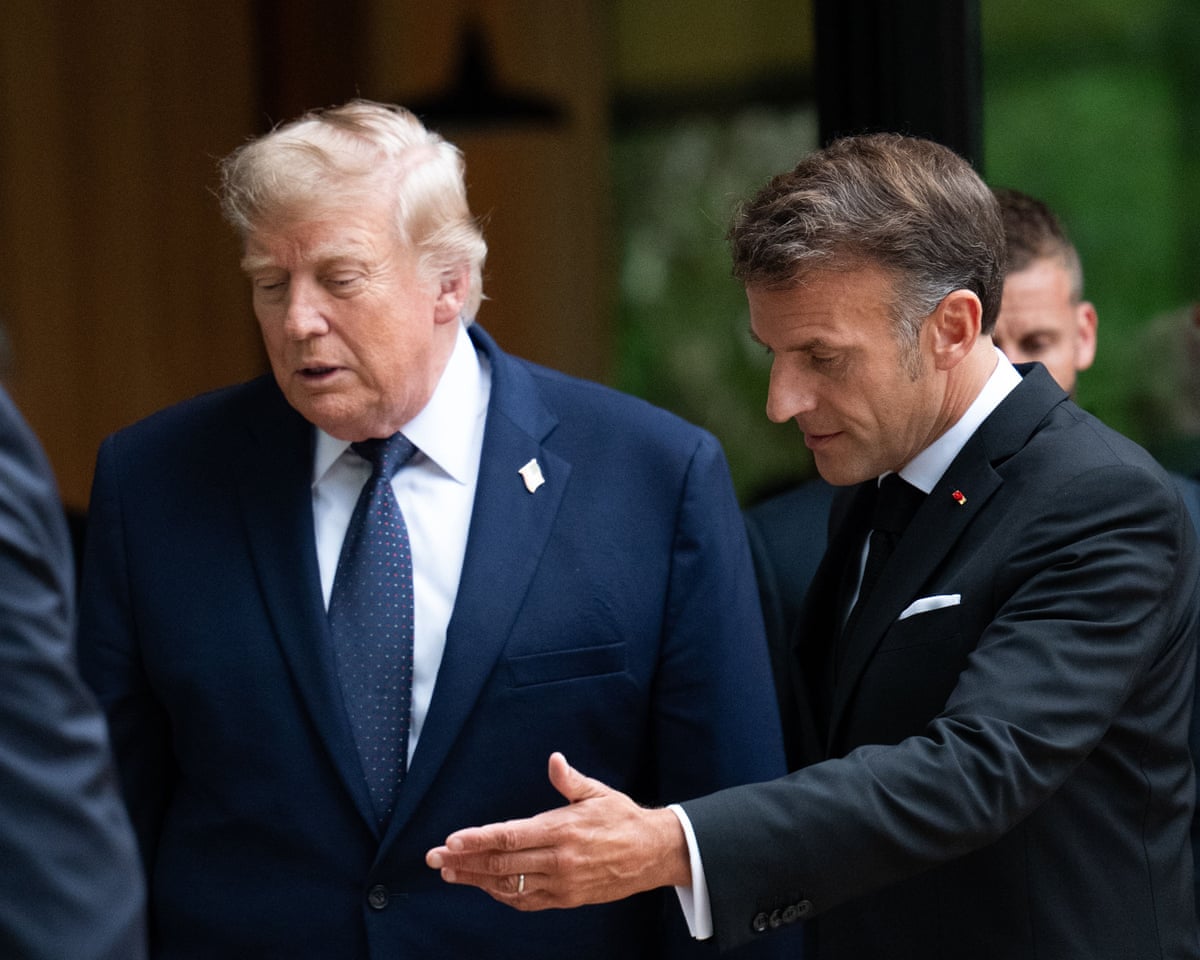
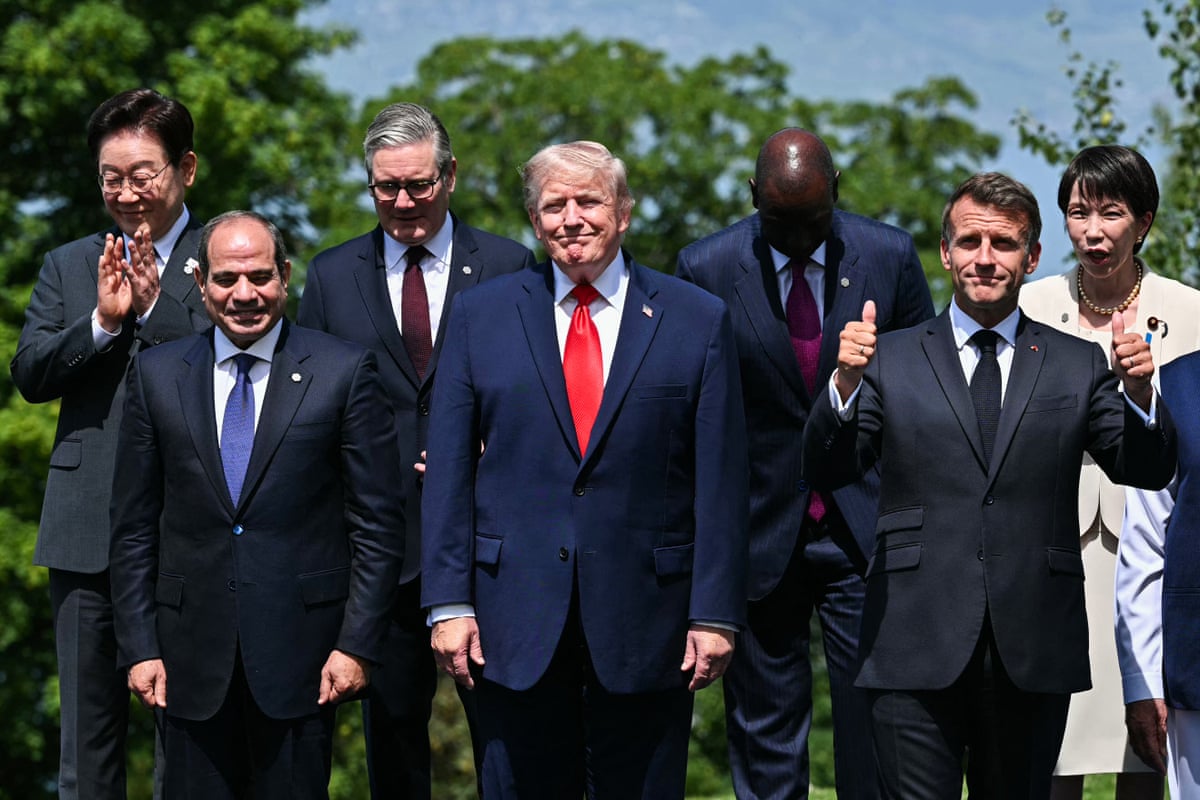
Despite initial concerns regarding Donald Trump’s stance, the G7 leaders convening in France have agreed on a statement affirming their “unwavering support for Ukraine in defending its freedom, sovereignty, and territorial integrity.”
The statement, released overnight, reads:
“We commend Ukraine for its resilience and progress on the battlefield in recent months and emphasise there is now a new momentum.
To support and accelerate this new momentum, we agree to increase the delivery of air defence capacities, additional systems and interceptors, and long-range capabilities.
We are also ready to consider extending to Ukraine the benefit of licenses to allow for an increase in Ukraine’s military production.”
In a move reminiscent of previous Trump-era diplomacy, the statement also includes explicit praise of the US president, seemingly aimed at maintaining his support:
“We commit to increase the pressure on the Russian war economy. In this context, we will strengthen our sanctions, including those on the oil and gas sectors. We consider this the right moment to proceed with additional measures, as president Trump has delivered a deal that we support in reopening the strait of Hormuz.”
The leaders will continue discussions today on economic growth and artificial intelligence, with the latter session expected to draw attention as they meet with executives from OpenAI and other technology firms.
Later this evening, France’s Emmanuel Macron will host US President Donald Trump at the Palace of Versailles to commemorate the 250th anniversary of US independence. Trump expressed notable enthusiasm, describing the event as “a real deal” and stating he was looking forward to it.
Separately, NATO Secretary General Mark Rutte is scheduled to speak this morning ahead of tomorrow’s meeting of the alliance’s defence ministers. This occurs less than a month before the much-anticipated Ankara summit, which is expected to focus heavily on maintaining Trump’s support.
It is Wednesday, 17 June 2026. Jakub Krupa reporting, and this is Europe Live.
'I am the boss,' Trump tells G7 leaders before morning session
Meanwhile, the White House released a video capturing the moment President Trump entered the room for this morning’s session and declared to other leaders,
“I am the boss.”
Mark Rutte was asked whether Trump is moving closer to Ukraine’s position on ending the war. He responded by affirming his positive view of the US stance and commended Trump for
“breaking the deadlock” last year.
Rutte noted that the battlefield situation has shifted, stating,
“Russia is not making advances at the moment.”He added,
“Ukraine is really doing better”but emphasized that ending the war requires cooperation from both sides, noting that
“Putin does not seem to be ready to join talks yet.”
He further praised the American president’s role, saying,
“And here the American president is, I think, playing a very positive role now for a year and a half in trying to get this war done, he wants to get it done, and I completely support him.”
Potential reopening of dialogue with Russia 'clearly debated among allies,' Rutte says
When asked about the possibility of reopening communication channels with Russia, a position supported by some leaders including Finland’s Alexander Stubb, Rutte acknowledged that
“clearly it is something debated among allies,”primarily within the European Union. However, he noted that this issue has not yet been addressed at the NATO level.
He explained,
“It’s really a discussion playing out in the EU at the moment, and of course we are following that, and will be supportive wherever we can.”
Regarding Europe’s responsibility for its own defence, Rutte was challenged on whether this might detract from support for Ukraine. He stated that the two objectives
“need to go hand in hand, and everybody realises that.”

He pointed to the G7 statement on Ukraine as evidence that all NATO allies remain
“completely committed to making sure that Ukraine maintains its position in the fight against Russia, and is able to defend itself.”
Rutte highlighted the continued US support in areas unique to its capabilities, such as the air defence Patriot systems, which are funded by European and Canadian allies.
He expressed his desire for the upcoming summit to deliver
“an absolute ironclad commitment”to NATO spending pledges made last year and to Ukraine’s defence.
'We are not naive,' Rutte says on reports China helps Russia with military training
Rutte was questioned about reports that China is assisting Russia through military training, as recently disclosed by the EU’s foreign policy chief, Kaja Kallas. He responded that NATO is
“constantly trying to follow exactly what China is doing.”
He added,
“We are not naive. We follow everything exactly. I cannot tell you more at this moment, or at least in this open press conference, but you can be assured that we follow every [bit].”
Regarding the Czech Republic’s challenges in reaching the 2% defence spending target under Prime Minister Andrej Babiš, Rutte stated,
“We know each other for many years, and I know that the Czech Republic is as committed as everyone to what we decided in The Hague.
Czechia did not reach the 2% last year, but I know that the Czech government is working very hard to make sure that when it comes to a credible trajectory, it will be there.”
Rutte expects Ukrainian President Volodymyr Zelenskyy to have a full programme of meetings at NATO’s summit in Ankara next month, but notably
“no sit down with all the 32 leaders.”
When asked about what Ukraine is likely to receive from the NATO summit, Rutte referenced positive statements already emerging from the G7 in France.
He said NATO will
“focus particularly, of course, on what Ukraine needs to maintain the fight,”including the supply of military equipment such as US interceptors for the Patriot system. The emphasis will be on
“making sure the money is there.”
He expressed confidence, stating,
“I’m pretty confident that collectively we’ll make sure you have what you need as far as Europeans and Americans can help to defend yourself.”
Pressed further on timelines, which he initially avoided, Rutte gave a complex response, saying it is impossible to answer simply:
“It’s not that you can answer that question with a yes or no. It’s clear that US has adjusted its commitment to the NATO force model, but it’s in technical terms, it is not a yes or no.”
Regarding spending commitments and countries perceived as lagging, Rutte noted that overall increases are
“really staggering,”with many nations
“really ramping up”their defence budgets.
On the potential NATO or European role in the Strait of Hormuz, Rutte explained that this falls outside the NATO framework but acknowledged coordination between France and the UK. He said it was discussed at the G7 summit in France.
He stated,
“Whether NATO will play a role there, yes or no… if helpful, of course we will play a role, but if they can do it without us, also okay; we are always ready to help if so wanted.”
Journalists expressed some skepticism about Rutte’s positive portrayal of changes to the NATO Force Model. When questioned further, he responded:
“We have already seen that, as the United States has adjusted its pledge contributions, other allies have stepped up to contribute more, in some cases completely, in some cases nearly, but there are also areas that require more work, but the overall picture is looking good.”