

Special workshops for disabled people employ 300,000 people in Germany
A test case before a German court could have significant consequences for hundreds of thousands of disabled individuals in Germany who currently earn less than the legal minimum wage.
The legal action is brought on behalf of 57-year-old Jürgen Linnemann, who has spent his entire working life in a "Werkstatt für behinderte Menschen" – a workshop for disabled people.
In English, these are referred to as sheltered workshops, and approximately 300,000 disabled people in Germany are employed in such settings.
These workshops manufacture a variety of products for companies and brands often recognized internationally. However, the workers producing these goods receive wages below the minimum wage and less than what a mainstream economy worker would earn for the same work.
This wage disparity is possible because disabled individuals in sheltered workshops are not legally considered employees. Consequently, they are not entitled to minimum wage protections or other employment rights, such as the ability to join trade unions.
Linnemann is requesting the court to rule that individuals like him should be classified as employees and thus entitled to receive the minimum wage.
Challenges within the segregated workshop system
Hubert Hüppe, a former federal commissioner for the interests of disabled people and a vocal critic of the workshop system, explains that once individuals enter this segregated system, it is difficult to exit.
"You go from a special kindergarten to a special school and then into one of these sheltered workshops,"
he states.
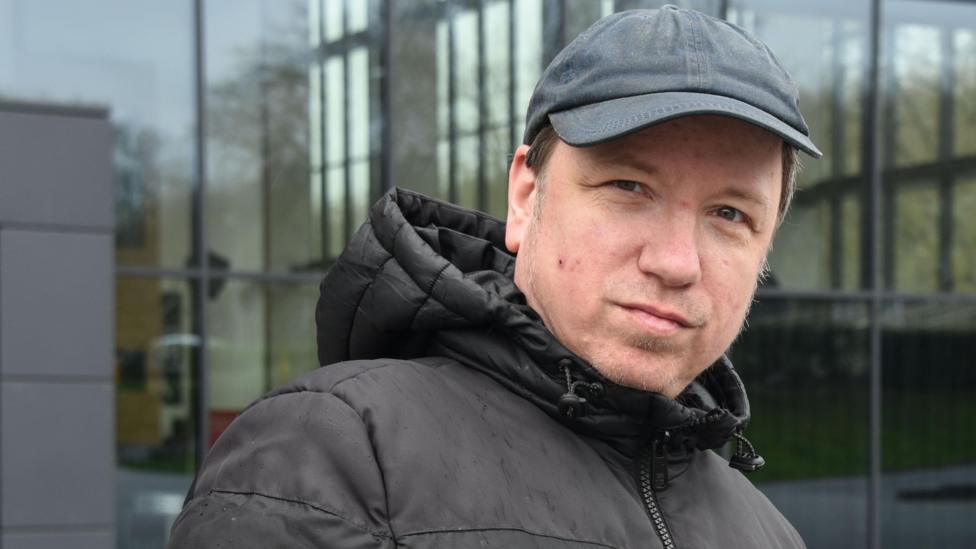
This trajectory was experienced by Dirk Hähnel, now in his 50s, who spent most of his adult life in sheltered workshops near the central-western city of Paderborn.
Initially, Hähnel attended a regular school but was soon transferred against his wishes to a special school. He recounts,
"My parents were told that a special school was the best choice."
When preparing to leave the special school, he was informed that his only option was to enter a workshop. He expresses,
"I didn't want to do that."
Hähnel attempted to secure an apprenticeship instead but faced discrimination. He recalls a particularly disheartening job interview,
"I told my potential employer that I had epilepsy and he said, 'we don't employ idiots here'."
Similar stories are common. The author, who was born blind, recalls a first school report at age six advising his parents to send him to a school for children with learning disabilities. Growing up bilingual in German and Arabic, he often confused the two languages. Had his parents followed the report's advice, he might have ended up in a workshop as well. Instead, he is now among the few journalists in Germany with a visible disability.
Hüppe criticizes the workshop system for failing in its fundamental role to rehabilitate disabled individuals and prepare them for employment in the mainstream economy.
"This responsibility just isn't taken seriously,"
he says.
Economic incentives and low transition rates
Part of the issue stems from economic incentives provided to German companies to support the workshop system. German law mandates that any company with more than 20 employees must hire at least one disabled person. Larger companies have a minimum quota of 5%. Companies that do not meet this quota must pay compensation into a central fund supporting disabled workers.
Many companies opt to pay this compensation rather than fulfill their quota. Furthermore, if they outsource production to a workshop, the compensation amount is reduced.
As a result, fewer than 1% of disabled individuals successfully transition from workshops to mainstream employment.

Hüppe also notes that workshops are reluctant to lose their most productive workers.
"Obviously a workshop is a commercial enterprise that survives on what it produces,"
he explains.
"And so obviously they want to hold on to their best workers, the ones that would have the best chance of making it out in the mainstream economy."
He references a 2023 report by the United Nations Committee on the Rights of Persons with Disabilities, which criticized Germany's record on disability. The report specifically highlighted
"the high number of persons with disabilities enrolled in sheltered workshops and the low rate of transition to the open labour market."
Perspectives from workshop workers and management
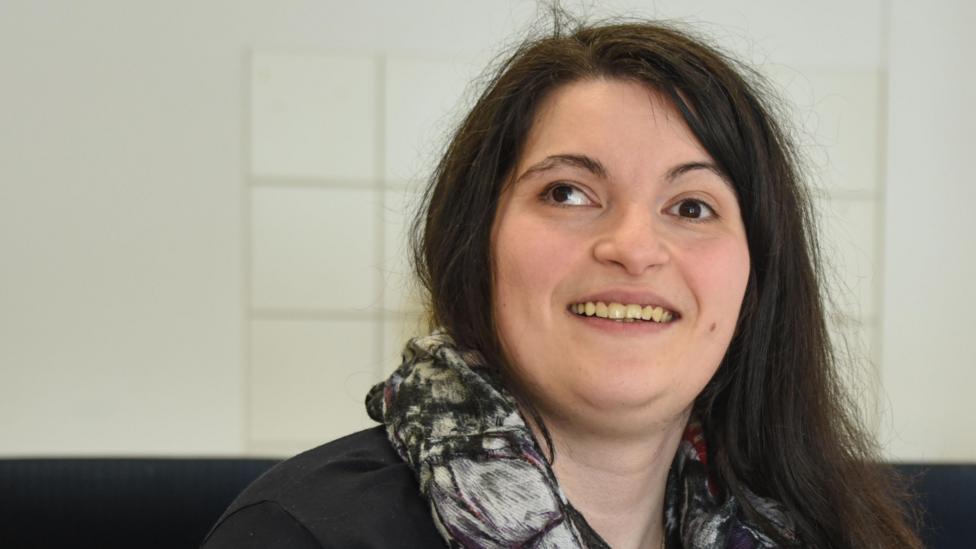
Not all workers are dissatisfied with employment in workshops. Medina Arnaut, 35, works at a Caritas-operated workshop in Paderborn and chairs the local workshop council, representing workers' interests similarly to a trade union.
She states,
"We have colleagues here who are so grateful that workshops exist. These are colleagues who quite simply need this workshop environment because of their disability."
Arnaut adds that many colleagues have experience working in the mainstream economy and find the pressure there overwhelming.
"People come to me and say, I've experienced life out there in the commercial world and it made me sick."
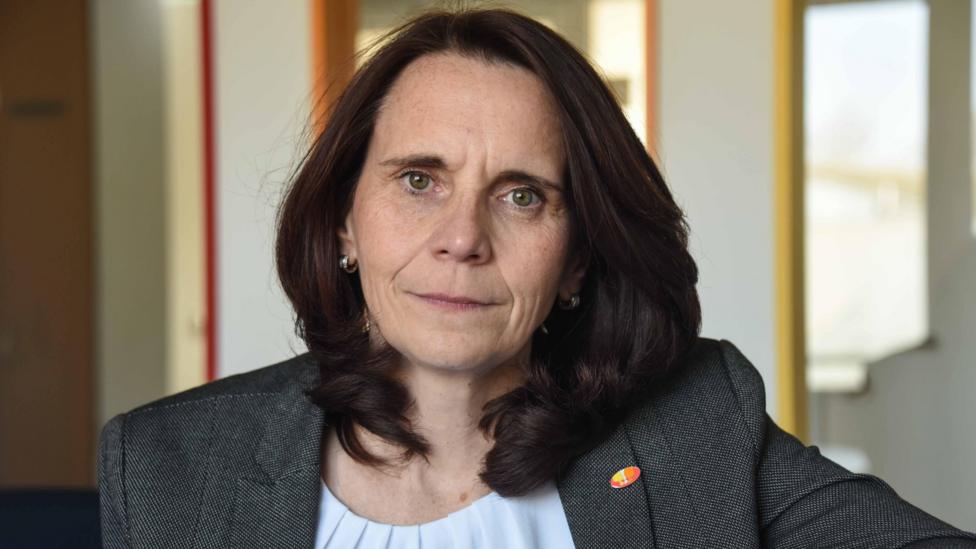
Karla Bredenbals, head of the Caritas workshops in Paderborn, acknowledges the low transition rate to mainstream employment.
She explains,
"Quite often we'll find companies that, for example, don't have any accessible toilets. Or we might have someone with the potential to move on, but they are not able to use public transport."
Bredenbals admits that sometimes she hears reluctance to let productive workers leave the workshop.
"That's the one sentence that makes me really angry,"
she says.
"When I hear someone say 'I can't let this person leave because I don't know how we'll get the work done without them'.
Hanging onto people means we are robbing them of the chance to take responsibility for their own working lives."
Regarding the issue of workshop workers receiving minimum wage, Bredenbals responds cautiously.
She states,
"If you are talking about what it means to be employed and you are talking about rights, then you also have to talk about obligations."
She continues,
"Someone who is in employment is obliged to perform certain tasks, to perform to a certain level, as per their contract. But many of the people in our workshops are not in a position to fulfil these obligations fully, and we have to talk openly about this."
Legal proceedings and outlook
Linnemann's legal case concerns a different set of Caritas-run workshops near Münster, separate from those managed by Karla Bredenbals. The case is supported by the Berlin-based human rights organization Gesellschaft für Freiheitsrechte (The Society for Civil Rights).
The next hearing at Münster Labour Court is scheduled for September, with a decision expected within approximately one year.
Additional reporting by Tim Mansel.


