Morning opening: 'Long way to go' on Ukraine, Russia's foreign minister says
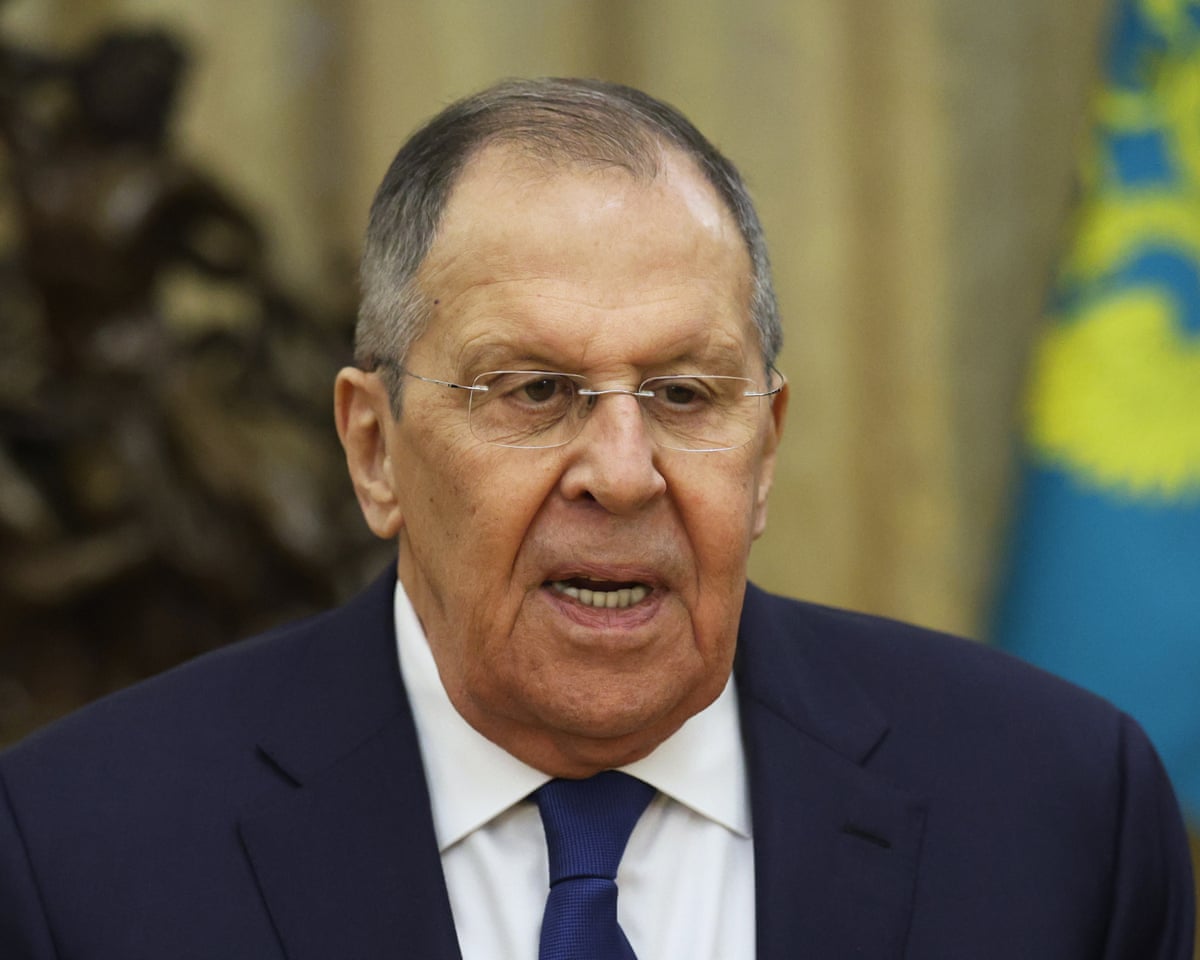
Russian Foreign Minister Sergei Lavrov stated that there was no cause for optimism regarding US President Donald Trump’s pressure on Europe, emphasizing that peace talks on Ukraine still have a long way to go, according to Russian state-owned news agency RIA.
His remarks came days after what the US, Ukraine, and other parties described as difficult but constructive discussions in Abu Dhabi, indicating that achieving a final agreement may remain challenging.
Russia continues to pursue its original maximalist demands, including territorial claims over Ukraine’s eastern regions, and opposes Ukraine joining NATO or hosting Western troops as part of security guarantees.
Ukrainian President Volodymyr Zelenskyy stated in his nightly address that
“reliable security guarantees are the only real foundation for peace,”warning that Russia might test any peace settlement through strikes or hybrid operations.
Meanwhile, Russia continues attacks on Ukraine’s energy infrastructure, with an energy facility in the southern Black Sea region of Odesa targeted overnight, despite ongoing cold temperatures across the country.
Elsewhere, attention will focus on discussions about improving European competitiveness ahead of Thursday’s informal EU summit, updates on the EU-US trade deal which was briefly paused, and other continental developments.
It is Tuesday, 10 February 2026. This is Jakub Krupa with Europe Live.
France's Macron urges Europe to assert its position amid global shifts
French President Emmanuel Macron has called on Europe to reassert its global position amid rapidly changing political and trade landscapes.
In an interview with several European media outlets, Macron criticized the strategy of deferring to the US and other geopolitical powers, urging Europe to accelerate integration to prepare for
“permanent instability”ahead.
He stated,
“It is time for Europe to wake up … If we do not decide for ourselves, we will be swept away.”Macron spoke to outlets including Le Monde (€), Der Spiegel (€), (£), and El País (€).
Macron described Europe as facing
“a profound geopolitical rupture”with significant shocks in trade and defense due to evolving relations with China and the US.
He advocated for reducing risks and dependencies and making autonomous decisions rather than waiting for crises, warning,
“If we choose to be spectators, we will be vassals.”He referred to the US interest in Greenland, a NATO ally’s territory, as a
“Greenland moment,”a wake-up call for European leaders.
Macron noted that Europeans
“stand firm, but react too slowly,”and called for more common leadership to assert Europe’s role as a global superpower.
He cited the Franco-British-led Coalition of the Willing for Ukraine as an example of an initiative that enabled Europe to build strong international alliances to defend its interests, including in defense and security.
In remarks likely to provoke debate, Macron suggested reopening diplomatic channels with Moscow to avoid delegating discussions to others, including the US.

He said Europe should engage with Russia
“without being naive or pressuring the Ukrainians, but also without having to depend on a third party”to conduct talks.
“We have European interests to defend and I’m not going to delegate them to anyone, not even the US.”
Macron also highlighted the risk of renewed tensions with the US over Europe’s push to regulate social media platforms and the Greenland issue.
Here is the daily briefing on Europe to update on the latest developments from the past 24 hours.
Ukraine and France have agreed to begin joint weapons production, Ukrainian Defence Minister Oleksii Reznikov said on Monday after hosting his French counterpart in Kyiv.
Ukraine is opening exports of its domestically produced weapons, President Zelenskyy announced, aiming to leverage wartime technological advances to generate much-needed funds.
Russian attacks damaged production sites of Ukraine’s state-run oil and gas company Naftogaz in the Poltava and Sumy regions, the company’s CEO reported on Monday.
The EU has proposed extending sanctions against Russia to include ports in Georgia and Indonesia that handle Russian oil, marking the first time sanctions would target ports in third countries, according to a proposal document.
Russia claims advances in Zaporizhzhia region
Russia’s Defence Ministry claimed its forces captured the settlement of Zaliznychne in Ukraine’s Zaporizhzhia region, according to Russian state news agency RIA.
Kremlin says no date set for next Ukraine talks
The Kremlin announced there is no set date yet for the next round of Ukraine peace talks but indicated negotiations are likely to occur soon, reported.
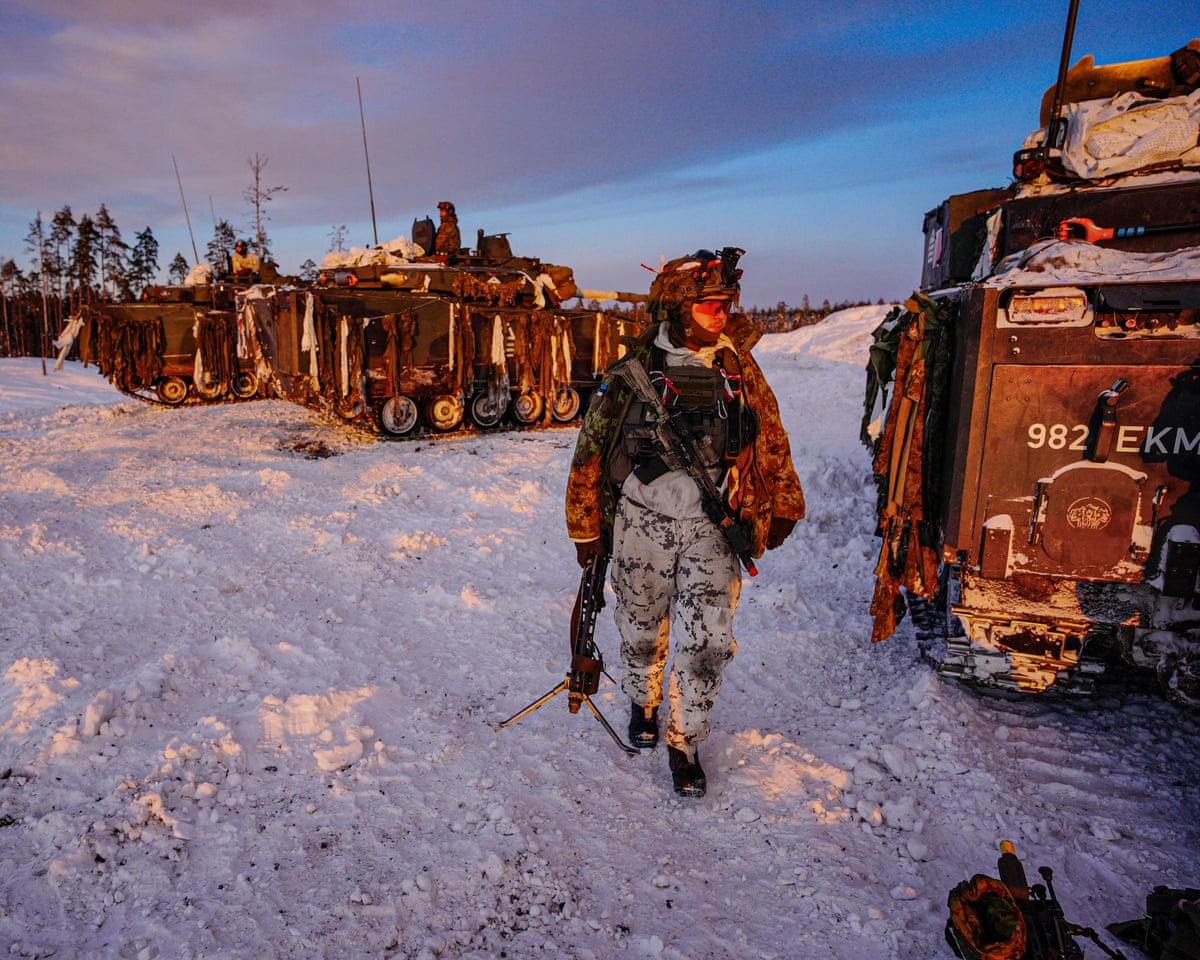
Estonia warns Russia continues hybrid warfare, uninterested in real talks
Estonia’s foreign intelligence service released a forecast on the global security situation, focusing heavily on the threat posed by neighboring Russia.
The forecast indicates Russia is unlikely to launch a conventional attack against NATO states in the next year but will continue various forms of hybrid warfare.
This assessment contradicts recent US claims that a deal to end Russia’s war in Ukraine is near, stating there is no indication Vladimir Putin is interested in genuine negotiations.
Kaupo Rosin, head of the Estonian intelligence service, said:
“We see that Russia is setting long-term operational objectives in the war against Ukraine. This confirms that the so-called peace talk rhetoric is merely a tactic to buy time, and Russia has no intention of ending the war until its objectives are achieved.”
Regarding claims from Trump administration officials about a near deal, Rosin commented:
“I do not know what the US assessment is based on. Putin would only make a proper deal in our view, if the economy or financial sector takes very heavy hits with, for example, additional sanctions, which would be directed towards oil and gas industry... If additional measures and pressure are applied, then maybe Putin’s calculus changes. But currently, we do not see any change in his thinking.”
On Russia’s economic outlook for the coming year, Rosin stated:
“We see that Russia’s economy has entered a downturn, this is fuelled by defence sector expanding at the expense of the contracting civilian economy and sanctions that amplify low productivity caused by outdated technology. While an economic crisis is a possibility, the total collapse of the Russian economy remains highly unlikely. A more plausible outcome is that financial considerations will carry much greater weight in political decision-making than before.”