

PSNI Representation and Recruitment Concerns
The Irish justice minister, Jim O'Callaghan, has expressed a desire for the Police Service of Northern Ireland (PSNI) to more accurately reflect the community it serves. His comments come in response to the latest PSNI recruitment campaign, which recorded the lowest percentage of Catholic applicants in over ten years.
The PSNI currently faces an under-representation of Catholics within its ranks, and there is growing concern that this imbalance may deepen if recruitment trends continue. Sinn Féin has advocated for a recruitment policy aiming for a 50-50 balance, proposing that for every Catholic applicant accepted, one applicant from a Protestant or other background should also be accepted.
"I want to see the police service of Northern Ireland to reflect the community of Northern Ireland that they are policing,"O'Callaghan stated.
"It's not for me to get involved in recruitment in respect of people coming into the PSNI, I do that for An Garda Síochána. But I would like to see the PSNI representative of the community that it polices."
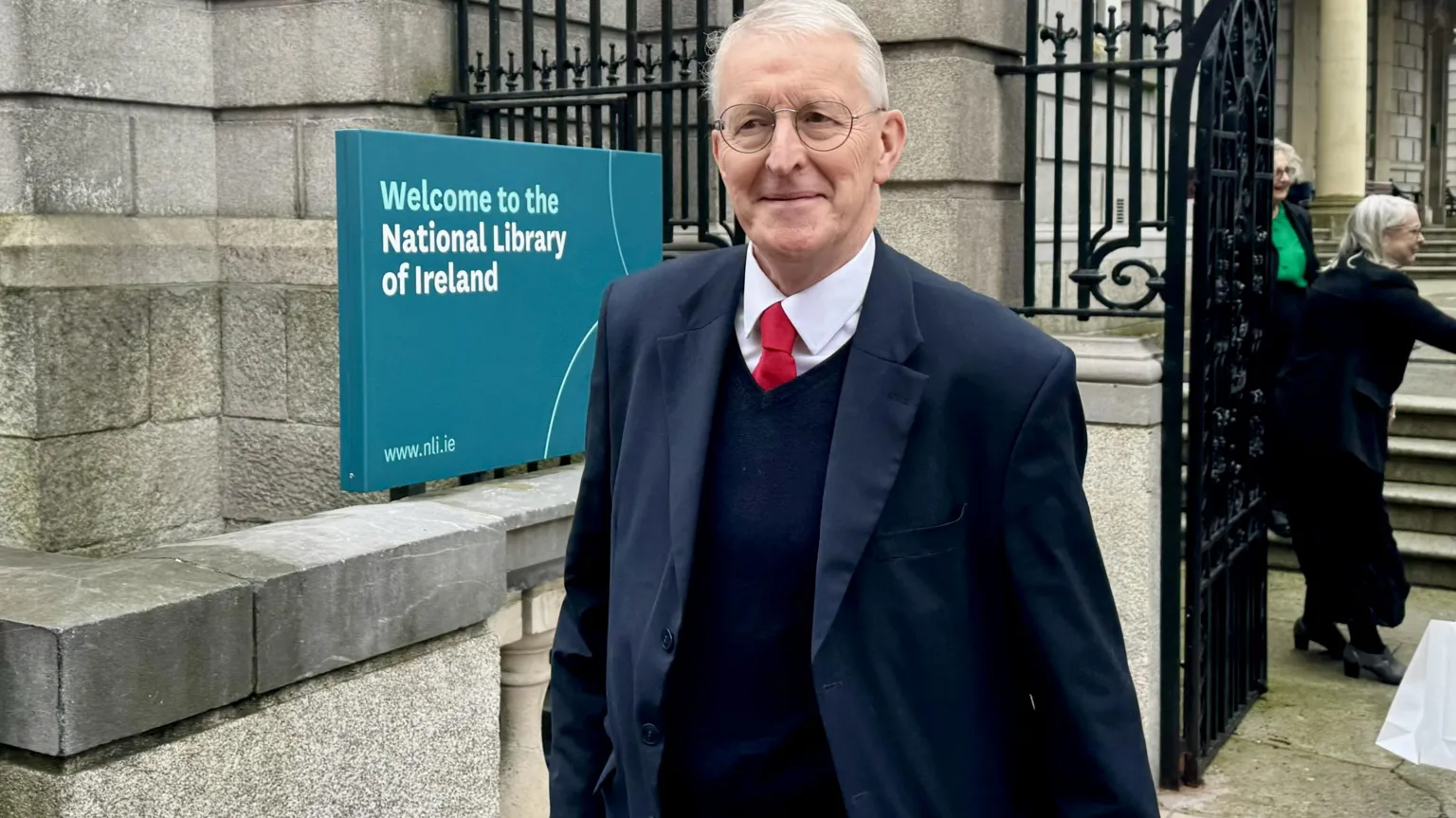
These remarks were made following a meeting in Dublin on Thursday with Northern Ireland Secretary of State Hilary Benn and Foreign Affairs Minister Helen McEntee.
Information Sharing and Legacy Investigations
Prior to the meeting, Hilary Benn emphasized the critical role that information sharing by Irish authorities will play in legacy investigations, including the inquiry into the Omagh bombing.
"There is no doubt that sharing of information by the Irish authorities will be hugely important for legacy investigations and the Omagh bombing inquiry,"Benn said.

O'Callaghan affirmed that the Irish government will maintain full cooperation in providing any necessary information.
"The Irish government has fully cooperated with all inquiries before.
Already, we've provided significant amount of documentation in respect of Omagh and any files that An Garda Síochána has had. When it comes to any legacy files and investigations, the Irish government will be fully compliant and fully cooperative."
Legislative Coordination and Legacy Proposals
O'Callaghan highlighted the importance of the Irish government having access to UK legislation relevant to legacy investigations.
"It's very much important and I emphasised this to the Secretary of State this afternoon, that we get to see the UK legislation as well, because obviously the UK legislation is crucially important to this and was very much encouraged by the commitment by the Secretary of State to ensure that that legislation would be put in place."
He noted that Irish legislation concerning the Omagh bombing inquiry is scheduled to be introduced to the Irish parliament next month, with prompt enactment expected thereafter. Additional legislation is planned for introduction in May.
O'Callaghan stated that the UK and Irish governments are fully aligned on legacy proposals, despite the controversies that have sometimes surrounded them.
The Labour bill aims to replace the contentious Legacy Act, which had imposed a ban on inquests and civil actions related to incidents from the Troubles era. The new framework includes the establishment of a Legacy Commission to investigate Troubles-related killings, a separate body dedicated to information recovery, and a specialized legacy unit within An Garda Síochána.
These measures were agreed upon jointly by the UK and Irish governments.


