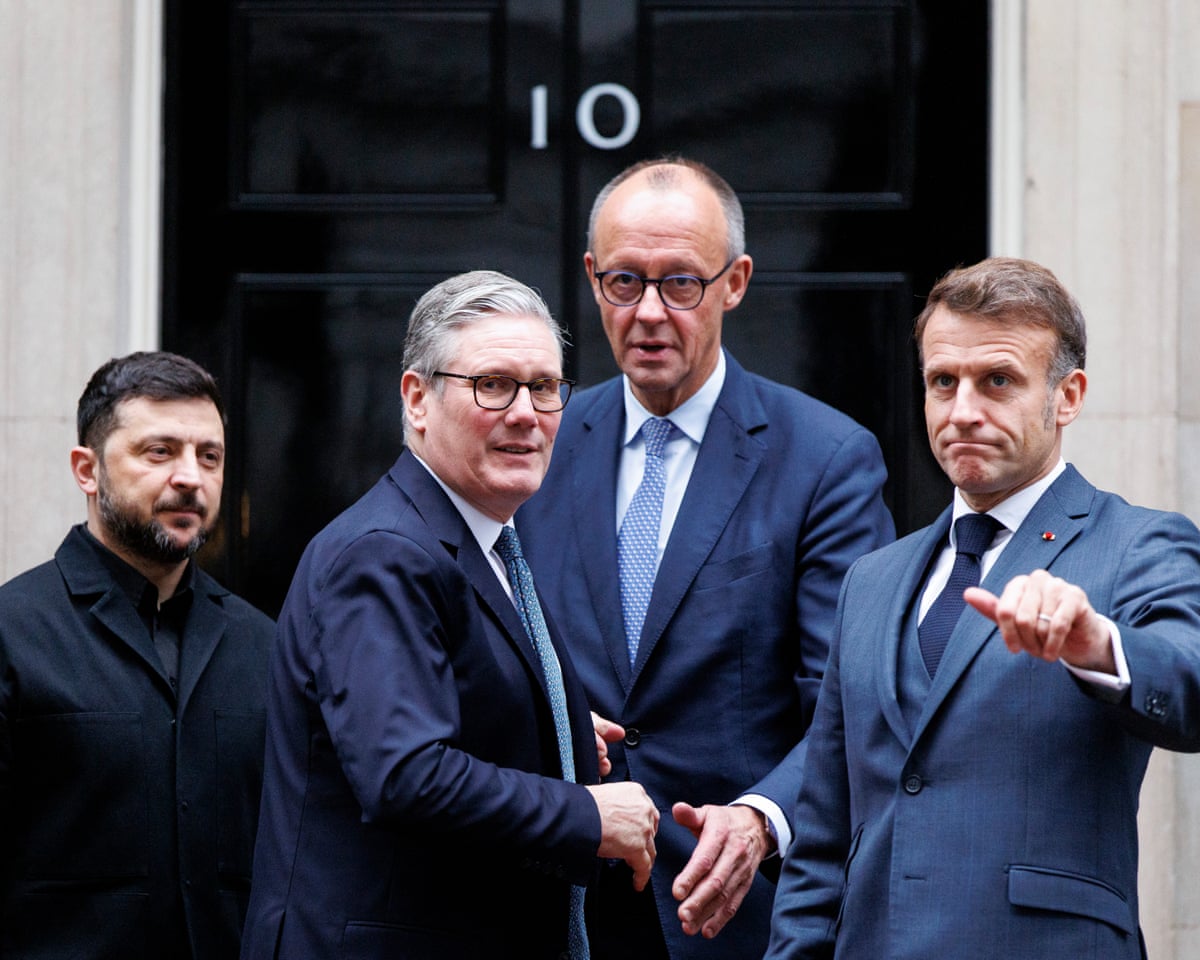
Germany joins France in summoning Russian ambassador over alleged cyber, hybrid attacks
Germany has joined France in summoning the Russian ambassador to Berlin in response to alleged Russian cyber-attacks targeting several EU countries and Ukraine, according to EU allegations.
The German foreign ministry described the attacks as unacceptable and stated they would be met with decisive actions, reported.
Kremlin to monitor Paris summit, criticizes Coalition of the Willing for prolonging war
In reaction to the Paris summit hosted by France, the Kremlin announced it would "closely follow" the discussions but criticized the Coalition of the Willing as "the group of countries which want the war to continue," reported.
Ukraine’s President Volodymyr Zelenskyy condemned recent Russian attacks overnight, stating that "the Russians have once again ’triumphed’ over absolutely civilian targets," citing strikes on "ordinary passenger buses in Odesa, ordinary apartment buildings in Zaporizhzhia, and an ordinary hospital in the Kharkiv region."
"Every single day of this war that Russia is waging against life only proves that supporting Ukraine is the right thing to do from every perspective – defence, political, and simply human. And everyone around the world sees it. They see that Ukraine needs more air defence, more protection for people’s lives, and that the Russian authorities have gone insane over this war and are completely irrational in refusing to end it. But pressure on Russia must work. New sanctions against the aggressor, new support packages for Ukraine, new projects – like our European anti-ballistic initiative, FREYJA – all of this must work. Thank you to everyone who is helping. In the near future, there will be meetings and negotiations that must strengthen our defences."
The Élysée Palace indicated that the Paris summit on Ukraine would focus on a "powerful moment of renewed transatlantic convergence and unity," alongside "more favourable developments on the ground" for Kyiv.
The leaders of the Coalition of the Willing, led by French President Emmanuel Macron and UK Labour leader Keir Starmer, are expected to concentrate on cooperation regarding air and missile defence with Ukraine, including licensed weapons production within the country.
President Zelenskyy and other leaders are also anticipated to remain in Paris for the Bastille Day parade on the Champs-Élysées, which Macron’s office stated will underscore France’s ongoing support for Ukraine, AFP reported.
EU foreign ministers aim to expand sanctions amid cyberattacks
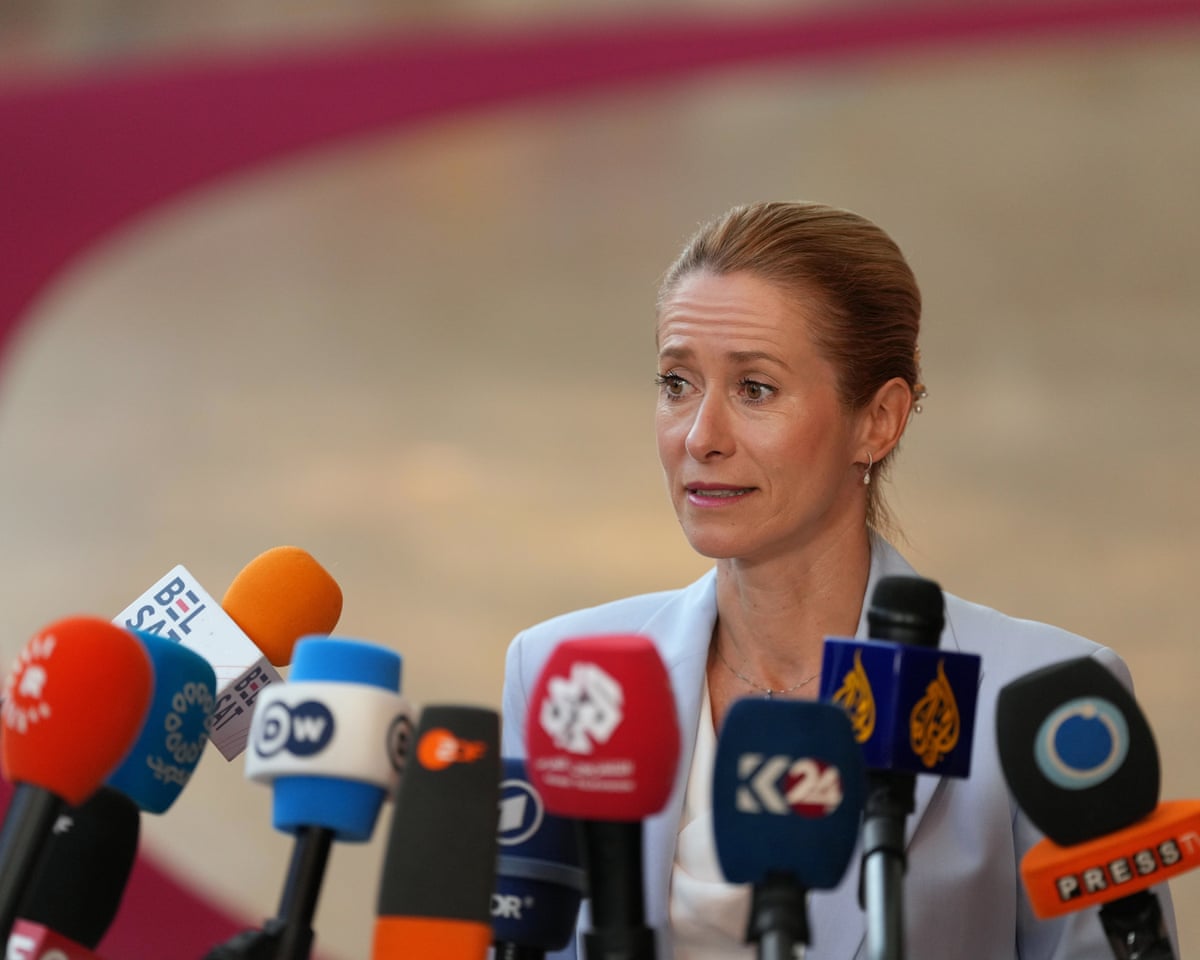
EU foreign policy chief Kaja Kallas stated earlier that foreign ministers meeting in Brussels were working towards a deal on as many as 250 new sanctions listings, supplementing the 21st sanctions package.
"This is the biggest number of listings we have done so far. It’s also reaction to the attacks that Russia has had on the [Ukrainian] civilians recently," she said.
"There are different people, individuals that have been engaging in different activities. So it’s a vast list I hope that we get to adopt today. When it comes to the 21st package, there are still some open questions, but we are working towards agreement," she added.
UK sanctions 24 individuals and entities for Russia's hybrid operations; attributes Poland energy grid attack to Russia
The UK government announced sanctions against 24 individuals and entities involved in "destructive and hybrid operations" in Europe, including an attempted disruption of Poland’s electricity grid last year.
"Today’s action targets 24 individuals and entities behind the destructive cyber and hybrid operations including cybercriminals involved in proxy networks linked to the Russian Intelligence Services (RIS). This includes sanctioning GRU senior leadership figures Vyacheslav Stafeyev, Ivan Senin and Ivan Kasyanenko for their role in directing GRU cyber and hybrid threat operations. GRU Unit 29155 cyber division worked with cybercriminals, including the company IMPULS, to recruit hackers and cyber specialists from universities and academies across Russia. In addition, the UK together with EU member states is today attributing the attack on Poland’s energy grid to Russia’s FSB Centre 16. This reckless attack failed but could have caused 500,000 citizens to lose electricity in the depths of winter. It is another example of the Russian state’s irresponsible attempts to sow chaos across Europe. As Russia struggles to sustain its ailing war effort in Ukraine, the Russian Intelligence Service agencies have tasked cybercriminals to collect intelligence to support Russia’s military and foreign policy objectives, threatening security across Europe. This is another example of Russia using its criminal networks to do its dirty work."
EU sanctions nine individuals and four entities over Russian cyber espionage and sabotage
The EU has imposed new sanctions targeting "Russia’s malicious cyber ecosystem" that has targeted the EU, its member states, and international partners.
These cyber activities have included infiltration of governmental networks and sabotage of critical infrastructure. Countries targeted include France, Germany, Poland, Cyprus, the Netherlands, Austria, Slovakia, Romania, and Finland.

In France, the 16th Centre has conducted cyber espionage against strategic governmental entities since 2010 and the defence industry since 2015. In Germany, governmental entities have been targeted. Recently in Poland, the 16th Centre carried out disruptive sabotage operations against critical infrastructure, including combined heating and power plants.
Nine individuals and four entities were sanctioned, including GRU intelligence officers, cybercriminals, and private companies contributing to Russia’s efforts to destabilize the EU.
"We strongly condemn Russia’s behaviour and misuse of this cyber ecosystem, targeting public services and critical infrastructure, causing disruptions and financial losses."
Morning opening: Focus on Ukraine
French President Emmanuel Macron is set to host the Coalition of the Willing in Paris later today amid hopes that Ukraine’s recent advances in strikes on Russia could compel Vladimir Putin to negotiate.
The meeting at the Hôtel des Invalides, scheduled just before Bastille Day, will convene over 20 European leaders to discuss further support for Kyiv and increased pressure on Moscow.
Earlier in the day, Macron will meet with Ukraine’s President Volodymyr Zelenskyy.
A press conference featuring Macron, Zelenskyy, Germany’s Finance Minister Friedrich Merz, and Britain’s Labour leader Keir Starmer is planned for the late afternoon.
In the lead-up to the meeting, France’s Foreign Minister Jean-Noël Barrot announced that France will summon the Russian ambassador to Paris in the coming days over an alleged cyberhacking campaign conducted by Russia against European countries, including France, reported.
"We are going to publicly condemn a widespread cyber campaign carried out by Russia against at least 10 European countries," Barrot told BFM TV.
"We will also impose sanctions on nine individuals and four entities responsible for this cyber campaign, which was orchestrated by the FSB" security service, he added.
Separately, approximately 300 kilometers north of Paris, EU foreign ministers are meeting in Brussels to discuss the bloc’s next, 21st, package of sanctions against Russia.
EU foreign policy chief Kaja Kallas told reporters that "there are still some open questions" and the package has not yet been signed off by ministers, but she expressed hope that an agreement could be reached later today.
Lithuanian Foreign Minister Kęstutis Budrys stated that EU countries have yet to decide on a proposed maritime services ban and tightening restrictions on Russian liquefied natural gas.
"So I’m looking to see whether we are serious enough. We cannot put economic interests above security interests … that is a very dangerous trend," he told reporters.
I will bring you all the latest here.
It’s Monday, 13 July 2026, it’s Jakub Krupa here, and this is Europe Live.