

Prolonged Conflict and Limited Russian Advances
As Russia’s invasion of Ukraine enters its fifth year, the conflict has already surpassed the duration of the entire eastern front campaign during the Second World War. The Soviet advance from Leningrad to Berlin in 1944-45 took just over 15 months, whereas current Russian advances measure only about 70 metres per day in some areas like Kupiansk, with 23 metres recorded recently.
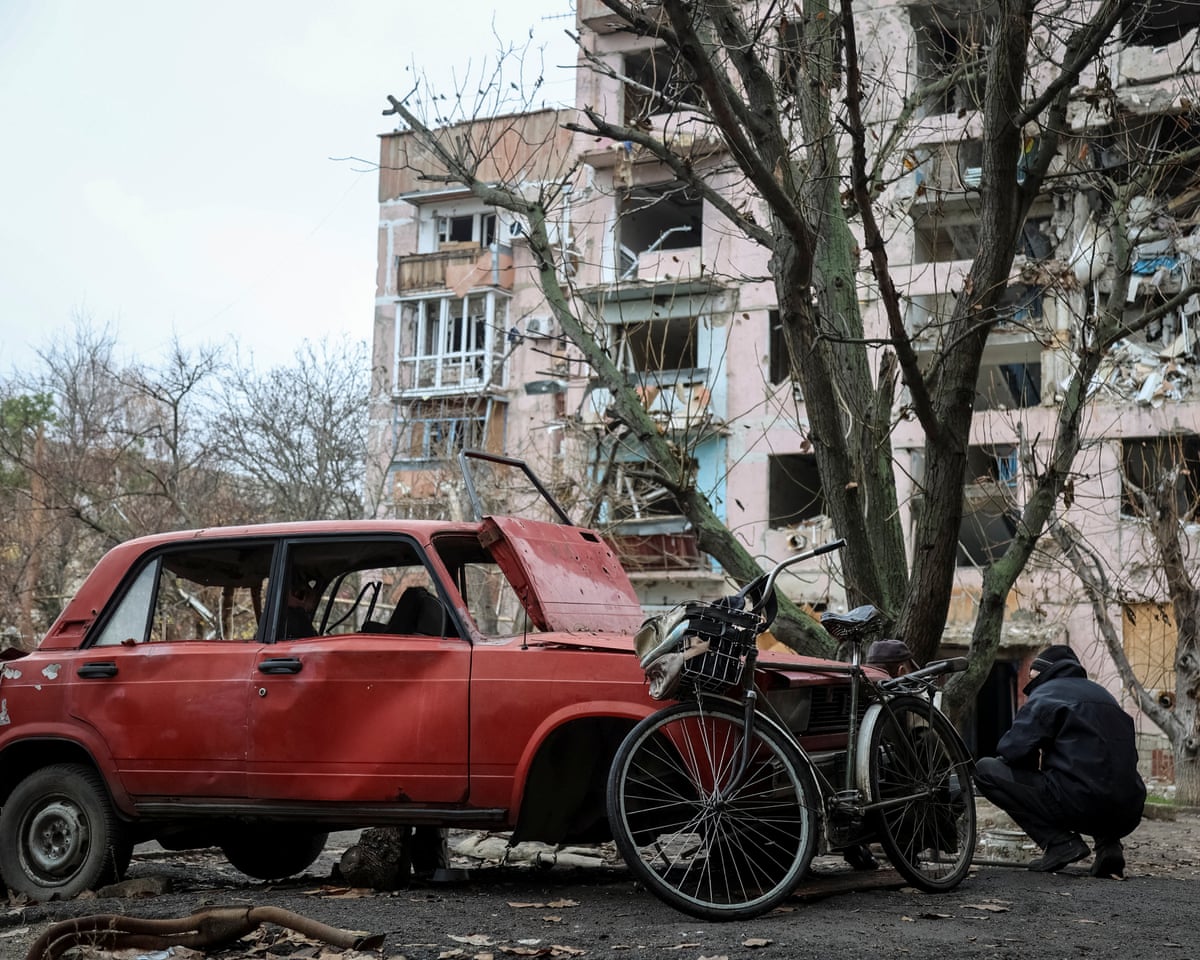
The territorial gains by Russia remain minimal relative to Ukraine’s overall size, amounting to approximately 1,865 square miles in 2025, which is about 0.8% of the country. This challenges narratives, sometimes echoed by Russian sources and occasionally accepted by the White House, suggesting that Ukraine is experiencing a slow-motion defeat. In reality, despite the severe impact of Russian bombing that has left hundreds of thousands of homes without electricity, heating, and water, Ukraine is refining its military strategy and achieving modest successes in pushing back.
Ukrainian Counteroffensives and Strategic Advances
A notable Ukrainian counterattack north of Huliaipole, situated in the open terrain of Zaporizhzhia province, has resulted in an estimated gain of 40 square miles this month. This progress has been facilitated in part by Elon Musk’s Starlink satellite communications system, which recently blocked Russian soldiers from using the service within Ukraine. This operation follows Ukraine’s successful recapture of Kupiansk in the Kharkiv region in December. Ukrainian President Volodymyr Zelenskyy visited the town three weeks after Russian forces claimed to have captured it.
“The Kremlin is trying to create a narrative that Ukraine is on the verge of collapse,”said Christina Harward of the Institute for the Study of War.
“It’s completely false. What in fact we are seeing are small-scale liberations by Ukraine, taking advantage of winter weather and the blocking of Starlink.”
Russian Demands and NATO Assessments
Amid these developments, Russia continues to demand that Ukraine withdraw its military presence from key locations such as Kramatorsk, Sloviansk, and the remainder of Donetsk. The latest Russian proposal involves creating a demilitarised zone, which Russia seeks to patrol. Earlier this month, a NATO intelligence official estimated that Russia is unlikely to capture the Donetsk region within the next 18 months. Given the urbanised nature of the area, any such campaign could extend much longer and potentially result in over 600,000 Russian casualties.
Diplomatic Claims and Military Performance
The ongoing diplomatic discourse highlights the poor performance of Russia’s military. Last week, Russian Foreign Minister Sergei Lavrov referenced understandings allegedly agreed upon in Anchorage, claiming that at the August summit in Alaska, then-US President Donald Trump agreed with Vladimir Putin that Ukraine should surrender the remainder of Donetsk without resistance. While Trump has occasionally entertained such ideas, the US has not pursued this position due to objections from Ukraine and European allies.
This contrasts with the situation almost exactly one year ago, when Trump and Zelenskyy openly clashed in the Oval Office, and it seemed the US might cease support for Ukraine entirely.
“The worst-case scenario didn’t happen, though,”said Orysia Lutsevych, a Ukraine expert at the Chatham House thinktank.
“The US is selling arms to Ukraine, still supplying intelligence and whatever the pressure, it is not so strong that Kyiv has to concede.”

Humanitarian Impact and Infrastructure Damage
Ukraine faces severe challenges, particularly in utilities, due to systematic Russian bombing. More than one million Ukrainians are currently without electricity, heating, and water during a harsh winter with temperatures dropping to -20°C. In Kyiv, the eastern left bank is the worst affected, where indoor temperatures fall to 5 or 6°C in apartments. This bombing campaign has been described by some as a form of kholodomor, or death by cold.
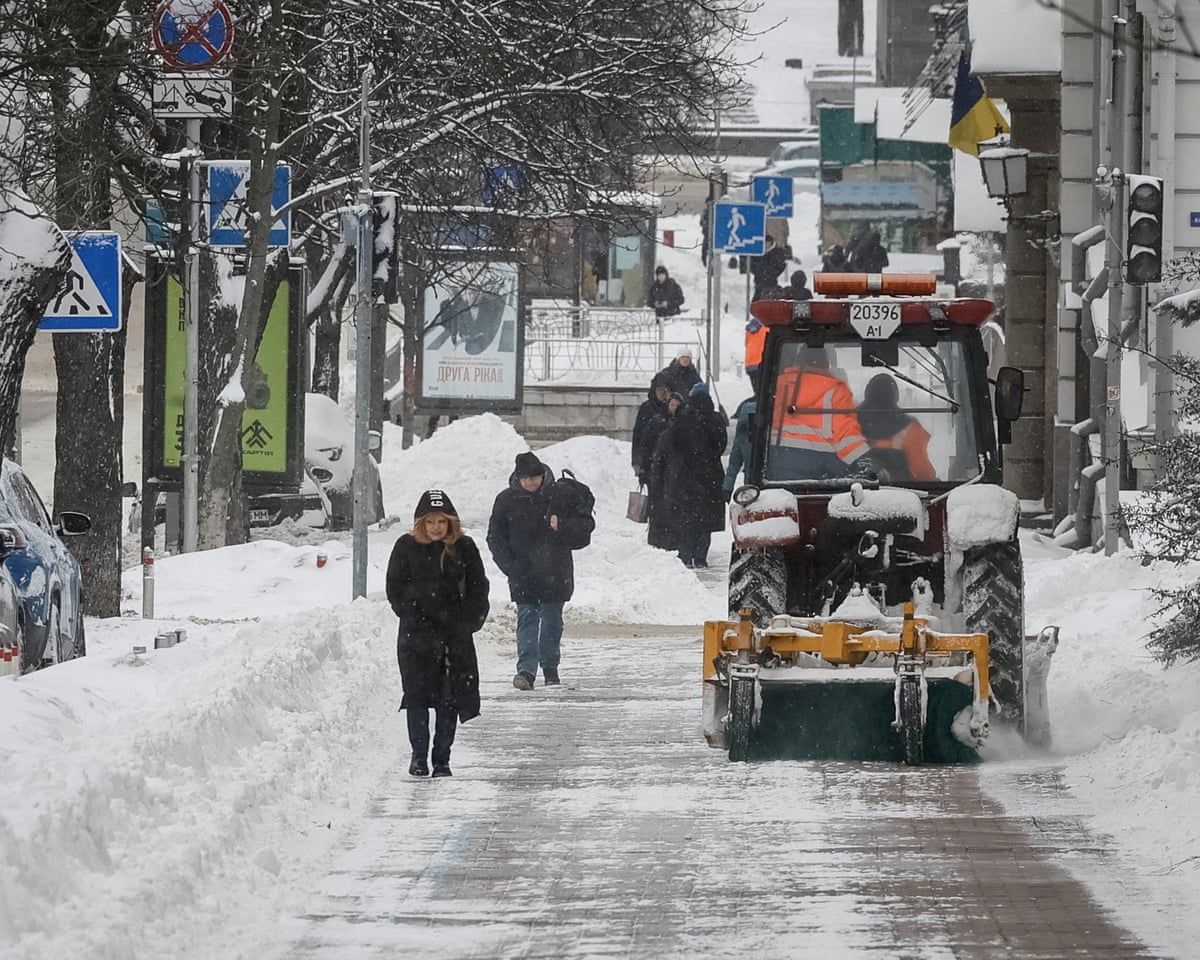
Although the weather is expected to improve soon, the failure of Western allies to produce sufficient air defence missiles remains a significant issue. There are hopes for the deployment of affordable ground-based Shahed interceptors, such as Wild Hornet’s Sting missiles, which entered frontline service in autumn. Data from the Institute for Science and International Security indicates that the proportion of armed Shaheds successfully hitting targets increased from 6% in January to 30% in May, maintaining around 29% in December.
Strategic Outcomes and Population Resolve
Despite relentless attacks on Ukraine’s civilian population, Russia has gained minimal strategic advantage. This approach is notable given President Putin’s previous assertion that Russians and Ukrainians constitute “one people.” While Ukraine’s population is undoubtedly strained, there remains no willingness to submit to Russian control or to cede the rest of Donetsk. The battlefield dynamics show no clear shift favoring Moscow.
Ukraine’s Military Goals and Challenges
Ukraine has adopted a more assertive military stance. Mykhailo Fedorov, the country’s new defence minister, has set a target to eliminate 50,000 Russian soldiers per month, an increase from the current estimated casualty rate of approximately 35,000 monthly. NATO estimates that between 20,000 and 25,000 of these are fatalities. This ambitious goal aims to surpass Russia’s recruitment rate of around 20,000 soldiers per month, potentially compelling Moscow to undertake politically risky mobilization or pursue a more pragmatic diplomatic approach.
Experts consider this higher target theoretically achievable, contingent on continued Russian offensives. Approximately 80% of casualties are inflicted by drones operating up to 15 miles (25 km) behind enemy lines, which effectively prevents either side from massing large numbers of troops without significant risk. However, Ukraine also contends with high rates of absence among its best units and soldiers.
Last month, Fedorov acknowledged that 200,000 Ukrainians were absent without leave, unable to endure the strain of frontline service. This raises concerns about the army’s capacity to sustain a higher operational tempo.
Concerns Over Allied Strategy and Peace Prospects
Jade McGlynn, a research fellow at King’s College, expressed concern that Ukraine’s allies lack a credible plan to compel Russia into a ceasefire in what has become a deadlocked conflict.
“I don’t see a strategy in Europe, and the US has its eggs in the peace process, but there is no process if Russia is not engaging properly,”she said.


