

The impact of the oil crisis on Australian streets
The ongoing global oil crisis is visibly affecting Australian urban transport, with increased bicycle sales and busier cycle lanes across Sydney.
Prior to the 1970s global oil crisis, Copenhagen city planners considered removing bike lanes as bicycles were seen as outdated and cars dominated, with only 10% of locals cycling regularly.
However, as the economic repercussions of the oil crisis spread worldwide, Denmark, heavily dependent on imported oil, reversed its approach. Citizens staged mass protests on highways demanding improved cycling infrastructure.
Between 1975 and 1985, Copenhagen expanded its bicycle network rapidly, and today approximately 60% of Copenhagen residents commute by bike to work or study.
Amid a new oil shock affecting the globe, Sydney residents are drawing inspiration from Copenhagen to ease fuel costs.
In March, the City of Sydney recorded 600,000 bike-sharing trips, a 25% increase from the previous month, according to a council spokesperson. Concurrently, thousands of cars have disappeared from Sydney’s roads.
“Last month, many of our bike counters recorded slight increases and their highest numbers of trips since we installed new counters six months ago,” the spokesperson said.
‘Fuel prices went crazy’
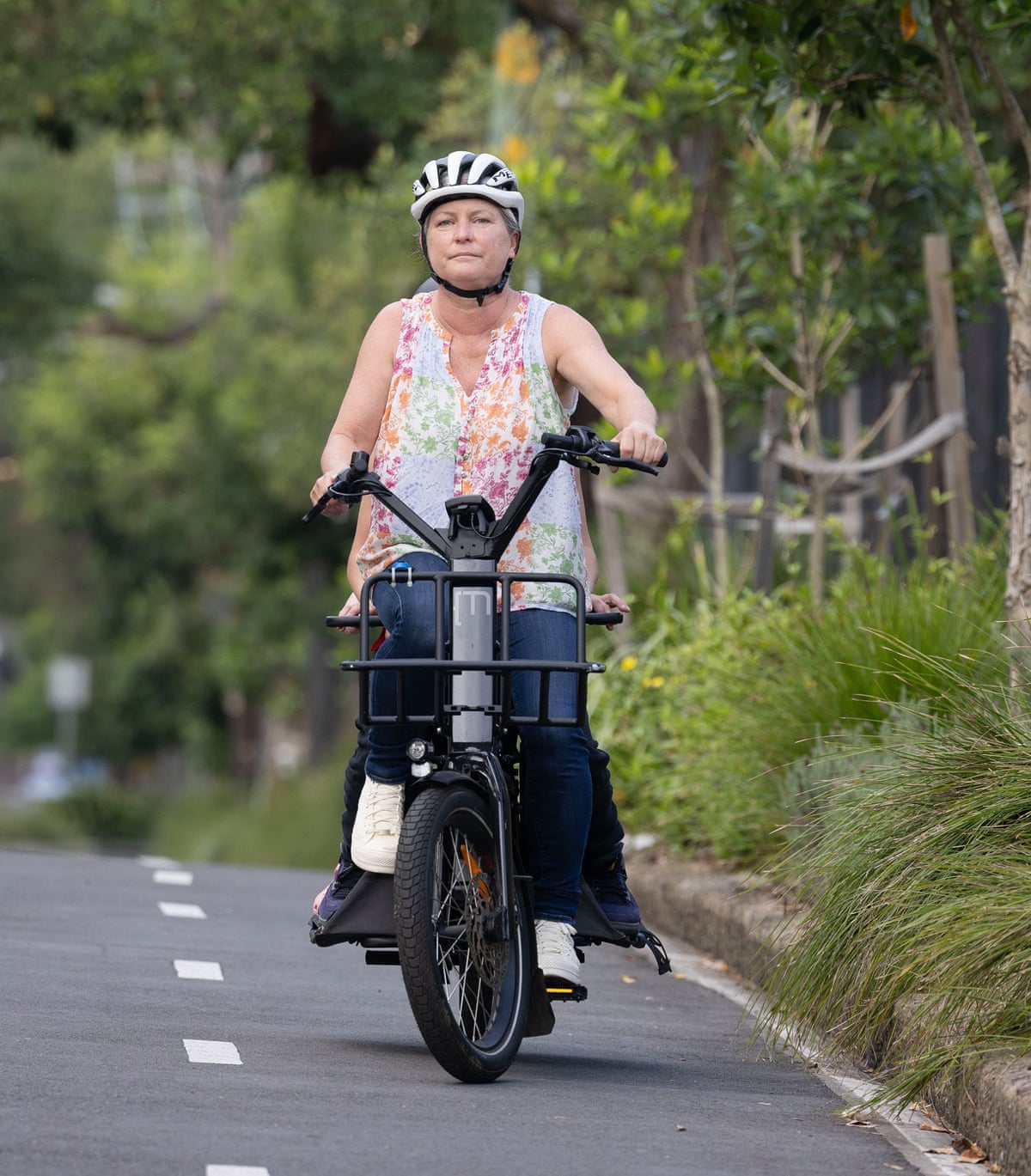
Jacinta Peperkamp, an inner-west Sydney resident, is among many turning to bicycles due to soaring fuel prices.
“We haven’t used our car since fuel prices went crazy,”said the single mother of two.
Using her cargo e-bike and her 11-year-old son’s electric bike, they combine cycling with train travel for longer distances.
Before the conflict in Iran, Peperkamp would not have considered cycling long distances. Now, they travel as far as western Sydney by bike and have observed others doing the same.
“The initial motivation [to get an e-bike] was more environmental,”she explained.
“But now it’s definitely a cost-of-living thing. I’m kicking myself for having not bought an electric car already.”
New South Wales government data indicates that car traffic on major arterial roads in Sydney, including Pennant Hills Road and Parramatta Road, fell by approximately 5% in March compared to the previous year.
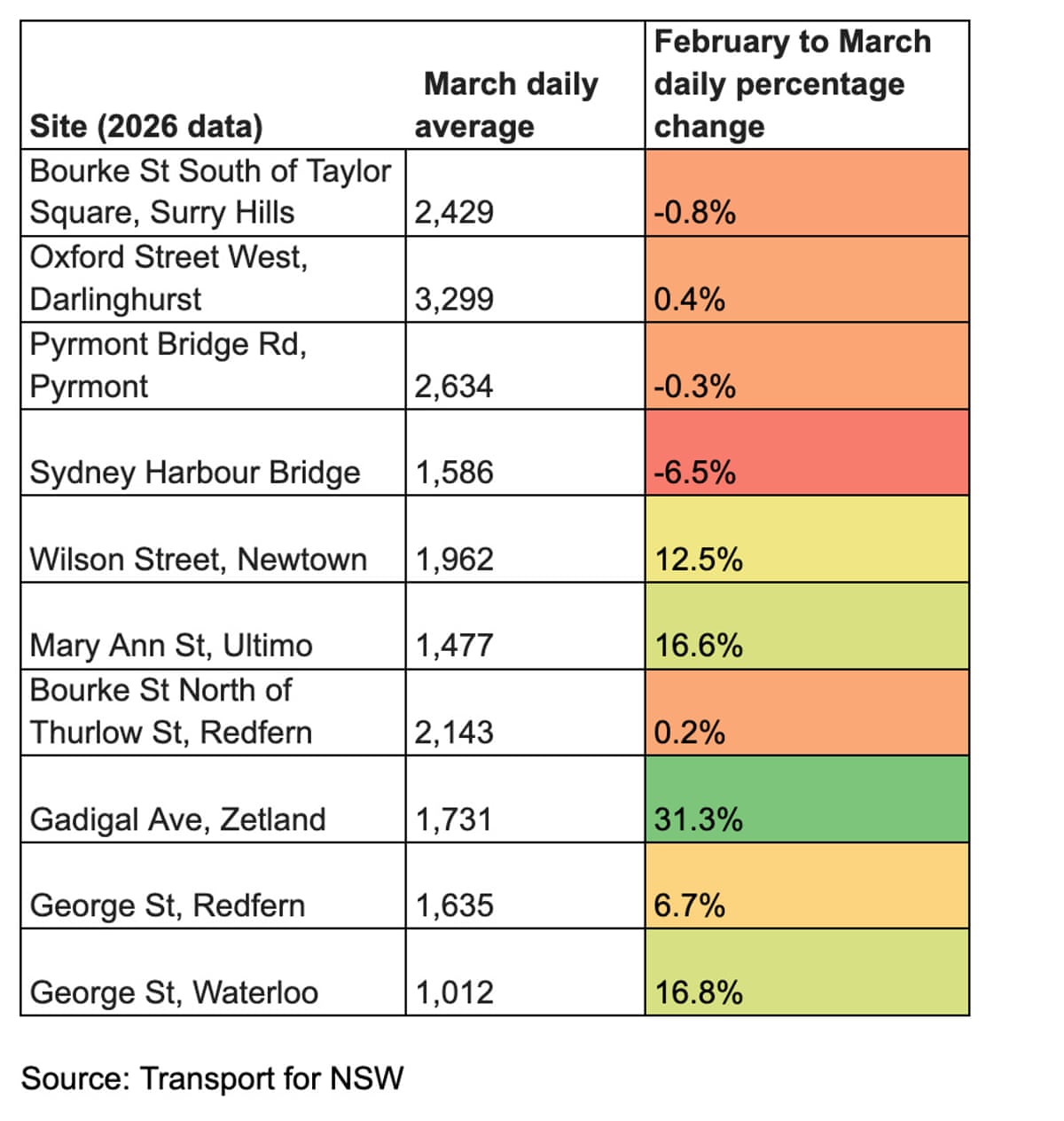
In the same month, the newly opened Oxford Street cycleway recorded nearly 100,000 uses, while the Bourke Street cycleway in Redfern had 134,254 uses—almost triple the 53,928 recorded the previous year, according to Transport for NSW (TfNSW).
Sydney’s bike rides are continuously tracked by counters installed by local councils and TfNSW.
On a single day last Wednesday, over 4,500 bike trips were recorded on Darlinghurst’s Oxford Street, marking the highest count since the cycleway opened last July.
Long-term data from TfNSW shows cycling rates nearly doubled in the Sydney CBD last month compared with the same period last year (496,516 counts versus 288,907) and increased in nearby suburbs such as Paddington (26,065 versus 17,215) and Eveleigh, where counts rose from 15,011 to 71,151.
Other regions, including Parramatta in western Sydney and the northern beaches, showed stable cycling rates.
‘Pulling the trigger’ and going electric
Bike retailers report booming business similar to the surge seen in electric vehicle sales.
At 99 Bikes, e-bike sales increased by 136% year-on-year in the past week, reflecting a clear shift in consumer attitudes, said David Miller-Heidke, general manager for Australia and New Zealand.

“We are seeing a significant sales uplift for commuter bikes, e-bikes and e-scooters over the past few weeks, coinciding with the recent spike in fuel prices,”he stated.
“Many people who were previously considering an e-bike have now pulled the trigger, viewing it as a long-term cost-of-living fix.”
Chris Moore, owner and manager of Omafiets bike shop in Sydney, noted increased demand for entry-level e-bikes and cargo bikes, alongside more customers bringing in old pedal bikes for servicing.
“Sydneysiders have been coming into my store who’ve explicitly said that high petrol prices are the reason they’re purchasing a bicycle or e-bike,”Moore said.
According to recent data, in the last quarter of 2025, the average Australian household spent approximately $453 weekly on car-related expenses, including loan repayments ($214) and fuel ($94).
While first-quarter 2026 figures are not yet available, unleaded petrol prices have risen from about 170 cents per litre last year to nearly 260 cents per litre in April—an increase of almost 50%.
“There’s been a lot of interest in family e-bikes and commuting bikes, which for many people can replace many of the car trips in their everyday life,”Moore added.
“We’ve seen an increase in inquiries from people who haven’t ridden their bike for a while. High petrol prices are a nudge for people to reconsider how much they need to be driving, especially in the dense inner-Sydney suburbs.”
Violette Kirton, an inner-west resident, is considering selling her car to rely solely on cycling due to cost-of-living pressures.
Having purchased her first home last year amid rising interest rates, Kirton said the petrol price surge
“really put things into perspective.”
“What once felt manageable suddenly didn’t make as much sense,”she said.
“Living and working in the inner west, I’ve started riding my bike more and realised I don’t need a car day to day.”
An opportunity for a green revolution?
Peter McLean, CEO of Bicycle NSW, expressed regret that governments continue to rely on fuel tax cuts rather than investing significantly in active transport to capitalize on the cycling increase.
“It’s cheaper – even to have a really high-quality expensive e-bike – than it is to maintain a car,”he said.
“It’s not just the fuel costs, it’s the insurance costs, the servicing costs, the registration costs that have all gone up and compounded.
But of course, you do need to be in an area that has really good access to safe infrastructure, particularly if you’re a beginner.”
McLean cited the Oxford Street cycleway’s success as evidence of demand for expanded cycling greenways in urban areas.
“Some of the commentators and politicians have all jumped to: ‘You need to cut road taxes and fuel excises’, which I agree with, but no one said you should double down on e-bike subsidies,”he stated.
He described the Albanese government’s halving of the fuel excise as a
“sugar hit”that did not deliver the public health, community, and social benefits that cycling infrastructure could provide.
“Governments need to know in times of crisis that they can pull other levers to make a long-term positive impact.”


