Arrest at Brisbane Rally
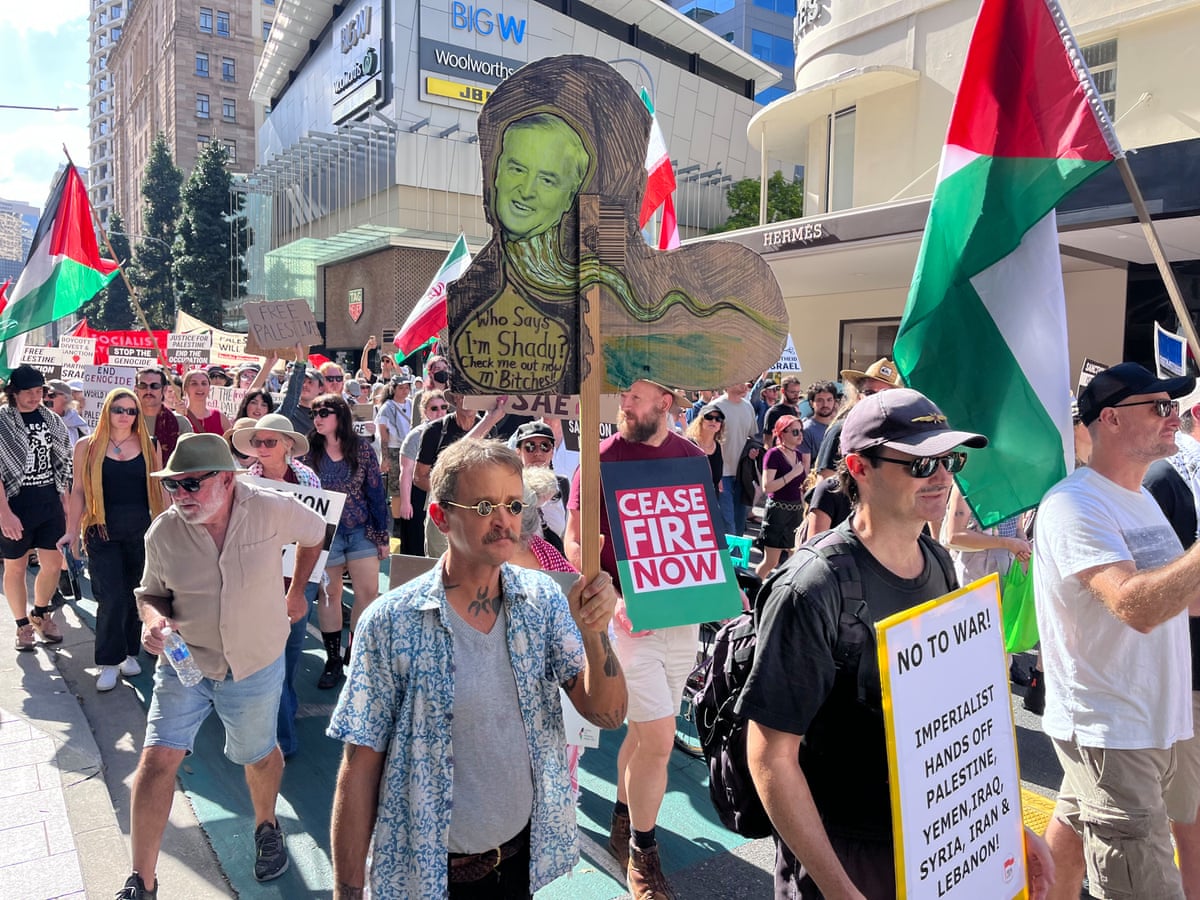
Stephen Heydt, a 73-year-old Jewish clinical psychologist, was arrested at a rally in Brisbane after wearing a custom-made T-shirt and speaking using a phrase now prohibited under new Queensland laws targeting antisemitic hate speech. Heydt said he was charged with two offences: one related to the T-shirt and another for chanting the phrase.
“I was wearing a T-shirt which displayed the six-word phrase which I can’t say, and I gave a speech using the six-word phrase which I can’t say,”
“Almost immediately I was arrested and charged with two offences: one for the shirt, one for the chanting.”
The T-shirt bore the phrase “Jews for a free from the river to the sea”. Heydt explained that he had the shirt printed in Melbourne to avoid causing trouble in Queensland.
He was among the first charged under the new laws that prohibit certain pro-Palestinian slogans, bringing the total number of charges to 25. Police confiscated his shirt.
Other Arrests and Police Response
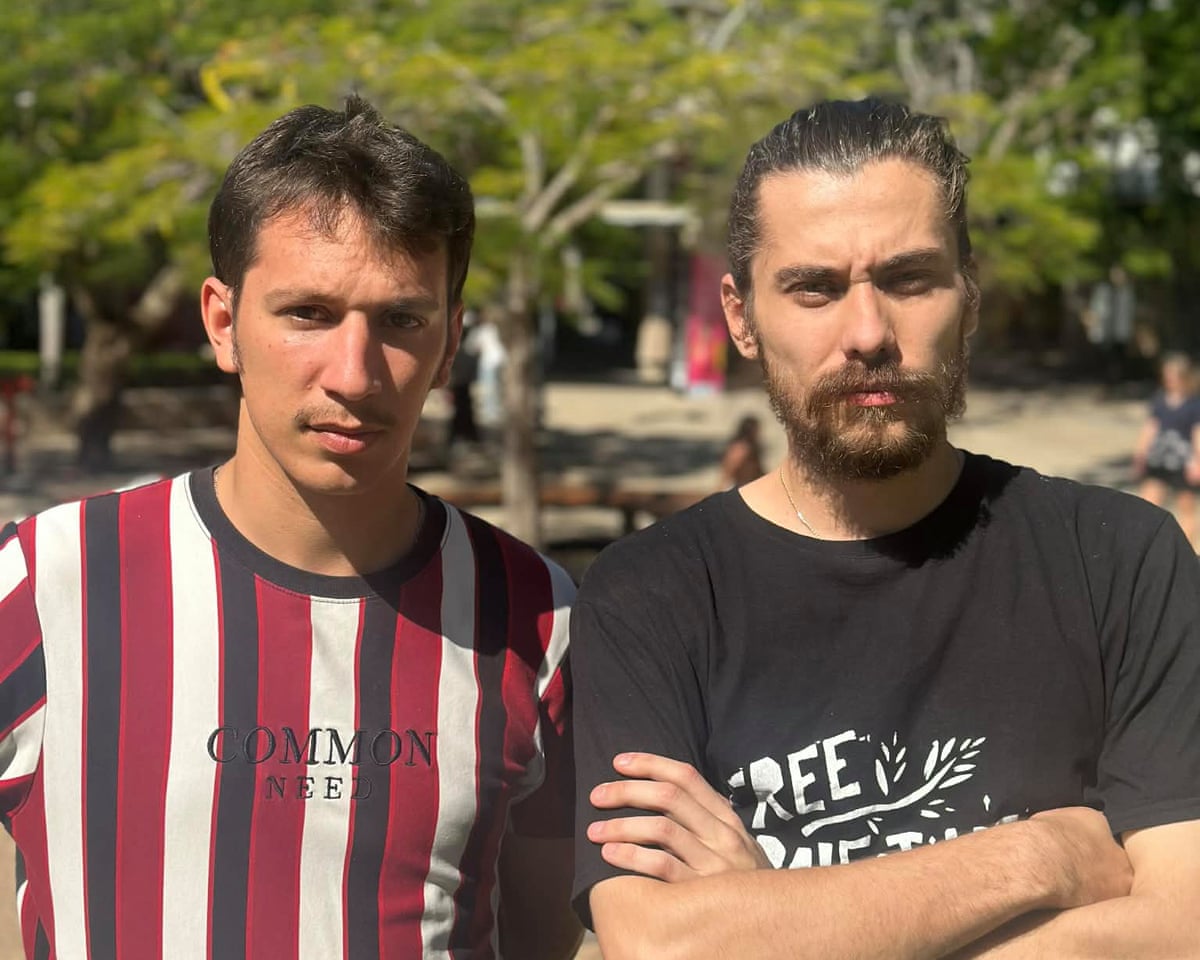
Also arrested was Palestinian Australian student Zac Karaniki, who described the police response at the protest.
“I was one of those people holding up a banner that had one of the banned phrases on it,” Karaniki said. “A huge wave of cops descended on the protest … [I was] ripped away, put in a paddy wagon and held in a watchhouse for eight hours.”
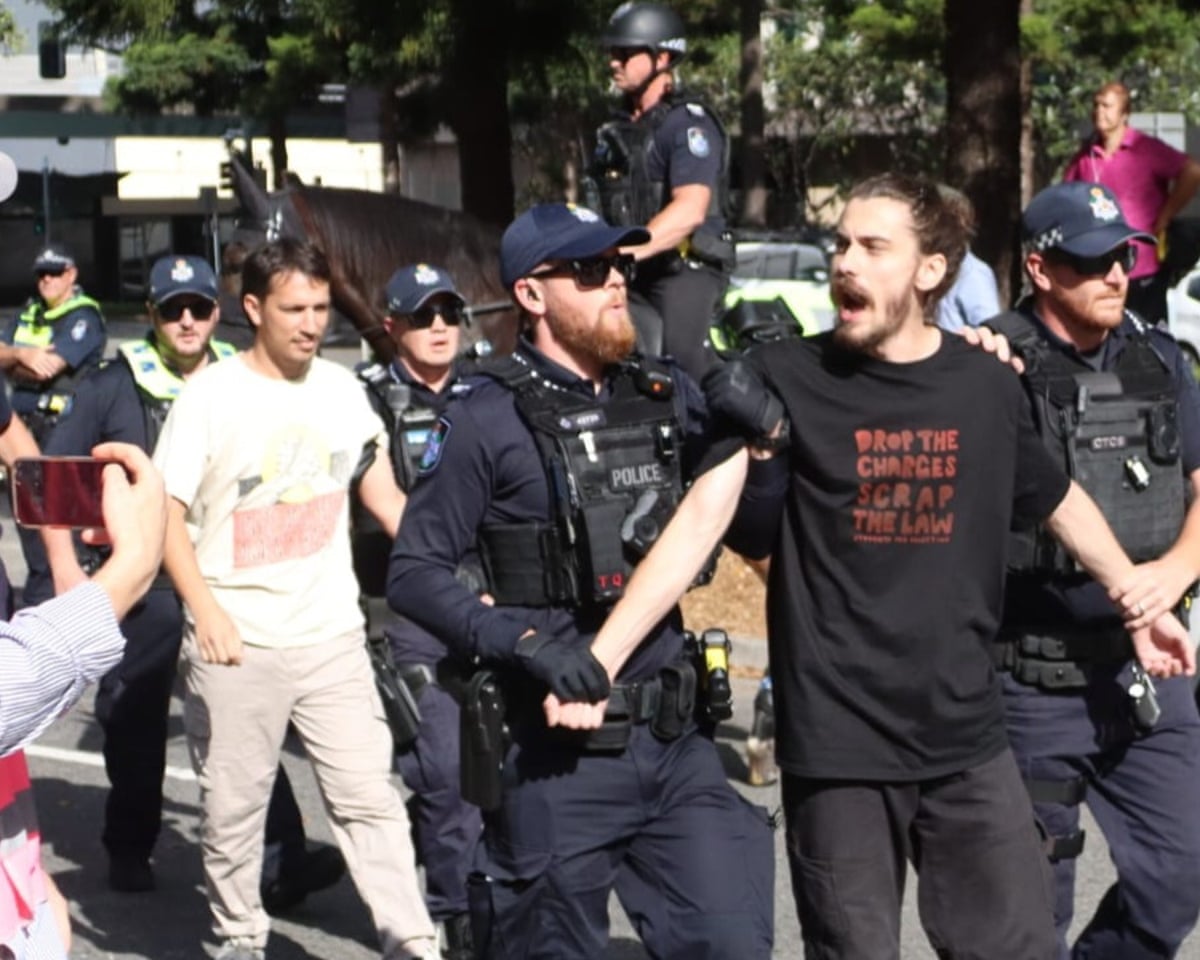
The two phrases now proscribed under the laws are “from the river to the sea” and “globalise the intifada.” Use of these phrases in a manner that could cause menace, harassment, or offence carries a maximum penalty of two years’ imprisonment.
Historical Comparisons and Political Context
Legal expert and civil liberties advocate Ronan O’Gorman compared the recent events to the era of police repression under former Queensland premier Joh Bjelke-Petersen in the 1970s. O’Gorman referenced an amendment to the traffic act in September 1977 that severely restricted street protests, leading to mass arrests.
“This is very reminiscent, it is a very similar scenario to what occurred in October 77,”
“This is the first major freedom of speech, civil liberties or public rally issue [in Queensland] since.”
Queensland Premier David Crisafulli responded to media inquiries by stating the laws aim to balance the right to protest with the need to prevent slogans that amount to calls for genocide, linking the banned phrases to a terror attack in Bondi.

Personal Background and Perspectives
Heydt, who fled apartheid-era South Africa, has experience working with trauma and disability patients in Gaza and the West Bank during three Israeli wars in the 2000s. He offered a different interpretation of the phrase on his shirt.
“I believe it’s [about] people’s inalienable right to be free,”
Edward Carroll, a 36-year-old Jewish transport worker and pro-Palestine activist, was the first speaker arrested at the rally. Carroll emphasized the importance of Jewish voices in the movement.
“Because these laws have nothing to do with Jewish safety and everything to do with silencing dissent against the state of Israel,”
The interpretations of these phrases and the Queensland laws banning them differ significantly from those of many Jewish organizations in Australia.
Jason Steinberg, president of the Queensland Jewish Board of Deputies, described the phrase as a terrorist slogan used since the 1960s.
“Brisbane should be a city of inclusion, but there is no room on our streets for a terrorist slogan that calls for the annihilation of others,”
“Queensland’s new laws are clear for all to see, and those who protested on the weekend understand the penalties.”
Activism and Legal Challenges
William Sim, a student activist and Mununjali man arrested alongside Karaniki, expressed his willingness to face arrest for a cause he sees as paralleling Indigenous Australian struggles.
Sim said he planned to contest the charges laid against him “all the way”.
The activist group Justice for Palestine Magan-djin announced plans to coordinate a High Court challenge to the laws, arguing they are invalid under the Australian constitution.
O’Gorman commented on the potential legal challenge.
“I cross-examined Joh at the Fitzgerald inquiry on the street march issue, and fundamentally put the proposition to him that it was all about politics,”
“And he eventually, after a lengthy cross-examination, agreed.
“This is all about politics too.”