
One Nation ‘not our enemy but an opponent’, Liberal senator says
James Paterson, the shadow defence minister, stated that One Nation’s growing prominence warrants increased scrutiny, dismissing suggestions from new party president Tony Abbott that the Liberals should avoid contesting parties to their political right.
Paterson told the ABC on Monday night:
"One Nation are not our enemy but they are a political opponent, they are trying to take votes and seats off the Liberal party.
Their increased prominence in the polls brings increased legitimate scrutiny on their performance, on their policies, on their candidates, on their conduct."
Paterson cited a report from The Australian revealing that One Nation’s leader, Pauline Hanson, missed 88% of Senate estimates hearings over the past decade.
When questioned about Abbott’s comments suggesting the Liberals should not oppose One Nation, Paterson responded:
"It’s up to the parliamentary party to chart our own course, and I’m very clear about our role in this.
It’s not really his role as party president, it’s an organisational role, his role is to rally the troops, to raise money, to get the campaign organisations fighting fit, I’m very pleased he’s put his hand up for that role, he’ll be outstanding in it."
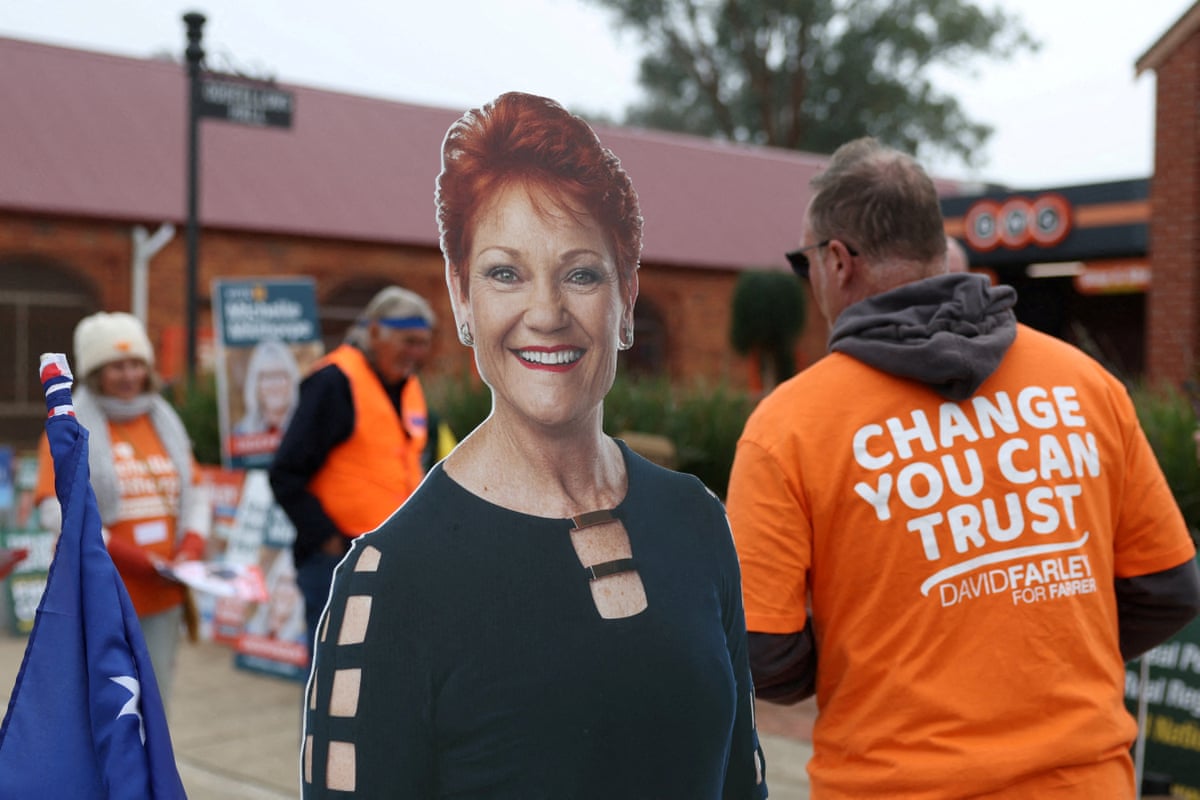
Hanson’s attendance ‘up to Pauline’, says Farley
One Nation representative David Farley, who won the Farrer byelection in May and is to be sworn into Parliament this morning, stated on RN Breakfast that attendance decisions are up to Pauline Hanson, avoiding direct comments on her attendance record.
Asked if he would commit to attending all parliamentary sessions, Farley said:
"That’s my objective, unless something calls me with a greater urgency outside of it.
I’m not exactly sure if, you know, besides reading the press on the weekend, Pauline’s attendance record and understanding it. But it’s up to Pauline to see where she’s more effective. And I’ll leave that to that question for Pauline."
Recently, Hanson posted a photograph on social media during estimates hearings showing herself and mining magnate Clive Palmer having lunch in Queensland for her birthday.
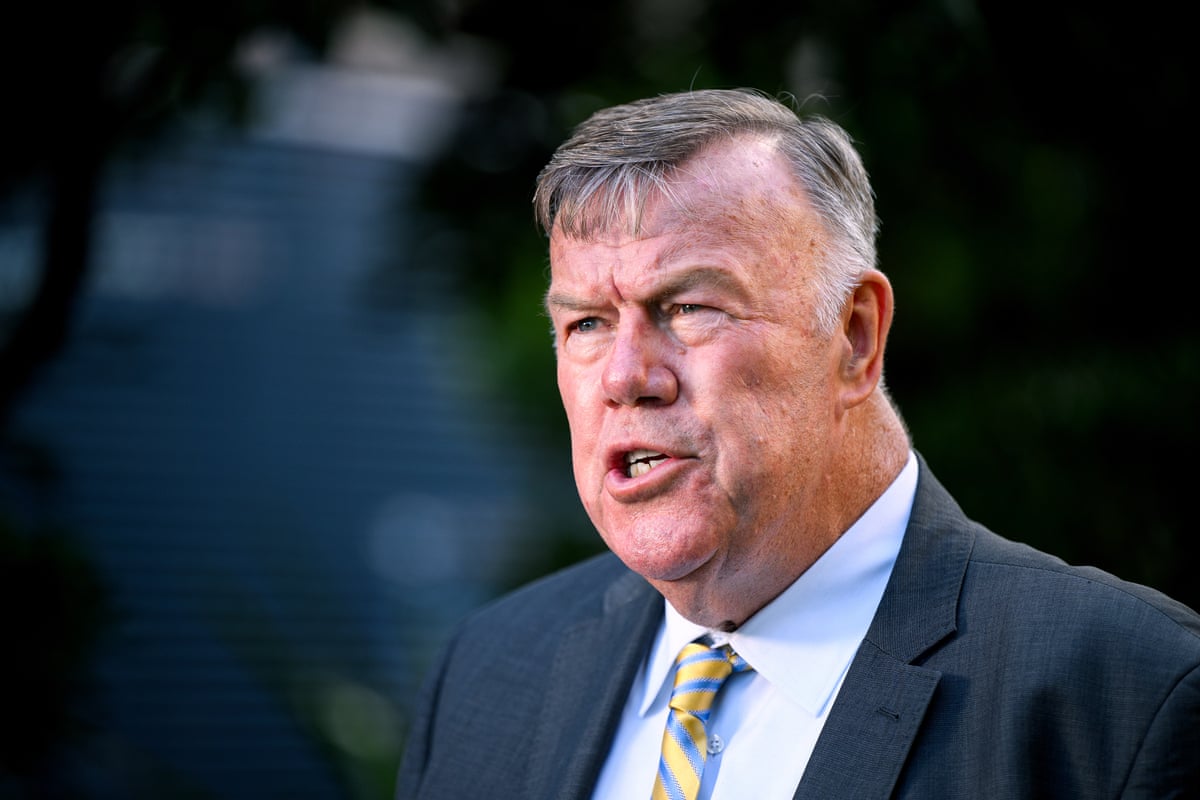
Hanson ‘can’t even be bothered showing up to do her job’: Paterson
Shadow defence minister James Paterson criticized Hanson’s parliamentary attendance, stating it reflects poorly on her commitment.
The Australian’s report that Hanson missed 88% of Senate estimates hearings prompted Paterson to say:
"There’s no more important forum than estimates for an opposition or crossbencher.
If 88% of the time Senator Hanson can’t even be bothered showing up to do her job, to advocate for her constituents, I think that reflects badly on her commitment to her job."
Paterson agreed with Treasurer Jim Chalmers that economic factors primarily drive One Nation’s popularity but added cultural issues also motivate voters.
"I think the biggest driver is the economy. I think it’s the loss of living standards that Australians have suffered in the post-pandemic era, which has meant they’re very disillusioned with the direction of their country and they are looking for alternatives. But they are also animated by cultural issues. They are animated by the flag, anthem and Anzac Day. They’re also very concerned about immigration.
I think it’s in Australia’s interest that mainstream politics resolves those problems, solves them in a way that minor parties have no interest in actually solving them. They just want to mine them for political grievance."
Paterson’s comments echoed Chalmers’ earlier remarks about the Coalition and One Nation.
‘Real risk of capability gap emerging’: Paterson
Paterson expressed concerns on RN Breakfast regarding Australia’s recent announcement to receive three used Virginia-class submarines from the United States under the Aukus agreement.
He noted the submarines have a lifespan of approximately 33 years and that Australia would receive them when they are already about ten years old, potentially causing capability gaps.
"It means they need to be replaced sooner by other submarines. And that’s the SSN Aukus program, which is the Australian program to build nuclear submarines with the United Kingdom. If that doesn’t happen on plan and on schedule, and these are megaprojects that have high risks, then you have a real risk of a capability gap emerging."
Paterson explained that the government’s “optimal pathway” plan was to receive one new Virginia-class submarine and two secondhand ones.
When asked if accepting three secondhand submarines was worthwhile to maintain good relations with the US, Paterson replied:
"Not in my view, no.
I think the most important thing about this program is securing Australia’s national interest, about being able to defend our values, about how to defend our country ultimately and we shouldn’t swap that for praise from a foreign government. We should do what we believe is in our national interest."
Treasurer says shift towards One Nation economic in nature
Jim Chalmers attributed the voter shift towards One Nation primarily to economic concerns, which the government acknowledges.
He emphasized that Labor aims to address these issues, whereas the opposition and One Nation seek to exploit them for political gain.
One Nation’s primary vote has been rapidly approaching Labor’s, with a Financial Review poll indicating the minor party had overtaken the government.
"People do have legitimate concerns about how the war in the Middle East is playing out and the hefty price that we are paying for it in inflation here at home. And so we don’t dismiss for one second or disregard for one moment the very legitimate concern that people have about where they fit in our economy and in our society.
The difference between us and the three-ring circus on the right of politics is that they want to benefit politically from this sense of dislocation, whereas we want to address it."
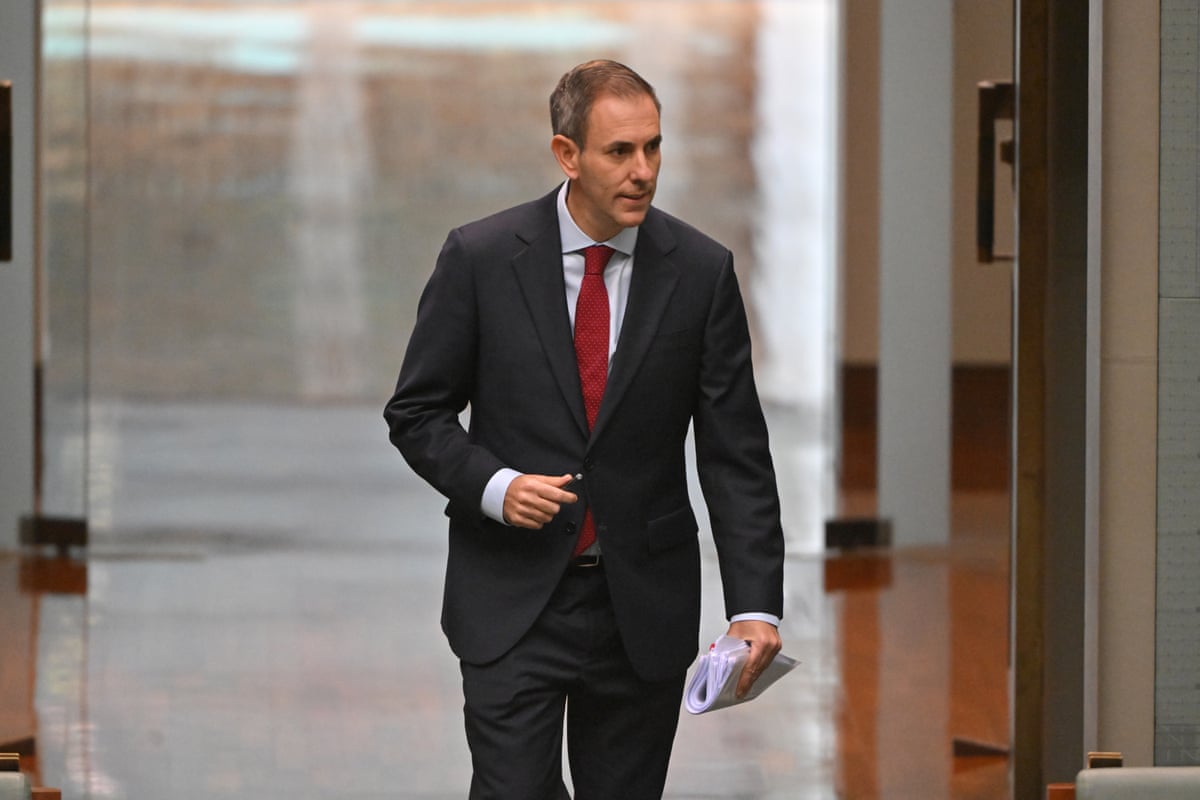
Chalmers prepared to take the ‘political hit’ for CGT changes
Chalmers acknowledged from the outset that his budget was contentious. New polling from Redbridge indicates the measures have not been well received by young people, with 51% of millennial voters believing the budget would negatively affect them.
Speaking on RN Breakfast, Chalmers reiterated he did not expect popularity amid difficult economic conditions and noted the government has time before the next election when polls are more consequential.
"I would rather get the policy right and take a political hit for that than to take a much easier decision politically, which is to leave everything exactly as it is."
‘Our job here is not to target a particular price outcome’: Chalmers
Chalmers stated that auction clearance rates were already slowing prior to the budget, as housing prices across capital cities face a decline.
He reiterated Treasury’s prediction that house prices will continue to rise, but at a slower pace, and emphasized the importance of first home buyers having a fair chance at auctions.
When asked if a price decline would be positive, Chalmers said:
"Our job here is not to target a particular price outcome. Our job here is to make sure that there are more affordable options for first home buyers to get a toehold in what has been historically a really difficult market …
The tax changes aren’t the only factor here. The last few decisions from the independent Reserve Bank are playing a role, the softer economic conditions are playing a role as well."
Regarding concerns that first home buyers using the 5% deposit scheme might face negative equity early on, Chalmers responded:
"No, because housing is a medium term, or long term investment, not a short term one."
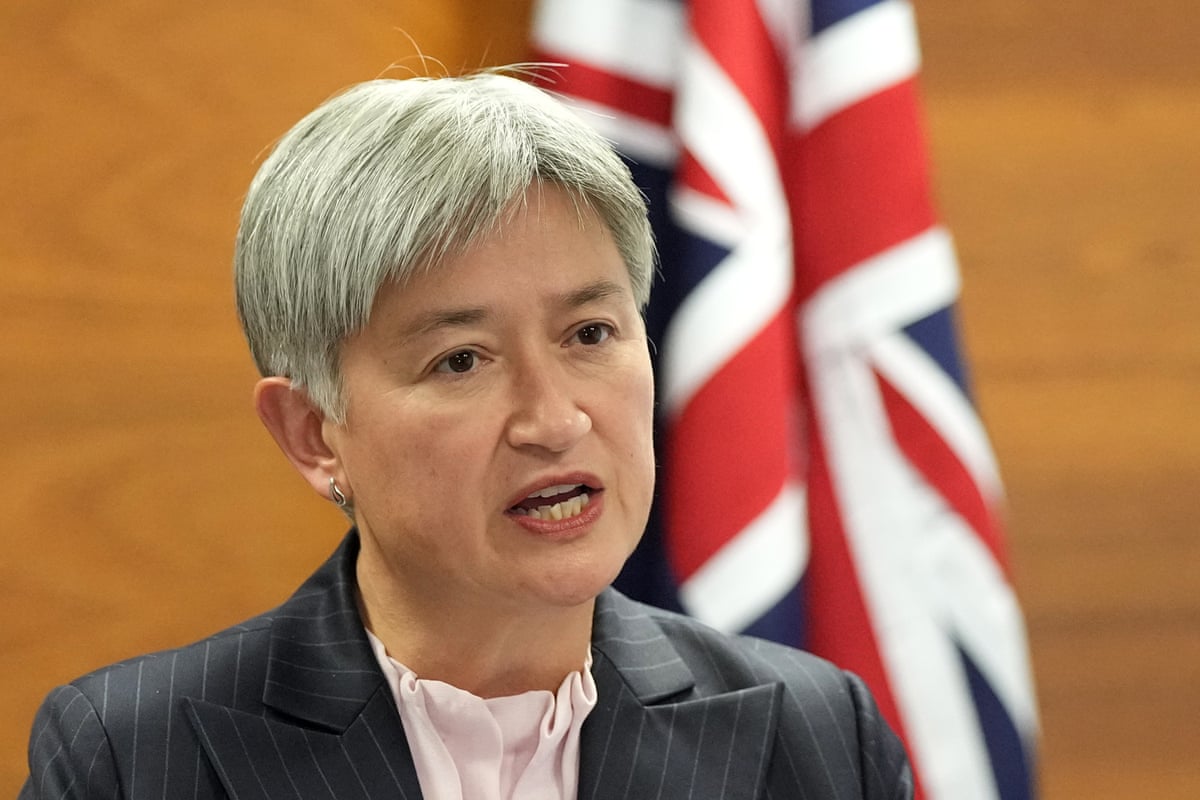
Government places new sanctions in response to settler violence in the West Bank
Foreign Minister Penny Wong announced new Commonwealth sanctions targeting three Israeli individuals and four entities in response to escalating settler violence against Palestinians in the West Bank.
The sanctions include targeted financial restrictions on the entities and travel bans to Australia for the individuals.
Wong stated that these sanctions were coordinated with New Zealand and other nations.
"For the first time, designated entities now include farming outposts that serve as hubs for settler violence.
Settler violence is used to displace Palestinians and perpetuate the settlement enterprise, through destruction of property, displacement of families, beatings, sexual assault, and torture, resulting in serious injuries and deaths."
‘A beat up’: Chalmers refutes having godlike powers over CGT details
During an appearance on the Today Show, Jim Chalmers was questioned about the government’s authority to add details on capital gains tax (CGT) changes after the initial legislation was introduced last week.
Chalmers explained that further details would be added following consultation with the startup and business sectors.
When asked by host Sarah Abo if he had granted himself “godlike powers” to amend legislation, Chalmers replied:
"Of course not.
This is another beat up. It’s not unusual in tax legislation for the definitions to be settled in what’s called legislative instruments."
Chalmers says minimum wage workers deserve a ‘decent real increase’
On ABC’s News Breakfast, Chalmers stated that workers deserve a real wage increase ahead of the Fair Work Commission’s decision on the next minimum wage adjustment. A real wage increase means a rise above inflation.
The government has not specified a figure, citing good reasons, but has made its position clear.
"Workers on the minimum wage and on awards need and deserve a decent real increase today.
We’ve made that very clear [that] higher wages and lower taxes are the best way to help working people with the cost of living by making sure that people are earning more and keeping more of what they earn."
The increase is set to take effect on 1 July. The Australian Council of Trade Unions has advocated for a 6% wage rise.
Good morning, Krishani Dhanji here with you, thanks to Martin Farrer for getting us started.
Ahead of today’s minimum wage announcement, the treasurer is engaging with the media. The government continues to promote the budget despite mixed reviews, particularly regarding capital gains tax changes.
There will be significant activity in estimates today, which we will monitor closely.
Greens to question US use of Australian naval base
Regarding Aukus, Australian Associated Press reports that defence officials will face scrutiny today over the US designation of a key Australian naval base for the Aukus pact.
The Greens plan to use Senate estimates to question officials and the Albanese government about HMAS Stirling in Western Australia being classified as a US shore installation.
A US government procurement site has referred to the base since April as “Naval Support Activity Stirling.”
Bases in the US and worldwide are described as “naval support activity,” though the exact implications remain unclear.
Greens defence spokesperson David Shoebridge will also question officials about taxpayer funding for infrastructure, in addition to the announcement that Australia will no longer purchase new nuclear-powered submarines from the US.
Peter Garrett will lead an independent, community-funded inquiry into the Aukus submarine pact.
He told the ABC this morning:
"This was the most significant, and by far the most costly decision made in secret by an Australian government, tying us to two other sovereign governments, and taking out an extraordinary amount of taxpayers’ money on a proposition which has got a lot of distinct and very difficult complexities and potential problems lying up ahead."
Australia's ebola screening measures sufficient and border closures not needed: health department
Australia is screening overseas arrivals for Ebola and does not require border closures despite the worsening outbreak in central Africa, according to the health department.
Canada has implemented measures for travelers from the Democratic Republic of the Congo, Uganda, and South Sudan, requiring a three-week quarantine for arrivals from countries with Ebola cases. The US has also imposed restrictions.
Australia has not adopted similar measures. A Department of Health spokesperson said on Monday:
"Australia has strong border health measures to screen for people who may be symptomatic with very serious communicable diseases like Ebola disease.
We do not need to close Australia’s borders to safely manage the current risk, which remains low for Australia.
We are aware of measures taken by some other countries, and we decide on the measures most appropriate for Australia based on Australia’s circumstances."
The government has placed signs at Australian airports for arrivals from DRC or Uganda, featuring a QR code with information on symptoms and actions if symptoms develop.
The spokesperson added:
"Anyone who has signs or symptoms on arrival will be identified by the existing screening measures.
The department and the Australian Centre for Disease Control are monitoring the global situation and will work with border agencies to implement additional measures if the assessed risk changes."
Minimum wage increase to be announced today
The Fair Work Commission will announce its decision this morning on the extent of minimum and award wage increases effective from July.
Business groups have proposed increases up to 3.9%, while the peak small business body has suggested a temporary wage freeze with increases deferred until December.
One Nation’s Pauline Hanson has advocated for no increase this year.
The Albanese government has called for a “sustainable real wage increase” but has not specified the amount or inflation metrics for the Commission to consider.
The Reserve Bank forecasts headline inflation to reach 4.8% by June’s end and underlying inflation to hit 3.8%.
Trade unions seek a 6% increase for three million of Australia’s lowest-paid workers, arguing pay should outpace inflation.
The wage panel’s inclination remains unclear, though one member suggested a 6% rise could exacerbate inflation.
The decision will be announced at 10am.
Good morning and welcome to our live politics blog. I’m Martin Farrer with the top overnight stories, followed by Krishani Dhanji with the main updates.
James Paterson, shadow defence minister, told 7.30 that One Nation’s increased prominence should bring increased scrutiny. He described the party as an opponent, not an enemy. More details to follow.
The Fair Work Commission will announce its minimum wage decision this morning. More updates soon.


