From Plaintiff to Defendant: A Dramatic Shift
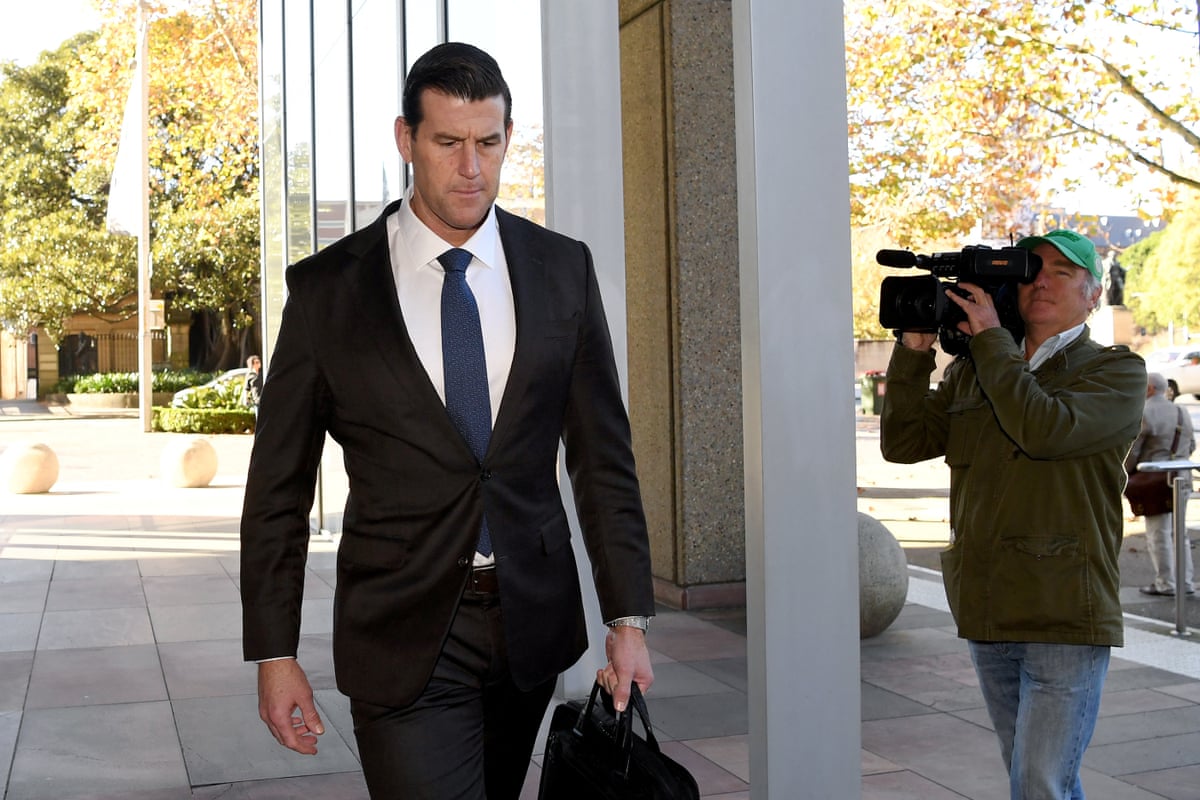
For nearly every day of his lengthy defamation trial, Ben Roberts-Smith, VC, occupied the same seat in federal court—a chair by the window, illuminated by sunlight, from which he could scrutinize witnesses testifying against him.
He now finds himself in a markedly different position.
During the defamation proceedings, Roberts-Smith was the applicant, challenging accusations that he was a war criminal and murderer.
His reputation—carefully built and maintained over many years—was at stake, along with millions of dollars borrowed from supporters who believed in his integrity and character.
On Wednesday, Roberts-Smith will appear for the first time as a defendant in a criminal court, where a guilty verdict could result in a life sentence.
The stakes, already significant, have escalated dramatically.
In contemporary Australia, few have experienced such a precipitous fall from grace.
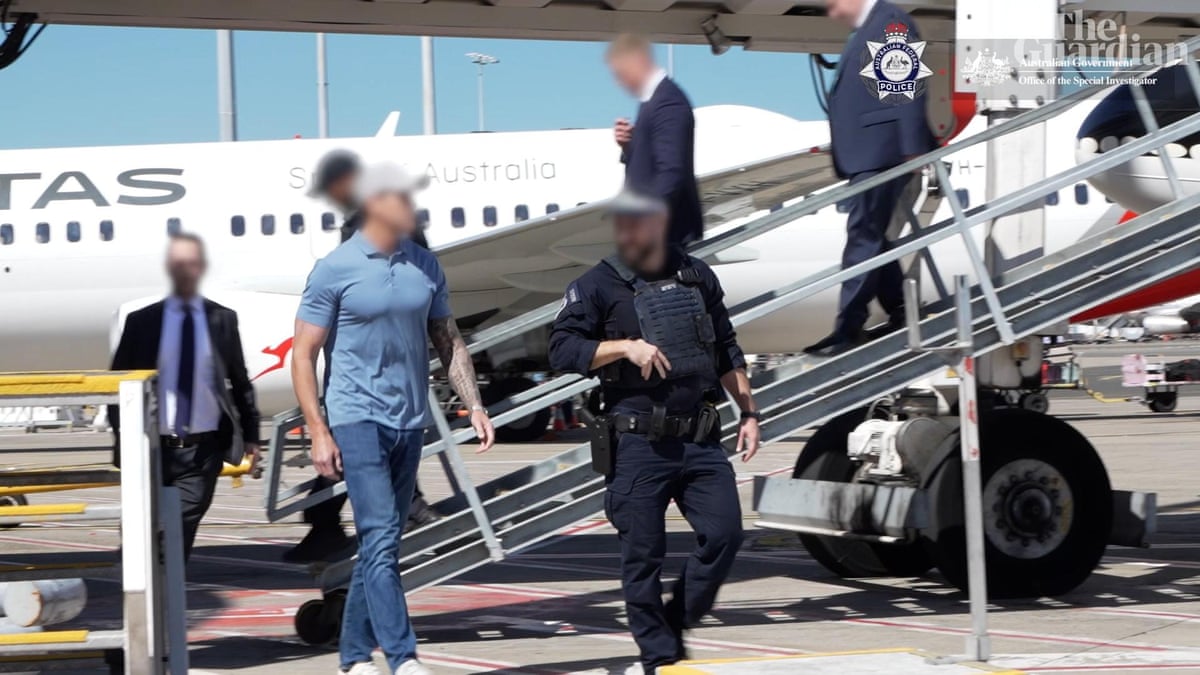
Marched off a plane at Sydney airport on Tuesday morning, Roberts-Smith’s descent from celebrated soldier to accused criminal is extraordinary.
Once the most renowned soldier of his generation and recipient of the Victoria Cross for "most conspicuous gallantry," he was widely admired as the embodiment of Australian military valor and even celebrated as father of the year.
Now, he confronts multiple criminal charges, each carrying the possibility of life imprisonment.
Roberts-Smith is accused of murdering unarmed civilians during his service in Afghanistan—individuals who posed no threat to Australian forces and who should have been protected but were instead killed without justification.
As with any accused individual, Roberts-Smith is presumed innocent until proven guilty. He has consistently and vehemently denied all allegations and defended his conduct both during wartime and in peacetime.
This case is notable for the extensive public record of evidence related to the allegations, much of which was presented during the defamation trial.
Thousands of documents have been submitted as evidence, and numerous soldiers have been subpoenaed to testify regarding their observations and actions.
It is important to note that the defamation trial is separate from the criminal proceedings. The criminal case requires proof beyond a reasonable doubt, a significantly higher standard than the balance of probabilities applied in civil cases.

Details of the Charges
The first two charges against Roberts-Smith pertain to a 2009 raid on a compound codenamed Whiskey 108. During this operation, Australian special forces discovered two men hiding in a small underground tunnel—an elderly man and a man with a prosthetic leg—both unarmed and surrendering.
The federal court heard during the defamation trial that both men were killed: one under Roberts-Smith’s direction and the other by Roberts-Smith himself, who allegedly threw the disabled man to the ground before machine-gunning him to death.
In a disturbing detail, the man’s prosthetic leg was taken as a trophy by another soldier. It was reportedly used as a beer-drinking vessel at the SAS’s on-base bar, known as the Fat Ladies’ Arms, where Australian soldiers were photographed drinking from it.
The third charge involves the most high-profile allegation against Roberts-Smith. In 2012, during a mission to the village of Darwan, he allegedly marched a handcuffed farmer named Ali Jan to the edge of a 10-metre-high cliff overlooking a dry riverbed.
Evidence from the defamation trial indicated that Roberts-Smith then kicked Ali Jan in the chest, causing him to fall backward over the cliff, striking his face against the rock during the fall before landing below.
Ali Jan survived the fall but was severely injured. As he attempted to rise, Australian soldiers descended a diagonal footpath to reach him.
Roberts-Smith is alleged to have ordered a subordinate soldier to shoot Ali Jan dead.
The fourth and fifth charges relate to a mission at Syahchow, where it is alleged that two unarmed prisoners, posing no threat, were taken to a nearby field and shot unseen. Weapons were then planted on their bodies to conceal the fact that they were noncombatants.
Legal Process and Broader Implications
The legal proceedings are expected to be protracted. The investigation into Roberts-Smith has been complex, and the prosecution is anticipated to be similarly intricate. It may be years before the criminal trial formally commences.
Accountability remains crucial. War is inherently violent, frightening, and corrosive, but it is governed by laws.
These allegations affect all Australians. They have tarnished the honorable service of thousands of dedicated soldiers repeatedly deployed to the front lines of a challenging and damaging conflict.
At the core of this case are the victims of the alleged murders committed over a decade ago.
Children have grown up without fathers, spouses have lived without partners.
Families have endured years of despair, awaiting a justice many feared would never arrive.