
Arts Degrees to Remain Expensive Until 2028
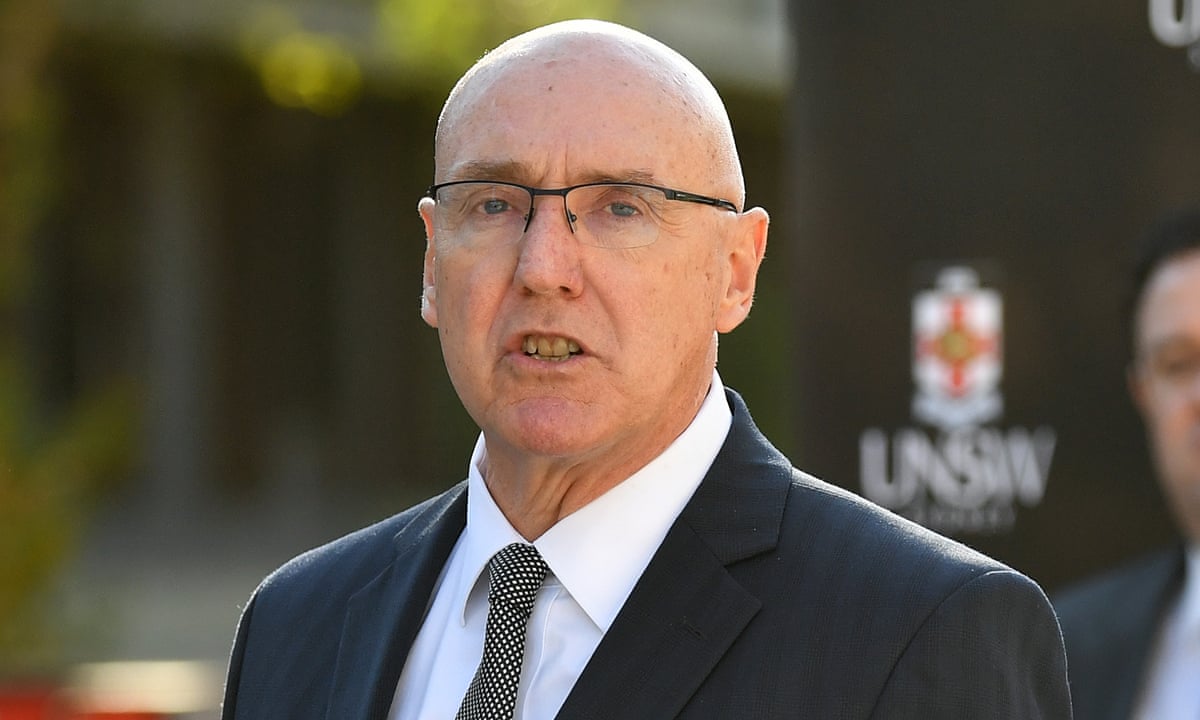
Barney Glover, head of the Australian Tertiary Education Commission (Atec), has announced he will provide advice to the government on degree funding next year but will not recommend any interim measures to reduce the $50,000 cost of arts degrees. This comes despite his previous criticism of the Job-ready Graduates (JRG) program, which he described as a failure.
Under the JRG scheme, introduced by the Morrison government, fees for science and mathematics courses were reduced to encourage enrolment in STEM subjects, while fees for arts and humanities courses increased significantly. This shift has led to a decline in university enrolments among students from lower socioeconomic backgrounds in some arts subjects, prompting concerns about equity and access.
Glover told Australia that he understands the frustration of those seeking immediate action on the JRG program.
“I absolutely appreciate the frustration of people who’d like to see immediate action on Job-ready Graduates,”
“Our mandate is to get compelling evidence for change at a time when governments, not just here in Australia, but around the world, are under pressure in terms of investment in education.”
He had previously stated in May to The Australian,
“It’s clear the JRG reforms have failed.”
The timeline for reform has raised concerns within the higher education sector. George Williams, vice-chancellor of Western Sydney University, warned that the cost of humanities degrees would remain high until at least 2028.
“The longer it takes to fix Job-ready Graduates, the longer it is that students will be paying unfair fees and taking on unreasonable debt,” Williams said.
“This needs to be fixed urgently so every Australian has the opportunity to further their education.”
Glover indicated that work is already underway to assess the actual costs universities incur in providing degrees.
“I’m confident we’ll deliver a compelling argument to government, and I appreciate the challenges, but I think this work has to be done well, and it’s very challenging to do it more rapidly, because it’s complex.”
Funding Impact and Sector Concerns
Data analysis by Innovative Research Universities, published in February, found that the JRG program has resulted in a significant funding shortfall for the sector. The analysis revealed that the Commonwealth government provided $1.2 billion less in funding in 2024 compared to what would have been allocated under pre-JRG arrangements. Additionally, base funding for universities was $813 million lower in 2024 despite increased student contributions.
Mehreen Faruqi, deputy leader of the Greens, called for immediate reform rather than waiting another 18 months.
“We should be making uni fee-free, just like it was for the prime minister,” Faruqi said.
“Instead we’ve got Labor dragging their heels on the easiest of reforms.”
International Student Numbers and Funding Stability
Glover, who will also assume responsibility for allocating international student numbers to universities next year, has cautioned the sector to seek new funding sources as the international student boom appears to have ended.
He noted that international student numbers are stabilizing after years of rapid growth, partly due to government-imposed caps, which he believes will reduce instability within the sector.
“Universities at the moment should be carefully planning on stability in international education, rather than growth, and they certainly need to be looking at diversification. That’s been a very key indicator of government,”
“They should be diversifying if they’re highly reliant on a single market.”
Glover assumed the Atec role after serving as commissioner of Jobs and Skills Australia and previously as vice-chancellor of Western Sydney University. While the government currently controls overall overseas student intake, from 2027 Atec will have the authority to allocate these numbers across universities through negotiation.
“Having been a vice-chancellor, I know when you have growth, it’s great, because it’s important to bring international students to Australia, but I think right now it’s going to be a period, hopefully, of stability,”
“If you take the volatility out, then universities don’t have the same unfortunate need to respond through restructure and downsizing and redundancies.”
Between 2014 and 2019, international student numbers in Australia increased by approximately 10% annually. This growth was sharply curtailed between 2020 and 2022 due to the COVID-19 pandemic, followed by a 27% increase in 2023. The past two years have seen a slight decline in some universities, although institutions in New South Wales increased their intake by 7.5% between 2024 and 2025.
Risks of Reliance on International Students
In May, Western Australia’s auditor general, Caroline Spencer, released a report highlighting concerns about universities’ continued reliance on international students to support their financial performance.
“This dependence is increasingly problematic given recent federal government migration policies aimed at managing international student numbers, which restricted the flow of international students into Western Australia in 2025,”
“Some of the universities are responding to this risk by expanding or entering into offshore operations. While this may broaden the potential student base, it also introduces other risks which may not be easily mitigated.”
Spencer noted that all universities in Western Australia fall into medium to high-risk categories regarding reliance on overseas revenue.


